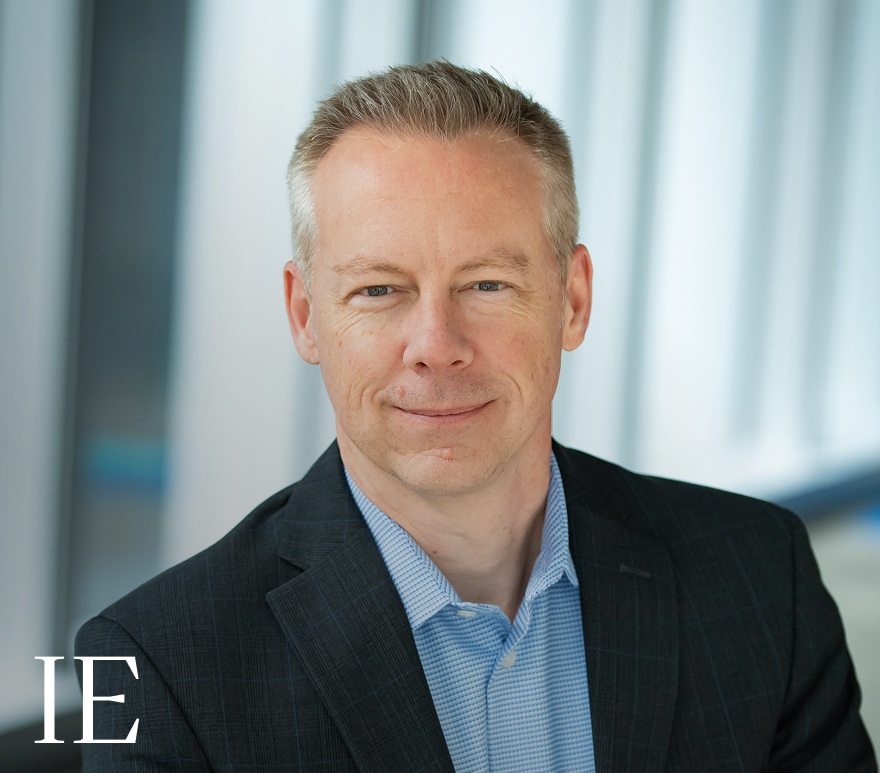
Hiten Patel:
Hello and welcome to a very special episode of the Innovators' Exchange. I'm here in Toronto, Canada at the home of TMX Group and joined by the CEO of TMX Group, John McKenzie.
John McKenzie:
Pleasure. Nice to have you here.
Hiten:
Thank you for having us. Maybe begin by a brief introduction for the listeners who are not familiar with your role at TMX Group.
John:
So, TMX Group, I am the CEO here, have been here for six years in the role. And for those that don't know, TMX Group is really the host of all the core parts of the Canadian capital markets infrastructure. So, the Toronto Stock Exchange, the Venture Exchange, the Montreal Exchange, the depository for securities, the derivatives clearing house, but also a very big growing global business in data information and indices as well. 174 years of history and looking for the next 174 to go.
Hiten:
Amazing. Look forward to getting stuck into some of the details there. But before we do, I always like to hear from guests a little bit about the earlier part of their journeys. As I always say, no one's born a CEO or a leader in these parts of the system. So, talk to me a little bit about growing up, education, things that may have shaped or formed who you are as a leader today.
John:
I've always been kind of a finance guy. So even as a kid, I was a finance guy.
Hiten:
Cool kid.
John:
And if there was ever a club and they needed the treasurer, I was the treasurer.
Hiten:
Nice.
John:
In the university fraternity, I was the treasurer. And when it was time to go to university, I remember my first choice of university was actually to go to math. I was going to go into mathematics and do pure and applied math. And I had this great guidance counselor at high school who said in his very colorful way of kind of directing how you think about your career, he said, "What the hell do you want to do that for?" Now it probably would have been a great path as well, because the kind of engineering that came out of Waterloo Math has been fantastic. So I didn't do that. I ended up going into business. I went to Laurier for business, which is a phenomenal business program, because it's one of the first universities that really got into experiential learning, case-based studies, cooperative engagements.
And so that's where I started to get to do real finance. And first two jobs I had were co-op jobs out of Laurier, then were finance jobs in Petro Canada. So this is more than 30 years ago. I was doing forecasting work for oil and lubricants, which by the way, because of our business, it actually kind of helps now, because I actually know what's in an oil barrel, which I learned that back in university. So always had a finance career. When I started working, it was in Procter & Gamble in finance, working through bar soaps, Pantene shampoos, CoverGirl Cosmetics. I got nicknamed Coverboy a little bit, not because I looked good on a magazine, because I was working on CoverGirl. I worked on MaxFactor. My wife would say that was a way better job than this one because we got product. There's no product from TMX to take home every day, but it was a great way to get the career going.
Procter & Gamble is a phenomenal place to learn, especially if you're learning finance or marketing, brand and sales it is a phenomenal learning ground. But I very much wanted my career to be in Canada and if you're going to keep growing in that company, you really need to do it outside of Canada. So the time came to look for other opportunities, but the other opportunities also came, because the great network that got built there. So when it came time to look around, I had all kinds of opportunities that came up and they were all people I knew from being at P&G that had gone on to other jobs. And one of them was Michael Ptasznik, who had come to the Toronto Stock Exchange to be a finance director here. Some of the American audience might actually know Michael as well, because he was previous CFO for NASDAQ before he retired.
And so Michael gave me a call up and he said, "So what are you doing now and what do you think about coming down to the stock exchange?" And then he didn't call me back for three years, and I kept working at P&G, and then he called back again because the Toronto Stock Exchange was about to demutualize into a for-profit company. And so it needed some finance DNA in it. I remember coming down to interview here and not being able to find the front door, because I'd remember the Toronto Stock Exchange from my school visits when you'd go on the bus, and they took you to the trading floor, and you watched the guys doing the hand signals and trading shares on the floor, and it wasn't there anymore because it had been closed three years earlier when they went electronic. First one to go all electronic in the world.
So eventually I find my way. I find my way into this job here and I started with a finance team of three of us. And that was the beginning of Toronto Stock Exchange as a for-profit company right in 2000.
Hiten:
Wow. So right at the heart of it. And in between that I read that you trained for a CPA [Certified Public Accountant], you kind of did some off the side of your desk in the evenings. Talk to me a little bit about the ambition drive, finding time to be able to kind of do the day job and pursue further qualifications.
John:
Yeah. I've always believed you just got to keep the mind going. So actually before I even knew I was coming here, I did the securities markets training while I was working at P&G, just out of interest. So the Canadian security courses and the conduct courses. So I actually already had them when the job actually came up. I started working on my, what was the CMA [Certified Management Accountant] at the time, which became a CPA later while I was at P&G just to learn on the side. I found out when I started doing it that I actually didn't have any of the accounting credentials I needed. So I went back to Laurier at night school during the week to pick up my accounting credit so I could do it, and did that for about three years and then wrote my CMA exams while I was working at the exchange.
Hiten:
And the motivation, and given everything you're juggling at that stage in life, and then how that translates into you working through the roles that you're working through. Talk to me a little bit about that dynamic. So there's a lot of use of your marginal time and effort. And right now there's probably a lot of listeners thinking about, "I have a day job, but there's a lot of change coming, whether that be AI [Artificial Intelligence], whether that be new learning". Back then, how did you think about that trade off or what drove that decision making around, okay, where do I put my marginal time? How much is it all just in my current career? How much do I need to keep my eyes and ears open around what's happening around me?
John:
Well, I've always been a big believer that you have to have balance in your life that has enough of the things that you want to do in them. If you are all in one thing, unless you can make that 100% of the passion, you've got to find ways to get your energy from other things. And so if those other things are continuous learning or other sports and activities, the whole time I keep playing softball every weekend for the last 26 years while I've been doing this, it's like anything else that's important to you, you book it and you prioritize it. And if it means that you've got a book, we were talking about running earlier today, if I've got to book my run at two o'clock in the afternoon because that's the only place it fits in, then I'm going to book it at two o'clock in the afternoon.
Nice. And once you kind of got into the career to learn that you can give yourself permission to plan your day, your night in a way that you can put all these things in, it doesn't have to have a traditional structure to it. It's about what are your priorities and where are you going to fit them? And so if continuous learning and reading and engaging the mind is important, book time for it.
Hiten:
So important.
John:
And it's a really interesting intertwine for me personally, because having arrived kind of at the beginning of the for-profit exchange days, not only the beginning, but also 2000 is quite a disruptive time for exchanges if people dial back that far. And when I resigned from P&G and I gave my notice to say, "I'm going to go work at the Toronto Stock Exchange." My manager at the time said, "You're an idiot. Exchanges aren't going to be here." And it was actually, this is the dotcom boom and bust trading activities. This is the first time that trading activity started to really go crazy and it's electronically enabled, but the systems can't keep up with it. And so the day I resign and accept the job here, the next day the Toronto Stock Exchange system fails, headline in the global mail is, our stock exchange is obsolete, internet's going to replace it.
And I went to the job thinking, "Okay, well this might only be a couple year experience, but it's going to be a really cool one and I'm going to learn as much as I can.
And then you got into this organization that became an organization that had to constantly reinvent itself. And to be fair, this is an organization here that's always been on the forefront of innovation in the space. I already mentioned it was like the first one to go all electronic. The first ETF [Exchange-Traded Fund] got built here. We were the first ones in North America to go public. And so that was actually in the early days of really getting into these neat experiences. So, as a new company, we'd never done M&A [Merger & Acquisitions] before.
We never acquired anything. And so we'd had the Toronto Stock Exchange here, this nascent venture market out west who needed technology and a few of us said like, "Why aren't we just selling technology? Why don't we buy it? Other companies buy things." But we didn't have anyone else that did M&A before. And so I put up my hand, I said, "Well, I'll do the valuation. I'll figure out how."
And that was kind of my first track on doing that. And that became then eventually one of the biggest parts of my career, because I switched from being a pure finance department lead to transitioning into what became corporate strategy and development, leading the strategy for the firm, all the M&A work that started to put together the early building blocks of what became TMX. And I actually did that job for nine years, which is a phenomenal time to think about that any job lasts nine years in terms of this pace, but it was constant new changes, new opportunities, you're looking at new businesses and a lot of that early strategy that we wrote about putting all the pieces of the capital markets ecosystem into one house to create the value for the clients, that was drawn on a piece of paper in 2004.
So there was years about trying to execute it and some things took a few tries. The Canadian depository for securities, I tried to get us to buy that four times and failed four times before the Canadian banks thought it was a good idea when it was their idea and then it came in.
Hiten:
Subtle difference.
John:
So that was the earlier years, was all about strategy and development. And then the latter half of my career here really came out of the opportunities that came in through some of the things we did. So the depository for securities, as I said, it finally came in through a transaction called the Maple Transaction, which was essentially, we were looking at a deal of potentially merging with London Stock Exchange. The Canadian industry didn't like it. They didn't like the idea of potentially seeding the authority for the marketplace to London.
So rather than just get in the way, they put together a counter proposal, and it was a leveraged buyout of TMX, which then also brought in another exchange, which was the AlphaMarket in Canada that the banks owned and CDS, the Canadian Depository for Securities, that the banks owned as well. And at the time, I remember Michael said to me, he said, "Well, so what do you think of this proposal?" And I said, "Well, Michael, I think this is our strategy." Our strategy wasn't merged with London.
Our strategy was to build this infrastructure. So eventually the organization got behind that, we got the CDS piece done and the individual that was leading CDS at the time was retiring. So I went to our then CEO of the time, Tom, and said, "I'd like to put my hand up for that role." And he asked me what experience I had in leading clearing houses and risk management. "Absolutely none." I said, "But I have nine years of a book of what I think we can do with this strategically to build it for Canada."
And he said, "That's great." And he gave the job to somebody else. And we hired a phenomenal guy from one of the banks to lead it who was great in risk management and knew how to lead and transform large teams. And he pulled me into a call shortly afterwards and said, "I hear you've got some ideas for what we can do.
"And I laid out the kind of things I've been thinking about over the years and he said, "Okay, what do you think about coming over here being my number two, chief operating officer and CFO of Clearinghouse?" And I went, "Well, why not? I've been doing this for a long time. Here's a chance to put some of the practice into action." The one thing that people who work in M&A often don't get to do is take the experience of executing afterwards. So now I get to execute something. And within a year, I was then president of the Clearinghouse. And that was probably the biggest building block along the way because that moved from being finance and strategy, to running an operation, to supporting clients, to working with large teams to setting not just the strategy, but learning how to communicate it to 400 people to get them on board.
I was able to do that for a few years before coming back into TMX to be CFO, which was then the launchpad for this role later on.
Hiten:
At what point on that journey do you think, "I'm going to run this ship. This is my baby. I've kind of been involved. I've shaped it. I've crafted it." Is there a point in which you kind of realize that this is the mission, this is the calling?
John:
Candidly, not till I was doing it. And again, going back to the roots, I always thought of myself as a finance guy. So to be the CFO, that was the job I wanted. That was the job I wanted to build to. My long ago, political aspirations would have been never to be prime minister, be finance minister, to be the guy behind the scenes that actually makes it all happen.
Hiten:
It's that treasurer days in your youth, right?
John:
You don't need to be the face. So as I was in the CFO seat and Lou, the CEO at the time, he said, "What do you think about doing some leadership development around kind of CEO training? No promises, just to see if there's an interest there." And I never even thought of myself in the role before. I thought why not? There'll be some great learnings. So I did some great development work and I remember this really interesting exercise along the way where they worked with you kind of plotting out your career and your life on what were your super highs and your super lows.
The biggest champions and the biggest pitfalls that set you back, because some people have charts that look like this. And then I found mine was really more like this, little highs and little lows and constant progress along the way, but nothing that really sparked either way.
And then coming into the near the end of that, we had a real big challenge at home. And so this was kind of the formative piece for me and really changed how I thought about leadership. But around that time, 2019, my middle son, who was 16 at the time, 23 now, is diagnosed with cancer. And he's diagnosed with a really tough cancer. He's got osteosarcoma, bone cancer in his hip. And a huge shout out to the folks in TMX, because when I call him at the time and I'm breaking down and it's, "No, we've got your back."
So I'm in a CFO seat for a public company and I'm about to go live with my wife and kid in a hospital for God knows how long. And it's interesting that we actually just did the market open for Princess Margaret Cancer Hospital today because we do this every year to support them.
When you go through that journey and now you want to see highs and lows along the way, the early part of that journey, every piece of news you get is a next degree of bad news, but it feels more positive because you're in the path. The early days when you don't know what the path is are the most terrifying, but once you've got a program, I'm like, "Okay, we've got a path in terms of how we're going to deal with this. "Even though you start getting more and more bad news, you've got something you can do to help.
So this journey was first kind of nine months at first of very, very difficult cancer treatments. He's had seven operations, very intrusive operations. We had amazing cancer doctors, nurses, health technicians that actually, because Jacob was passionate at the time was music and he's still passionate about music.
And he played in a band and the band that year was going to perform at Normandy for D-Day for the 75th anniversary. He was less upset about cancer as he was about potentially missing that trip.
Hiten:
Oh my days.
John:
So his surgeon, his oncologist worked to carve out three weeks out of his program so we could go with Children's Wish Helping, because it's hard to travel with a kid with cancer to France so he could perform with his band. And if you ever want to be inspired and see the resilience, watch the kid who's already had 10 weeks of chemo, he's as white as can be, he's bald as a Q-ball and he's marching with an eggplant size tumor in his hip, but he's marching every day and not complaining, because this is what he wants to do. And it's actually the last time he'll march, because he can't march anymore because he needs some support in walking. And I remember when he told the band director that he's crushed because he won't be able to be marching the band anymore. And the director said, "Why not?"
He said, "If you can't walk, we'll put you in a wheelchair. Someone will push you. You play your saxophone. There's nothing you can't do." So as we came through that whole journey, and it was literally, I was at the end of that journey of we had just got him home from all his treatment is now finished. He's about to go into rehab.
We knew there was going to be a leadership change potentially at TMX and the folks that had been kind of the thoughtful successors weren't there anymore. I had a call from our chair and first thing he asked was, "How's Jacob doing?" I said, "He's doing great. We're turning to the corner here." And he said, "Okay, Lou's looking to leave. Can you step in?" And I said, "I can absolutely step in. This is on my team, my strategy as well. I want to see it successful, but I can't commit beyond that, because we don't know where we are in our life." So starting in January 2020, I stepped into the interim CEO role while being CFO at the same time and started 10 weeks of rehab treatment for Jacob living in another hospital in Toronto, which candidly actually is closer to the office than where we live.
So my night sleeping there was a shorter commute and we made it work. I did some audit committee calls from hospital waiting rooms and we made it work. And my wife and I both found the right way to support each other at the right time to get through it all. Now the interesting thing is 2020 is also the outbreak of COVID. And so here's all the kind of highs and lows that are now coming together. So we've just got on the back of this journey. We're getting them through rehab. I'm in an interim seat. I don't know if I'm long-term to keep working because of what we've been through, stepped into this role. Market has gone crazy, because of all the trading around COVID. TMX systems take a hit because we couldn't keep up with the volume.
I'm in Miami at the time when I find out the systems are down, rushed back and I'm asked, "Okay, you got to go in the morning on media and reassure the market that we're going to be up and running." And I remember saying to Shane, I said, "Well, we haven't actually done the media training yet because this was supposed to be an interim gig." And he said, "But you're going to do it on air." So that was kind of issue number two. Our CEO previously had left fairly suddenly, so there were morale issues in the company as well and some strategic drift - issue number three. And so after maybe three months of that, I called up the chair of the board and the chair of the HR committee and said, "I think I can do this.
I think I should take a shot and here's what I'd want to do." That was when, it wasn't until I'd been doing it for a while that I can do this. And it was a great question that sometimes young people ask and they say, "When do you stop feeling like you're an imposter in a role?" And I've always believed that if you are still learning, then you're probably still feeling like an imposter, because even now six years in, you still walk in a room saying, "Why does anyone want my opinion? Is it because of the job or it's because it's a good opinion?" And so, you should always be constantly learning and constantly have more to do and you should never be comfortable. If you're comfortable, you're probably not learning anymore. So that was the journey. So I put myself forward. It was a competitive process, but the silver lining of going through that kind of terrible ordeal from the previous year was that I could put myself forward with, here's my vision for where I'd like to take the organization.
And if that's not your vision, that's fine. You can pick someone else and I can help them transition and I can move off. I've done my part. So there's an element of peace and comfort that really allowed me to personally feel like I could be authentic with what I wanted to do.
I think afterwards, in terms of being able to lead the company, that authenticity and knowing everyone and they know me has been invaluable, because we've got phenomenal trust in the organization. So sometimes your worst experiences are actually the best experiences in terms of making you a better person.
Hiten:
Thank you for sharing such a poignant and powerful story. That's truly incredible. Where does that leave you then as a person? You've gone through that. You have an incredibly successful and still successful career as CEO. I was going to bring out some stats, let me just talk a little bit from the outside how people view TMX. We've gone through that period where a lot of the exchange groups are redefining themselves. They're doing very large M&A deals, crazy diversification plays, but that's for the guys who make three, four billion plus in revenue, for the big guys.
What's amazing is in the period that you steered TMX as a CEO, you've doubled the value of the company, you've diversified your business around the core, that you successfully navigated a great value creation journey for your own leadership. Talk to me about how when you look back on that now, everything you've achieved, where you are as a person after what you've just shared at that element, how do you process and make sense of what's just then gone on in the following four or five years?
John:
Well, you've got to start with giving credit for the people that came before you to build a foundation to build on. It's almost like the pitchers that come into the end of the game and they get the save. You can't get the save if the team wasn't already winning.
So I gave a lot of credit to the team and the leadership that came before that started to do the hard work on restructuring and creating the efficiencies and starting to put together some of the disparate pieces of the organization to have a base to build on. And so from what in my time here, Barb and Richard in the early days setting us on a growth path, Tom and Lou in terms of some of the building blocks and Lou in terms of really getting the structure tighter and more efficient. So I got the launchpad now of taking it forward and being able to build out a strategy for growth. And that was the conversation that we had with the board then, which was how do we take this organization, which is a great organization, does really important things, but hasn't been materially growing and how do you change that direction around growth?
So it's funny that you talk about the two times because the strategy, we actually called it TM2X. I remember we wrote this TM2X. I didn't realize it's really hard to say TM2X a lot. It doesn't roll off the tongue that easy, but we had just put together the new leadership team and so the leadership team is, it's me, it's a couple people who also had leadership aspirations that stayed on, folks that were longtime leaders in their organization that had bigger roles and folks that were new, like Cindy and David who had come in from outside. And we went offsite for the first offsite retreat the leadership team had in probably at least five years and wrote on a board "1000 days." And people said, "What's 1000 days?" And I said, "Well, the average tenure of every CEO that's been here since we went as a for-profit company has been five years and we're a year in.
So I maybe have a thousand business days left and we just use one, cross it off, 999. So every day has to be filled with purpose in terms of how we're moving things forward. And so we started talking about aspiration and the aspiration of, could we double this franchise in that timeframe. So it was the whole history of the company to get to a half a billion. You talk about the three billion guys, took us 14 years to get from a half to a billion and I was like, okay, can we do the next billion in half the time? Double the organization, half the time. And the reason we started to set a big hairy goal is because that makes you reframe how you think about growth, because you can't get to it incrementally. And so we had some old paradigms in the old strategy around, well, we can grow in this area and in this area.
These are our growth vectors, which left lots of the core important parts of the exchange kind of underinvested in.
So we set some new dynamics of, okay, we're going to build for 2X. That means that every business we're in is a growth business or else we shouldn't be in it. So we want a growth strategy from everywhere, which also means you have to think about your market differently. And to your point, we're not going to compete for the biggest M&A deals with folks that are five times our size, because we don't have those pockets. We've got to focus on the things that we're really good at. So that was number one, 2X, focus on what we're good at, redefine everything being a growth vector and then candidly focus on fewer bigger things. Everywhere in the organization, whether we're talking about M&A, whether we're talking about projects, whether we're talking about employee events, fewer bigger items. We're not big enough to do everything everywhere, and geographically focus on areas where we can grow, not a little bit pieces all over the place.
So that was the foundations of it and then really leaning into our core strategy around capital formation, global trading clearing, data information, and finding ways to both grow organically and use inorganic to accelerate it really fast. And you said it in your opening the question, in five years now, we've hit the 2X metric on every single one of the measures and now the dialogue is, can we go to 3X, or do we go to 2X squared, 4X?
Hiten:
Let's come there in a moment, but I want to reflect a little bit on what we've talked about so far and what that may have played into delivering that impact. Because there is a look across the industry, there's a temptation to often hire a CEO externally. There's a temptation in that period to go and hire yourself an M&A banker, and go and run that playbook, and go and spend the capital that gets driven off the core business.
What is it that you think you brought, all those roles that you saw, you sat in the finance seat, you did some early stage M&A, you were involved in the post-trade business, an incredible, moving, powerful personal period. Right now a lot of people are looking at, okay, who should lead this? What should a next generation exchange CEO look like? You've obviously, you were an atypical version back then. What was it that you think that equipped you to allow you to do that?
And I think for me, I asked this question in a sense of, there's a whole bunch of CEO transitions coming up across the industry writ large, and I think people are now re-litigating what do we need from a leader and what is the chapter that comes forth? But I want to look at when you look at what you've achieved over those last five years, what do you think some of those key ingredients were or building blocks that came along the way earlier or that enabled you to do what you did?
John:
I mean, I think one of the biggest ones, and I think one that's been missing in some of the leadership transitions through the industry is deep industry knowledge, understanding of the client, the curiosity that goes with it and let's be candid, passion. These are very unique businesses.
It's not like a bank and it's not a tech firm, even though it's got elements of both. At the core, the core of an exchange is part of the engine of an economy and the things that we do every day about actually unlocking capital and helping a business raise money to expand and build, your ambition there is not actually about what you're achieving for our business, it's about what we're enabling for them to be successful.
So to have that knowledge by working in so many different pieces over the years, but also have the passion for what we can do and why it's important, I think are two of the ingredients that are sometimes missing. You can have lots of knowledge around finance and data and things like that, but if you don't want to dig in on actually what makes it successful for the clients, then that growth strategy is not long-term sustainable.
I love the fact that we're doing this in the Market Center because the Market Center is, it's not just about the cancer market open we had this morning, but when a small company comes here after their idea, their passion has got to a level where they can take it public and they're so excited about that, that they've brought mom and dad, and they've flown over relatives from Australia, and they've brought the kids to ring the bell. You realize that, okay, what we do here is special. So you've got to care about the specialness of it as well, and preserve that core and legacy while also building on top for the future. You can't do just one or the other. If you only build for the future, you'll lose the core. And if you only focus on the core, you could be Kodak and not a lot of people are doing film and cameras only.
Although I hear they're actually still making film for a narrow hobby. Niche audience who wants to do it. Maybe it'll be like record albums at some point. I don't know. It'll come back.
Hiten:
Let's talk about the future. Let's talk about how you think about innovation going forward from here. We sit now at a period where a lot of column inches are written on AI, tokenization, prediction markets. There's a lot of scrutiny on some of the diversification that's gone on in the industry in recent years and where does that leave us? TMX, as you look out for the next three, four, five years, how are you thinking about innovation across some of those dimensions?
John:
I think we have tremendous runway and partly because we've really focused a lot of our diversification as you will, though it's diversification from our core. So we've really stayed true to it's marketplace based. We've been diversifying into more services for companies so we can support their journey, more services from investors in terms of building indices and ETFs, more marketplace solutions. So everything's still concentric rings around our core. It's not that we're in businesses that were not relevant. So continuing to innovate around that, I believe in purpose-driven innovation.
And we talked earlier about the fact that there's a lot of historical innovation that's come out of this organization, but you can't rest on that. It's good to have it in your DNA, but you cannot rest on it because the pace of change now is the piece that's the most fascinating. It's not that we're talking about AI and blockchain and tokenization and all these things.
We're talking about them all at once. And what was new six months ago sometimes isn't new anymore. And that's probably the challenge for most businesses and the leadership teams in them is how do you work with a pace of change that's very, very quick where you actually don't really know which components of these innovations are actually going to create value.
And so that's the way we think about it, is we try to pull back the shiny cover from some of the objects and say, okay, how are we going to create value for the industry in doing that? So our team's been deeply involved in blockchain, digital assets, tokenization. We've been working on blockchain technology probably 15 years, but there hasn't been a super use case yet that's actually created a lot of value for the industry either in terms of speed, efficiency or quality. We're at the cusp of potentially being scalable today. And I know there's lots of different areas where the US is looking at it. A place where we're focusing on is really around how do we help to tokenize money, collateral, create efficiency through clearing and settlement, more mobility of assets so that we can actually bring down the cost for the industry and make it more streamlined.
That only works if you actually have organizations like ours that are at the center of the infrastructure to engage in it, because one of the reasons why this stuff hasn't taken off in the last 15 years is because if you try to innovate from outside, how do you integrate it into banks and custodians and other clearinghouses? So I think it's on us to help drive some of that innovation, but drive it in a smart way. We see the same thing around 24-hour trading. We already do it for our derivative space. We're not doing it for the equity space yet, because we want to be thoughtful on how we execute it. So we are thinking about how does a company do announcements? How do you risk manage it? How can you create liquidity in the middle of the night if you don't have liquidity so you've got good execution for the investors and that's the kind of thing that keeps us up.
So we've got a lot of pieces in our strategy that are around this innovation and productizing, which may or may not work.
And that's okay. Good strategies should have some things that don't work or else you're not trying enough.
Hiten:
And in the exchange world, our view is things either massively work and take hold or they don't. They're kind of binary outcomes, right? So it's important to have that portfolio play that you described. I want to move on to geography. And it's not uncommon for there to be the exchange groups that I described in size, they usually set adjacent to a very large market. If you're in Singapore or Australia, you're next to China. If you're in London, you're next to Concentra Europe. You guys are next to the United States of America. Talk to me a little bit about what it's like to lead the organization in the context of geography in the context now of a potentially really important role of these, what, middle power to borrow a term from Mark Carney. How are you balancing and thinking about geography in this context?
John:
So I'm not a big fan of the term middle power. I prefer nimble power. And here's the curse and the blessing of living right next door to the most competitive, dynamic, liquid market in the world, is you have to be competitive. So you think about the fact that we are right next door, capital flows freely across the Canadian-US border like no other border in the world. Every company in Canada or the US is mutually recognized. Our clearinghouses are interconnected. So it is almost seamless for people to trade across the border and it's the same time zone. So it's a very different competitive dynamic than even some of the other regions we've talked about. And that means that even though we are smaller in size, our market has had to be just as price competitive, just as feature rich, just as fast from a technology standpoint.
And that creates a different kind of innovators dilemma, which is, we're not as big as those guys, so how do we actually compete really smartly?
And that's, I think, one of the reasons Canada developed what has now become the benchmark for junior public markets. So the venture exchange we have here hasn't been designed the same way anywhere else in the world. We have over 1,600 public companies that are junior insides that anywhere else in the world are probably private companies. And so we've created this ecosystem that's allowed companies to grow, and foster, and graduate, and raise capital at different scale and they give us a unique competitive advantage that doesn't exist across that border.
So that's that nimbleness. So it's not about being in the middle, it's about being able to do things that other markets can't potentially at a speed that they can't and create your own competitive advantage. And so when we look around the world, we also look at, okay, what are those geographies that make sense for us to operate in where we're going to create value?
And our move to London when we first went there with the acquisition of Trayport. Now we've been in London already with some capital formation, getting to the mining companies that are centered there, but Trayport was a bigger move for us to get in there. And the nexus for us was, even though this is a trade screen, it's a data and information screen around the energy markets, what exchange in the world is better at energy than we are? Sure, we're not trading the energy like ICE and CME are in terms of trading WTI [West Texas Intermediate] and Henry Hub every day, but we have one of the largest cadres of global energy companies that are on the exploration side, the development side, the infrastructure side. We've got relationships on the brokerage side. We've got knowledge that we can bring to the space. So we might not have had that trading piece, but we had the knowledge, experience and the independence.
That was that first really major geographic foray. The second major geographic foray for us, which was more recent was we've got to be able to compete in the US. So not just compete in Canada next to the US, but compete directly in the US. And we looked at what are the best ways for us to do that versus going kind of head to head in the most liquid components. Now we already have an investment in the Boston Options Exchange, great platform and we're about 50-ish percent owner there, but we didn't have a lot of on the ground TMX operations in the US. So if you went back to New York two and a half years ago, we could have our entire US, not leadership team, the entire US team around one table in a restaurant. And Jay Rajarathinam had a holiday dinner and I think there was he and I and eight others and we were everybody, but that was where we started to build.
And our first big build was to get into the index and benchmark space through VettaFi. This was a build by strategy. We started with building indices. We started looking for partner that we could build more things with. That was VettaFi. VettaFi needed capital for where they wanted to go next. So we provided seed capital and very quickly moved to bring the whole franchise in. And you think about competitive forces and innovation at the time. The innovation there was, we are still in the early days of the development of ETFs. So we are going to get a seat at that table and make sure we can provide extra value to our ETF clients globally.
Hiten:
Amazing.
John:
And that gave us another beachhead into the US. From there, we built our own market. We built the trading platform AlphaX to start to deal with some of the higher execution quality trading. From there, we added the Verity data team so we could do enhanced data sets and in some cases AI-based datasets. And so over the kind of couple of years, we've grown from having a handful of different sales reps to 300-ish people, a New York headquarter, multi-line of business and a platform to grow on. And then our next kind of hyper-regional site will be Australia. So our announcement on the acquisition of CBOE's assets, it's a natural move for us to move into Australia.
Hiten:
So I wanted to go there. What was the draw to Australia, the plan, the vision for Australia? There's obviously a lot of thematic relevance across mining commodities, but there's also meaningful geographical distance. How difficult a decision was this? Talk to us a little bit around how that came into being.
John:
Yeah, I think we're about as physically as far from Sydney as you can get right now. Again, any opportunity is also, you have to be lucky and have good timing as well. I had a call from Craig at CBOE saying that they had made the decision that they were going to move out of a couple of geographies that weren't big enough for them, being Canada and Australia and would we be interested in the Canadian assets? We were able to very quickly come back and say, "We are interested in both." So this is a unique opportunity where they've got some nice Canadian marketplaces that if we bring them into TMX, we can reduce cost for the industry, make the industry here more efficient. And if there was ever a time that you needed to make great national champions to compete on a global scale, it's right now.
And that's the geopolitical challenge around the world. Europe is talking about the same thing. How do they actually create the conditions to create more national champions? So we saw this as a way to, if we can bring this in, we can put everything on a single platform. We can reduce connectivity, data costs, friction costs, data center costs, and really reduce cost, improve efficiency for the Canadian industry so that they can compete more, we can compete more on a North American and global basis. And at the same time with the same transaction, make a beachhead move into a market in the world, to which your point is exactly right. Canada's the number one mining market in the world and Australia is a close second in terms of not just where the properties are, but where the companies are that build global mining franchises.
And so we had a vision of what we could do there. We'd already been doing business development in Australia. We have 27 companies from Australia that list here already. I've done IR [Investor Relations] development, business development, strategic development in the region. So this is a very natural move for us and it gives us the opportunity to think about the what ifs that you can do once you have a strong presence. And so these are the hypothesis, not the plans. The hypothesis as we build out there, can you create the conditions for a clearing link like we have with the US so you can make it more seamless for capital to go back and forth.
Can we create the conditions for interlisting? So when you work with a company, you can help them raise capital in multiple markets and support a global issuer base. Can we do more around futures and options? Can we help the market there in ETF development? North America is way ahead of the rest of the world in terms of ETF development and what we've done in Canada, what we're doing with VettaFi, we've got pieces we can bring to the market there and all of it's complimentary. So you've got a national market there that's got a tough job. Every national market's got a tough job in their home market, and what you can bring are things that are going to be complimentary to help build out the economy there and create more global linkages. And even if I don't use the word middle power, it goes also to the strategy of the Canadian government here, is creating those kind of global linkages to help people expand, raise capital and grow.
So it's fortuitous timing. It's not a massive investment for us, but it's highly strategic.
Hiten:
It's very exciting and look forward to seeing what comes of that. Last question in this section, John, talk to me about AI and how that's showing up at TMX group.
John:
I mean, other than keeping me up at night, I don't think I'm going to surprise you where I say it shows up. We've really leaned into focusing on where we can use AI to create more efficiency in the organization, and efficiency not to get smaller, efficiency to go faster. And that was really key to how do you get folks to embrace it in the organization and really test and try and experiment is you start right from the get-go, is we're not looking at this to reduce jobs. We're looking at this to help you be more efficient so we can do more for clients.
Number one area is around technology development and almost half of our organization is tech development. This is allowing us to go faster and do more with what we have. We can code quicker, we can test better. We've deployed multiple AI tools throughout the organization so the developers can actually in a safe box use the ones that make sense. We've got some work to do around the data architecture still, because some of the data is in a great architecture where you can test AI on it, some isn't. What you don't want to do is put AI into your production environment. And especially if you're running core mission-critical infrastructure for markets that can't fail, you don't put AI into that infrastructure. You've got to put it in a safe environment. So we're building the environments to do that. We've got a lot of business process automation that we see AI taking it to a next level.
And we've done some of this work already. So you think about like algorithmic trading in the industry is, it's not AI, but it's enhanced digital trading. We've built some of those capabilities in Trayport. We've done automation of the front end of everything to do with listings. That's all digitized. It's all workflow. And sometimes whenever we talked about things like DeFi and TradFi or traditional finance, I actually someone once I said, "What do you think in the traditional finance world is not digitized today?"
We've digitized every part of that value chain from issuance to settlement.
So that's a concept. AI is the next layer of how do you automate so you can take repetitive workflow out. The other area though, the big area though is around security and everything that's come up in the last little while around Anthropics Methos and the Glass Wing Initiative in the US has had all of us relook, okay, how secure are our systems and what do we need to do differently? And I think it's been a good eye-opener on what I'll call kind of three categories of systems. Those things that we build that are proprietary and we build a lot of proprietary tech. So unlike a lot of other kind of middle size economies and exchanges, our trading platforms are our own. We don't rent from anyone else. We build our own tech, which also means we can ringfence it really well and we know there's no vulnerabilities in it that are someone else's because of open source or other reasons.
So that's your piece. What's your new proprietary tech? How good is it? And you actually can use AI tools to test for vulnerabilities. The second piece is where do you use kind of global systems from large vendors they're going to get patched. And so we've got to have some trust and reliability in our partners, but recognize that we're going to get hundreds, if not thousands of patches this summer as everyone looks to upgrade the capability of their systems and that's going to take some reprioritization in terms of what's going to be the most important thing we work on. And that's bucket two. And bucket three, like anyone that's driving a technology-based business, we have some old cr*p that we've never shut off, that's going to be vulnerable, that can't be updated, that's out of service, and there's going to be a piece of work that has to get done, which is either sunset, rebuild, or honestly just kick out the plug and see if anybody notices.
And there's some stuff in there that's probably 25 years old. Now, I think we're probably ahead of the game that we've replatformed most things already. We've replatformed all clearing just in the last year, but that'll be that last piece. So, proprietary stuff, big systems, and then clean up all the legacy and it's a have-to-do, not a nice-to-do.
Hiten:
And that last bucket, it's great you call it out, right? Sometimes some places keep it as a secret that guys, we've got a whole tech modernization challenge and issue coming and we're critically dependent on it, but I think it's great to bring on the spotlight. It's just a function of where we're at, right? And these are things that need to be done rather than burying it. I'm going to move us on, John, if that's okay. The final section of the conversation, a little bit for the benefit of the listeners is some reflections on your leadership journey that people are often interested in. So I'll start with biggest lesson learned from your journey to date that you think listeners would learn from.
John:
Oh, for me, it's very much about resilience. And I often get asked with the young people come into the organization. I do a monthly call with every new person that comes in the company and I'll often get asked, "How did you make your career journey? How did you get to this seat?" And I said, "Well, every career journey, they don't go like this. They go like this and sometimes they go down on the way to going up. And the key along that way has been resilience. Sometimes you don't get the job you ask for and that doesn't mean you shouldn't go for it, because that's actually when you're going to learn. And the best job experience that I've ever had, and this has been my learning, was when I got the opportunity to do something I wasn't qualified for or I didn't think I was qualified for."
When I first started doing strategy and M&A and someone gave me the opportunity and said, we'd like you to do this, and I hesitated, because I don't know if I've got the skills to do that. I've never run this piece. I've never run a team like that. I didn't come out of investment banking. And the gentleman who became CEO at one point, he said, "Well, why are you hesitating?" He said, "How old are you anyway?" I said, "I'm pretty sure you're not allowed to ask that question." And maybe I was in my late 20s or 30s and I told him and he said, "Oh, well, then you can afford for this to be a complete mistake." And that was the biggest learning aha-moment, is because sometimes in our journeys we think every decision is the most important decision ever and it's not. It can be a complete mistake as long as you learn from it and use it to help build the building block for the next one.
And so that for me was the biggest learning. Take the job you're not qualified for, you're going to learn the most in it and the resilience that when you do get knocked down or you don't get what you asked for, that's not a death blow. You just learn from it and you move on. There's a phenomenal book. It's not about resilience, but I think it's about resilience and it's called The Splendid and the Vile.
Hiten:
The Splendid Vile?
John:
The Splendid and the Vile. And it's about Churchill. And there's lots of books about Churchill, but this book about Churchill takes place over one year while London is being bombed. This takes place all during the Blitz, and it really gets to the testament of the British people that lived through that every day. And we think some of the things that we've got are challenges today. We don't have to worry about going down into the bomb shelter with our children each night because the city's going to get bombed and then we're going to dust ourselves off in the morning and go back to work. That's resilience. And sometimes I feel like we don't have that same level of perspective. And so if you can read some of those pieces to understand what other challenges people have had to endure, well, then we can endure this.
Hiten:
It's amazing. I love the way that you go back and you use their historical references to zoom out and frame it. And also your phrase, you can afford this to be a complete failure. It's quite poignant, because actually sometimes the risk that you would take in career moves, you literally jump so far if you've got the certainty that you can make it, right? And actually some of the bigger leaps that you describe, you need to be prepared to fail as you put it.
John:
And have faith not only in your own abilities, but also in the people around you that are championing you. Because if they've championed you and they're giving you the chance, they are equally invested in your success.
Hiten:
Very well put. Very well put. Outside of work, John, talk to me a little bit about some things that you do outside of the office that kind of enable you to be an effective leader.
John:
Well, I mean, I continue to read a ton, and the reason I think that helps be effective is I think you can bring, like we just talked about, more context and more story in terms of why we do things. But I also just believe in being a well-rounded person. So if I'm not here, you'll find me doing the things that I love and that'll be at the Blue Jays or playing baseball myself a couple times a week, playing baseball with my own family on the team. I'm leading that team, not because I want to lead it, because I want my kids to be able to play with me. But I think all those things just make you a better person. If you're all just one track, it's not really interesting.
And then when I'm not doing that, I've got two passion projects that are leadership roles for me. I work with the Hamilton Health Sciences Foundation, Hospital Foundation, midsize, its a middle power. But interesting about the Hamilton Foundation is there's amazing research work getting done in Hamilton and breakthroughs in medical technology and medical implementations. And if we can help them raise money, maybe we can help save the next generation of kids going through cancer and things like that. So we work with them, my wife and I work with the pediatric oncology group. And then for this year and next, I'm also chairing the World Federation of Exchanges. And this for me is fascinating, because the opportunity to meet and engage with different exchange leaders from all over the world, it's a really interesting mutual benefit, because in some ways we compete with each other, but in some ways we have all the same local challenges and we can help each other both from a learning standpoint, but also from an advocacy standpoint and a support standpoint.
So those pieces are keeping me well rounded, keeping me really busy, but busy in a way that's energizing.
Hiten:
And I think the first few on that list for me make you just, for a better word, human, and in an age of where everyone wants to be so automated and efficient and AI-driven, the power of the anecdotes and the things that you refer to have come through so clearly in today's conversation. So that rings true. Last one as we wrap up, I ask all guests to share or throw the spotlight. So to encourage listeners to go and look up something, an individual company could be any idea. It's your opportunity to share the spotlight, what would you like to call out?
John:
I'm going to call out two things. I'm going to do one in the space and one outside, because people that follow capital markets, there's some people doing some really cool, interesting things around capital markets. And sometimes these are the exchanges that are the smaller ones that people don't know about, at least in North America. I just got back from Luxembourg last week for a federation meeting at the Luxembourg Stock Exchange. Luxembourg and Julie's team there are the absolute global leaders in the green bond world. So you think about one of the pressing challenges of our time, even though doesn't get the same amount of press these days around energy transition and climate, the work that they are doing around being able to finance it through the exchange is world leading, absolutely worth looking at. And this is from an exchange in one of the smallest countries in the world.
And then I look just to the west of them, to Stuttgart, a small German exchange, Stuttgart, they're competing with the big guys at Deutsche Boerse, but they're finding their own space to be innovative and they've built a really fascinating crypto-based trade platform for retail. Exchanges aren't traditionally straight to retail, but they've built one and have been really successful and it's a big part of their business now. So getting the chance to see both of them and having to get to participate with them showcasing what they're doing, I love that. And in our world, each of us can learn from what the others are doing and if we can't do it, we can promote it.
When I get outside our space, and I got to go back to another book that I read, my favorite business leader of kind of the last, we'll call it the last decade or so, was the first round of Bob Iger at Disney. And I loved his book, Ride of a Lifetime, which is not a traditional, I don't think it's a traditional business leader book because it's not just a book about here are the 10 principles and you follow him all the way through. He tells his story. He tells the story in terms of how he rose up through things like ABC and through Disney. But what I found the most impressive about his approach to leadership was reading about the highs and lows of what he dealt with in his career. Biggest thing for him, career moment was building out Shanghai Disney. You think about that ability for an American organization to take that model into China and the decades of work and the resilience and persistence it took to do that.
That was his big career win. But at the same time, there was a tragedy at a park in Orlando, and he dropped what he was doing in China to go and talk to the family of the child who passed away at one of the parks over the advice of his lawyers that would've told him not to, because you can't take on that liability and basically said, "I'm a dad. I'm going to call him and see what I can do." And I look at that level of human leadership and compassion and passion that even though I'm opening the biggest thing of my career, the most important thing I can do is take care of the family at one of my parks. So, great story, great business leader, understood also what was really important at the end of the day.
Hiten:
Thank you for sharing, John. And thank you very much for being so generous with your time. Thank you for hosting us here. It's been a very, very special episode of the Innovators' Exchange. It's been a real privilege to be here and yeah, thank you very much, John. Thank you for having us.
John:
It's a pleasure. Thank you.
This transcript was edited for clarity.