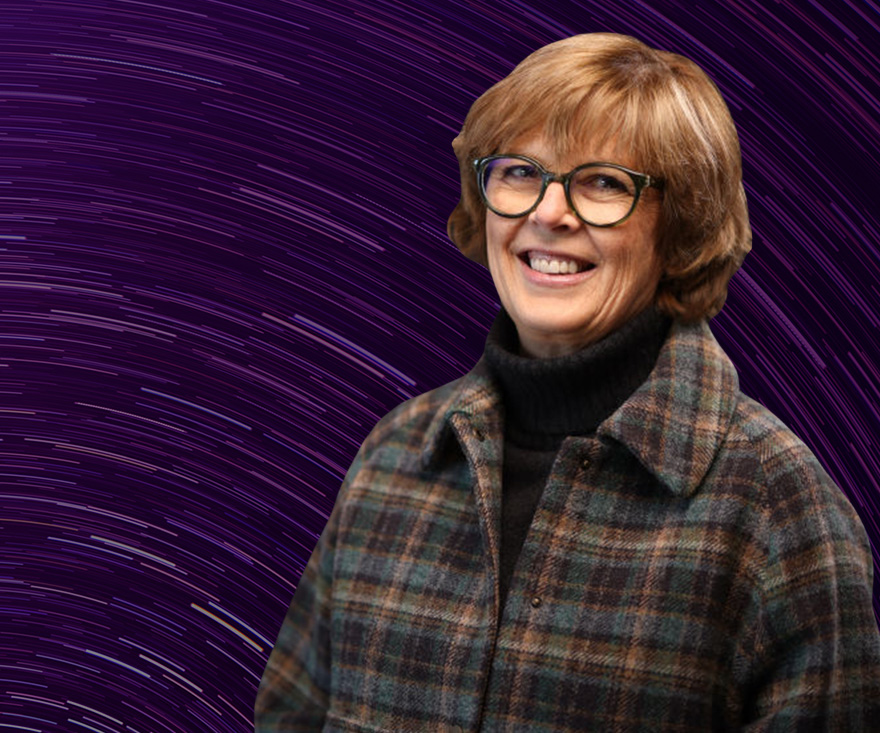
Hiten Patel: Thank you for joining us on today's episode of the Innovators’ Exchange. I'm co-hosting with my colleague Nikolai Dienerowitz, who leads a lot of our work in the capital markets technology space, and we are delighted to welcome today, Valerie Urbain, the CEO of Euroclear. Welcome, Valerie.
Valerie Urbain: Thank you very much, very happy to be with you as well.
Hiten: Perhaps we can start, Valerie, with a brief introduction to your role at Euroclear. And in particular for our listeners who are not in the depths of the capital markets plumbing, how would you like them to understand, or think of what Euroclear does?
Valerie: So, Euroclear is the global financial market infrastructure that specializes in the settlement of securities transactions and in the efficient safekeeping of the securities, be they equities, bonds, funds, ETFs [Exchange-traded funds]. So, Euroclear very much is a linchpin, if you wish, between the issuers and the investors, making sure that the funds are channeled to the projects, for example, where indeed financing is needed. Euroclear, we are a European company.
We were created in 1968, but at the same time, you know, we really provide a gateway to the world, in the sense that from Europe we connect to over 45 different markets. So, we settle about one quadrillion of value, you know, equivalent of value, of securities transactions, meaning that, to give an idea, we settle the equivalent of the world GDP [Gross Domestic Product] every month. And we safekeep about $41 trillion of assets.
So, this is Euroclear in a nutshell. You talk about plumbing, I'm not sure I always like this word. But it is fair to say that we are very much an essential step to make sure that on one side, we are the digital notary of a security, and on the other side, we ensure the transfer of property between, you know, buyers and sellers of securities, between issuers and investors.
Hiten: Amazing. Thank you for laying that out. It's a great introduction. I always like to start by acknowledging that CEOs are not born CEOs. You weren't born into the role that you had, and I'd love to spend a few moments talking through the earlier stages of your journey. And I often pick where we start there, but I was fascinated to read about your upbringing in Senegal, so I was wondering if we could start right at the beginning of your journey, Valerie.
Valerie: Sure, yes, you absolutely are very well connected, very well informed, because indeed, I was born in Senegal, I was raised in different African countries, and that has probably had a very big influence also in my career choices, and still today, you know, in my areas of interest. But what I really love about this youth is that very early, I was confronted with being different, you know?
And so, I think it is certainly a red thread in my whole career, you know, making sure that I nurture the differences, and I really try to leverage the differences. Diversity is something that is extremely dear to my heart. But also, I think I learned very early in my life the power of proper financing for the real economy, you know?
My father was working in the development of countries, and, you know, I've been really plunged into this, you know, the value of bringing the funds where they were needed in order to indeed develop the local economy, the domestic activities. After that, I came to Europe for my studies, so I was alone as from the moment I was 16 years old. So, that has also helped me to be extremely autonomous, very independent. Because I had to take care of myself, nobody was there to do it. And that also has probably had an important influence on who I am, on my personality.
Hiten: That's fantastic. Talk to me a little bit more about your early professional career. I note 1992, I believe, you arrived at Euroclear. I'd love to understand those earlier chapters. How did they shape how you lead and what you observe today? It's been, you know, a couple of decades. What's changed also through that period, since you spent time at Euroclear?
Valerie: Maybe worth just saying that before Euroclear, I also had a life, so I spent five years in a bank, and I started to work for a Chicago-based bank, which does not exist anymore. But the interesting point there is that I was sent part of the graduates, you know, so it was really a training program of six months to make sure that all the newcomers, the new graduates in the group, were really aligned with the strategy and were convinced about the fact that we were part of the future.
The only problem, they started on the 3rd of October 1987. Which is a couple of days, a couple of weeks before Black Monday [severe and largely unexpected stock market crash]. I was in Chicago, in the Stock Exchange, you know, we were all witnessing Black Monday. And that was also quite interesting, because a couple of weeks later, the bank was not recovering from the Black Monday, and so while we had been the future of the bank, suddenly all these subsidiaries outside the U.S. were sold, were for sale.
And so suddenly we became the past. And when you come out of university, you're full of hope, and suddenly you realize that actually you will have to change a little bit of orientation. But that was a good lesson anyway. So that was just to make a parenthesis about how market circumstances can change, also your views when you start working.
Hiten: It’s like a sliding doors moment, I imagine. Life could have been very different if that event hadn't happened.
Valerie: That's very true. But then in 1992, you're right, December 1992, I joined Euroclear, and I must say that I spent almost 10 years in commercial, so I was very much selling the product, the services of Euroclear. And I think if I want to define myself, I will always say that I am a salesperson. I'm really geared up to deal with clients, trying to understand what they need, trying to understand how we can add value, and so throughout my career, I have always tried to be close to the client base and really involved in client discussions.
And still today, I need to continue to travel to meet my clients and to listen to them. I think that's the best way to get the pulse of the market and see whether we are going in the right direction. So, client proximity and client centricity are definitely the motto of my life in Euroclear.
Hiten: Amazing, and talk to me a little bit more about some of the roles that you held over that period, and what they enabled you to see, observe, learn, equip you for today, right, when you're steering the whole ship yourself?
Valerie: As I said, I've been in commercial for many years, then I started to move also into product management, where it was about developing services, and at that time I was based in EUI [Euroclear UK & Ireland], so in London, in our London office. What has been interesting for me throughout that is very much, as I said, to understand how we are adding value to the market, for sure.
But also it has been very interesting to understand the different requirements of our clients, and, you know, working for Euroclear Bank, which is an international central security depository, or working for a local domestic infrastructure, like EUI or ESES [Euroclear Settlement of Euronext-zone Securities] later on, that also has given me a good sense of, you know, what are we expecting to do when you are really domestically focused versus the international world. I think today, while I am heading the group where we have this complementarity between domestic players and international ones.
Clearly, my experience on the ground has been phenomenal, and has really shaped, if you wish, my vision for our clients. The other thing is that I started to be in a general management role in EUI, and then I became the CEO of ESES, of Euroclear Bank, and all of that. But I think I learned also when I started to be in a general management position, especially in ESES, that often the people start seeing you differently when you are in a leading role. And that has also been an interesting lesson, because you feel that you remain the same person. And actually, hopefully you do, but the way that people look at you is different, because they expect from you more direction, more vision, but also a sense of responsibility.
And so, inevitably, there is a distance that is being created between you and the rest of the people, and you start realizing what it means to carry the flag of a company. So that was very much the journey I've been to, I've been through, and I've been very lucky, because I have been able to really build on my, I would say, responsibilities growing in terms of the importance of the entity, the importance of the topics I was dealing with. So, I really feel that I have had the luxury of stepping up gradually and learning all my way, so that was super interesting.
But I wouldn't be complete if I didn’t talk about another experience that I've had for five years, which has been Head of Human Resources for the group. And this function came as a surprise to me, because I was not at all thinking that, being a commercial person, I could end up leading HR. And at the same time, I believe that it is probably the experience that has been the most powerful, also from a personal perspective. Because in a commercial, you do everything to be loved by your clients.
In HR, nobody likes you, so you have to suddenly understand that it's not because people don't like you or that you don't do a good job. But also, in HR, you always have in mind the collective aspect of human capital. Because you can't start only looking at individual cases, you really need to see each time, okay, if I do that, what does it mean for the rest of the population, what kind of precedent am I creating? So, I think it really gives you also this perspective of looking from a distance at the human capital, and not only at the sum of individuals.
So, yeah, it has been a very difficult experience for five years, but at the same time, I think that it has really helped me to be where I am today, and understanding the power and the strength of human capital is definitely something that today is really driving most of what I'm doing as the CEO of the group.
Hiten: I'd love to just double-click on that last part, right? That role of heading human resources. If I look out there, there are a lot of CEOs who are, you know, in our industry, in the capital markets, the standard thing is to take an M&A [Merger & Acquisition] banker and make them CEO and assume that they can run that.
I'd love to hear the pitch from you, Valerie, around, as a result of you spending that time in the HR function, some of the things that you could do that you otherwise couldn't do, and your views on whether you think more CEOs and leaders of these organizations ought to have had experience leading the people function?
Valerie: Well, for me, I mean, it is essential to really continue to develop your human capital, because we can have the best technology, you can have the best clients, but at the end of the day, as a CEO, you don't do anything. You need a full team behind you. And you need to have a team that is really motivated, who have a passion for what they do, who are curious, who are brave in the way they manage the job, but also their career. And from day one, when I took my CEO role, I've been very clear in my mandate to the board of Euroclear, which is to make sure that I was preparing the next generation of leaders.
For me, it is essential to make sure that we develop our talents. We also changed the culture of the company, because, you know, Euroclear is a wonderful position, and I've been extremely lucky to take on the company at the time I did. But at the same time, I'm also very conscious that the recipe of the past may not be the recipe of the future for our success, right? Because the world is changing around us, and I'm sure we'll talk about that.
The world is changing, and so there is absolutely a need for me to make sure that we spend sufficient time building the competencies of our people, and that we really continue to upskill them, reskill them, that we give them this eagerness to learn and to go through changes. Because at the end of the day, changes are a constant in our work, in our world, and I feel that it is my responsibility to ensure that the people working in Euroclear do feel that we're investing in them, and that we really allow them to give the best of what they can be.
Nikolai Dienerowitz: I'd love to double-click, Valerie, on the point you made around culture. And obviously, you had a very international upbringing. I think a lot of our listeners may not associate Belgium with a global company, but I know you are very geographically spread, and a lot of your path is about international expansion. How would you define Euroclear culture today, and what's important about that culture for you?
Valerie: So, I would say the Euroclear culture is indeed, as you say, very international. So, we are 6,000 people spread across 12-15 different locations. We are speaking 80 different languages. So, indeed, because we are based in Belgium, it's a bit by accident. Belgium in itself is a very small market for us, so all our clients are very much everywhere. We have more than 2,000 financial institutions, which are based in every location, in every capital market center. And so, I would say that the culture of Euroclear is sometimes what we say is an engineer culture. With people who are extremely analytical, very expert in what they do, and very dedicated to the results.
But at the same time, the flip side of that is that maybe sometimes people are a little bit binary. We like to have clear things, and it's ‘yes’ or ‘no’, and it's ‘right’ or ‘left’, you know? And I think part of the cultural transformation that we have started is very much to make sure that we are a lot more at ease with ambiguity, with what I call always the multiple shades of grey. Understanding the context and adapting to it each time. Because I think that the direction of travel is very clear.
We want to become a digital and data financial market infrastructure. But the way to get there, we’ll have to adapt depending on market circumstances, new technologies, you name it. So that's why part of the cultural change is very much to allow our people to be more at ease in this kind of environment, which is a lot more ambiguous and a lot more uncertain than what we had learned before.
The other thing as well is continuing to work in a more agile way altogether. I think Euroclear is a very caring company, so the human dimension is existing, is very high, you know? But at the same time, people tend to work within their function. And I would really like us to move more from functional leadership to enterprise leadership, with a lot more transversality. And the reason I want more transversality is that, as I said, the world is becoming more complex, and therefore, we need to make sure that people draw the competencies of their colleagues. Instead of trying to fix everything themselves. And so, a lot more transversality going forward is definitely something that we should also be doing.
Hiten: That's some great points there.
Valerie: And I would like to maybe bounce back on what you said about internationalization, in the sense that, yes, we are a European financial market infrastructure, so when you look at the strategy of Euroclear, we are very keen to contribute to the European capital markets and to the savings and investment union, so to continue to contribute to that development. But at the same time, I also decided to be a lot more proactive in the Asian markets. Because, again, it's important to realize that, given our client base, but also our shareholding, Asia is an important element of our strategy.
Not to say that the US, the Americas, is not, but the Americas is very much us represented by our client base, because our biggest clients are Americans, and therefore, I believe that by servicing them, we are already pretty much tuned to what this side of the world needs. But continuing also to have a strong footprint and a strong contribution to the European and the Asian markets, I believe it's important for the future of Euroclear.
Hiten: Super. Thank you, Valerie. And Nikolai, I want you to come in now, maybe just double-click on some of these themes around the post-trade innovation, Valerie. It'd be great to pick up the thread there.
Nikolai: Awesome. Thank you, Hiten, and thanks, Valerie, for everything you've shared already. I'd love to pick up on a few points you highlighted at the start, and I think you mentioned the global role Euroclear plays in capital markets. For us sitting here in the UK, and you mentioned you spend a lot of time here, I think sometimes in continental Europe, if you open the newspaper, there's a lot of talk about the death of capital markets, or the death of public markets, and the challenges that Europe is facing in particular. I'd love to get a bit of your read around. Are capital markets or public markets dead? What's the role of post-trade to revive them, if so?
Valerie: I mean, post-trade, usually nobody cares about it until the moment there is a crisis, you know? And when we had the financial crisis in 2008, suddenly people realized the value of the financial market infrastructure, because it provided, at that time, resilience of the capital markets. Today, with this geopolitical context, and also with the wars that are very close to us, I think we start again seeing the value of financial market infrastructure, where we continue to provide resilience, reliability, but also the value of the rule of law. So, I think that it's always in those moments that suddenly post-trade becomes interesting again.
Now, to come back to your question, I would say that for me, the post-trade has a role to play for the capital markets, but I think in Europe, even before talking about the post-trade, what is extremely important is to work on making sure that the European savers become, as well, investors. And this is something which, you know, there are trillions of assets or cash, which are deposited with banks. But they are not really directly contributing to the real economy in Europe. And so, I think the first thing that needs to be done is really to transform those savers into investors, because money is there, but they need to start investing in the real economy.
And the reason why it is needed is that if we really want to continue to bring growth in Europe, we need to be able to finance startups, to scale up startups. So, the startups need to be able to find access to funding in an easy way, and throughout the maturity of their own journey. And I must say, when you look at the American capital markets, it's amazing to see how the capital is available at different stages of maturity. You have the seed capital, you have venture capital, and you have the private equity.
So, yeah, we need to really make sure that Europe starts being equipped on both sides, on the buyer and the seller, with more capacity. And then, of course, we post-trade, we are there to support those changes. But you can’t have the best post-trade if you don't have enough money on one side and enough projects on the other side. We are a little bit lacking in purpose, you know?
Nikolai: Fully understood, and this completely resonates. I think when we look at European capital markets, we sometimes look at Sweden and think that's an interesting investment culture, more active, I know you have operations there. I'm wondering, is there something else you think FMIs [Financial market infrastructures] could do in that regard? Is there more that needs to be done in terms of education, making savers aware of what the investment opportunities are?
Valerie: Well, I think there are a couple of things that we can continue to do, which is continuing on one side, as you say, to participate in the financial literacy. Having said that, again, we are post-trade, we are really at the end of the chain, so we are probably not the easiest one to speak up, but I must say, that's also why I'm very, I'm involved for many years in university, because I feel that, again, it's important to really educate our youngsters financially. And I must say on that one, as you say, Sweden has been a very good example where they have, for 25 years now, or 30 years, they have really created this financial literacy and incentives for the retail market also to invest in the capital markets. Now, this is one thing.
The second thing that I think we should continue to do is to ease access to capital markets, to continue to bring the benefits of economies of scale, and, therefore, continue to reduce the cost for the investors and the issuers as much as we can. And so, Euroclear is already the result of a lot of consolidation. We have six CSDs [Central Security Depository], one ICSD [International Central Securities Depositaries], and we want to continue to do so. We want to continue to use the current momentum of the SIU [Savings and investment union], we want to use it to continue to lower the cost for the market.
Another thing as well, which we should not undermine, and I think, again, Europe is well-positioned, is the attractiveness of the European capital markets for the external investors. Typically, when you know that the financing needs of Europe will be gigantic, we talk about defense, sovereign autonomy, the aging of the population, new technology, and climate transition. The financing is gigantic, and I'm not so sure that only tapping into European savers is enough. And so, we also need to continue to bring, you know, and to raise the attractiveness of the European capital markets.
I'm just back from Asia, where, really, the message is, we really want to use Europe as an alternative. We do believe that Europe has a lot to offer. There are very good companies in Europe, but please help us access the European capital markets, so I think it’s a moment for Europe.
Nikolai: Thank you. It's a powerful message, and it sounds like we're still open for business, which is good to hear.
Valerie: Woohoo! We are, we should be, we should believe in ourselves. And frankly, I think that European institutions, I would say for the last 18 months, are really trying to work on the right priorities. Now, European governance has become something complicated. But I'm optimistic that the combination of public and private sectors can still help Europe to fix its issues.
Nikolai: That's a great point, actually, Valerie, and it was on our list as well. You've lived through several financial crises, many of which were followed by a raft of regulations. We would argue that a lot of that regulation, which you heard some of your colleagues discuss on this podcast, was very beneficial for market infrastructure providers. I guess if you're looking across the world, other jurisdictions are taking a more, maybe from a European view, lax, from another view, business-enabling stance.
Would love to hear if there's anything from your perspective where you think we could rethink the way we're doing things, maybe we've gone too far in some areas, or you sense maybe there are others where, you know, more clarity might be needed?
Valerie: I think in this domain, you need to be extremely nuanced, because it is fair to say that with the financial crisis, it was obvious that the industry was lacking proper regulation. And a lot has been done, and you're right, I mean, when I see, at least for Euroclear and for the CSD, I mean, CSD regulation has been the first attempt and success to really define what a CSD is. And frankly, it has been very useful for us also to diffuse any feeling that we're competing with the custodian or whatever.
What we are is very clear, what we can do is very clear, and so I think it has helped to bring clarity to the market. So that's one thing. Second thing, I think that bringing the right protection around the issuers and the investors is the right thing to do. And, you know, preventing abuses, so I think there are a lot of very good things in financial regulation, which have continued fueling the trust in the capital markets, especially in Europe.
Now, it is fair to say that it's not always easy to strike the right balance between, on one side, bringing the right protection, but on the other side, allowing for, you know, economic growth, allowing for innovation. And I think that this is where, sometimes, the pendulum has gone too far. And, I think it's always with a very good intent, so I think the initial intents are always very good, but then understanding the unintended consequences of some regulations may not have always been deep enough.
And then sometimes, as I said, the pendulum has gone too far, where at the end, the regulation has lost a little bit of the initial purpose, and is really more about preventing new business coming in, and new services and products getting developed. So, I think, yeah, it's a domain where I was saying, you need to be very nuanced and really trying to strike this balance.
Nikolai: Understood. It's, I think, on the front page of the FT [Financial Times] today in the UK, people are complaining about our regulator not being enabling enough for stablecoin and stifling innovation. Keen to hear how you, Valerie, are looking at that part of innovation, DLT-enabled [Distributed Ledger Technology] innovation.
I think Euroclear has been talking about it for a long time as well, and you were one of the first ones, maybe some of your peers have maybe struggled a little bit to turn that into a commercial opportunity. Would love to hear how you are looking at it, and what you're hearing from your clients as well?
Valerie: I think of innovation, it's really part of our purpose to innovate, and innovation is not only about new technology, it's also about different ways of working, it's also about legal, solution, or whatever. So, the word innovation should be taken in a very broad way. Now, on the new technology, on DLT, you're absolutely right that we have been pretty pioneering to some extent, using DLT for the digital native issuance. And we have had that for the last three years now.
We have also managed to attract very reputable, world-class issuers. But fair to say that the volumes are not much there, you know? So far, there have not been a lot of, I would say, scalable and profitable solutions brought to the market on the security side. Having said that, we are not a first mover, but we're always a quick follower, for sure. Having said that, I think that we have reached a stage where I think there is a bigger momentum, there is more willingness to find a solution. I think all the talks about disintermediation or whatever have also become a lot more reasonable.
I think that people continue to understand the value of having somebody who is really holding, to some extent, the trusted network. Making sure that all things are done properly, so I think that is good. But I think that there are still a lot of initiatives in the market, but with little success, because the difficulty with DLT is that if you really want a solution to become scalable and profitable, you need to have the whole market moving at the same time, you know?
Nikolai: Absolutely.
Valerie: And so that's not easy to achieve. Now, having said that, we are really keen to play a role in the UK market. I mean, you are in the UK, so we definitely want to play a role in digital gilts and DIGIT [Digital Gilt Instrument]. You know, we also have a similar initiative in France with the NEU CP [Negotiable European Commercial Paper]. So, I mean, we really try to make sure that we continue to serve the capital markets, even if you are moving more towards digital assets. And the jury will tell us a little bit how this will progress. On the cash side, I would say on the stablecoins, CBDC [Central Bank Digital Currency], I see there a little bit of an acceleration, especially with what is happening in the US.
Nikolai: Yeah.
Valerie: I think the ECB [European Central Bank] now is really serious and keen to work on CBDC, and clearly, we will do our part as well to connect and to work with the ECB on that front. I have the feeling that maybe things will go faster, and therefore we'll start also bringing less fear towards these things. But another thing which is very important, because we tend to have a little bit of a dichotomy, you know, there is the legacy world and the digital assets.
Actually, there is also a need to make sure that those two sides of the market, if you wish, continue to be interoperable, because you will not get rid of the traditional assets so quickly. So, I think it's also very important that we continue to create interoperability between the traditional and the digital assets. So, let's continue to work all the market together, and, I must say, there are quite a number of initiatives which can be promising, so let's see how it works.
Nikolai: Great. No, and it's maybe a great connector role for you to play as well, given you are so central to a lot of capital markets activity already.
Valerie: I think that the strength of Euroclear, even more so in this current geopolitical context where deglobalization is somehow happening, is that the strength and the competency of Euroclear is to remain the body, which is really ensuring interoperability between different pools of liquidity. So, I talked about regionalization, but also when you look at, on the collateral management side, with the collateral highway, we've always been a kind of glue of the liquidity of the capital markets. And so, as well, in this evolution of the digital assets market, it's important that we continue to play this role of connector or interoperable provider.
Hiten: I think it's a fascinating discussion, and Valerie, I love your phrasing around the interoperability of the traditional and digital world. And I think also sometimes when people think of innovation, they assume it's always about the technology. But hearing you both speak, for me, one of the key ingredients that's more scarce is this idea of trust. And this idea of you trusting, you mentioned earlier, a digital notary, you mentioned some of the volumes that you guys handle and process.
I think for me, there are lots of people out there now who can have the technology and offer this. There are very few people in, particularly in this geopolitical climate, where trust isn't even a scarce commodity. I think, for me, there's the ingredient that you guys are bringing there as well. So, it's a great articulation. I don't know, Niko, if you've got a chance for one more question on your side, then I'll move us on.
Nikolai: I’d love one broader technology question, Valerie, and I know you're partnering with big tech providers. AI [Artificial Intelligence] is on everyone's mind. I'd love to hear how you are using AI in your daily job as a CEO, and then more broadly, maybe where you see the opportunities for Euroclear, and any challenges you might want to share around people adopting that new technology as well.
Valerie: I must say, for me, AI and Generative AI are a fascinating world. Earlier this year, we went on a trip to Silicon Valley. And compared to two years ago, I mean, it's just amazing how not only people talk about AI and Generative AI, but how fast it's growing. As I said, I was in Asia, I was in Hong Kong last week, and again, same thing, it's amazing how on both sides of the world, you know, these things are going so fast. For us, AI is definitely another area of development, if I can call it that. In the sense that, well, first of all, we've rolled out Microsoft Copilot to all our staff, also to make sure that they start feeling at ease with the new technology.
But more importantly now, we are starting to really use AI to review our end-to-end processes. I think Euroclear has been a champion of the lean methodology 20 years ago, and that has really helped us to reduce quite substantially the cost of operations. But we do see now AI as the new way to achieve substantial productivity gains. And so, we are launching across the organization as well, the use of AI to really improve the productivity of our services and operations. We are also starting to look at how we can use AI and GenAI for our clients, but it's fair to say that we will probably make sure that we have some teething issues internally before exporting them to clients.
But still, in the context of T+1 [refers to the securities settlement cycle where a trade is finalized one business day after the trade date], we are now already looking at how we can use predictive AI to allow the back offices of our clients to really focus on the unmatched transactions, which are unlikely to settle on time. So, I think the easiest thing with AI versus DLT [Distributed Ledger Technology] is that you can already benefit from the technology on your own before putting it for the clients. And you don't need to have the massive and big bank approach, if you wish, that probably is needed for DLT.
Nikolai: Absolutely. And can you share how you are using it, Valerie, either in your work setting or privately?
Valerie: Frankly, for the time being, I'm using it in a very basic way, which is more to get information, or to help draft some of the things, or to look for more specific information on a given topic, so it's more like a search tool. So, I'm not yet the most, I would say, agile on that front. But on their side, there is something I wanted to say about AI. We have just hired somebody who has a philosophy background.
Because we feel that it is also important to keep the compliance and ethics dimension of using AI, and we want to embed that as well, as soon as possible. For our people, but also towards the clients. Because I feel that AI is not just a technological innovation, it's also changing a lot of things. And so, we felt that it was important not to forget about that side, that dimension in this new technology.
Hiten: Awesome. Thank you so much, guys. I'm going to move us on, Valerie, to the final set of questions. Listeners always tell us how much they enjoy and benefit from some of the reflections and learnings that leaders are willing to share. I was going to ask you about whether you could talk us through one of the most interesting challenges you've faced along the journey, and some of the lessons that you've drawn from that, that you think listeners would benefit from hearing.
Valerie: I would say, I think we have already touched upon a lot of things, which are very much around the human side. With COVID, for example, I learned, I continued to, or I got the confirmation that we continue to be in a people business. And that's something which, for me, is extremely important. In the sense that, of course, with all the technology we can do plenty of things on a remote basis. But if you really want to continue to develop your franchise, if you really want to continue to bring innovation, you need to be with people.
I think we are animals that need sociability. And so, continuing to really invest in the relationship with your clients, with your colleagues, with your stakeholders, with your shareholders. I think it remains such an important element of our work, and I remain convinced about that. Now, in the challenges, I feel that the biggest lessons are always coming from mistakes. Usually, it sticks to yourself, and then you start trying to understand what led you to make a mistake, and what you should have done to avoid the mistake. And at the end of the day, I know that in our business, we don't like mistakes, we don't like errors. But at the same time, it's probably the best learning, the quickest learning curve.
Now, I'm not encouraging people to just make mistakes for the sake of making mistakes, but I think what is important is to ensure that we learn from them. There was a saying from Mandela that I always loved, which is “You never lose. You either win or you learn.” And I love this saying.
Hiten: It’s an amazing phrase, and a very powerful point. It reminds me, at my house at the moment, I have a five-year-old daughter who listens to a song from a show called Gabby's Dollhouse, which is all about ‘whoopsie, I've made a mistake’, and to celebrate all the learnings that come from it. Maybe we should play that in a few more boardrooms and executive leadership sessions.
Thank you for sharing that. Talk to me a little bit, Valerie, about things outside of work. Any hobbies or interests that you pursue that enable you to be such an effective leader?
Valerie: I think that there are two elements that have really helped me in my leadership style. The first thing is that I am a mum. I think as a mother, you learn the limitations of people management courses. And you really need to learn how to motivate different characters, different personalities. But it also forces you to put things into perspective. Because we tend to think everything is urgent, everything is essential, everything is life or death. But when you have children, you are forced to really put things into perspective.
I must say that I wouldn't be where I am without having been a mom or being a mom. Because actually, I'm also learning that you are a mom until the end of your life, even for your older children. So that's for sure. I think the second thing that has been extremely important for me is the discussion that we started; it was about differences. And recognizing that differences and tolerance towards differences are something that is very positive. It's not because somebody is different from you that they are better or worse than you. No. I think you can really complement each other with people who are different in whatever dimension.
And, being a woman in finance, I think that has certainly exacerbated my interest in diversity, in inclusion. Because diversity without inclusion, we don't get any far. I must say that for me, I'm a little bit sad to see that we are losing this value of tolerance. And we are in a world that is more and more polarized, and I think there is so much more that we can do by being together, rather than by being against one another. That remains a very strong value of my personality, and certainly of my leadership style, for sure.
Hiten: Incredibly well put, and incredibly pertinent. Right now, it seems to be, as you said, moving backwards rather than forwards, but we probably all need to stand up and do more on that front.
Last question from me, Valerie. We always invite guests to share and throw the spotlight, and to call out an individual or a company that you think listeners should go and look up and pay attention to. Would love to hear your suggestion here.
Valerie: I would have two answers. One regarding an individual. I already mentioned him, but I've always been extremely admirative of people like Nelson Mandela, but also Simone Veil in France. These are people who have gone through terrible circumstances. On one side, Mandela with apartheid, and Simone Veil with the Shoah. And despite the horror they went through, they overcame it. And they really transcended, if you wish, all that they have lived through into something positive for society.
And, you know, Simone Veil, after her studies, was one of the first ladies to also defend the rights of women. She defended the abortion law in France, and she became the first female president of the European Parliament. She really strived to defend her passion and her beliefs, despite how she started her life. And I think Mandela did exactly the same, and he overcame the hatred that he had been faced with to really go through the reconciliation of South Africa. These are people for me who are so inspiring. I will never be at that level, but I feel that it is so inspiring to see how you overcome horror. And then you switch your experience into something good for the world, for society.
And on another one, we have started a Euroclear Foundation. Even before starting the Euroclear Foundation, we were working with a number of NGOs [non-governmental organizations]. And there are a couple of NGOs which, for me, are also so inspiring, because they start with something very small, like feeding kids on the soccer team. I'm thinking of the Felix Project in the UK. Or I'm thinking about Junior Achievement in Europe; in the world, actually, where they're trying to instill a little bit of entrepreneurship at the level of the school kids. And by coming up with something very, very small, they really had this passion to make it big, to make it worldwide. When I see Junior Achievement, they've even been nominated a couple of times for the Nobel Prize, so it's about the education of the youth. I mean, these for me are some amazing examples.
Hiten: I think all of those are very noteworthy, particularly in the context that you described right now, where we need a little bit more tolerance, a little more celebration of differences. Those examples stand out even more in that context, so thank you for sharing, Valerie.
And thank you so much for taking the time to come on the show. We've really enjoyed and benefited from hearing your personal story, the things that are going on at Euroclear. Thank you so much for coming on and being so generous with your views.
Valerie: Thank you very much also for your time. It has been a pleasure to speak with you. Thank you so much.
Nikolai: Thank you, Valerie.
Hiten: Thank you.
This transcripted was edited for clarity.