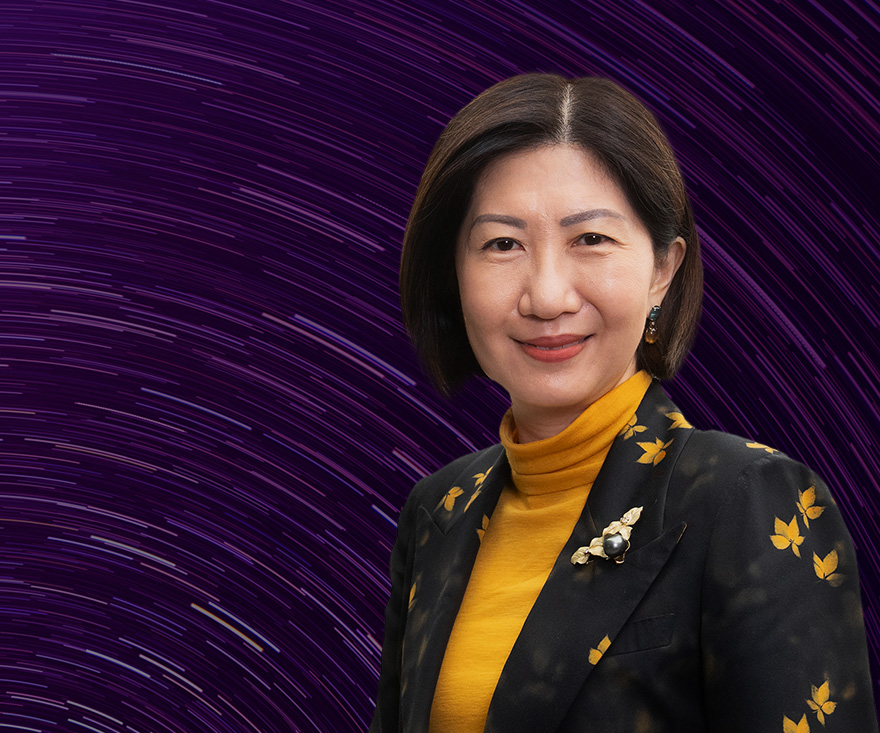
Hiten Patel: Hi. I'm Hiten Patel, Partner at Oliver Wyman, and I'm delighted to welcome Bonnie Chan, the CEO of Hong Kong Stock Exchange [HKEX].
Bonnie Y Chan: Well, thank you for having me.
Hiten: Super. Bonnie, maybe we’ll start with a brief introduction to your role as the CEO of the exchange. And for listeners who are not totally familiar with the exchange, would be great to.
Bonnie: Right. So, well, first of all, it's a real privilege to be the CEO of the Hong Kong Stock Exchange. I started the journey in March 2024, but I've actually been with HKEX much longer. In fact, this is my second stint. So, my journey started the first time in 2007. I was a regulator when I first joined the stock exchange, and I was, in fact, the head of IPO [Initial Public Offering] transactions, meaning that my day job is to vet all the IPO applications going into the stock exchange for companies wanting to get listed in the stock exchange.
And I did it until 2010. I left and went back to private practice as a law firm Partner with Davis Polk for nine years. But then, you know, I decided to return to HKEX in 2020. Came back as the head of listing. And I did that for three years before the board decided that they wanted to give me a new challenge. And so, from head of listing, I became the co-head, or co-chief operating officer, did it for one year. And it was amazing because I knew so little about operations. And I have to learn a lot of things about operating a stock exchange in a short course of one year.
And then, finally in March last year, they decided that they wanted to give me yet another challenge. And so, I became the first internally promoted CEO of HKEX.
Hiten: Awesome. And so, we know there's lots of M&A [Mergers and Acquisitions] bankers who end up becoming CEOs of exchanges, but your law background, your legal background is an interesting bit. How has that equipped you to lead? And how does that differ to some of the traditional profiles that are out there.
Bonnie: Right. All right. Actually I, I did think about it, because it didn't strike people as a natural progression, shall we say. But being a lawyer, I think the training is about finding solutions for the most part. And if you look at a stock exchange, it's a financial market infrastructure. Very, actually, IT [Information Technology] and operations focused. When we, you know, do our day-to-day operations, actually, a lot of issues will come up, which requires problem solving. I think in that regard, the legal training did help, and also, you know, given that I was a capital markets lawyer, meaning that I was very focused on doing transactions and helping corporates raise funds.
That was quite natural. Quite a natural fit, the primary markets pedigree, if you may, that I had, gave me, I think, a good foundation. However, I have to admit, since becoming the CEO, what I found is that there's just so much more to learn about and to explore in the secondary market side, which is fascinating. And I think my learning journey has really just started.
Hiten: Wow, so it sounds like a continuous learning journey as you go from seat to seat. I'm also keen to explore - you've sat on the regulator side; you know on this side. How does the world look different when you're when you switch those boundaries or how consistent a view do you get in terms of the capital markets ecosystem, what's needed, what's required? There's a lot of debate here in Europe right now around regulating for growth and how you would sync with that. Would be great to get your views on both sides.
Bonnie: I think what you just mentioned is spot on. A lot of times people look at regulators as if they are hurdles, right. They are sort of the thing which stands between, you know, you and a transaction or something that you want to do. My take on being a regulator is quite different. I always think that being a regulator can be very enabling and empowering, and that if you really understand, you know, how the market wants to develop and how the stakeholders and the market participants want to achieve it, then it allows you to actually tailor the regulations in a very bespoke fashion. Which not only takes care of, you know, the interest you want to protect, but also helps these participants advance, you know, their interests and develop the market along the way.
So, I think it is actually, to me, very rewarding, being a regulator and I do feel that it helped a lot in my current seat.
Hiten: Super. Probably a lot for us to learn, particularly here in Europe around that as we try and work our way through that. I'm going to shift gears slightly, and I want to talk about Hong Kong's place in the global financial ecosystem.
I'm aware of my own role right now. It's very difficult to hold a global view. It's very, there's lots of skewing going on. If you sit in North America, we sit here in Europe, how things are reported and perceived. Sometimes, you know, different or deviate from the facts.
So given you've come here, I'd love to get your views on where Hong Kong is, how it should be viewed in the global financial ecosystem.
What are we misunderstanding when we kind of, you know, you take the mainstream media and there's always a bit of a take on it. So, I would love to get your view on how you think we should be thinking about the Hong Kong's role in the global financial system?
Bonnie: Well, first of all, I would say that Hong Kong has always played the role of a super connector. And it's now, this role I think is gaining even more traction as China becomes a lot more relevant and powerful in the global scene. Now, you are absolutely right. If I dial the clock back a few years ago, I think, we went through a phase in Hong Kong where we were dealing with a pretty challenging narrative. And it's, as part of China, I think sometimes, you know, this narrative about how Hong Kong and the Chinese mainland are uninvestable, right, has been a dominating theme for some time.
However, I think, interestingly, right as the geopolitical side of things pan out, and I think as China continues to be able to turn out exciting technology and a lot of different innovations, this narrative is now changing pretty quickly. In fact, if you look at the activity that we are seeing in the Hong Kong market and the mainland Chinese market right now, you will see that we are once again able to draw a lot of attention from the rest of the world. So, case in point, a couple of years ago, we didn’t do too well, shall I say, in the IPO space.
And we have been traditionally very, very strong. In fact, Hong Kong has been top of the world IPO league table many times, you know, occupying the number one space. But then we went through this phase where we were, you know, falling behind a little bit. However, this year we are once again number one in the global league table. And, if I look at the IPOs in the last 12 months in particular, what I think is particularly satisfying is to see the return of foreign investors.
In fact, since the beginning of the year, and you obviously are aware that we have done a lot of very exciting IPOs, including the biggest two IPOs in the world this year. So, the biggest one, CATL [Contemporary Amperex Technology Co., Limited], which is an EV [Electronic Vehicle] battery maker. In fact, they were able to draw so many cornerstone investors from the U.S., from Europe, from the Middle East, from everywhere in the world. And that trend continues. I think what we are seeing is maybe amidst this trend of global investors trying to find safe haven, trying to diversify their investments. As they turn their attention back to our part of the world, they begin to realize what they have been missing out in the last few years.
So, Hong Kong, I think, continues to play that super connector role. And now it's manifesting in an even more exciting manner. A lot of people just assume that Hong Kong is good in terms of drawing capital from the rest of the world into China. But what we are also seeing is the reverse, as the middle class gets bigger in China and people accumulate more wealth. We are also seeing Hong Kong play a very significant role in terms of helping mainland-based investors diversify into foreign assets.
And that's why if you take a look at our Southbound Trading, you know that we have the Stock Connect franchise whereby, retail investors in the Chinese mainland, they can invest into Hong Kong listed stocks through this program. And Southbound has now become a very important element, or feature in our trading. In fact, on average it is about 25% of our average daily trading. So, I'm very happy with the fact that we continue to play this role. There's so much more we can do I feel. And so, for me, you know, what I think about a lot is how to really expand that franchise and how do we amplify our impact as the super connector.
Hiten: Feels like there's a real meeting of the moment, given where your position, where things are at geopolitically right now. The other thing I want to tap into is a lot of the narrative that we hear, things that are on this show, is very Western world into other markets. I'd love to know what kind of dialog you're having with investors when you're going to the rest of Asia, when you go to the Middle East. What's the kind of dynamics? Because I think that's kind of underrepresented when we try and understand what's going on in the world.
Bonnie: Okay. Interesting question. Let's start with Asia. So, I think within Asia, we're very conscious that actually sort of in the world, the relative importance of Asia is getting bigger and bigger. In fact, if you think about population, if you think about contribution to global growth, you know, in terms of GDP [Gross Domestic Product] number, etc., Asia is big. It's more than 50% of the world's population. It's close to half of the GDP. However, there is a disproportionate importance which is manifested in the capital markets. So, if you think about Asia's share in terms of, you know, the equities market, fixed income, derivatives, commodities, etc.,
I think there's so much more room Asia can grow. So, I think I missed all these talks about geopolitical tensions and whatnot. There is a collective homework, shall we say, that Asia can do, which is how do we grow that relevance? I always say that, you know, let's not think about competition within Asia first. Let's talk about collaboration so that we grow that importance and that relevance of Asia as a whole. And that means a bigger pie for everyone to partake in.
And I do feel that, especially in the last few years, we all know that, you know, there was this movement of capital, right? I mean, in fact, over Covid, when everyone is stuck at home and, you know, a lot of people started trading, right? This retail phenomenon, this growing retail phenomenon we see in the past few years has always been gravitating towards the U.S. market. However, I think there's room to provide, you know, all the global investors with alternative investment opportunities. And I think that is what I would like to see, Asia as a whole, spend more time thinking about and working together on.
And therefore, you know, if you ask me, what we can do more in Hong Kong and Asia is to really make sure that, you know, we continue to develop the market, continue to collaborate so that we as a whole can present the world with these opportunities and therefore, hopefully we can find a new equilibrium. Right? In terms of how the world allocate capital.
Hiten: I mean, let me link to that, and link to your IPO point, like I'm fascinated by the innovation that's going on there. Right? You've got EVs, carmakers, you've got the DeepSeek moment. But again, I'm not sure it's always so fully understood from far away. I'd love to get your take on where we are at on the innovation cycle, coming out of the region. And what is there to look forward going forward?
Bonnie: So, why don’t I talk about our pipeline? Okay. So, at the moment there are about over 300 companies, which have already filed an application to get listed in Hong Kong, waiting in the queue. About half of them belong to what we call innovative companies. In particular, we have two chapters in our listing rules. Chapter 18A, which is a bespoke chapter catering for the needs of biotechnology companies, many of them pre-revenue. So, in relatively early stages of R&D [Research and Development]. And 18C, which cater for specialist technology companies, including what you've just mentioned: AI [Artificial Intelligence], new energy, you know, green tech, agricultural tech, exciting things, which in fact, I think are things which a lot of global investors are really most interested, in terms of their investment strategy.
So, half of the pipeline is in fact, you know, these very exciting technologies. Now, in my seat, of course, I have the privilege of meeting with a lot of these entrepreneurs. And I have to say, the technology is mind boggling. You know, be it EV, be it, you know, new ways of storing energy, be it, you know, all these developments in the biotechnology space. And one thing that I think, which also strikes me as being quite fascinating, is the fact that even though, right, they are what we call Chinese companies. Increasingly, they're very international. I think, you know, the perception has always been that multinational companies are Western companies.
But in fact, if I look at the companies which are listed on our exchange, since the beginning of the year, even though, like, on the surface, you call them Chinese companies, quite a lot of them have more than half of their revenue from international sources. So, I guess we need to continue to calibrate, right? These very well entrenched concepts.
Hiten: The hangovers.
Bonnie: Yeah. The hangovers. Right. What are international companies. What are MNCs [Multinational Corporation]. And I think that is really, really interesting phenomena.
Hiten: So, one thing I want to get into. The world is always obsessed with innovation, always kind of gets overly focused on Silicon Valley, West Coast, North America. It has kind of an obsessive narrative around that. What's the world not fully understanding about the innovation that's happening in Asia?
Bonnie: Oh, okay.
Hiten: And what could listeners do to better pay attention to, right? For those who are not on the ground or close to it?
Bonnie: Okay. The scale, the scale is mind boggling. Let's take AI as an example. I think, you know, obviously, if you look at AI innovations, a lot of people will agree and, in fact, I agree that the U.S. is leading in many, many respect. However, when it comes to how to embed that AI, how to apply it in, you know, industrial innovations, in day-to-day manufacturing and really just running businesses, and streamlining processes. You know, you look at China, there is just so much room for applying these exciting technologies. And we are seeing it in a lot of different manifestation.
And I think the scale of that economy, and just, you know, how prevalent, and how strong the manufacturing power is. It's really something that I would suggest if investors have not yet turned their attention to, they really should. And in a way, I think, you know, you mentioned the DeepSeek moment, which, you know, came at the beginning of this year. I think that was certainly a very good catalyst to draw attention back to the Chinese companies. But I would say, you know, there has been a wrong assumption, you know, again, got back to the narrative we spoke about. I think, you know about this phrase called “lying flat”?
Hiten: No.
Bonnie: “Lying flat”. Okay. So, there was this assumption that Chinese entrepreneurs for the last few years were “lying flat”. They were not doing anything, right. But it wasn't true, it wasn't true. In fact, I think DeepSeek, the DeepSeek moment, it's sort of a wake up call for a lot of people. And now they realize that, you know, the Chinese entrepreneurs have not been “lying flat”. And what I think is very pleasing, aside from obviously, you know, the return of foreign capital, is that the return of the interest also meant that a lot of investors are now willing to put more resources into researching these companies. And that is important.
I think the last few years, because of this assumption, that is, you know, things are uninvestable. Therefore, people were not paying attention. Therefore, people were not even researching all these names. But now I think the interest is back. The conversation that I've been having with investors, you know, in the U.S., and in Europe, and the rest of the world, the Middle East. It’s now a lot more interesting because, you know,
I feel that they have a better foundation, really, to understand and to appreciate the speed of this innovation, which is coming out from our part of the world.
Hiten: I think it's exciting, right? Just as a globalist and believer in capital markets, you can't have one region that just has a monopoly on innovation, right? It kind of defeats the whole purpose. So, it's great to have the competition for capital. We got competition for innovation. So, I think we're in a more exciting place, but just sometimes too negative a lens tainted on it. So no, it'll be exciting to see where things go.
One last question on this section for me. The rest of the world is in this kind of funk over public markets versus private markets. And where does innovation occur and can value creation, you know, is it kind of being captured only in the private market system? Talk to me a little bit, kind of like in Hong Kong, in Asia, the markets where are you on that journey? What's different, what's similar about how you rest in that conundrum?
Bonnie: Well, I already mentioned I have a very fulsome pipeline, 300 companies waiting to get listed. People always say that, you know, I'm the old-fashioned stock exchange, and I stick to my knitting. Meaning that, you know, I still believe in the good old-fashioned IPO. I guess, you know, stock exchanges around the world, they develop at a different pace. But I'm quite happy that we are still sort of serving the basic function of being a stock market or capital markets, which is really just matching capital with opportunities. That is the basic purpose.
Now, obviously in other markets, there are various reasons why, you know, private markets or private credit have developed the way it did. There's no right or wrong. That’s just, you know, what the players in those markets preferred. But I would say that I quite like the fact that, you know, we still are able to continue with this traditional offering. And it's important because, you know, as I mentioned earlier, right? You have Asia, which is a very big population. People in general, they want to generate wealth, they want to accumulate wealth. Right?
And being able to offer them with the opportunity, through participating in IPO's and subscribing for shares and companies that they feel excited about. It's a good thing. So, I feel that, you know, we will continue, obviously, to stay very focused in that space. That's not to suggest that therefore we are not, you know, expanding into other areas and thinking of other ways to match capital with opportunities. There is a lot of room to develop our market.
Hiten: One last one actually from me, because at the moment I can't get out of the front door without someone talking about stablecoins in particular.
Bonnie: Okay.
Hiten: And digital assets. It's, you know, it's had its period, and I've historically been a little bit slow to fully buy-in personally, but I guess at the moment stablecoins has got a big momentum. A lot of interest. Perspectives from Hong Kong, China on how that might get developed and your views on that?
Bonnie: So, first of all, in Hong Kong, we've already legislated the HKMA [Hong Kong Monetary Authority], it’s going to be the primary regulator of the issuance of stablecoins. The way I look at it, I guess at the very beginning you will see that adopted as a form of payment, right? The way I tend to look at it, a little different from other currencies, for example. To be a currency it, you know, it has to serve three functions, really. It's a unit of accounting. It's a medium of exchange and a storage of wealth. I think in the case of stablecoins at the present stage, the key difference between that and, you know, any currency, the U.S. dollar, the RMB [currency system in China], etc., is the fact that is still not a storage of wealth.
And you know that in the legislation of that and the regulatory framework in a lot of jurisdictions would not, for example, allow the payment of interest on stablecoins. And therefore, I think, the way we look at it at HKEX, we are very interested in sort of keeping abreast of the development. Moreso to understand how we may consider adopting that as a potential form of payment or, you know, to settle stock transactions, or securities transactions on our exchange. And in fact, because, you know, there will be some difference in terms of the limitations that we are seeing with sort of using the banking system, for example, to settle trades, which obviously you'll need to abide by the banking hours.
Stablecoins may actually give you that little advantage, right. So that you may be able to settle trades more conveniently, using that as a form of payment. So, for me, for now, it will be really looking at that direction. One thing I do really want to see happening is, it's just sort of an alignment of understanding, right? Because, you know, oftentimes I'm in conversation and people assume that stablecoins, they draw an equal sign with digital assets. Which in fact is not the case. Right. Like I said, if it is a form of asset then yes, we look at it as, you know, potential storage of wealth. But stablecoins to me is really a medium of exchange for now.
Hiten: Watch this space. I'm going to shift gears slightly in this final bit. Listeners love to hear some of the reflections, learnings from, you know, pioneers in the industry. So, I want to start with, talk to me about one of your most interesting challenges or biggest lessons learned through your career journey.
Bonnie: Oh, wow. My career journey, first of all, has been a rather convoluted one. I think since I graduated from law school back in 1993. Oh, I'm giving away my age. I have actually changed profession a few times, so I started off as a lawyer, became a banker for a while, a regulator. Then I returned to practice.
But I think one thing I learned, having sort of gone through that convoluted path is that there's always something to learn, right? The curiosity that I have basically caused me to really want to find out something, right, I need to crack it. I had that urge to really figure things out. Now, I have even in all these roles, basically, sort of stay within the confines of capital markets.
Which actually, upon reflection, I think is extremely helpful because I'm now therefore able to see more clearly, sort of what's driving behavior of all these different stakeholders in the ecosystem. And that probably helped me whenever I had to come up with a solution, thinking about how to strike a balance or get to a lender, right. You know, mediating between different conflicting interests. I can see what's driving behavior more clearly.
Other lessons learned is really, well, let's go back to my current role. I still remember when I, when the announcement of my appointment went out, it was December 2023, and we were in a very different spot.
I mean, at the time we were probably trading around less than 100 billion Hong Kong dollars a day. IPO activity was somewhat anemic. So, when I step into the role, I sort of talk to myself, and I said, okay, I'm the turnaround CEO. I need to find ways to sort of bring back more energy into the market.
And the focus is let's figure out how to bring back that energy into our core business first. Our equity business has always been our strongest suit. And, you know, with a bit of luck, I would say that, you know, now that we are, I'm in my 20th month now, as CEO. We're in a very different spot. We are trading much more healthily. We trade around 30-35 billion U.S. dollars a day.
Hiten: It’s amazing.
Bonnie: Yeah, you know, from an ADT [Average Daily Turnover] of 100 to now an ADT of over 250. It's been quite an amazing journey. And the IPO activity has come back in full throttle. So, I guess to me it's really that resilience we need to have, Hong Kong over the years have faced many, many challenges. You know, in my 30 plus years career journey, I've seen a lot of different cycles and, you know, crises. But there's something about, you know, being resilient and really staying on course. HKEX is a very purpose-driven company. We never steer away from that purpose. And I guess, yeah, that's a big learning for me. Just because we are the FMI [Financial Market Infrastructure] and so many investors, corporates really rely on us to get their business done. So, yeah, we need to really, you know, hold things down.
Hiten: That’s great to hear you go through that inflection point. But we spent a lot of time talking about flywheels and capital markets. Like, once you get the momentum, the momentum builds the momentum, the narrative, the investor interest, and you've kind of, once you've kicked gears through that, that's probably the bigger challenge to overcome is kind of working through that dip.
Bonnie: Absolutely.
Hiten: Just a little bit kind of outside of work. We like to ask leaders what do they do outside their day-to-day job that helps them be a successful leader in their day-to-day job?
Bonnie: Okay. So, in my case, the role does require a lot of energy. And so, I'm very conscious to make sure that I build a routine, which can help me sort of stay energetic. And, therefore, I think now a lot of people know about, you know, the fact that I'm a 5 a.m. club member. In fact, you know, I wake up every day at 4:30 a.m. That's my wake-up time. And the first thing I do, you know, after a small breakfast is to hit the gym. And, you know, I've been doing it for some time now. Weightlifting is what I do in the gym. And it's something I've grown to like a lot.
Weightlifting is a very interesting exercise in that you're challenging yourself. And you have to deal with a lot of setbacks, right? It's not like, you know, the more you do them, you know, you’ll always be able to build up that strength to lift more. You go through cycles. Very similar to what we have to deal with in our day-to-day job. And it's about conversing with yourself. It's about sort of challenging yourself, dealing with the setback and then staying the course. So, I mean, that's something magical about that particular exercise I like.
And then after, you know, hitting the gym, I go back to the office. Usually when I get to the office it is still around only 7 a.m. That's my “me time”. You know, I will have an hour, or two to reflect and plan for the day, the next few days, before the action begins. It's usually quite an activity packed calendar. On average, I'll have, you know, 10 to 15 items in my everyday schedule.
But, you know, it's a lot to learn and a lot to see, so I never feel, you know, too challenged.
Then in the evening, I still try to make a point to go home and prepare a small dinner for me and my husband. That's my, well, that's sort of to wind down and a little bit of me time. And then I do my second stint of exercise for the day, which is my cardio. I'm on my exercise bike for an hour before going to bed.
Hiten: Are you a peloton user?
Bonnie: It's just a good old-fashioned stationary bike. But it's good, you know? I mean, I chose among a few different exercises, but I ended up on the stationary bike because my hands are free, right. So, I can multitask on the bike, I can watch TV, I can sort of read.
Hiten: And I've got to ask Bonnie, as a fellow morning gym club member, your favorite weightlifting routines or certain exercises that make you more excited when you see them on the schedule in the morning?
Bonnie: Deadlift. Deadlift is the best.
Hiten: Love it.
Bonnie: But I should say, I should mention this. Actually, the exercise is not only something I pursue individually. We now have a big exercise culture at HKEX. We started a network called HKEX FIT, which is a collection of different sports teams. So, we have dragon boat, we have table tennis, we have basketball, we have badminton, soccer. And actually the list keeps building. And that's sort of, something that the company likes to pursue together. And I find that, you know, amidst all my very busy schedules, that's the occasion, you know, interacting with the team, practicing with them. It's the quality time I really enjoy spending with my team.
Hiten: You speak to my heart. I'm a big believer in sporting and activity routine.
Bonnie: And what do you play?
Hiten: So I play a lot of middle-aged old men, now Tuesday nights I play football as a team sport. I try and manage my travel schedule. So, I'm kind of here in London on Tuesdays. So I’m actually flying to the US in the morning, half of the day to slip it in.
Bonnie: Alright, next time you are in Hong Kong I bring you to dragon boat.
Hiten: I will take you up on that. I may disappoint you, but I'll try my best. Last question. We like guests to come on the show, to share and throw the spotlight. So, to encourage our listeners to look up an individual or a company that's kind of impressed you, that you think should be getting more attention. So I don't know if there's a term that comes to mind that you want our listeners to go away and look a little bit more into?
Bonnie: Okay, I have to be very careful with this question because, you know, I need to play neutral.
Hiten: Across your huge IPO pipeline
Bonnie: I have a huge pipeline, 300 companies. And I love them all. You know, I do have a few, you know, I like more, so I wouldn't call out any particular company. But if I were to throw a spotlight, I would throw a spotlight on Hong Kong as a city. I really think, you know, for those of you who have not been visiting Hong Kong for the last few years, go back, and check it out. I think seeing is believing. That narrative about how Hong Kong is the relic of an international financial center and totally uninvestable. I think that's way behind us. So Hong Kong is my answer.
Hiten: Love it. Bonnie, I know you got a crazy busy schedule, and you're on the road, and you've come to visit here in London. So, thank you for fitting us in. Thank you for making the time.
Bonnie: Thank you.
Hiten: And being so generous with your thoughts and the conversation.
Bonnie: Great. Wonderful. Thank you.
Hiten: Thank you.
This transcript was edited for clarity.