


Europe's defense readiness increasingly depends on secure communications, resilient digital infrastructure, and trusted data systems. Telecom operators can help strengthen these foundations — provided they adapt their capabilities to the stringent operational and security demands of defense organizations.
The timing seems right for the sector. European defense spending is expected to rise from approximately €409 billion today to more than €800 billion by 2030. This commitment reflects the need to strengthen secure communications, cloud infrastructure, and cybersecurity. As military operations become more connected and data-intensive, telecom operators have an opportunity to extend their expertise beyond traditional connectivity services.
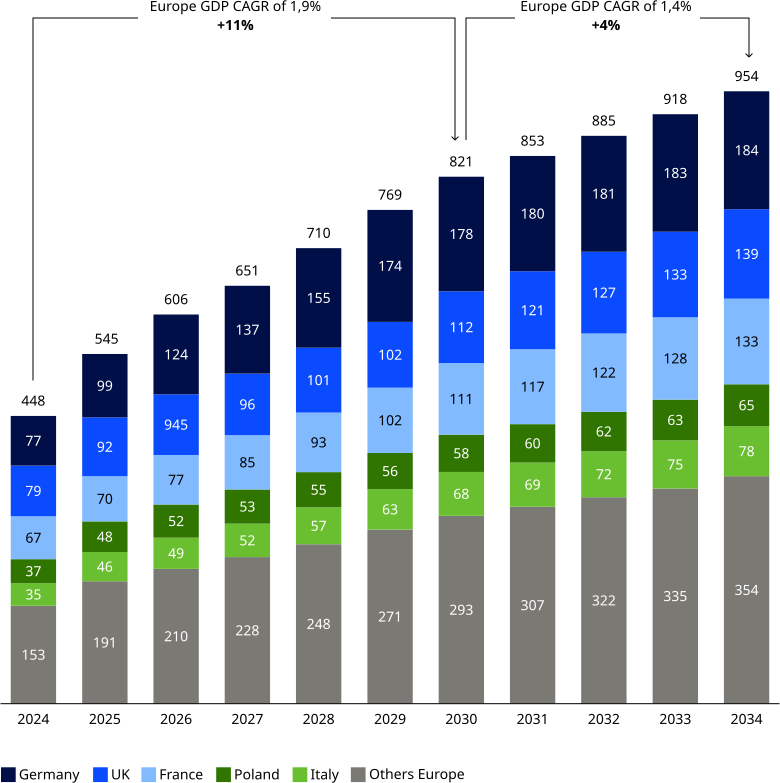
Telecom operators are well placed to meet this growing demand. They already manage critical national networks, operate data centers, and maintain secure, complex infrastructure. Yet defense is a difficult market to enter. Procurement cycles can stretch over years, security requirements are exacting, and established defence contractors control many of the relationships and programs.
For operators, the priority should be to identify where their capabilities can make a credible, lasting contribution to defense resilience rather than simply securing defense customers. Their contribution is likely to be greatest when proven civilian technologies are adapted to defense conditions rather than presented as ready-made substitutes for specialist military systems.
Why resilient telecom networks are mission-critical for European defense modernization
Modern military operations depend increasingly on the ability to connect people, platforms, and information across land, sea, air, space, and cyber environments. Unmanned systems, connected soldiers, and real-time intelligence require networks that can transmit data reliably, even during a cyberattack, electromagnetic interference, or disruption.
Commercial technologies such as 5G, satellite communications, and mesh networking can help meet these demands. Telecom operators bring experience in deploying and managing such networks at scale, alongside capabilities in systems integration, cloud infrastructure, and cybersecurity.
Technological sovereignty needs operational control and secure infrastructure
Europe's push for greater technological sovereignty also strengthens the case for the telecom sector. Defense organizations need control over sensitive data and critical systems, including the ability to operate independently of non-European technology providers. Operators with established national infrastructure and trusted government relationships have a potential advantage.
This requirement extends beyond the location of a data center or the nationality of a supplier. Defense organizations must consider what entity controls software, manages access, maintains systems, and sustains services if supply chains or external dependencies are disrupted. Sovereignty and resilience are closely linked: Greater control is valuable only when it also supports continuity of operations.
The move toward multi-domain operations adds another layer of complexity. Information from distributed sensors, platforms, and personnel needs to move securely between operational environments, often at the tactical edge and under difficult conditions. The command, control, communications, computers, intelligence, surveillance, and reconnaissance value chain depends on more than individual devices or applications. Reliable networks, data processing, and cyber protection must work together.
Four capability areas illustrate the scale of the contribution that telecom operators could make, representing an estimated €14 billion to €24 billion addressable market by 2030. This includes secure defense connectivity (€6 billion to €9 billion), cybersecurity services (€3 billion to €5 billion), cloud and edge computing (€2 billion to €4 billion), and on-premises data infrastructure, including AI (€3 billion to €6 billion).
The estimated market size signals the scale of demand for these capabilities, rather than a forecast of telecom operator revenue. For operators, the investment case should be grounded in clearly defined defense requirements, credible delivery capabilities, and long-term responsibility.
Three ways telecom operators can support European defense resilience
Three areas stand out in which existing telecom expertise could address critical defense requirements:
1. Secure defense connectivity and military 5G networks
Armed forces need resilient, high-capacity networks linking military bases, deployed personnel, sensors, and autonomous systems. Operators can combine private 5G, satellite links, and mesh technologies to provide secure communications, including deployable tactical networks that maintain connectivity in contested environments. Their experience managing complex networks gives them a foundation, although military deployment and security requirements demand additional specialist capabilities.
One practical application is a deployable tactical connectivity environment, sometimes described as a connectivity bubble. Combining private 5G, satellite links, and mesh networks could support personnel, sensors, and unmanned systems where conventional infrastructure is unavailable or degraded. Network slicing may also help accommodate different service requirements, although deployment would still need military-grade engineering, interoperability, and assurance.
The same capabilities could support drone and counter-drone use cases, including communications and sensing for improved situational awareness. Operators should be clear about the boundaries of their role: Providing dependable connectivity and network capabilities is different from developing or controlling military platforms.
2. Sovereign cloud and AI infrastructure for defense
Defense organizations are modernising legacy systems while seeking greater control over where sensitive data is stored and processed. Telecom operators can provide secure hosting, on-premises infrastructure, managed cloud services, and AI capabilities. Their data-center assets and systems integration expertise are particularly valuable where customers require sovereign solutions and strict operational control.
Defense customers may need a mix of sovereign cloud, on-premises systems, and edge processing rather than a single centralized architecture. Sensitive workloads can require local control over hosting, access, and maintenance, while edge infrastructure can bring processing closer to deployed operations. France’s SecNumCloud framework illustrates the kind of demanding security and sovereignty expectations that providers may need to address, although individual defense programs can impose additional requirements.
Operators can contribute by integrating data-center capacity, secure connectivity, managed hosting, and operational support. AI-related infrastructure and secure data governance may become increasingly relevant, but they must be designed around the customer’s security, assurance, and control requirements rather than around technology adoption for its own sake.
3. Cybersecurity services for the European defense sector
Operators already monitor critical networks, manage security operations centers, and respond to sophisticated threats. These capabilities can support managed detection, incident response, and cyber resilience services for defense organizations and their suppliers. Smaller companies in the defense industrial base may be particularly attractive customers, given the specialist resources required to meet demanding security standards.
A resilient defense ecosystem also depends on the security of its suppliers. Smaller organizations may struggle to maintain specialist monitoring and incident-response capacity in-house, making managed security operations and threat intelligence potentially valuable. Operators can extend capabilities developed to protect their own critical networks, while working with specialist partners where application security, zero-trust architecture, or other advanced needs exceed their direct expertise.
Across these opportunities, the strongest proposition is likely to combine capabilities rather than sell individual services. A defense customer may need secure connectivity, sovereign hosting, and continuous cybersecurity protection as part of the same operational environment. Telecom operators able to integrate these services could occupy a valuable position alongside established defense suppliers.
Finally, building partnerships is also central to success, particularly as recent defense contracts (such as Hyperion) reflect a growing shift towards open architectures and a more flexible, mix-and-match approach to integrating capabilities from multiple providers. Working with defense primes, systems integrators, and sovereign technology providers can give operators access to complex programs by extending operator capabilities. Targeted acquisitions in cybersecurity, satellite communications, edge computing, or defense technology may accelerate entry into the sector by filling in gaps in expertise.
Telecom operators must define their role in the defense value chain
The strategic challenge is deciding how much of the value chain to own. Some operators may be able to build integrated defense offerings and engage customers directly. Others may find greater success supplying connectivity, infrastructure, or managed services through established defense contractors. That choice should shape the investment, partnerships, and capabilities operators choose to develop.
Credibility will also depend on operating models. Defense programs often involve long lead times, security clearances, specialist accreditation, and collaboration across temporary consortia. Teams measured only against short-term enterprise sales targets may struggle to sustain the necessary engagement. A dedicated defense capability — supported by targeted research and development and appropriate long-term performance measures — can help bridge that gap.
Rather than attempting to replicate established defense contractors, telecom operators can focus on the layers where they have proven strengths: resilient networks, secure data infrastructure, and managed cyber services. Partnership models should reflect the customer’s operational needs and the operator’s ability to deliver reliably over the full life of a program.
How to make a long-term contribution to Europe's security
Europe's security and technological sovereignty will depend in part on trusted, resilient digital infrastructure. Telecom operators can play a meaningful role by adapting networks, cloud services, and cybersecurity expertise to defense needs.
Their existing infrastructure and technical capabilities provide a starting advantage, but they do not guarantee success. Defense customers require specialist expertise, trusted partnerships, sovereign solutions, and a willingness to invest over long-term horizons.
The operators that make the greatest contribution will be those that focus on genuine capability gaps, meet demanding security requirements, and establish trusted, long-term relationships across the defense ecosystem.
The goal for telecom operators should be to help Europe build dependable defense capabilities as well as develop a sustainable commercial role in the sector.