


Private markets are entering a new phase of consolidation. As scale, multi-asset capabilities, and underwriting sophistication become increasingly decisive, competitive advantage is concentrating among a smaller group of large, integrated platforms. And mergers and acquisitions (M&A) work is emerging as one of the fastest paths to the creation of these broader and more resilient private market franchises.
Scale is shifting from an advantage to a prerequisite as fundraising concentrates and competition intensifies, leading eventually to consolidation. Larger managers also benefit from broader sourcing networks, stronger institutional capabilities, and greater talent retention. M&A is increasingly being used to close capability gaps and strengthen competitive positioning.
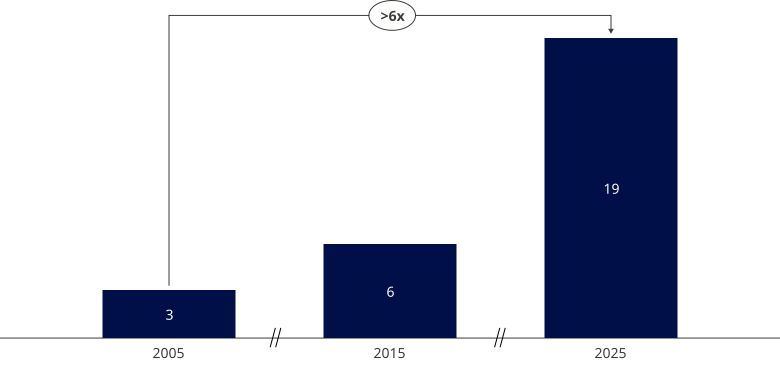
Private market assets under management are expected to grow at about 12% per annum over the next five years, compared with about 8% for liquid asset classes. Yet despite rapid growth, the market remains highly fragmented, with many firms still operating as single-strategy general partners (GPs).
Private market consolidation is reshaping the competitive landscape
This fragmentation and intensifying competition are helping fuel consolidation. Larger firms are increasingly using M&A to create integrated platforms that can compete across fundraising, origination, and portfolio management.
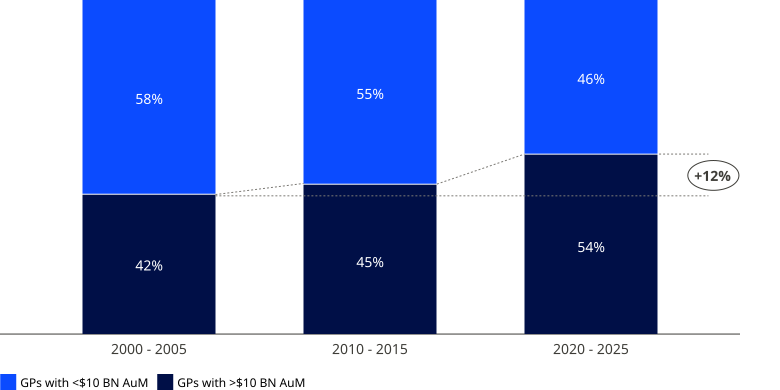
Fundraising trends reinforce this shift. Managers with more than $10 billion in assets under management have steadily increased their share of global fundraising over the past two decades.
As institutional investors place greater importance on operational sophistication, larger, consolidated firms are better positioned to invest in risk management, compliance, reporting, portfolio operations, and data capabilities that increasingly influence limited partner (LP) decision- making. For firms seeking to strengthen their competitive position, expanding through acquisition is often the fastest path to building capabilities.
Integrated multi-strategy platforms are becoming the industry model
As private market firms grow, the ability to offer a wider range of products and investment structures is becoming increasingly important.
Many of the largest managers have expanded beyond their flagship funds — GPs' primary recurring fund series, which represent the core investment strategy and track record — into broader platforms spanning private equity, private debt, structured equity, and hybrid solutions, among others. These platforms allow managers to serve borrowers and sponsors across different parts of the capital structure while adapting to changing market conditions.
Broader product suites, such as private equity, private debt, and structured equity, also create advantages with investors by making the firm more attractive. Limited partners increasingly value managers that can provide multiple strategies through a single operating and reporting framework. This allows firms to deepen relationships, increase wallet share, and deliver more tailored investment solutions.
With this shift, M&A deals are increasingly focused not only on increasing size (assets under management) but also on expanding strategic scope (investment capabilities). This is why scope is becoming as important as scale in private market M&A.
Superior underwriting drives performance in a more challenging market
Scale and diversification alone are not enough to create durable value. As liquidity conditions tighten and refinancing pressures increase, underwriting discipline is returning to the center of investor and lender diligence.
Performance increasingly depends on the ability to evaluate downside risks, preserve cash-flow resilience and manage more complex or stressed investments. Firms with strong underwriting and portfolio management capabilities are expected to have a significant advantage as market conditions evolve.
Structured and hybrid equity solutions that bridge traditional private equity and private debt strategies are becoming increasingly important as investors seek more flexible capital options.
Leading firms are using M&A to accelerate growth and efficiency
As consolidation accelerates, firms are increasingly focused on how transactions can create long-term value.
Revenue growth remains one of the most immediate drivers. Acquirers often seek to accelerate fundraising, scale existing strategies, launch adjacent products, and enter new client segments through expanded distribution capabilities to drive more revenue.
Transactions can also create operating leverage. Consolidating infrastructure, technology, vendor relationships, and support functions may improve efficiency and expand margins across larger asset bases.
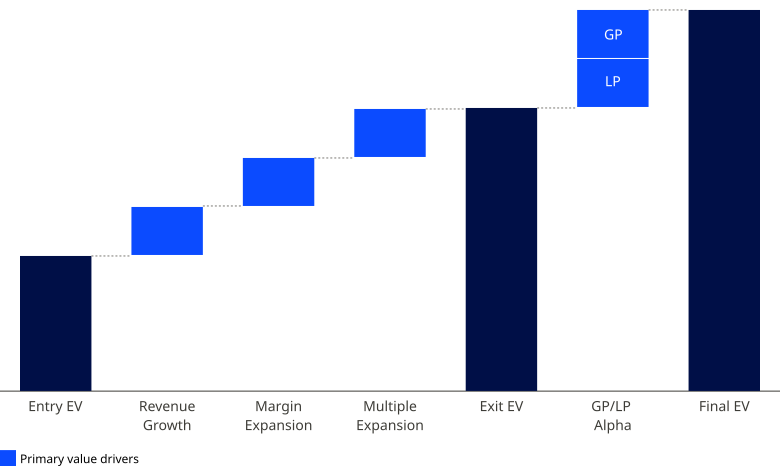
Beyond financial synergies, firms are also pursuing strategic benefits that may strengthen long-term platform valuations. Greater diversification, earnings resilience, and broader distribution capabilities can improve how investors assess the sustainability of future growth.
GP-alpha and LP-alpha are important value drivers in private market transactions. GP-stakes investors often target carried interest and performance fees, while asset owners may pursue acquisitions to gain better access to investment opportunities and improve alignment with portfolio objectives.
Ultimately, the success of M&A in private markets depends on whether firms can expand capabilities and scale platforms while protecting the investment engine that underpins long-term fundraising and performance.
