Hiten Patel:
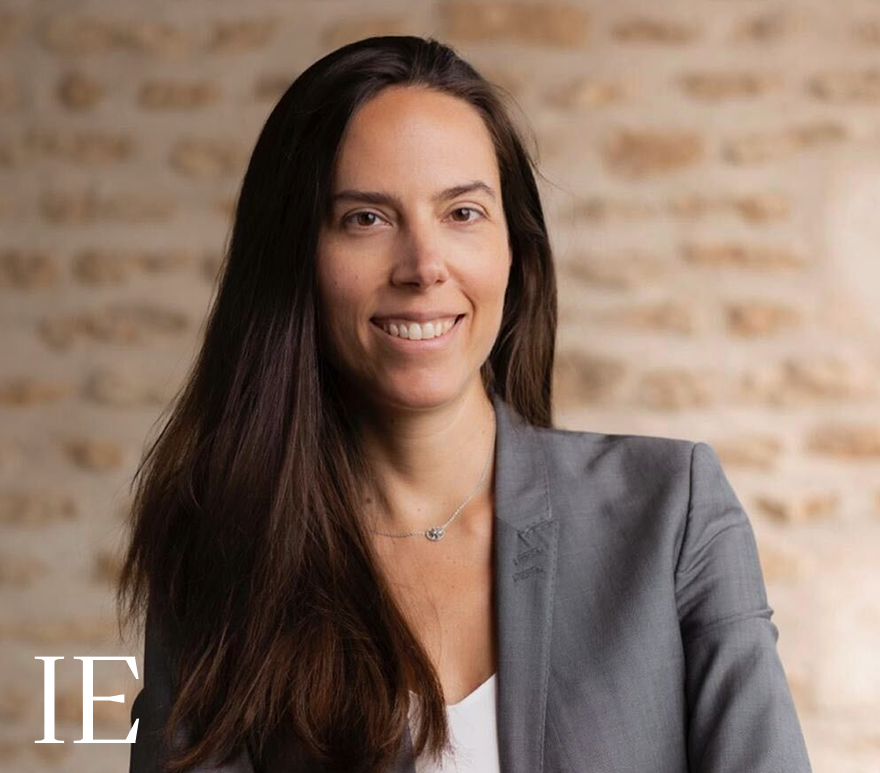
Welcome to the Innovators’ Exchange podcast. Today, I'm delighted to welcome Ambre Soubiran to the show. Ambre is the CEO of Kaiko, a leading data, analytics, and indexes provider in the crypto space. Welcome to the show.
Ambre Soubiran:
Thank you very much. Thanks for having me.
Hiten:
Kick us off by introducing yourself and Kaiko.
Ambre:
So I am the CEO of Kaiko, and Kaiko is a data company in the digital asset and blockchain space. Now, data company means a lot of things. We do crypto asset market data analytics and regulated indices, and we also offer data infrastructure solutions. This was initially geared for crypto being the only digital asset living on the blockchain, but in the last few years, we've started to see the emergence of the use of blockchain for non-crypto assets, and all of our data solutions are now expanding from crypto assets to all digital assets and tokenized assets.
Hiten:
Awesome. And there's lots for us to get into there, given everything that's going on in the space. I'm just going to refrain from that part of the conversation and just take a step back for a moment. One of my favorite questions is always, you weren't born a CEO. You've often been on your own personal journey to get to the seat you've got to. Talk to me a little bit about growing up, education, some of the earlier roles that you've had before you took on the seat.
Ambre:
So I grew up in France in the mix of six siblings, and I studied applied mathematics, like a lot of French students.
Hiten:
Like me too.
Ambre:
And like you too. And like a good French person, after studying applied mathematics, I went to work in equity derivatives. And so I started at HSBC, and I was part of a team called Strategic Equity Financing. And that is actually quite relevant to what we're doing with Kaiko today. I'll explain why.
Strategic Equity Financing is a team that was working on syndicated collateralized lending solutions with equity derivatives on top of that. So it was multi-party deals involving collateral and involving secondary life cycles with stuff like collateral monitoring, loan-to-value verification, coupon payments, and all the kind of equity derivative secondary lifecycle events. That was 20 years ago, but still quite manual. And I remember spending a lot of time and energy reconciling all the different parties involved, working with middle office, back office, et cetera.
So when I got into Bitcoin initially, completely accidentally, back in 2012, I was reading a math blog, and I read the white paper. So it was very just out of sheer curiosity. I still remember going to my first meetup here in London. It was in a garage on Brick Lane, and I got there, it was like Christmas 2012. It was full of people that flew from Canada that were like crypto anarchists and talking about overthrowing the banks. And I was here in my pantsuit with my HSBC necktie.
Hiten:
Fit right in.
Ambre:
Fit right in. But I got really interested about what does it mean to create digital scarcity? What does it mean to have a digitally native asset that you can send and not have it anymore? Which was, for me, very interesting because if you have a Word document or a photo or whatever, you can send it, but then you still have it.
It was the whole kind of how do you solve for double spend if you're going to have a digitally native currency? I thought that was really interesting, the idea that you would have a blockchain that would represent the state of the world at every time and representing the balances and accounts of everybody.
So I thought blockchain was super interesting, that Bitcoin was super interesting, but I didn't see that overthrowing banks and central banks anytime soon. And it's only two years later or three years later, when Ethereum was launched, that I thought smart contracts were an incredibly powerful technology to improve the way we did what I was doing, which was multi-party financial transactions that were quite binary because, if you think about it, an equity derivative is a relatively mathematical contract.
It's just if the price of the security does this, then you do that. The product does that. So I was like, actually, if you could bring the equity derivative logic on a blockchain that would be the underlying source of truth, and you layer on top of that source of truth programmatic contract execution, all you need for that to actually execute smoothly is good data. Because what you need is the data of the underlying asset, whether it's to price collateral or to mark a derivative.
So that's how I got really passionate about not just blockchain, but data infrastructure in the context of blockchain enabling financial services.
Hiten:
And when you rewind the clock that far back, I remember there were lots of debates as to, will this work? How useful will it be? I remember actually sitting with someone I studied applied maths with in the US who was a Frenchman who was waxing lyrical about this back then. I must admit, at the time, I couldn't quite comprehend or see the need or the utility. How wrong I've been proven two decades later.
But for you, how instantaneously or how obvious was it that this market structure evolution was going to take place, that this was going to be something that was going to be here to stay and have a meaningful contribution? Was it a bet? Was it a punt? Was it kind of clear for someone with your mindset to see that this is going to play through and stick?
Ambre:
I think there were a couple of cycles. When I left HSBC for Kaiko, I really thought this is going to happen. My whole pre-seed deck, like my slides from back then, are all about tokenized markets and market infrastructure, and we're going to need private oracles to enable capital markets on-chain. And there were a couple of companies back then that were building on that narrative.
This was quite early on, 2015, 2016. I think pretty fast I realized there was no market for this. However, what there was a market for was data for crypto as a tradable asset class. So pretty fast, what I realized is the long-term vision has never changed. Our vision from back then is trusted data from all markets on all networks. It's really about kind of bringing trusted data wherever this data needs to be consumed on-chain. So the vision has never really wavered. My understanding that this would take more time did.
And so what we've really done is readapt our product to the market. And we've grown our product range over time to really match the maturity of the industry. So if we go back 10 years ago, it was 10 years ago now, we were just basically connecting to all the centralized exchanges that were enabling the trading of cryptocurrencies. This was pre-DeFi [decentralized finance], pre-everything.
And we were collecting every order book, bids and asks, every executed transaction across all exchanges. We were really a market data aggregator, but what we were doing is providing access in a single consolidated place for all market data. It was still very kind of pro traders, home traders. It was not very sophisticated.
When the market did get a little bit more sophisticated and we saw crypto derivatives launch, we launched analytics. Analytics was all of the risk metrics, liquidity metrics, volatility metrics, all the derivatives data, everything that is still market data, but tailored to a slightly more sophisticated audience.
Then DeFi launched, it was DeFi Summer. And so we started running our own blockchain nodes to get the data directly from the blockchain in real time. And so that gave us also a lot of experience in running blockchain nodes and extracting data, indexing data, and then turning blockchain data into market data.
So from a client standpoint, whether you consume Coinbase data on Kaiko or Uniswap data on Kaiko, you don't know that one is a centralized exchange, one is a DEX [decentralized exchange]. So that's when we onboarded all of the on-chain market data activity, which included lending and borrowing protocols and all of the kind of nascent DeFi financial market data. So that we added this as well.
And then something really interesting happened, is that we acquired a company that was regulated to be a benchmark administrator, and we launched our index business. Index business is a regulated activity.
It's called Kaiko Indices, and we administer crypto benchmark rates 24/7 to enable the trading of derivatives and also ETPs [exchange-traded products] and ETFs [exchange-traded funds]. And so that was really when derivatives launched, you needed a benchmark when regulated derivatives started, and then ETPs and ETFs, 2024, I believe, ETFs in the US.
And then finally, data infrastructure is really going back to the original vision from more than 10 years ago, which is now there is going to be kind of DeFi logic applied to TradFi [traditional finance] assets. We're seeing this now at scale, whether it's perpetual swaps, whether it's repo, whether it's actual financial contracts that consume tokenized versions of assets.
Those require data infrastructure that bridges traditional financial data where it lives to the blockchain. And so that is what we're doing with data infrastructure.
Hiten:
Quite the journey. So you've followed the market structure evolution through that decade. I guess just going back to the start of it, you're sitting pretty comfortably on the trading floor at HSBC. You probably had a reasonably settled life, and things were going well.
And it must be noted, you're not the first guest who's gone from the HSBC trading floor to found a very successful company. François Cazor, who founded Kpler, who also describes his journey starting on the HSBC trading floor.
But how easy a decision was it to go and start this venture back then? You were reasonably early-ish, right, at that point. Talk me through the pros and cons, the thinking, where you were at that point in life, and how easy a call it was to make back then.
Ambre:
It's tough to leave a comfortable position in a bank. I have to admit, I only have great things to say about HSBC. And I really think that the team I was in was one of the most exciting parts of... You had kind of the best of the derivatives world because you were actually focused on real industrial solutions where we were working with CFOs [chief financial officers]. We were working with the M&A [mergers and acquisitions] teams on financing strategic deals.
And so really, that team was amazing. I'm still really close to my former teammates. And so leaving HSBC was tough because it was more than a job.
I came straight out of college, so it was the first home. So I really loved HSBC, and I hope we'll get to work again in the future. But I was honestly so passionate about blockchain and so convinced that blockchain technology would be, for the financial industry, the new wave of financial innovation from an infrastructure standpoint.
I was like, I don't know how much time it will take. I clearly didn't think it would take that long, but I was like, at some point, it makes so much sense that we're going to make markets more efficient by having everybody reconcile into a single ledger and by having this programmatic contract execution.
And that was like a belief that, once it was there, I was like, what do I do in this world? And what I wanted to do in this world was to kind of bridge the data worlds.
The company, and I had a friend who was at Markit back then, pre-S&P, pre-IHS, like that Markit back when I was at HSBC. And he was telling me about how data was an incredible business and how they were... He was telling me that story and how they were growing inorganically, acquiring companies.
And so the story of Markit has really been a role model in how I thought about what I wanted to build as a business. And it's still today kind of a company growth story that I follow closely and I'm really learning from.
Hiten:
Let's say we get to that ending. Lance was a guest on the show and obviously ended with a 40-odd-billion exit. So it's always a good one to have an inspiration for.
Ambre:
Lance is an investor in Kaiko today.
Hiten:
Small world, the financial data space. Let's double-click on the market and where we've got to today. You've kindly described where you've got to, some of the stages you've been on.
Just for the layman, zoom out a little bit. If you were to try and describe the problem that Kaiko is solving for, I think you mentioned your mother-in-law was staying with you last week. Maybe to your mother-in-law or an older generation or a non-technical audience. Before we get into more of the details, how would you describe what does Kaiko solve for?
Ambre:
So before saying what we solve for, I just want to separate the crypto blockchain data into two worlds. There's crypto as an asset class that people are trading like an asset class.
And so for that there's, I would say, I'm going to say hundreds. There are actually thousands, but I don't think thousands matter. There's hundreds of different crypto assets that you can trade across hundreds of exchanges today.
So on the crypto as an asset class side, what Kaiko solves is transparency, reliability, accuracy. If you're trading an asset and let's say you're trading it on a few US exchanges, you still want to know what is the global market depth for that asset? What is the volatility of that asset on Korean exchanges? Understanding the behavior and the kind of market structure of an asset is super important from an investor in an asset class standpoint.
And that matters a lot because crypto markets are extremely fragmented. So it's not like Apple, where it trades on Nasdaq. You have the market data of Nasdaq, you know what's going on for like 90% of the volume. There may be some stuff trading here and there, but overall, you know where to get your data from.
Crypto is highly fragmented. Today, just to give you a sense of scale, we cover market data for over 2,200 instruments. An instrument is a pair on an exchange. And so that includes derivatives, which obviously have expiry, and also it creates a big number of assets.
But yeah, there's a lot of assets. So if you're a trader of, let's say, a given token or even a given, whatever, 50 tokens or even just the top five, you'll have hundreds of markets for that. And it's also important to know, even if you're not trading derivatives but you're just doing spot, what's happening on derivatives because they give you big indications.
So all of that matters a lot. That is the first part, which is really providing data and accurate information on crypto as an asset class. Part one.
Part two is blockchain as a technology. Blockchain as in, this is a new technology that enables a novel way for financial market participants to design financial contracts between them and execute them.
And now that we are seeing blockchain technology that works, smart contract logic that works, stablecoins that are kind of regulated for some part, offering the cash leg of transactions. We're now seeing the collateral leg with tokenized securities.
You kind of have everything you need to create capital markets applications, whether it's repo, whether it's lending, whatever it is. However, everybody is excited about the potential of blockchain to enable 24/7 finance. It's great, but in order to enable 24/7 finance, you need 24/7 data.
So not only do you need to bring the data of the tokenized assets into the blockchain to mark the assets. We're going back to the Markit thing, right? If you have an asset and you want to do anything, you want to embed it into a financial transaction, you need to be able to mark that asset.
So the first thing is bringing the price of the tokenized asset into the blockchain. The second thing is, for a lot of those crypto-native products, perps [perpetual futures] is a very good example of that. They trade 24/7.
So it's not just about bringing the Nasdaq Apple price into the blockchain. You need to create a data asset that is live 24/7 and that will tick 24/7, which is also something that we do with our index business.
But going back to bringing the data on-chain, this is typically something we've really focused on, and we've partnered earlier this year with Bloomberg, for example, to bring IBVAL [Intraday Bloomberg Valuation], their fixed income market data, into the blockchain in order to enable US Treasury collateral applications or repo.
So this is really the second part of what we do, which is less about the data, but more about the plumbing that enables a distribution of traditional financial data owners into smart contract applications.
Hiten:
Amazing. And when you talk about that fragmentation in your first use case, just briefly describe to us how are you pulling all of those sources together? How are you kind of building that bridge, if I've heard you correctly, from understanding the world and getting that data into the blockchain world?
Ambre:
So for the crypto data, we're connected to all the crypto exchanges. Whether it's all the centralized exchanges, Binance, Coinbase, Kraken, all of the large crypto exchanges, or whether it's DeFi decentralized exchange protocols, where here we have to basically get the data directly from the blockchain.
So we're connected directly to the sources of all of the trading activity, and we gather market data from there. Then from what we call the tick data, which is the trade-level, transaction-level market data, we then create all sorts of derived data products, whether it's one-second VWAPs [volume-weighted average prices], TWAPs [time-weighted average prices], all sorts of aggregates. There's plenty of data products that you can create from there.
Something interesting worth noting is that over the past year and a half, two years, we have seen a flurry of crypto-native trading venues offering markets for non-crypto assets.
What I mean by that, there is something called xStocks. You probably have heard of it, but xStocks is essentially a company that will buy shares and then allow for the trading of a tokenized version of that share through SPVs [special purpose vehicles].
And so if you want to trade, from a price standpoint, the Apple share, today there are 14 different crypto exchanges that offer spot trading for Apple. And that's super interesting, right? Because the data that we collect, which is data from crypto-native exchanges, is increasingly non-crypto.
So we're starting to see all of the xStocks. There's a lot of US equities, there's Asian equities. And so we're really seeing that merge of TradFi leveraging crypto-native infrastructure. And to be honest, buying an Apple share on a crypto exchange does not mean holding an Apple share. However, it gives you a synthetic exposure to the price of the security.
And it also, from a data standpoint, is very interesting from a price discovery standpoint because crypto markets keep trading when US markets are closed. So that is really an interesting kind of evolution of the data we natively collect from crypto exchanges, which is it's kind of now not just crypto exchanges. You can see price discovery happening across a lot of different venues.
Hiten:
Where do you think you need to get to in this tipping point? If I have in my mind, I don't know, 80%, 90% of the trading still happens on a traditional stock venue. The price formation, the price realization, the price discovery, that will all be on there.
But is there a version of this where, if more and more is about trading the tokenized or the synthetic version out of hours, have you got a sense of where there's an inflection point where that data of the tokenized version starts to become materially significant and materially influential and becomes even as critical an ingredient on the pricing side as the on-venue price?
Ambre:
I think we will get scale once the issuers themselves will want to issue tokenized securities, right? Because today xStocks, they buy the equity and then they offer a tokenized version of it. But what will be interesting is native issuance by, sorry, native tokenization by issuers.
Or, and we've seen it recently, Kraken was the only crypto exchange that was able to get a SpaceX allocation because Nasdaq did a big partnership with Kraken that they announced recently. And so it will be also either TradFi exchanges who own that liquidity allow for some part of that liquidity to live elsewhere 24/7 on it.
And we're seeing a lot of meaningful announcements. We saw ICE [Intercontinental Exchange] partner with OKX, we saw Nasdaq partner with Kraken. So these partnerships are because the exchanges who own the liquidity are realizing that retail investors mainly are very interested in getting their hands on a 24/7 market and so are enabling and allowing this by also getting a piece of the pie.
And I think we're not going to see material volume unless the issuers themselves are a participant in that, and it's starting to happen.
Hiten:
And so everything you described for me paints this picture of us almost blurring the TradFi and the DeFi world.
When you described your little trip to the Brick Lane garage back then, I always viewed it as like it was like two religions, and never shall they meet. It was a dichotomy. You either overthrow the system or you believe in the traditional system.
I guess what you describe and what I observe right now is this blurring. Talk to me a little bit around where have we got to today? What does the market structure look like today? Particularly, what progress is underappreciated?
There's still a lot of noisy commentary where there's kind of lots of people who love to talk about the space, but as someone who's delivering and leading a business at the forefront, where are we at the point right now? What's gone slower than expected? What are people not fully appreciating that we have in the system today?
Ambre:
So it's funny, you just said the kind of crypto versus TradFi kind of divide that we had. I still remember in the early days of Kaiko, when I was talking about that, that there was this whole, "Oh, blockchain is great, but crypto is bad."
I don't know if you remember this "blockchain, not crypto." It was like there was this. People were afraid of crypto. And so why it took so long to get to where we are today is because there were so many private consortiums of people trying to create blockchains while removing crypto.
And I think that doesn't work because crypto, in the sense that crypto is for Bitcoin and ETH [Ether], is the economic unit that creates the incentive mechanisms of blockchain.
So it creates incentive and it creates... The consensus mechanism is built around the crypto asset. So you kind of have to have a unit of account that will be used for an economic incentive for participants in the network to bring value, whether that value is decentralization, speed, security, whatever it is.
But you cannot completely extract blockchain from crypto. I don't think that works.
And as much as people were using this "blockchain, not crypto" narrative back 10 years ago because they were terrified that if they said the word crypto, it was money laundering and dr*g trafficking and everything, I think today we're really more in a world where people understand the value proposition of crypto and understand that not all crypto are created equal.
And that there are some crypto assets that are here to create some economic value and incentive to benefit the network, and some that were just a different way to raise capital and to represent shares in some way. There's just different types of crypto. I think the world has matured to that much, much more.
And now we're back to understanding how we can leverage blockchain technology, but we are seeing a lot of financial institutions building on public blockchains. And actually, it's the public blockchains that have succeeded.
Most of the private blockchain consortiums are not really working, or they're used as internal forks for a large organization to use as their own private blockchain system. A lot of the large institutions still have a Hyperledger Besu environment that they run some blockchain initiatives on.
So I think that's a huge evolution where crypto is not a bad word anymore. Crypto is an investible asset class. Actually, everybody understands that it can be part of a diversified portfolio and that it is a smart strategic allocation into an asset class that is innovative. And as long as you obviously don't go too far down the list, I think it dies pretty fast. I have a funny anecdote on that.
So Kaiko, we have a KT10, Kaiko Top 10, which is our kind of flagship top 10 crypto index. And we struggle to put more than 10 crypto. And there's another one, which is the CoinDesk 20, which is quite famous.
And I think there's a Coinbase 50, but the Coinbase 50, based on their own methodology, has something like 35 assets because there's not enough assets that just fit the requirements to be elected into such an index. So the quality of the assets goes down pretty fast if you go down there.
Hiten:
Is that where all the meme coins start?
Ambre:
Exactly. We probably track 20,000, 30,000 crypto. And I think probably our view is that a top 10 index is a replicable benchmark that you can invest in, that has liquidity, is traded on sophisticated exchanges, et cetera.
But it doesn't go much further down. So yeah, I think crypto now is accepted as an institutional investible asset class.
It's not a bad word anymore. People understand the transformative power of public blockchains for the purpose of multi-party composability from a financial contract standpoint, atomic settlements, all of that is something that now is quite understood.
It's interesting also, sometimes I talk to people that are like, "Oh, but we can't do 24/7." And I'm like, "It's not because it ticks 24/7 that you have to do... You can price your collateral every hour or every day if you want to. You don't have to continuously price it 24/7. It's not because the technology enables you to do so."
So you could actually start migrating some of your infrastructure on a blockchain without changing the frequency, the speed, the settlement times. There could be a multiple-phased approach where initially you don't disrupt the whole world, but you change the underlying technology, and then maybe you price your collateral every four hours, every two hours. Then you start improving the speed at which you do things.
Hiten:
Rather than a big bang change. You've shown a great ability to kind of have quite a forward-looking vision when you talk back to that kind of transition in your HSBC era and going to the garage.
I guess when you look now with 2026, what does the journey ahead look like for the market structure evolution? Where are we headed to in the 2030s, and what are the key, I don't know whether it's externalities or what are the key factors that will help us get there?
When you think about, you've talked a lot about where we've come from, but where are we going next? Where can we credibly get to?
Ambre:
From an industry standpoint, I think the native issuance of collateral is going to materially change adoption. Today we know that the technology works. It's not about the plumbing so much anymore. It's about throwing water down the pipes.
And that I think is going to start changing with, there's the DTCC [Depository Trust & Clearing Corporation], who is natively issuing US Treasuries starting in a few weeks from now.
And so once you have collateral on-chain that you can move and that you can use, that once you have assets on-chain that you can use as collateral, that you can embed into financial applications, and that are kind of the traditional assets, the traditional setup, the traditional reference data points, that's when I bring Kaiko back into the mix.
If you're going to do tomorrow a repo contract that refers to any tokenized asset, you need to use your normal price that your treasury desk is used to settling against.
So you need to bring that on-chain. So I think the technology is there, and now it's about putting the content, bringing liquidity. And the only thing that I could see hindering that growth is fragmentation. And fragmentation is too many initiatives across too many layer ones.
Fragmentation from a technology standpoint, fragmentation from a regulatory standpoint. I mean, MiCA [Markets in Crypto-Assets Regulation] is kind of not really synchronized with what's going on in the US.
Fragmentation from where the assets are going to be natively issued. All of that is where we are going to need, at some point, liquidity to kind of build up somewhere.
Hiten:
In a singular product conservation.
Ambre:
And the whole bridge between layer ones is great. It's powerful. It's important. But ideally, we will see a few chains, I think, emerge with significant volume and liquidity and not fragmented markets everywhere.
Hiten:
And just for the layman, just explain the layer ones and the...
Ambre:
Layer ones is the native blockchain, like Ethereum or Bitcoin, or Canton, first blockchains.
On Ethereum, you have the ability to create what's called a layer two, which is almost like a subnetwork of the main chain that enables you to run your contracts or your products in a smaller environment that is dedicated to your product and that is faster and cheaper, and then you reconcile back into the layer one in order to secure your transaction.
Hiten:
And in that vision, as you described, the volume scaling, the networks playing a more meaningful role in the system, how does Kaiko fit into that? Five years down the line, when that's played through, what's the vision for Kaiko and its role?
Ambre:
So our vision is to be the kind of data partner for tokenized markets. I want to say digital asset markets, but it really includes the idea that it is as soon as a token or as a digital asset is used in the context of a financial application. And so it means two things. It means, one, really this infrastructure piece, this data infrastructure.
We, in that part, are enabling traditional financial data owners to distribute their IP [intellectual property]-protected data in a privacy-enabled way to their clients on the blockchain.
So here it is really, market data is a $45 billion annual turnover industry. It's huge. Market data is a critical pillar of market infrastructure. And so if we're thinking that we're going to rebuild a new capital markets infrastructure on a blockchain, migrating this market data infrastructure is a key component of making that a success. And so we are really building that bridge.
It does not mean that we're redistributing Bloomberg's data or anybody's data. We're really offering them the rails to distribute and monetize their data on the blockchain, which I think is super, super important.
It's important also for the consumers of the data who want to keep the same reference prices and the same benchmarks and everything. So that's one thing.
And then the second thing where we can be helpful from a data standpoint is really the 24/7 angle. It's just like I still think that price formation is going to remain fragmented.
And if you need to create a 24/7 price feed to feed into a blockchain contract in 24/7 real time, you need that kind of fabric of 24/7 data. And it's just that the traditional index providers, benchmark administrators, were not designed for 24/7 data.
And this is really, I think, the two angles where, in the next five years, Kaiko will play a critical role to partner with the data owners to create the 24/7 data and then to help them distribute and monetize this on-chain.
Hiten:
So that takes me to my next question. I guess if you are one of these TradFi-native or TradFi incumbent, either an infrastructure provider or a data provider, what should they be doing or thinking about as this evolution takes hold?
Ambre:
I love this question because I think that data today, when you are a data owner, you own IP, private data that is used and embedded into financial applications, I think you're going to see your addressable market grow significantly.
And we talk a lot about how AI [artificial intelligence] can be a threat to data. And I think the publicly available datasets may be commoditized by AI and agents being able to scrape the universe for data.
But if you are a financial product issuer, if you are a participant in a financial transaction on-chain, you are going to want to make sure that you know where the data comes from.
Because the more you reduce settlement times, the more you get into the world of instant settlements, the more you disintermediate contract execution, well then the fewer failovers you have in case the data is wrong.
And so if you trust an AI bot to go and scrape your financial data that is going to settle your 60-times-leverage derivatives contract and there's a bug, the financial impact is huge.
So I think that the more you bring in agentic AI and blockchain into capital markets, the more value there is to IP-owned data. And that's why I like what we do, which is really focused on financial market data.
It is data that is going to be provided in order to trigger a workflow or a kind of settlement calculation or something that will have a financial impact because that is where the data will be the most precious because of the kind of consequences of getting it wrong.
And so I think that data owners have an incredible opportunity to think about how they're going to address this industry. And my rationale is to say all of the parts of the value chain that are going to be moved on-chain, which will reduce friction from some of the middle office, back office, settlement, clearing, all of these intermediaries today in the capital markets industry are going to be streamlined.
But you can just, if you save a hundred, you can spend five more on data. The data becomes more valuable. Because the data becomes so much more valuable. So I think the whole change we're seeing right now is an incredible opportunity for data owners.
Hiten:
Just to play devil's advocate a little bit. What happens to those incumbent data providers who don't get on the train? Will other people come in and step and bridge that gap?
It's been a remarkably innovative part of the ecosystem. Is there a sense as to what happens if they remain overly passive and this market structure plays out without them?
Ambre:
I don't know of a lot of them that are overly passive. I'm very impressed. We announced another partnership earlier this year with S&P, with their index business, with DJI [Dow Jones Indices], where we've tokenized the iBoxx Treasury Index.
We've tokenized it, meaning it's not just like an oracle that will give the price of the index. It is an actual, we create an actual token, a little bit like an NFT [non-fungible token], but the content of that token is the index data, the metadata, the licensing rights, the distribution rights, et cetera.
And this is just a novel way for an index issuer to send their index to their clients so that the client can basically receive this index token on-chain and then wrap it natively on-chain into a financial product.
We've been working with a company called Derivenex, which is an OTC [over-the-counter] swaps platform on the Canton Network, to natively offer tokenized indices into on-chain OTC swaps, for example.
And so, I mean, companies like S&P are very, very innovative around what is their data distribution strategy and what are the novel ways to represent and distribute my data into the blockchain.
Nasdaq is doing also some very innovative things, NYSE [New York Stock Exchange] and ICE as well. I'm actually quite impressed by how quickly they've moved.
Hiten:
That's great. Can't let any guest go without talking about AI. You brought it up earlier around some of the impacts of agentic, but I guess when I look at all of the changes that are happening in the tech innovation space right now, I'm very interested in the intersectionality.
So particularly, you've talked about AI and agentic already, but also quantum computing and the potential for that takeover in the next five years.
Just high level, how do you think this all comes together in this space when you've got a whole confluence of these innovations coming to bear?
Ambre:
I think that crypto will probably become the default payment system of an agentic economy, especially for all the micropayments, and there's going to be a lot of really interesting... It's hard to believe in AI and not in crypto.
There's nothing more parametric and binary than crypto. And if you're going to trust agents to kind of go out and just take autonomous financial decisions, it seems like they're going to leverage crypto for a payment system. That's one part.
AI also, when we talk about autonomous kind of financial decisions and applications, super involved in trading strategies, building trading strategies, executing trading strategies.
All of that is going to also, as we mentioned earlier, I think, highly leverage data and highly require data to be traceable. So if there is an agent trading something against another agent and there is a problem and you want to open a dispute resolution process, you are going to look about, but sorry, what reference price did you use for settling that transaction? Okay, who signed that price?
One big distinction between the way we approach data infrastructure and the way crypto-native oracles have done that is that we sign every data transaction. We don't publish prices and then let people consume it. We only deliver prices with a purpose, and we sign the data input.
So if a contract will consume a Kaiko benchmark price, it will know that this data was provided at that exact time, signed by Kaiko. If we deliver Bloomberg data, even though we deliver it, it will be signed by Bloomberg.
And so the whole agentic AI setup that will need to consume external data to execute and to settle upon, you will need to have trusted data and traceability of where this data comes from. So that is really, I think, an interesting evolution also of the importance of accountable and signed, authenticated data on the blockchain.
Quantum is not my expertise, but obviously a big challenge in the context of just not breaking private keys and not starting to move around Satoshi's coins around the world.
That would kill Bitcoin immediately. But obviously something that most blockchain protocols are very, very conscious of and kind of working on quantum resistance.
Hiten:
Amazing. Well, thank you for sharing so much on the market. So much to take in there, and there's clearly an exciting time ahead, and Kaiko's incredibly well placed to kind of play a role as it plays through. So thank you for sharing that.
Final section of the conversation is a little bit more about you, Ambre, and I guess a few questions that... And listeners are always super excited to try and learn about the leaders who are shaping the industry at a personal level.
So talk to me first about the biggest lesson or one of the most interesting challenges you've gone through on this journey to date.
Ambre:
Most interesting challenge, I would say, building through the cycles and really having to strike a balance between we're so well positioned, we need to invest and grow market share, and oh my God, there's another crisis. Let's cut costs and wait until we...
And so navigating those ups and downs has been very challenging. I think we've done it pretty well. Our last round was five years ago. We reached profitability with that round, which was not the initial plan.
Hiten:
Amazing.
Ambre:
And that was kind of thanks to a really nasty bear market post-FTX where we were like, okay, financial soundness is probably priority number one now.
But navigating those ups and downs, and typically right now, I think we are in a very unique position. We're the only global independent, highly regulated, audited, very centralized data and data infrastructure company right when the market expands to tokenized assets.
So now would be the moment to really press on the pedal. But it's a balance that is hard to strike. I would say that's the hardest one.
And then lesson learned, I find it extremely difficult to get honest, blunt feedback. Sometimes I learn things from clients. I wish there was a dr*g to give to people that would be forcing them to tell you the hard truth.
Hiten:
Speak their mind.
Ambre:
Before you have to realize the hard truth. Whether it's from clients or investors, and it's just human nature, I guess. People want to be nice, and they won't tell you that you have salad in the middle of your teeth, and they won't tell you that they didn't like your latest API [application programming interface] endpoints.
Hiten:
Yeah. I used to have this vision. We used to do a lot of conference calls on these spiders where you didn't used to see people pre-COVID, and there was always this mute button.
And I always imagined if you create a version that didn't have the real mute button, because every time someone hit mute, they were about to say exactly what's the moment where they say the real thing about the thinking, and then they'd come off mute. So maybe it was an old-fashioned version of those so you could really hear what was going on in their mind.
Talk to me about outside work. Any hobbies or interests that kind of influence how you lead or influence how you make decisions?
Ambre:
I have three kids, and they're still really small. And so I think they taught me that everything is relative. I mean, I remember the first, well, actually the first five, six, seven years of Kaiko where nothing else mattered more.
And then one day you have a kid, and nothing else matters more. And then you have a second one, and it's the same. And it's great. It's part of the growth story also to realize that you take a little bit of distance and perspective.
And so it adds madness, but it gives you perspective on things. So I would say that this was probably the biggest outside-the-professional-sphere learning.
Hiten:
Definitely helps with a filter on the to-do list, right?
Ambre:
Exactly. What do I really need to do.
Hiten:
Amazing. Last one from us, we always invite guests to throw or share the spotlight. So to call out an individual or a company that's caught your attention that you think listeners should go and look up and learn more about.
Ambre:
Absolutely. You may have had them already, so I hope I don't sound redundant, but I would name the Canton Network.
And the reason for that is in a world where there are so many blockchains, so many layer ones, so many tokens, they're actually this week celebrating the two-year anniversary of the Canton Network, which is a very short period of time.
And what they've done in two years is crazy. We've been very involved as a super validator and validator and kind of building the data infrastructure for the network. But I have to say that the speed and quality of the execution is very impressive. So I would name them.
Hiten:
Amazing. And just by accident, I'm wearing Canton socks today, which were not sponsored or branded by. It was just a pure coincidence.
Ambre:
That didn't give me the idea. I thought about it before. It's not like I named some person behind you.
Hiten:
Amazing. Well, look, thank you so much for coming on the show, sharing all of your thoughts, your journey.
There's so much going on in this space, confluence of data and the digital asset ecosystem. So it's really great to hear firsthand your views and perspectives. So thank you very much for making the time for us.
Ambre:
Thank you so much.
This transcript was edited for clarity.