A new chapter begins

A new chapter begins

Learn More

The Impact Of AI And Geopolitics On The Index Industry

Understanding the index ecosystem

Hiten Patel, Magnus Burkl, and Steffen Scheuble

18 min read

Double Quotes
We need to consider how to bring down the cost of producing an index close to zero. Of course, AI will play a role in that. Where can we source data? How do we validate it? And how can we make data more robust in our infrastructure? Exploring these topics will drive greater efficiency in the future
Steffen Scheuble, founder and CEO, Solactive

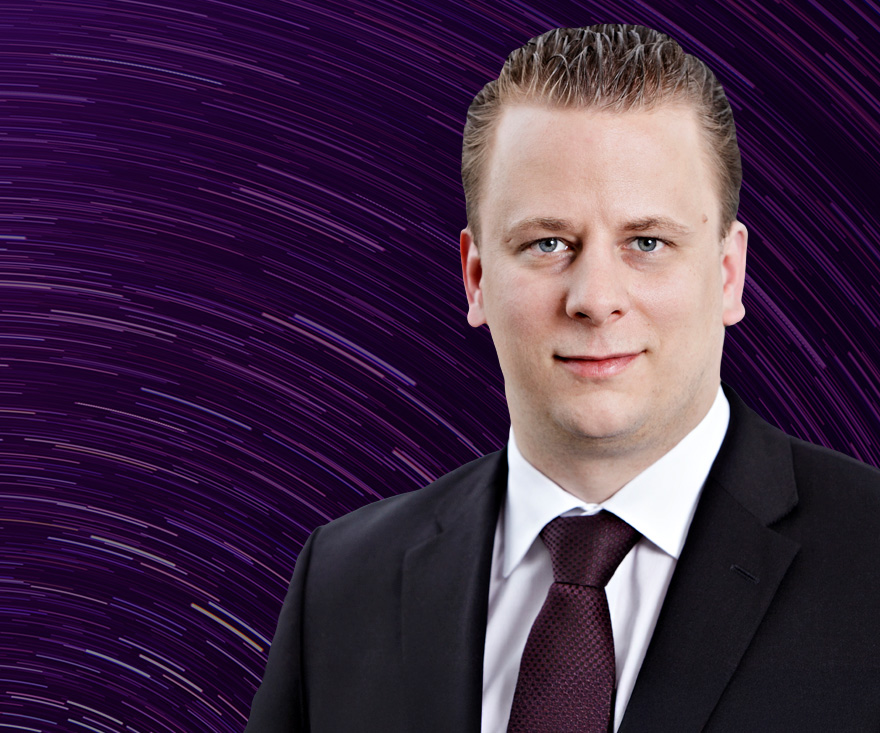
In this episode of the Innovators Exchange, Hiten Patel and Magnus Burkl welcome Steffen Scheuble, founder and CEO of Solactive, a company specializing in developing and calculating financial indices. Steffen talks about the challenges and successes he faced while growing the company, and his insights on the current and future trends shaping the index industry. The conversation touches on the impact of geopolitical factors, the increasing demand for customization in investment products, and the evolving role of technology, particularly artificial intelligence (AI), in index manufacturing.

Key talking points:

  • Background and motivation: Solactive specializes in calculating indices like the FTSE 100 and S&P 500, but with a focus on IT-driven efficiency and customization. Steffen's journey actually began as the first client of Solactive before it officially launched, driven by a need for efficient index solutions while working at Deutsche Bank.
  • Geopolitical impact: Steffen talks about the current geopolitical landscape and its implications for the index industry, particularly the rising interest in European-centric investment strategies. He discusses a noticeable shift in focus from US-based indices to European opportunities, driven by changing global dynamics.
  • Customization trends: The demand for customized indices is increasing as investors seek tailored solutions that align with their specific philosophies and regulatory requirements. Steffen shares how Solactive is committed to reducing the costs of index production to facilitate the launch of more personalized investment products.
  • Future of the index industry: Steffen emphasizes the importance of staying attuned to emerging trends and being flexible in response to market demands.
  • Themes driving the rise in private market indices: Key factors include the growth of  private market indices, environmental, social, and governance (ESG) considerations, and the need for adaptability in a rapidly evolving market. While AI enhances efficiency in index production, Steffen emphasizes the current limitations in making long-term predictive investment decisions.

This episode is part of the Innovators' Exchange series. Tune in to learn more about the evolution of AI, risk management, and entrepreneurial journeys. 

Subscribe for more on: Apple Podcasts | Spotify | Youtube | Podscribe

This episode was recorded in April 2025.

Hiten Patel: Welcome and thank you for joining us. On today's episode of the Innovators Exchange, I'm delighted to welcome Steffen Scheuble, the founder and CEO of Solactive. And I'm co-hosting today with my colleague, Magnus Burkl. Welcome, guys.

Steffen Scheuble: Welcome and thanks for having me.

Hiten: So, Steffen, would be great just to start with a brief introduction to your role and Solactive as a company.

Steffen: Well, I started with myself. I'm Steffen. I'm the CEO and founder, as you mentioned, started Solactive. In the meantime, it feels like ages ago, 1st of October 2007. So, we are getting close to becoming an adult company, turning 18 this year. And actually, what we are doing is, the one sentence story is, we calculate indices. So, if you're watching TV in the evening, the news channel, you see all the indices of what happened in the financial markets in the evening.

We do exactly the same. We calculate indices like the ones that you might know, the FTSE 100 [The Financial Times Stock Exchange 100 Index], the S&P 500 [The Standard and Poor's 500], and so on. We do exactly the same, just with a slightly different approach. And I guess that makes Solactive a little bit unique, whilst the others are a little bit more centered around having a strong brand, and investing a lot in marketing, and a lot of salespeople, and so on.

We believe a lot in what we call the power of IT [Information Technology], so overall, we look into solving the index calculation topic with IT, and having very efficient, very streamlined, very customizable processes, that is, at the end for us the utmost important topic. And some of the cost advantages we are passing on to our clients, so some people would say a disruptor or anything like that. I don't like the term too much, but essentially probably it's a good and fair way to describe our company.

Hiten: And what drew you to the index world back in, I think, was it 2007 when you started? What drew you to this space in particular?

Steffen: Well, the funny story is, I was the first client of Solactive before Solactive even existed.  So, at the end, you could really say Solactive is driven by client demand. The reality is, if we go back to the year 2005-2006, the structured product market in Europe was booming a lot, and I was working at that point in time at Deutsche Bank, and we had a pretty tough and ugly competitor called ABN AMRO at that point in time.

And they launched all the thematic products, thematic structured notes, using indices on very innovative themes, market access products, and so on. And me being a Deutsche Bank, we had no chance to compete with them, because the one missing piece was, we had no index provider who could deliver to us a very efficient and cost-efficient and fast solution.

So, at the end, what we've done being a Deutsche Bank, we've initiated a completely new index provider at that point in time. It was, in fact, a corporation between the Stuttgart Stock Exchange and Swiss Consulting company. They entered the index business, and I was the first client. If you think back to 2006, you don't see that with my body but essentially, I love sports. And so, at that point in time was the Soccer World championship in Germany. So, the first index that we launched in 2006 was the Sports Betting Index. That was the topic of and the flavor of the month at that point in time.

So, we launched the first index product, the Deutsche Bank, linked to that index, initiated by that new corporation, and then overall a few things happened. So, in 2006 I joined the Swiss Consulting company. They IPO-ed [Initial Public Offering] their business at that point in time. So, I just thought, hey, that sounds pretty cool if I'm at the management board member of a stock listed company. I joined them after a little bit more than a year. I left them again, made a management buyout, took over the part of the corporation that was essentially the starting point.

And the last, and probably very relevant and most important step in our company journey is in 2009. We acquired the index business from the Stuttgart Stock Exchange, so since then we actually do everything in-house, developing indices, marketing indices, calculating indices. So, in fact, long answer on a short question. But the reality is all of that was driven by client requirements, so fast solutions to compete with an ugly competitor. It was a pretty tough cookie at that point in time, so that was the starting point.

Hiten: And it's interesting because it feels like you were a little bit ahead of the curve. Right? I think, post 2009-2010, you saw a lot of talent transfers from the banks into some of the exchanges and the data providers. You've gone early here, as you say it was still a little bit of the heyday around some of the structured products, the traditional banking world. How did it feel at that time? Did it feel like you were taking a risk or a leap into the unknown? Or was there enough clarity that, hey, there's a direction of travel here that's worth surfing.

Steffen: Yeah, to be honest, that sounds a little bit too much, because in the end, you know, I can now sit down here and say it's the year 2025. And back in the days I had the vision that the world needs a new index provider, and so on. No, the reality is it happened. So overall, if you just look back, I worked for Deutsche Bank. Then I joined the smaller consulting company. I made the decision to leave them. So, in the end, the big question is, what's next? So, I cannot go back to a big bank, that would feel awkward. So okay, I've lost. I didn't handle it in the small shop.

I couldn't do that. So, it was the point in time when it was quite easy. I had no family at that point in time, so you can take the risk. If you win, you'll win big. If you lose, then you start again. I was a young kid at that point in time. So, I just thought, okay, let's give it a try. If you don't try it today, then you will never try it. The reality is, you know people are in different phases of their life, so overall, you can start a company if you are young. If you fail, then it's okay.

Think about, you know, if you're a dad of three kids and you're 35, and you just bought your own house or apartment. It's substantially harder to start a new company. It's the wrong point in time. So, to be honest, I was lucky at that point in time. I just thought, let's give it a try, because I just thought I could not go back to a bank, and then let's see what's happening. But I wouldn't say that there was the big vision that you know the world needs an index provider. It happened. That was the way that actually was working well. Of course, the beginning, hard times, and so on. But finally, we just said, okay, we'll give it a try. And here we are today.

Hiten: Talk to me about those years from, you know, 2007 onwards as you can, as the business evolved, matured. Just take us through some of those chapters.

Steffen: Well, I guess you know chapters, challenges, and so on. You know I'm always joking a little bit. You know, if the average German, how they think about business, and the average US person, how they think about business. So, at the very beginning, no one knew who Solactive is. No one knew who Steffen is. So, I was a young kid. And you just get started. So, in the end, what you need to do is very easy and simple. You need to get money on the account, so that you can pay your people at the end of the month. That was the number one challenge at the very beginning. So, you work hard to find people who give you a job, who just say, you know, can you do me a favor here? Can you launch an index here and there?

And I'm always joking. You know the typical German company is, and that was pretty much the beginning, and the typical German company will say, hey, Steffen, this is a great idea. Let's wait five years. If you're still around, then we'll start an intensive five-year due diligence. But if you pass that due diligence, we will do big business together. So that is the typical conservative German company. The typical US company is you have got one call. If they like you, they will just tell you, okay, let's give it a try. If it's working out, then we'll grow together, and if it's not working out, I'll move on and go somewhere else. So, from a philosophical standpoint, very, very different approaches towards business. 

So different chapters. You need to get money on the account. That was the first couple of years where essentially you worked hard to get that done. Then, overall, you start growing. So, it's one big room at the beginning. Suddenly, you've got two rooms. So, you know, you need to talk about communication. You need to build these very strange things called structure, and reporting lines. And you know, a management structure, things like that. Then you overall get into the growth models. Suddenly, you know, oh, hey, this is profitable. We will be able to handle it. So, let's grow. Let's continue to invest.

The next growth phase you onboard the first investor, which is what we've done in 2015, when Goldman Sachs invested in Solactive, that's the next growth phase, and so on and so on. So, then you've got strange phases - Covid. So essentially, I don't know if you could study at university how to behave as a CEO during Covid. So, you learn a lot of things in how you react, and how you lead a company, and you do a lot of mistakes and hopefully, more things right, then you've done mistakes.

But all of these topics are, you know, different phases in the company. And today we've got seven offices all around the world. Yeah, you need to manage them. You've got different cultures. You know, it's one big team. So, it's a very, very interesting journey where at the end, you learn each and every day something new.

Hiten: Awesome. Thank you for sharing that. Magnus, I'm going to bring you in here now. It'd be great just to talk a little bit about the index market as a whole.

Magnus Burkl: Thanks, Hiten. And Steffen, one topic that concerns us these days quite a lot, also, given geopolitics, is the role of Europe and one could argue, if you look at the index industry by a large, you could see that's a pretty Anglo-Saxon dominated market. What is the role of Solactive as a core Continental European index business? What are your thoughts on that topic?

Steffen: The topic of geopolitics?

Magnus: The role of having a Continental European Index provider.

Steffen: Yeah, I don't think too much if we are Continental European, if we are European, if we are German or anything like that, we are part of an ecosystem that is currently growing at pretty high pace. I guess if you're just looking into the overall, let's say, end result for end investors. There are enough studies out there that active management is usually not beating the benchmark in the long term. So, more and more people learn that that is why you see in probably the number one product category for passive or index linked investments, ETFs [Exchange-Traded Fund], you see a massive trend and massive growth rates in the last couple of years.

So, from that perspective, we are part of that ecosystem. So, we are now based here in Germany, which has some pros and which has some cons. If we start talking about the political advantages of being a German company, and you know how easy it is to start a company in Germany versus starting a company somewhere else. You know, we've got a different podcast session.  But in reality, we feel very, very comfortable where we are these days. I guess, looking a little bit into the global setting, we believe that it is very, very important to be locally on the ground. Let's say we don't go offshore too much. Yeah, to be honest, nothing.

Our main offices are in Hong Kong, in Frankfurt, and in Toronto. So, in the main hubs of the financial ecosystem, we usually try to go on a little bit different route. So, our North American office is not in New York. It is in Toronto, and to be honest, we feel quite comfortable about that. We've got a great team there. We don't fight US index providers or Anglo-Saxon index providers, that has no meaning to me. We look into our positioning in the indexing world. We try to grow our footprint in that space, and if at the end we take market share from US companies, I'm absolutely fine. If we take market share from Frankfurt-based index providers called stocks, I'm perfectly fine as well. But you know, we don't have a strategy to go after the US, or after Frankfurt, or after UK. We want to grow our footprint because we believe our product offering is pretty unique and will be beneficial for investors in the long term.

Magnus: Great, thanks, Steffen. And you know, looking at the index industry more broadly, yes, you said ETF was a big growth driver for the industry, and it's probably going to remain over the next couple of years. What else is keeping you busy, or the index industry busy from your perspective for the next couple of years? There's a lot of talk around private market indices, more customized indices, you know, getting into the wealth industry via indices. What are the big themes that you think will coin the industry the next decade?

Steffen: For the next decade is something, if you know what's going on in the next three months, please let me know. I would be extremely happy to understand that. I guess we don't plan in these extremely long cycles. The reality is, you know, each and every company and each and every corporate is at the end part of a global ecosystem, and the world is changing at the pace where overall we don't believe it makes sense to think let's say, about the next decade. It's just from our perspective, doesn't make too much sense. Let's look a little bit into that.

What are currently the topics that we are working on? We are currently talking about geopolitics, we are talking about, you know, tariffs. We are talking about how to position, let's say, investment ideas around these multipolarization that is happening between the US, and China, and Europe somewhere in between.

To be honest, was that foreseeable 10 years ago? No, 10 years ago, we were talking about globalization, not de-globalization. So overall, I'm always saying, you know, sometimes the next big theme is just a tweet away. You know, that is something that the world is changing at a very, very high pace. A few fundamentals are, from my perspective, pretty clear. We are getting a little bit more into, let's say, everything highly customized. So, from that perspective, that is, for sure, a trend that is here to stay.

We are European, so we can still talk about ESG [Environmental, Social, and Governance]. It's still a topic here on our side of the world. So, from that perspective, think about Germany and France. We are next to each other. We are neighbors. So, we all could completely agree. We don't want to have controversial weapons. We don't want to have child labor, and there's a series of topics where we agree. ESG-related, yes, that is what we don't want to have. If you're just talking about nuclear energy the French people will have a completely different view than the German people.

So, from that perspective, we will have if we are talking about a French asset owner versus a German asset owner, we come to two different results about what is ESG and whatnot. And that reflection in investment philosophies, that reflection at the end in indices, that degree of customization is something that I personally believe will grow substantially over time. It has grown already. 

Some people will say, Steffen, does it make sense to have, and we currently calculate around 30,000 indices, does it make sense? Will there be another 1,000 coming to market? Clear answer is yes. If you're asking me, Steffen, what is the next big thing? Well, I don't know. So, we are currently discussing geopolitics. We are talking about humanoids. That is currently one of the themes that we are looking into. These are the topics as of now.

And next month there will be another topic. Looking a little bit into private markets. That's one topic that you just mentioned. You know, I've got a little bit of a controversial view on that. Private market investments, it seems to be a little bit the hot topic and the flavor of, you know, this quarter. So, every asset manager is looking into, I want to do something in private markets. I've not recognized personally that suddenly there's twice as much as target investments available. I've not recognized that. Perhaps you've recognized that, I've not seen it. But now it's the hot topic that everyone is looking into.

I'm personally, and I might be completely wrong. We have to find out, that is really a discussion for the next decade. We'll find out in 10 years if I was right today. Think back 15-20 years. An investment banker is leaving the bank and you're asking him, hey, what are you doing now? The answer was, I'll start my own hedge fund.

How many of these hedge funds are still around? The last five years, everyone told you, hey, I'll do something in crypto. How many of these companies will survive? And I raised the question, you know, how many initiatives in the private market space that you currently see will survive? And how much of that is just the bull market topic these days? I don't know. I'm a little bit careful there. I prefer to jump on a trend if the trend is really big and really real, and then I prefer to be the best number two and not try to be number one.

Hiten: There's a lot in there, Steffen. I'll take you back to something you said out there. The outside of that response that really resonated with me was this the need for customization as you're getting more divergent views. And it feels like when you talk about your product. What drives traction in the market. Ultimately, where do the dollars flow, and what do the dollars need? And ultimately kind of being able to ride that direction of travel.

Steffen: Exactly. So, let's say you're an asset owner. Ultimately you manage money on behalf of your client base. So, from that perspective you look into what? What are your beliefs? What is your policy benchmark, that you try to track? What is your strategic asset allocation? How much do you split between public equity and, let's say, fixed income markets, and of course, private markets? And how much do you invest in private equity, and so on. And then you've got all the different topics. You have got, of course, regulations that come into the mix. So, we are currently seeing two completely different systems in the US.

It's deregulation of everything. In Europe you've got a lot of, let's say, frameworks around ESG investments and so on. So, you've got different topics there. And, by the way, we are now talking about the US and Europe. By the way, there is an Asian market that is big as well. There's Africa, Australia, where we're doing business. So, in all of these markets, of course, you've got different requirements in terms of how you invest and what you do.

So, I'm strongly convinced that this degree of customization will continue to happen. And customization for me, I guess it's really a very important topic. For, by the way, each and every company in the world. So, at the end, what is our responsibility? We need to bring down the cost for production in each and every entity that we are producing as much as we can.

Because the more you bring costs down at the end, the more there is a market for additional, let's say, customization. Think about structured products. To launch a structured product today costs you a fraction of what it cost you 20 years ago. Think about ETFs. ETF managers are currently thinking about how can I bring down the cost of launching and maintaining an ETF. Which has a topic of, you know, custody. Can we bring down custody costs with blockchain? What does it mean there? And the more you bring down the cost of producing an individual, let's say entity of your product. If it's an index, if it's an ETF, or whatever.

The more you can launch these customized solutions. And that is, you know, we've got one. We call it initiative within Solactive. What do we need to do to bring down the cost of launching a new index close to zero? The closer to zero you get the more customization you can do. And we are the shuffle producer. So overall, we need to have, let's say, the product producers to think along the same lines. But you know, if today it makes sense to launch a product with a 100 million investment at some point in time, it will be 50, at some point in time it will be 10, and that opens a whole new market segment.

Magnus: Thanks, Steffen, very clear. I would like to bring you back to just one question that resonated, or one point that resonated with me around geopolitics. Do you right now see lots of client demand for European specific indices doubling down on the investment that is foreseen and creating indices around the investment opportunities people might think that arise in Europe?

Steffen: It is. Let's say we need to be very precise. Because in the end, if you're raising that question, we need to look into the different, let's say, regions in the world. So, let's look into the US. Completely surprising we have not received any request to launch a European index out of the US. So overall the US, currently, the US is very US-centric these days. So, in Europe it's a little bit different. So, in Europe we are currently seeing, indeed, some interest. So, we've seen some very European-centric strategies, talking about European defense where we've seen things, European infrastructure, and companies that are generating their revenues in Europe so that they are not hit by any theoretical US tariff anywhere in the world.

So, in Europe the focus on Europe is a lot bigger than it has been before. So, if I'm just going back six months, the main investment that you need to have is Max7 [Magnificent 7 Stocks: Alphabet, Amazon, Apple, Meta Platforms, Microsoft, Nvidia, Tesla], or S&P 500, or Nasdaq. And you look into US exposures that have for sure changed. In Asia, if I'm looking to Asia, it's a very interesting topic. So, in Asia the people were predominantly and only looking into US exposures in particular, in certain markets. And what has fundamentally changed in these markets, they are currently looking into China but at least they know how to spell Europe. So, there is a starting point of investors in Asia really looking into Europe. That hasn't been the case. So, it feels like there is a fundamental shift in demand and investment topics. And it's for sure, let's say, if you average that globally, Europe is for sure, rising, because people are looking more and more into that.

Magnus: Very interesting. Steffen, one last point, and then I also shut up with buzzwords and throwing that around. But by, you know, taking to the customization point that you, I think, laid out very, very well, and then taking the cost point that you also outlined very well. I think Hiten knows where I'm going. But talk to me about what's the role of AI that you see in index manufacturing more generally. Is there a role? What is the role? Is that role going to increase?

Steffen: So, AI has at the end two different, let's say areas, let me call it like that. So, the first area is, use AI to run allocations in certain asset classes. So overall use. AI. Sorry. Give me a second. Sorry for that. I'll I'll start again. I hope we can cut that. Yeah. So thinking about AI, you've got two different roles there. So, using AI to select target investments. So overall you just say, I've got my AI algorithm, and the AI algorithm tells me today, I should invest 20% in Nvidia, because tomorrow it will rise. I'm personally not the strongest believer of that, because the reality is, these signals are usually very short-dated, so that the predictive horizon is at the moment a couple of days, a couple of hours, but at the end that is usually not an index provider's business to think about these short terms.

So, we need to wait and see if the predictive, let's say, capabilities of AI models will turn out to be longer dated. And I currently do not see that. So, we have a few AI models. We have a few things. And it's working okay. But in order to be a really big trend in that respect, I personally think the time horizon, the predictive time horizon, needs to extend a little bit. Everything else is more a hedge fund business and their applications for sure. But I don't see that in the index business. The other way let's think about the analogy that I just mentioned. We need to think about bringing down the cost of producing an index close to zero.

Yes, of course, AI will play a role in that. So, at the end where can we source data? How can we validate data? How can we make the data more robust in our infrastructure? So these topics will help us to be more efficient in the future. So, the role of the people within our organization will change over time. I might be wrong. I currently don't see that happening in the upcoming 12 months. I personally think it's a little bit more of a three to five years topic. But yes, of course, we are looking a little bit into that as well. 

Usually, we wait to be again the best number two. So overall the mistakes should be done by others, and then we just see what they've learned, and then we'll apply that. So that's a little bit the current situation. But I'm absolutely sure that AI will drive a lot of changes, not only for Solactive, will drive change on your end, and in many, many other companies as well.

Hiten: Awesome. Thank you, Steffen, for sharing not just that view, but just the perspectives you shared on the market as a whole. I'm just going to switch tracks slightly and go back to Steffen the person, the individual again. And listeners really value hearing what's kind of underpinned the journey today. So just a few questions on kind of what's got you there. So, I guess first of all, are you open to sharing what's one of the most interesting challenges that you've faced on the journey to getting where you've got to today? And perhaps what the lesson learned from that experience was?

Steffen: People always think, oh, there is, you know, this number one challenge, and if you handled it, and if you overcome that number one challenge, then you're in a great spot. The reality is, you know, life as an entrepreneur will bring you different challenges at different points in time. So, in the end, let's go back to 2007. The number one challenge was overall, I need to get money on the account to pay my people. So, in the end, the whole life and you know I was working at the beginning seven days a week, and 16 hours a day, essentially, to solve the number one challenge - let's get money on the account. So that is the first topic.

And then overall, you know, in the different cycles, growth companies, you know, you need to think a lot about communication. At the very beginning, at Solactive there was one room, I was sitting in the middle, you hear my voice, I can be loud if I want to and everyone knows everything.

Hiten: Yeah.

Steffen: So, at the end, you know, you just shout across the room and ask someone, can you write that one invoice? And you know, the accountant at that point in time was just sitting through the desk next to it. Then you start specializing. And you know how it is in no company in the world, that's for sure, a given fact. In no company in the world communication is ever enough. So, some people want to know everything. But you know in a company with four people, you can know everything, in a company of 300 people you cannot know everything. So, there are cultural changes, there are philosophical changes, and so on. Then, you know, suddenly, we've got two outside shareholders. So, at the end they've got requirements.

Then you've got Covid. How you handle that. So, the reality is, there are challenges each and everywhere. I guess it is the beauty of my job, and to be honest, I love it. If I'm going to a town hall, or, let's say, a new joiner session. If we hire new people, and I'm just telling each and every one, for the record, I will do a lot of mistakes. I was never running a company with 300 people.

I will do mistakes. I will try to do everything to avoid mistakes. But it will happen. And mistakes are absolutely logical. It's happening. We just need to sit down and learn from the mistakes that we've done and be self-reflected. A very important topic. Everyone believes he's self-reflected. But really think about that. How self-reflected you are? So, I'm just turning around.

Just say, hey, Magnus, this is a weak spot of you. You don't want to hear things like that. You just say stuff. You cannot say that to me, so these are a little bit the topics. There was not the number one challenge. Life is an ongoing challenge. I love it, and we are here to solve these challenges and make the best out of that in the interest of the company.

Hiten: I love that framing. I love that framing, Steffen. Very, very helpful.

Steffen: A good friend of mine told me, Steffen, there's one thing that is for sure. There's always in your life; there's always a biggest problem. And he's absolutely right. The biggest problem can be big, or the biggest problem can be small. But there is always the biggest problem that you have. 

Hiten: Very true. Talk to us about something you do outside of work, a hobby or an interest that helps you, kind of be effective in the role that you have day to day?

Steffen: First of all, you know, my job is, it's not a job. I love what I'm doing. So overall, it's not an issue for me to sit down during the weekend and get some work done, or think about the company, and so on. Besides that, we just tested the camera at the very beginning, so you don't see too much of my belly, so overall, I love good food. So, from that perspective, I love to go out to good restaurants. I love to have good dinners with friends, good conversations, things like that.

So, I guess that is one passion that I have. And the second passion, Bayern Munich [FC]. So overall, I love the club. Usually I don't miss any matches, at least on TV, and sometimes in the stadium. And you know, you don't want to record 90 mins of an intensive match, seeing me in front of a TV, that can be intensive.

Magnus: Now I need to ask Steffen around Bayern Munich, your favorite player? Either current or former?

Steffen: Oh, favorite player, that's overall, a tough one, you know. I like players like van Bommel [Mark van Bommel], you know, hardworking guys that are overall, let's say they've got character. To some extent, I love people with characters that are truly themselves. I'm not the biggest supporter of all these polished players who just say after the match, you know, it was today, it was an intensive first half, but we played well. Blah blah, that is too polished.

So, I don't want to say it's not too popular to say I love Mario Basler and things like that. But he was saying what he was thinking, and he was a true character, and to be honest, I love characters, and van Bommel was, for sure, someone like that. Effenberg [Stefan Effenberg], Oliver Kahn. So, we had some great players.

Hiten: Authenticity is back, Steffen. Last one from us. We always invite guests to kind of share the spotlight, and I don't know if there's a specific individual or company that is impressing you right now that you'd want listeners to look up and pay attention to?

Steffen: I would. I don't want to mention, let's say, a specific company, a specific person. So, we've got many great companies out there. If you just think about hyper growth companies, how they kept culture, for sure, a huge and massive challenge if you grow very, very fast. And we can mention there Apple, we can mention Google or Alphabet. You know if you enter a Google or Alphabet office, you know this is a Google or Alphabet office. And that is something that is for sure massive. If I'm talking about individuals, I love that are direct, that say what they think and who have at the end, I don't know what the right word is, with the backbone of, you know being truly themself.

I don't know, Magnus, you might know one of the soccer coaches that was here in Germany, which was Christian Streich. He was the coach of a smaller team, Freiburg, and they have achieved a lot in the last couple of years. If you listen to Christian Streich he has clear views on what's going on in society. He has got clear views on what's going on with the right-wing party in Germany. He does not only have clear views, he was communicating these clear views, was very, very consistent in what he was saying. To be honest, that is a person that for sure, you know, yeah, let's call it admire. Because well, he has, from my perspective, a lot of right views in terms of society and things like that. 

He's also not forgetting the people who have a little bit of a worse situation. The three guys of us in the call now, wearing white shirts and being privileged, working in the financial industry or somewhere there. He does not forget these people. And I guess that is a lot more than you know; I don't want to pick a specific individual. I've got many friends in my environment, in my surrounding that are clear character, that clearly say what they think, that do great things for life, great things for society, and things like that, and these are the true heroes from my perspective.

And I don't want to mention a specific, oh, this company is great or anything like that. No, these are from my perspective, the true characters of the world. And we need that today, we need that today more than we have ever needed that, so hopefully, we'll find more of that in the future.

Hiten: I love that, Steffen. I love that so much, I think, particularly as everyone else is starting to use a lot more AI to try and predict what to say or what to write. I do think the value of authenticity is going to be something that stands out. And so yeah, it's a great point.

Steffen: Yeah, I'm always saying that I'm telling that to my sales team. Well, in the end, we are all human beings, and human beings are made to interact with each other. So, you cannot build a relationship by swiping right or left. We need to talk to people. We need to be close to people. We are human beings, and we often forget that in times I guess that is one of the most from my personal perspective. One of the most frustrating things about Covid.

I guess that has changed a lot, and we are not individual persons, and society is currently thinking too much about their own personal benefits, and everyone should think a little bit more about society. That's my personal view, and we should be forgetting about swiping right or left. Let's build true relationships. That's something very valuable.

Hiten: So true and so very well put, and a great place to end the conversation. So, Steffen, thank you so much for making the time, and being so generous with your thoughts. It's been great to have you.

Steffen: Thanks for having me.

Magnus: Thank you, Steffen. Thanks, Hiten. 

This transcript has been edited for clarity.

    In this episode of the Innovators Exchange, Hiten Patel and Magnus Burkl welcome Steffen Scheuble, founder and CEO of Solactive, a company specializing in developing and calculating financial indices. Steffen talks about the challenges and successes he faced while growing the company, and his insights on the current and future trends shaping the index industry. The conversation touches on the impact of geopolitical factors, the increasing demand for customization in investment products, and the evolving role of technology, particularly artificial intelligence (AI), in index manufacturing.

    Key talking points:

    • Background and motivation: Solactive specializes in calculating indices like the FTSE 100 and S&P 500, but with a focus on IT-driven efficiency and customization. Steffen's journey actually began as the first client of Solactive before it officially launched, driven by a need for efficient index solutions while working at Deutsche Bank.
    • Geopolitical impact: Steffen talks about the current geopolitical landscape and its implications for the index industry, particularly the rising interest in European-centric investment strategies. He discusses a noticeable shift in focus from US-based indices to European opportunities, driven by changing global dynamics.
    • Customization trends: The demand for customized indices is increasing as investors seek tailored solutions that align with their specific philosophies and regulatory requirements. Steffen shares how Solactive is committed to reducing the costs of index production to facilitate the launch of more personalized investment products.
    • Future of the index industry: Steffen emphasizes the importance of staying attuned to emerging trends and being flexible in response to market demands.
    • Themes driving the rise in private market indices: Key factors include the growth of  private market indices, environmental, social, and governance (ESG) considerations, and the need for adaptability in a rapidly evolving market. While AI enhances efficiency in index production, Steffen emphasizes the current limitations in making long-term predictive investment decisions.

    This episode is part of the Innovators' Exchange series. Tune in to learn more about the evolution of AI, risk management, and entrepreneurial journeys. 

    Subscribe for more on: Apple Podcasts | Spotify | Youtube | Podscribe

    This episode was recorded in April 2025.

    Hiten Patel: Welcome and thank you for joining us. On today's episode of the Innovators Exchange, I'm delighted to welcome Steffen Scheuble, the founder and CEO of Solactive. And I'm co-hosting today with my colleague, Magnus Burkl. Welcome, guys.

    Steffen Scheuble: Welcome and thanks for having me.

    Hiten: So, Steffen, would be great just to start with a brief introduction to your role and Solactive as a company.

    Steffen: Well, I started with myself. I'm Steffen. I'm the CEO and founder, as you mentioned, started Solactive. In the meantime, it feels like ages ago, 1st of October 2007. So, we are getting close to becoming an adult company, turning 18 this year. And actually, what we are doing is, the one sentence story is, we calculate indices. So, if you're watching TV in the evening, the news channel, you see all the indices of what happened in the financial markets in the evening.

    We do exactly the same. We calculate indices like the ones that you might know, the FTSE 100 [The Financial Times Stock Exchange 100 Index], the S&P 500 [The Standard and Poor's 500], and so on. We do exactly the same, just with a slightly different approach. And I guess that makes Solactive a little bit unique, whilst the others are a little bit more centered around having a strong brand, and investing a lot in marketing, and a lot of salespeople, and so on.

    We believe a lot in what we call the power of IT [Information Technology], so overall, we look into solving the index calculation topic with IT, and having very efficient, very streamlined, very customizable processes, that is, at the end for us the utmost important topic. And some of the cost advantages we are passing on to our clients, so some people would say a disruptor or anything like that. I don't like the term too much, but essentially probably it's a good and fair way to describe our company.

    Hiten: And what drew you to the index world back in, I think, was it 2007 when you started? What drew you to this space in particular?

    Steffen: Well, the funny story is, I was the first client of Solactive before Solactive even existed.  So, at the end, you could really say Solactive is driven by client demand. The reality is, if we go back to the year 2005-2006, the structured product market in Europe was booming a lot, and I was working at that point in time at Deutsche Bank, and we had a pretty tough and ugly competitor called ABN AMRO at that point in time.

    And they launched all the thematic products, thematic structured notes, using indices on very innovative themes, market access products, and so on. And me being a Deutsche Bank, we had no chance to compete with them, because the one missing piece was, we had no index provider who could deliver to us a very efficient and cost-efficient and fast solution.

    So, at the end, what we've done being a Deutsche Bank, we've initiated a completely new index provider at that point in time. It was, in fact, a corporation between the Stuttgart Stock Exchange and Swiss Consulting company. They entered the index business, and I was the first client. If you think back to 2006, you don't see that with my body but essentially, I love sports. And so, at that point in time was the Soccer World championship in Germany. So, the first index that we launched in 2006 was the Sports Betting Index. That was the topic of and the flavor of the month at that point in time.

    So, we launched the first index product, the Deutsche Bank, linked to that index, initiated by that new corporation, and then overall a few things happened. So, in 2006 I joined the Swiss Consulting company. They IPO-ed [Initial Public Offering] their business at that point in time. So, I just thought, hey, that sounds pretty cool if I'm at the management board member of a stock listed company. I joined them after a little bit more than a year. I left them again, made a management buyout, took over the part of the corporation that was essentially the starting point.

    And the last, and probably very relevant and most important step in our company journey is in 2009. We acquired the index business from the Stuttgart Stock Exchange, so since then we actually do everything in-house, developing indices, marketing indices, calculating indices. So, in fact, long answer on a short question. But the reality is all of that was driven by client requirements, so fast solutions to compete with an ugly competitor. It was a pretty tough cookie at that point in time, so that was the starting point.

    Hiten: And it's interesting because it feels like you were a little bit ahead of the curve. Right? I think, post 2009-2010, you saw a lot of talent transfers from the banks into some of the exchanges and the data providers. You've gone early here, as you say it was still a little bit of the heyday around some of the structured products, the traditional banking world. How did it feel at that time? Did it feel like you were taking a risk or a leap into the unknown? Or was there enough clarity that, hey, there's a direction of travel here that's worth surfing.

    Steffen: Yeah, to be honest, that sounds a little bit too much, because in the end, you know, I can now sit down here and say it's the year 2025. And back in the days I had the vision that the world needs a new index provider, and so on. No, the reality is it happened. So overall, if you just look back, I worked for Deutsche Bank. Then I joined the smaller consulting company. I made the decision to leave them. So, in the end, the big question is, what's next? So, I cannot go back to a big bank, that would feel awkward. So okay, I've lost. I didn't handle it in the small shop.

    I couldn't do that. So, it was the point in time when it was quite easy. I had no family at that point in time, so you can take the risk. If you win, you'll win big. If you lose, then you start again. I was a young kid at that point in time. So, I just thought, okay, let's give it a try. If you don't try it today, then you will never try it. The reality is, you know people are in different phases of their life, so overall, you can start a company if you are young. If you fail, then it's okay.

    Think about, you know, if you're a dad of three kids and you're 35, and you just bought your own house or apartment. It's substantially harder to start a new company. It's the wrong point in time. So, to be honest, I was lucky at that point in time. I just thought, let's give it a try, because I just thought I could not go back to a bank, and then let's see what's happening. But I wouldn't say that there was the big vision that you know the world needs an index provider. It happened. That was the way that actually was working well. Of course, the beginning, hard times, and so on. But finally, we just said, okay, we'll give it a try. And here we are today.

    Hiten: Talk to me about those years from, you know, 2007 onwards as you can, as the business evolved, matured. Just take us through some of those chapters.

    Steffen: Well, I guess you know chapters, challenges, and so on. You know I'm always joking a little bit. You know, if the average German, how they think about business, and the average US person, how they think about business. So, at the very beginning, no one knew who Solactive is. No one knew who Steffen is. So, I was a young kid. And you just get started. So, in the end, what you need to do is very easy and simple. You need to get money on the account, so that you can pay your people at the end of the month. That was the number one challenge at the very beginning. So, you work hard to find people who give you a job, who just say, you know, can you do me a favor here? Can you launch an index here and there?

    And I'm always joking. You know the typical German company is, and that was pretty much the beginning, and the typical German company will say, hey, Steffen, this is a great idea. Let's wait five years. If you're still around, then we'll start an intensive five-year due diligence. But if you pass that due diligence, we will do big business together. So that is the typical conservative German company. The typical US company is you have got one call. If they like you, they will just tell you, okay, let's give it a try. If it's working out, then we'll grow together, and if it's not working out, I'll move on and go somewhere else. So, from a philosophical standpoint, very, very different approaches towards business. 

    So different chapters. You need to get money on the account. That was the first couple of years where essentially you worked hard to get that done. Then, overall, you start growing. So, it's one big room at the beginning. Suddenly, you've got two rooms. So, you know, you need to talk about communication. You need to build these very strange things called structure, and reporting lines. And you know, a management structure, things like that. Then you overall get into the growth models. Suddenly, you know, oh, hey, this is profitable. We will be able to handle it. So, let's grow. Let's continue to invest.

    The next growth phase you onboard the first investor, which is what we've done in 2015, when Goldman Sachs invested in Solactive, that's the next growth phase, and so on and so on. So, then you've got strange phases - Covid. So essentially, I don't know if you could study at university how to behave as a CEO during Covid. So, you learn a lot of things in how you react, and how you lead a company, and you do a lot of mistakes and hopefully, more things right, then you've done mistakes.

    But all of these topics are, you know, different phases in the company. And today we've got seven offices all around the world. Yeah, you need to manage them. You've got different cultures. You know, it's one big team. So, it's a very, very interesting journey where at the end, you learn each and every day something new.

    Hiten: Awesome. Thank you for sharing that. Magnus, I'm going to bring you in here now. It'd be great just to talk a little bit about the index market as a whole.

    Magnus Burkl: Thanks, Hiten. And Steffen, one topic that concerns us these days quite a lot, also, given geopolitics, is the role of Europe and one could argue, if you look at the index industry by a large, you could see that's a pretty Anglo-Saxon dominated market. What is the role of Solactive as a core Continental European index business? What are your thoughts on that topic?

    Steffen: The topic of geopolitics?

    Magnus: The role of having a Continental European Index provider.

    Steffen: Yeah, I don't think too much if we are Continental European, if we are European, if we are German or anything like that, we are part of an ecosystem that is currently growing at pretty high pace. I guess if you're just looking into the overall, let's say, end result for end investors. There are enough studies out there that active management is usually not beating the benchmark in the long term. So, more and more people learn that that is why you see in probably the number one product category for passive or index linked investments, ETFs [Exchange-Traded Fund], you see a massive trend and massive growth rates in the last couple of years.

    So, from that perspective, we are part of that ecosystem. So, we are now based here in Germany, which has some pros and which has some cons. If we start talking about the political advantages of being a German company, and you know how easy it is to start a company in Germany versus starting a company somewhere else. You know, we've got a different podcast session.  But in reality, we feel very, very comfortable where we are these days. I guess, looking a little bit into the global setting, we believe that it is very, very important to be locally on the ground. Let's say we don't go offshore too much. Yeah, to be honest, nothing.

    Our main offices are in Hong Kong, in Frankfurt, and in Toronto. So, in the main hubs of the financial ecosystem, we usually try to go on a little bit different route. So, our North American office is not in New York. It is in Toronto, and to be honest, we feel quite comfortable about that. We've got a great team there. We don't fight US index providers or Anglo-Saxon index providers, that has no meaning to me. We look into our positioning in the indexing world. We try to grow our footprint in that space, and if at the end we take market share from US companies, I'm absolutely fine. If we take market share from Frankfurt-based index providers called stocks, I'm perfectly fine as well. But you know, we don't have a strategy to go after the US, or after Frankfurt, or after UK. We want to grow our footprint because we believe our product offering is pretty unique and will be beneficial for investors in the long term.

    Magnus: Great, thanks, Steffen. And you know, looking at the index industry more broadly, yes, you said ETF was a big growth driver for the industry, and it's probably going to remain over the next couple of years. What else is keeping you busy, or the index industry busy from your perspective for the next couple of years? There's a lot of talk around private market indices, more customized indices, you know, getting into the wealth industry via indices. What are the big themes that you think will coin the industry the next decade?

    Steffen: For the next decade is something, if you know what's going on in the next three months, please let me know. I would be extremely happy to understand that. I guess we don't plan in these extremely long cycles. The reality is, you know, each and every company and each and every corporate is at the end part of a global ecosystem, and the world is changing at the pace where overall we don't believe it makes sense to think let's say, about the next decade. It's just from our perspective, doesn't make too much sense. Let's look a little bit into that.

    What are currently the topics that we are working on? We are currently talking about geopolitics, we are talking about, you know, tariffs. We are talking about how to position, let's say, investment ideas around these multipolarization that is happening between the US, and China, and Europe somewhere in between.

    To be honest, was that foreseeable 10 years ago? No, 10 years ago, we were talking about globalization, not de-globalization. So overall, I'm always saying, you know, sometimes the next big theme is just a tweet away. You know, that is something that the world is changing at a very, very high pace. A few fundamentals are, from my perspective, pretty clear. We are getting a little bit more into, let's say, everything highly customized. So, from that perspective, that is, for sure, a trend that is here to stay.

    We are European, so we can still talk about ESG [Environmental, Social, and Governance]. It's still a topic here on our side of the world. So, from that perspective, think about Germany and France. We are next to each other. We are neighbors. So, we all could completely agree. We don't want to have controversial weapons. We don't want to have child labor, and there's a series of topics where we agree. ESG-related, yes, that is what we don't want to have. If you're just talking about nuclear energy the French people will have a completely different view than the German people.

    So, from that perspective, we will have if we are talking about a French asset owner versus a German asset owner, we come to two different results about what is ESG and whatnot. And that reflection in investment philosophies, that reflection at the end in indices, that degree of customization is something that I personally believe will grow substantially over time. It has grown already. 

    Some people will say, Steffen, does it make sense to have, and we currently calculate around 30,000 indices, does it make sense? Will there be another 1,000 coming to market? Clear answer is yes. If you're asking me, Steffen, what is the next big thing? Well, I don't know. So, we are currently discussing geopolitics. We are talking about humanoids. That is currently one of the themes that we are looking into. These are the topics as of now.

    And next month there will be another topic. Looking a little bit into private markets. That's one topic that you just mentioned. You know, I've got a little bit of a controversial view on that. Private market investments, it seems to be a little bit the hot topic and the flavor of, you know, this quarter. So, every asset manager is looking into, I want to do something in private markets. I've not recognized personally that suddenly there's twice as much as target investments available. I've not recognized that. Perhaps you've recognized that, I've not seen it. But now it's the hot topic that everyone is looking into.

    I'm personally, and I might be completely wrong. We have to find out, that is really a discussion for the next decade. We'll find out in 10 years if I was right today. Think back 15-20 years. An investment banker is leaving the bank and you're asking him, hey, what are you doing now? The answer was, I'll start my own hedge fund.

    How many of these hedge funds are still around? The last five years, everyone told you, hey, I'll do something in crypto. How many of these companies will survive? And I raised the question, you know, how many initiatives in the private market space that you currently see will survive? And how much of that is just the bull market topic these days? I don't know. I'm a little bit careful there. I prefer to jump on a trend if the trend is really big and really real, and then I prefer to be the best number two and not try to be number one.

    Hiten: There's a lot in there, Steffen. I'll take you back to something you said out there. The outside of that response that really resonated with me was this the need for customization as you're getting more divergent views. And it feels like when you talk about your product. What drives traction in the market. Ultimately, where do the dollars flow, and what do the dollars need? And ultimately kind of being able to ride that direction of travel.

    Steffen: Exactly. So, let's say you're an asset owner. Ultimately you manage money on behalf of your client base. So, from that perspective you look into what? What are your beliefs? What is your policy benchmark, that you try to track? What is your strategic asset allocation? How much do you split between public equity and, let's say, fixed income markets, and of course, private markets? And how much do you invest in private equity, and so on. And then you've got all the different topics. You have got, of course, regulations that come into the mix. So, we are currently seeing two completely different systems in the US.

    It's deregulation of everything. In Europe you've got a lot of, let's say, frameworks around ESG investments and so on. So, you've got different topics there. And, by the way, we are now talking about the US and Europe. By the way, there is an Asian market that is big as well. There's Africa, Australia, where we're doing business. So, in all of these markets, of course, you've got different requirements in terms of how you invest and what you do.

    So, I'm strongly convinced that this degree of customization will continue to happen. And customization for me, I guess it's really a very important topic. For, by the way, each and every company in the world. So, at the end, what is our responsibility? We need to bring down the cost for production in each and every entity that we are producing as much as we can.

    Because the more you bring costs down at the end, the more there is a market for additional, let's say, customization. Think about structured products. To launch a structured product today costs you a fraction of what it cost you 20 years ago. Think about ETFs. ETF managers are currently thinking about how can I bring down the cost of launching and maintaining an ETF. Which has a topic of, you know, custody. Can we bring down custody costs with blockchain? What does it mean there? And the more you bring down the cost of producing an individual, let's say entity of your product. If it's an index, if it's an ETF, or whatever.

    The more you can launch these customized solutions. And that is, you know, we've got one. We call it initiative within Solactive. What do we need to do to bring down the cost of launching a new index close to zero? The closer to zero you get the more customization you can do. And we are the shuffle producer. So overall, we need to have, let's say, the product producers to think along the same lines. But you know, if today it makes sense to launch a product with a 100 million investment at some point in time, it will be 50, at some point in time it will be 10, and that opens a whole new market segment.

    Magnus: Thanks, Steffen, very clear. I would like to bring you back to just one question that resonated, or one point that resonated with me around geopolitics. Do you right now see lots of client demand for European specific indices doubling down on the investment that is foreseen and creating indices around the investment opportunities people might think that arise in Europe?

    Steffen: It is. Let's say we need to be very precise. Because in the end, if you're raising that question, we need to look into the different, let's say, regions in the world. So, let's look into the US. Completely surprising we have not received any request to launch a European index out of the US. So overall the US, currently, the US is very US-centric these days. So, in Europe it's a little bit different. So, in Europe we are currently seeing, indeed, some interest. So, we've seen some very European-centric strategies, talking about European defense where we've seen things, European infrastructure, and companies that are generating their revenues in Europe so that they are not hit by any theoretical US tariff anywhere in the world.

    So, in Europe the focus on Europe is a lot bigger than it has been before. So, if I'm just going back six months, the main investment that you need to have is Max7 [Magnificent 7 Stocks: Alphabet, Amazon, Apple, Meta Platforms, Microsoft, Nvidia, Tesla], or S&P 500, or Nasdaq. And you look into US exposures that have for sure changed. In Asia, if I'm looking to Asia, it's a very interesting topic. So, in Asia the people were predominantly and only looking into US exposures in particular, in certain markets. And what has fundamentally changed in these markets, they are currently looking into China but at least they know how to spell Europe. So, there is a starting point of investors in Asia really looking into Europe. That hasn't been the case. So, it feels like there is a fundamental shift in demand and investment topics. And it's for sure, let's say, if you average that globally, Europe is for sure, rising, because people are looking more and more into that.

    Magnus: Very interesting. Steffen, one last point, and then I also shut up with buzzwords and throwing that around. But by, you know, taking to the customization point that you, I think, laid out very, very well, and then taking the cost point that you also outlined very well. I think Hiten knows where I'm going. But talk to me about what's the role of AI that you see in index manufacturing more generally. Is there a role? What is the role? Is that role going to increase?

    Steffen: So, AI has at the end two different, let's say areas, let me call it like that. So, the first area is, use AI to run allocations in certain asset classes. So overall use. AI. Sorry. Give me a second. Sorry for that. I'll I'll start again. I hope we can cut that. Yeah. So thinking about AI, you've got two different roles there. So, using AI to select target investments. So overall you just say, I've got my AI algorithm, and the AI algorithm tells me today, I should invest 20% in Nvidia, because tomorrow it will rise. I'm personally not the strongest believer of that, because the reality is, these signals are usually very short-dated, so that the predictive horizon is at the moment a couple of days, a couple of hours, but at the end that is usually not an index provider's business to think about these short terms.

    So, we need to wait and see if the predictive, let's say, capabilities of AI models will turn out to be longer dated. And I currently do not see that. So, we have a few AI models. We have a few things. And it's working okay. But in order to be a really big trend in that respect, I personally think the time horizon, the predictive time horizon, needs to extend a little bit. Everything else is more a hedge fund business and their applications for sure. But I don't see that in the index business. The other way let's think about the analogy that I just mentioned. We need to think about bringing down the cost of producing an index close to zero.

    Yes, of course, AI will play a role in that. So, at the end where can we source data? How can we validate data? How can we make the data more robust in our infrastructure? So these topics will help us to be more efficient in the future. So, the role of the people within our organization will change over time. I might be wrong. I currently don't see that happening in the upcoming 12 months. I personally think it's a little bit more of a three to five years topic. But yes, of course, we are looking a little bit into that as well. 

    Usually, we wait to be again the best number two. So overall the mistakes should be done by others, and then we just see what they've learned, and then we'll apply that. So that's a little bit the current situation. But I'm absolutely sure that AI will drive a lot of changes, not only for Solactive, will drive change on your end, and in many, many other companies as well.

    Hiten: Awesome. Thank you, Steffen, for sharing not just that view, but just the perspectives you shared on the market as a whole. I'm just going to switch tracks slightly and go back to Steffen the person, the individual again. And listeners really value hearing what's kind of underpinned the journey today. So just a few questions on kind of what's got you there. So, I guess first of all, are you open to sharing what's one of the most interesting challenges that you've faced on the journey to getting where you've got to today? And perhaps what the lesson learned from that experience was?

    Steffen: People always think, oh, there is, you know, this number one challenge, and if you handled it, and if you overcome that number one challenge, then you're in a great spot. The reality is, you know, life as an entrepreneur will bring you different challenges at different points in time. So, in the end, let's go back to 2007. The number one challenge was overall, I need to get money on the account to pay my people. So, in the end, the whole life and you know I was working at the beginning seven days a week, and 16 hours a day, essentially, to solve the number one challenge - let's get money on the account. So that is the first topic.

    And then overall, you know, in the different cycles, growth companies, you know, you need to think a lot about communication. At the very beginning, at Solactive there was one room, I was sitting in the middle, you hear my voice, I can be loud if I want to and everyone knows everything.

    Hiten: Yeah.

    Steffen: So, at the end, you know, you just shout across the room and ask someone, can you write that one invoice? And you know, the accountant at that point in time was just sitting through the desk next to it. Then you start specializing. And you know how it is in no company in the world, that's for sure, a given fact. In no company in the world communication is ever enough. So, some people want to know everything. But you know in a company with four people, you can know everything, in a company of 300 people you cannot know everything. So, there are cultural changes, there are philosophical changes, and so on. Then, you know, suddenly, we've got two outside shareholders. So, at the end they've got requirements.

    Then you've got Covid. How you handle that. So, the reality is, there are challenges each and everywhere. I guess it is the beauty of my job, and to be honest, I love it. If I'm going to a town hall, or, let's say, a new joiner session. If we hire new people, and I'm just telling each and every one, for the record, I will do a lot of mistakes. I was never running a company with 300 people.

    I will do mistakes. I will try to do everything to avoid mistakes. But it will happen. And mistakes are absolutely logical. It's happening. We just need to sit down and learn from the mistakes that we've done and be self-reflected. A very important topic. Everyone believes he's self-reflected. But really think about that. How self-reflected you are? So, I'm just turning around.

    Just say, hey, Magnus, this is a weak spot of you. You don't want to hear things like that. You just say stuff. You cannot say that to me, so these are a little bit the topics. There was not the number one challenge. Life is an ongoing challenge. I love it, and we are here to solve these challenges and make the best out of that in the interest of the company.

    Hiten: I love that framing. I love that framing, Steffen. Very, very helpful.

    Steffen: A good friend of mine told me, Steffen, there's one thing that is for sure. There's always in your life; there's always a biggest problem. And he's absolutely right. The biggest problem can be big, or the biggest problem can be small. But there is always the biggest problem that you have. 

    Hiten: Very true. Talk to us about something you do outside of work, a hobby or an interest that helps you, kind of be effective in the role that you have day to day?

    Steffen: First of all, you know, my job is, it's not a job. I love what I'm doing. So overall, it's not an issue for me to sit down during the weekend and get some work done, or think about the company, and so on. Besides that, we just tested the camera at the very beginning, so you don't see too much of my belly, so overall, I love good food. So, from that perspective, I love to go out to good restaurants. I love to have good dinners with friends, good conversations, things like that.

    So, I guess that is one passion that I have. And the second passion, Bayern Munich [FC]. So overall, I love the club. Usually I don't miss any matches, at least on TV, and sometimes in the stadium. And you know, you don't want to record 90 mins of an intensive match, seeing me in front of a TV, that can be intensive.

    Magnus: Now I need to ask Steffen around Bayern Munich, your favorite player? Either current or former?

    Steffen: Oh, favorite player, that's overall, a tough one, you know. I like players like van Bommel [Mark van Bommel], you know, hardworking guys that are overall, let's say they've got character. To some extent, I love people with characters that are truly themselves. I'm not the biggest supporter of all these polished players who just say after the match, you know, it was today, it was an intensive first half, but we played well. Blah blah, that is too polished.

    So, I don't want to say it's not too popular to say I love Mario Basler and things like that. But he was saying what he was thinking, and he was a true character, and to be honest, I love characters, and van Bommel was, for sure, someone like that. Effenberg [Stefan Effenberg], Oliver Kahn. So, we had some great players.

    Hiten: Authenticity is back, Steffen. Last one from us. We always invite guests to kind of share the spotlight, and I don't know if there's a specific individual or company that is impressing you right now that you'd want listeners to look up and pay attention to?

    Steffen: I would. I don't want to mention, let's say, a specific company, a specific person. So, we've got many great companies out there. If you just think about hyper growth companies, how they kept culture, for sure, a huge and massive challenge if you grow very, very fast. And we can mention there Apple, we can mention Google or Alphabet. You know if you enter a Google or Alphabet office, you know this is a Google or Alphabet office. And that is something that is for sure massive. If I'm talking about individuals, I love that are direct, that say what they think and who have at the end, I don't know what the right word is, with the backbone of, you know being truly themself.

    I don't know, Magnus, you might know one of the soccer coaches that was here in Germany, which was Christian Streich. He was the coach of a smaller team, Freiburg, and they have achieved a lot in the last couple of years. If you listen to Christian Streich he has clear views on what's going on in society. He has got clear views on what's going on with the right-wing party in Germany. He does not only have clear views, he was communicating these clear views, was very, very consistent in what he was saying. To be honest, that is a person that for sure, you know, yeah, let's call it admire. Because well, he has, from my perspective, a lot of right views in terms of society and things like that. 

    He's also not forgetting the people who have a little bit of a worse situation. The three guys of us in the call now, wearing white shirts and being privileged, working in the financial industry or somewhere there. He does not forget these people. And I guess that is a lot more than you know; I don't want to pick a specific individual. I've got many friends in my environment, in my surrounding that are clear character, that clearly say what they think, that do great things for life, great things for society, and things like that, and these are the true heroes from my perspective.

    And I don't want to mention a specific, oh, this company is great or anything like that. No, these are from my perspective, the true characters of the world. And we need that today, we need that today more than we have ever needed that, so hopefully, we'll find more of that in the future.

    Hiten: I love that, Steffen. I love that so much, I think, particularly as everyone else is starting to use a lot more AI to try and predict what to say or what to write. I do think the value of authenticity is going to be something that stands out. And so yeah, it's a great point.

    Steffen: Yeah, I'm always saying that I'm telling that to my sales team. Well, in the end, we are all human beings, and human beings are made to interact with each other. So, you cannot build a relationship by swiping right or left. We need to talk to people. We need to be close to people. We are human beings, and we often forget that in times I guess that is one of the most from my personal perspective. One of the most frustrating things about Covid.

    I guess that has changed a lot, and we are not individual persons, and society is currently thinking too much about their own personal benefits, and everyone should think a little bit more about society. That's my personal view, and we should be forgetting about swiping right or left. Let's build true relationships. That's something very valuable.

    Hiten: So true and so very well put, and a great place to end the conversation. So, Steffen, thank you so much for making the time, and being so generous with your thoughts. It's been great to have you.

    Steffen: Thanks for having me.

    Magnus: Thank you, Steffen. Thanks, Hiten. 

    This transcript has been edited for clarity.

    In this episode of the Innovators Exchange, Hiten Patel and Magnus Burkl welcome Steffen Scheuble, founder and CEO of Solactive, a company specializing in developing and calculating financial indices. Steffen talks about the challenges and successes he faced while growing the company, and his insights on the current and future trends shaping the index industry. The conversation touches on the impact of geopolitical factors, the increasing demand for customization in investment products, and the evolving role of technology, particularly artificial intelligence (AI), in index manufacturing.

    Key talking points:

    • Background and motivation: Solactive specializes in calculating indices like the FTSE 100 and S&P 500, but with a focus on IT-driven efficiency and customization. Steffen's journey actually began as the first client of Solactive before it officially launched, driven by a need for efficient index solutions while working at Deutsche Bank.
    • Geopolitical impact: Steffen talks about the current geopolitical landscape and its implications for the index industry, particularly the rising interest in European-centric investment strategies. He discusses a noticeable shift in focus from US-based indices to European opportunities, driven by changing global dynamics.
    • Customization trends: The demand for customized indices is increasing as investors seek tailored solutions that align with their specific philosophies and regulatory requirements. Steffen shares how Solactive is committed to reducing the costs of index production to facilitate the launch of more personalized investment products.
    • Future of the index industry: Steffen emphasizes the importance of staying attuned to emerging trends and being flexible in response to market demands.
    • Themes driving the rise in private market indices: Key factors include the growth of  private market indices, environmental, social, and governance (ESG) considerations, and the need for adaptability in a rapidly evolving market. While AI enhances efficiency in index production, Steffen emphasizes the current limitations in making long-term predictive investment decisions.

    This episode is part of the Innovators' Exchange series. Tune in to learn more about the evolution of AI, risk management, and entrepreneurial journeys. 

    Subscribe for more on: Apple Podcasts | Spotify | Youtube | Podscribe

    This episode was recorded in April 2025.

    Hiten Patel: Welcome and thank you for joining us. On today's episode of the Innovators Exchange, I'm delighted to welcome Steffen Scheuble, the founder and CEO of Solactive. And I'm co-hosting today with my colleague, Magnus Burkl. Welcome, guys.

    Steffen Scheuble: Welcome and thanks for having me.

    Hiten: So, Steffen, would be great just to start with a brief introduction to your role and Solactive as a company.

    Steffen: Well, I started with myself. I'm Steffen. I'm the CEO and founder, as you mentioned, started Solactive. In the meantime, it feels like ages ago, 1st of October 2007. So, we are getting close to becoming an adult company, turning 18 this year. And actually, what we are doing is, the one sentence story is, we calculate indices. So, if you're watching TV in the evening, the news channel, you see all the indices of what happened in the financial markets in the evening.

    We do exactly the same. We calculate indices like the ones that you might know, the FTSE 100 [The Financial Times Stock Exchange 100 Index], the S&P 500 [The Standard and Poor's 500], and so on. We do exactly the same, just with a slightly different approach. And I guess that makes Solactive a little bit unique, whilst the others are a little bit more centered around having a strong brand, and investing a lot in marketing, and a lot of salespeople, and so on.

    We believe a lot in what we call the power of IT [Information Technology], so overall, we look into solving the index calculation topic with IT, and having very efficient, very streamlined, very customizable processes, that is, at the end for us the utmost important topic. And some of the cost advantages we are passing on to our clients, so some people would say a disruptor or anything like that. I don't like the term too much, but essentially probably it's a good and fair way to describe our company.

    Hiten: And what drew you to the index world back in, I think, was it 2007 when you started? What drew you to this space in particular?

    Steffen: Well, the funny story is, I was the first client of Solactive before Solactive even existed.  So, at the end, you could really say Solactive is driven by client demand. The reality is, if we go back to the year 2005-2006, the structured product market in Europe was booming a lot, and I was working at that point in time at Deutsche Bank, and we had a pretty tough and ugly competitor called ABN AMRO at that point in time.

    And they launched all the thematic products, thematic structured notes, using indices on very innovative themes, market access products, and so on. And me being a Deutsche Bank, we had no chance to compete with them, because the one missing piece was, we had no index provider who could deliver to us a very efficient and cost-efficient and fast solution.

    So, at the end, what we've done being a Deutsche Bank, we've initiated a completely new index provider at that point in time. It was, in fact, a corporation between the Stuttgart Stock Exchange and Swiss Consulting company. They entered the index business, and I was the first client. If you think back to 2006, you don't see that with my body but essentially, I love sports. And so, at that point in time was the Soccer World championship in Germany. So, the first index that we launched in 2006 was the Sports Betting Index. That was the topic of and the flavor of the month at that point in time.

    So, we launched the first index product, the Deutsche Bank, linked to that index, initiated by that new corporation, and then overall a few things happened. So, in 2006 I joined the Swiss Consulting company. They IPO-ed [Initial Public Offering] their business at that point in time. So, I just thought, hey, that sounds pretty cool if I'm at the management board member of a stock listed company. I joined them after a little bit more than a year. I left them again, made a management buyout, took over the part of the corporation that was essentially the starting point.

    And the last, and probably very relevant and most important step in our company journey is in 2009. We acquired the index business from the Stuttgart Stock Exchange, so since then we actually do everything in-house, developing indices, marketing indices, calculating indices. So, in fact, long answer on a short question. But the reality is all of that was driven by client requirements, so fast solutions to compete with an ugly competitor. It was a pretty tough cookie at that point in time, so that was the starting point.

    Hiten: And it's interesting because it feels like you were a little bit ahead of the curve. Right? I think, post 2009-2010, you saw a lot of talent transfers from the banks into some of the exchanges and the data providers. You've gone early here, as you say it was still a little bit of the heyday around some of the structured products, the traditional banking world. How did it feel at that time? Did it feel like you were taking a risk or a leap into the unknown? Or was there enough clarity that, hey, there's a direction of travel here that's worth surfing.

    Steffen: Yeah, to be honest, that sounds a little bit too much, because in the end, you know, I can now sit down here and say it's the year 2025. And back in the days I had the vision that the world needs a new index provider, and so on. No, the reality is it happened. So overall, if you just look back, I worked for Deutsche Bank. Then I joined the smaller consulting company. I made the decision to leave them. So, in the end, the big question is, what's next? So, I cannot go back to a big bank, that would feel awkward. So okay, I've lost. I didn't handle it in the small shop.

    I couldn't do that. So, it was the point in time when it was quite easy. I had no family at that point in time, so you can take the risk. If you win, you'll win big. If you lose, then you start again. I was a young kid at that point in time. So, I just thought, okay, let's give it a try. If you don't try it today, then you will never try it. The reality is, you know people are in different phases of their life, so overall, you can start a company if you are young. If you fail, then it's okay.

    Think about, you know, if you're a dad of three kids and you're 35, and you just bought your own house or apartment. It's substantially harder to start a new company. It's the wrong point in time. So, to be honest, I was lucky at that point in time. I just thought, let's give it a try, because I just thought I could not go back to a bank, and then let's see what's happening. But I wouldn't say that there was the big vision that you know the world needs an index provider. It happened. That was the way that actually was working well. Of course, the beginning, hard times, and so on. But finally, we just said, okay, we'll give it a try. And here we are today.

    Hiten: Talk to me about those years from, you know, 2007 onwards as you can, as the business evolved, matured. Just take us through some of those chapters.

    Steffen: Well, I guess you know chapters, challenges, and so on. You know I'm always joking a little bit. You know, if the average German, how they think about business, and the average US person, how they think about business. So, at the very beginning, no one knew who Solactive is. No one knew who Steffen is. So, I was a young kid. And you just get started. So, in the end, what you need to do is very easy and simple. You need to get money on the account, so that you can pay your people at the end of the month. That was the number one challenge at the very beginning. So, you work hard to find people who give you a job, who just say, you know, can you do me a favor here? Can you launch an index here and there?

    And I'm always joking. You know the typical German company is, and that was pretty much the beginning, and the typical German company will say, hey, Steffen, this is a great idea. Let's wait five years. If you're still around, then we'll start an intensive five-year due diligence. But if you pass that due diligence, we will do big business together. So that is the typical conservative German company. The typical US company is you have got one call. If they like you, they will just tell you, okay, let's give it a try. If it's working out, then we'll grow together, and if it's not working out, I'll move on and go somewhere else. So, from a philosophical standpoint, very, very different approaches towards business. 

    So different chapters. You need to get money on the account. That was the first couple of years where essentially you worked hard to get that done. Then, overall, you start growing. So, it's one big room at the beginning. Suddenly, you've got two rooms. So, you know, you need to talk about communication. You need to build these very strange things called structure, and reporting lines. And you know, a management structure, things like that. Then you overall get into the growth models. Suddenly, you know, oh, hey, this is profitable. We will be able to handle it. So, let's grow. Let's continue to invest.

    The next growth phase you onboard the first investor, which is what we've done in 2015, when Goldman Sachs invested in Solactive, that's the next growth phase, and so on and so on. So, then you've got strange phases - Covid. So essentially, I don't know if you could study at university how to behave as a CEO during Covid. So, you learn a lot of things in how you react, and how you lead a company, and you do a lot of mistakes and hopefully, more things right, then you've done mistakes.

    But all of these topics are, you know, different phases in the company. And today we've got seven offices all around the world. Yeah, you need to manage them. You've got different cultures. You know, it's one big team. So, it's a very, very interesting journey where at the end, you learn each and every day something new.

    Hiten: Awesome. Thank you for sharing that. Magnus, I'm going to bring you in here now. It'd be great just to talk a little bit about the index market as a whole.

    Magnus Burkl: Thanks, Hiten. And Steffen, one topic that concerns us these days quite a lot, also, given geopolitics, is the role of Europe and one could argue, if you look at the index industry by a large, you could see that's a pretty Anglo-Saxon dominated market. What is the role of Solactive as a core Continental European index business? What are your thoughts on that topic?

    Steffen: The topic of geopolitics?

    Magnus: The role of having a Continental European Index provider.

    Steffen: Yeah, I don't think too much if we are Continental European, if we are European, if we are German or anything like that, we are part of an ecosystem that is currently growing at pretty high pace. I guess if you're just looking into the overall, let's say, end result for end investors. There are enough studies out there that active management is usually not beating the benchmark in the long term. So, more and more people learn that that is why you see in probably the number one product category for passive or index linked investments, ETFs [Exchange-Traded Fund], you see a massive trend and massive growth rates in the last couple of years.

    So, from that perspective, we are part of that ecosystem. So, we are now based here in Germany, which has some pros and which has some cons. If we start talking about the political advantages of being a German company, and you know how easy it is to start a company in Germany versus starting a company somewhere else. You know, we've got a different podcast session.  But in reality, we feel very, very comfortable where we are these days. I guess, looking a little bit into the global setting, we believe that it is very, very important to be locally on the ground. Let's say we don't go offshore too much. Yeah, to be honest, nothing.

    Our main offices are in Hong Kong, in Frankfurt, and in Toronto. So, in the main hubs of the financial ecosystem, we usually try to go on a little bit different route. So, our North American office is not in New York. It is in Toronto, and to be honest, we feel quite comfortable about that. We've got a great team there. We don't fight US index providers or Anglo-Saxon index providers, that has no meaning to me. We look into our positioning in the indexing world. We try to grow our footprint in that space, and if at the end we take market share from US companies, I'm absolutely fine. If we take market share from Frankfurt-based index providers called stocks, I'm perfectly fine as well. But you know, we don't have a strategy to go after the US, or after Frankfurt, or after UK. We want to grow our footprint because we believe our product offering is pretty unique and will be beneficial for investors in the long term.

    Magnus: Great, thanks, Steffen. And you know, looking at the index industry more broadly, yes, you said ETF was a big growth driver for the industry, and it's probably going to remain over the next couple of years. What else is keeping you busy, or the index industry busy from your perspective for the next couple of years? There's a lot of talk around private market indices, more customized indices, you know, getting into the wealth industry via indices. What are the big themes that you think will coin the industry the next decade?

    Steffen: For the next decade is something, if you know what's going on in the next three months, please let me know. I would be extremely happy to understand that. I guess we don't plan in these extremely long cycles. The reality is, you know, each and every company and each and every corporate is at the end part of a global ecosystem, and the world is changing at the pace where overall we don't believe it makes sense to think let's say, about the next decade. It's just from our perspective, doesn't make too much sense. Let's look a little bit into that.

    What are currently the topics that we are working on? We are currently talking about geopolitics, we are talking about, you know, tariffs. We are talking about how to position, let's say, investment ideas around these multipolarization that is happening between the US, and China, and Europe somewhere in between.

    To be honest, was that foreseeable 10 years ago? No, 10 years ago, we were talking about globalization, not de-globalization. So overall, I'm always saying, you know, sometimes the next big theme is just a tweet away. You know, that is something that the world is changing at a very, very high pace. A few fundamentals are, from my perspective, pretty clear. We are getting a little bit more into, let's say, everything highly customized. So, from that perspective, that is, for sure, a trend that is here to stay.

    We are European, so we can still talk about ESG [Environmental, Social, and Governance]. It's still a topic here on our side of the world. So, from that perspective, think about Germany and France. We are next to each other. We are neighbors. So, we all could completely agree. We don't want to have controversial weapons. We don't want to have child labor, and there's a series of topics where we agree. ESG-related, yes, that is what we don't want to have. If you're just talking about nuclear energy the French people will have a completely different view than the German people.

    So, from that perspective, we will have if we are talking about a French asset owner versus a German asset owner, we come to two different results about what is ESG and whatnot. And that reflection in investment philosophies, that reflection at the end in indices, that degree of customization is something that I personally believe will grow substantially over time. It has grown already. 

    Some people will say, Steffen, does it make sense to have, and we currently calculate around 30,000 indices, does it make sense? Will there be another 1,000 coming to market? Clear answer is yes. If you're asking me, Steffen, what is the next big thing? Well, I don't know. So, we are currently discussing geopolitics. We are talking about humanoids. That is currently one of the themes that we are looking into. These are the topics as of now.

    And next month there will be another topic. Looking a little bit into private markets. That's one topic that you just mentioned. You know, I've got a little bit of a controversial view on that. Private market investments, it seems to be a little bit the hot topic and the flavor of, you know, this quarter. So, every asset manager is looking into, I want to do something in private markets. I've not recognized personally that suddenly there's twice as much as target investments available. I've not recognized that. Perhaps you've recognized that, I've not seen it. But now it's the hot topic that everyone is looking into.

    I'm personally, and I might be completely wrong. We have to find out, that is really a discussion for the next decade. We'll find out in 10 years if I was right today. Think back 15-20 years. An investment banker is leaving the bank and you're asking him, hey, what are you doing now? The answer was, I'll start my own hedge fund.

    How many of these hedge funds are still around? The last five years, everyone told you, hey, I'll do something in crypto. How many of these companies will survive? And I raised the question, you know, how many initiatives in the private market space that you currently see will survive? And how much of that is just the bull market topic these days? I don't know. I'm a little bit careful there. I prefer to jump on a trend if the trend is really big and really real, and then I prefer to be the best number two and not try to be number one.

    Hiten: There's a lot in there, Steffen. I'll take you back to something you said out there. The outside of that response that really resonated with me was this the need for customization as you're getting more divergent views. And it feels like when you talk about your product. What drives traction in the market. Ultimately, where do the dollars flow, and what do the dollars need? And ultimately kind of being able to ride that direction of travel.

    Steffen: Exactly. So, let's say you're an asset owner. Ultimately you manage money on behalf of your client base. So, from that perspective you look into what? What are your beliefs? What is your policy benchmark, that you try to track? What is your strategic asset allocation? How much do you split between public equity and, let's say, fixed income markets, and of course, private markets? And how much do you invest in private equity, and so on. And then you've got all the different topics. You have got, of course, regulations that come into the mix. So, we are currently seeing two completely different systems in the US.

    It's deregulation of everything. In Europe you've got a lot of, let's say, frameworks around ESG investments and so on. So, you've got different topics there. And, by the way, we are now talking about the US and Europe. By the way, there is an Asian market that is big as well. There's Africa, Australia, where we're doing business. So, in all of these markets, of course, you've got different requirements in terms of how you invest and what you do.

    So, I'm strongly convinced that this degree of customization will continue to happen. And customization for me, I guess it's really a very important topic. For, by the way, each and every company in the world. So, at the end, what is our responsibility? We need to bring down the cost for production in each and every entity that we are producing as much as we can.

    Because the more you bring costs down at the end, the more there is a market for additional, let's say, customization. Think about structured products. To launch a structured product today costs you a fraction of what it cost you 20 years ago. Think about ETFs. ETF managers are currently thinking about how can I bring down the cost of launching and maintaining an ETF. Which has a topic of, you know, custody. Can we bring down custody costs with blockchain? What does it mean there? And the more you bring down the cost of producing an individual, let's say entity of your product. If it's an index, if it's an ETF, or whatever.

    The more you can launch these customized solutions. And that is, you know, we've got one. We call it initiative within Solactive. What do we need to do to bring down the cost of launching a new index close to zero? The closer to zero you get the more customization you can do. And we are the shuffle producer. So overall, we need to have, let's say, the product producers to think along the same lines. But you know, if today it makes sense to launch a product with a 100 million investment at some point in time, it will be 50, at some point in time it will be 10, and that opens a whole new market segment.

    Magnus: Thanks, Steffen, very clear. I would like to bring you back to just one question that resonated, or one point that resonated with me around geopolitics. Do you right now see lots of client demand for European specific indices doubling down on the investment that is foreseen and creating indices around the investment opportunities people might think that arise in Europe?

    Steffen: It is. Let's say we need to be very precise. Because in the end, if you're raising that question, we need to look into the different, let's say, regions in the world. So, let's look into the US. Completely surprising we have not received any request to launch a European index out of the US. So overall the US, currently, the US is very US-centric these days. So, in Europe it's a little bit different. So, in Europe we are currently seeing, indeed, some interest. So, we've seen some very European-centric strategies, talking about European defense where we've seen things, European infrastructure, and companies that are generating their revenues in Europe so that they are not hit by any theoretical US tariff anywhere in the world.

    So, in Europe the focus on Europe is a lot bigger than it has been before. So, if I'm just going back six months, the main investment that you need to have is Max7 [Magnificent 7 Stocks: Alphabet, Amazon, Apple, Meta Platforms, Microsoft, Nvidia, Tesla], or S&P 500, or Nasdaq. And you look into US exposures that have for sure changed. In Asia, if I'm looking to Asia, it's a very interesting topic. So, in Asia the people were predominantly and only looking into US exposures in particular, in certain markets. And what has fundamentally changed in these markets, they are currently looking into China but at least they know how to spell Europe. So, there is a starting point of investors in Asia really looking into Europe. That hasn't been the case. So, it feels like there is a fundamental shift in demand and investment topics. And it's for sure, let's say, if you average that globally, Europe is for sure, rising, because people are looking more and more into that.

    Magnus: Very interesting. Steffen, one last point, and then I also shut up with buzzwords and throwing that around. But by, you know, taking to the customization point that you, I think, laid out very, very well, and then taking the cost point that you also outlined very well. I think Hiten knows where I'm going. But talk to me about what's the role of AI that you see in index manufacturing more generally. Is there a role? What is the role? Is that role going to increase?

    Steffen: So, AI has at the end two different, let's say areas, let me call it like that. So, the first area is, use AI to run allocations in certain asset classes. So overall use. AI. Sorry. Give me a second. Sorry for that. I'll I'll start again. I hope we can cut that. Yeah. So thinking about AI, you've got two different roles there. So, using AI to select target investments. So overall you just say, I've got my AI algorithm, and the AI algorithm tells me today, I should invest 20% in Nvidia, because tomorrow it will rise. I'm personally not the strongest believer of that, because the reality is, these signals are usually very short-dated, so that the predictive horizon is at the moment a couple of days, a couple of hours, but at the end that is usually not an index provider's business to think about these short terms.

    So, we need to wait and see if the predictive, let's say, capabilities of AI models will turn out to be longer dated. And I currently do not see that. So, we have a few AI models. We have a few things. And it's working okay. But in order to be a really big trend in that respect, I personally think the time horizon, the predictive time horizon, needs to extend a little bit. Everything else is more a hedge fund business and their applications for sure. But I don't see that in the index business. The other way let's think about the analogy that I just mentioned. We need to think about bringing down the cost of producing an index close to zero.

    Yes, of course, AI will play a role in that. So, at the end where can we source data? How can we validate data? How can we make the data more robust in our infrastructure? So these topics will help us to be more efficient in the future. So, the role of the people within our organization will change over time. I might be wrong. I currently don't see that happening in the upcoming 12 months. I personally think it's a little bit more of a three to five years topic. But yes, of course, we are looking a little bit into that as well. 

    Usually, we wait to be again the best number two. So overall the mistakes should be done by others, and then we just see what they've learned, and then we'll apply that. So that's a little bit the current situation. But I'm absolutely sure that AI will drive a lot of changes, not only for Solactive, will drive change on your end, and in many, many other companies as well.

    Hiten: Awesome. Thank you, Steffen, for sharing not just that view, but just the perspectives you shared on the market as a whole. I'm just going to switch tracks slightly and go back to Steffen the person, the individual again. And listeners really value hearing what's kind of underpinned the journey today. So just a few questions on kind of what's got you there. So, I guess first of all, are you open to sharing what's one of the most interesting challenges that you've faced on the journey to getting where you've got to today? And perhaps what the lesson learned from that experience was?

    Steffen: People always think, oh, there is, you know, this number one challenge, and if you handled it, and if you overcome that number one challenge, then you're in a great spot. The reality is, you know, life as an entrepreneur will bring you different challenges at different points in time. So, in the end, let's go back to 2007. The number one challenge was overall, I need to get money on the account to pay my people. So, in the end, the whole life and you know I was working at the beginning seven days a week, and 16 hours a day, essentially, to solve the number one challenge - let's get money on the account. So that is the first topic.

    And then overall, you know, in the different cycles, growth companies, you know, you need to think a lot about communication. At the very beginning, at Solactive there was one room, I was sitting in the middle, you hear my voice, I can be loud if I want to and everyone knows everything.

    Hiten: Yeah.

    Steffen: So, at the end, you know, you just shout across the room and ask someone, can you write that one invoice? And you know, the accountant at that point in time was just sitting through the desk next to it. Then you start specializing. And you know how it is in no company in the world, that's for sure, a given fact. In no company in the world communication is ever enough. So, some people want to know everything. But you know in a company with four people, you can know everything, in a company of 300 people you cannot know everything. So, there are cultural changes, there are philosophical changes, and so on. Then, you know, suddenly, we've got two outside shareholders. So, at the end they've got requirements.

    Then you've got Covid. How you handle that. So, the reality is, there are challenges each and everywhere. I guess it is the beauty of my job, and to be honest, I love it. If I'm going to a town hall, or, let's say, a new joiner session. If we hire new people, and I'm just telling each and every one, for the record, I will do a lot of mistakes. I was never running a company with 300 people.

    I will do mistakes. I will try to do everything to avoid mistakes. But it will happen. And mistakes are absolutely logical. It's happening. We just need to sit down and learn from the mistakes that we've done and be self-reflected. A very important topic. Everyone believes he's self-reflected. But really think about that. How self-reflected you are? So, I'm just turning around.

    Just say, hey, Magnus, this is a weak spot of you. You don't want to hear things like that. You just say stuff. You cannot say that to me, so these are a little bit the topics. There was not the number one challenge. Life is an ongoing challenge. I love it, and we are here to solve these challenges and make the best out of that in the interest of the company.

    Hiten: I love that framing. I love that framing, Steffen. Very, very helpful.

    Steffen: A good friend of mine told me, Steffen, there's one thing that is for sure. There's always in your life; there's always a biggest problem. And he's absolutely right. The biggest problem can be big, or the biggest problem can be small. But there is always the biggest problem that you have. 

    Hiten: Very true. Talk to us about something you do outside of work, a hobby or an interest that helps you, kind of be effective in the role that you have day to day?

    Steffen: First of all, you know, my job is, it's not a job. I love what I'm doing. So overall, it's not an issue for me to sit down during the weekend and get some work done, or think about the company, and so on. Besides that, we just tested the camera at the very beginning, so you don't see too much of my belly, so overall, I love good food. So, from that perspective, I love to go out to good restaurants. I love to have good dinners with friends, good conversations, things like that.

    So, I guess that is one passion that I have. And the second passion, Bayern Munich [FC]. So overall, I love the club. Usually I don't miss any matches, at least on TV, and sometimes in the stadium. And you know, you don't want to record 90 mins of an intensive match, seeing me in front of a TV, that can be intensive.

    Magnus: Now I need to ask Steffen around Bayern Munich, your favorite player? Either current or former?

    Steffen: Oh, favorite player, that's overall, a tough one, you know. I like players like van Bommel [Mark van Bommel], you know, hardworking guys that are overall, let's say they've got character. To some extent, I love people with characters that are truly themselves. I'm not the biggest supporter of all these polished players who just say after the match, you know, it was today, it was an intensive first half, but we played well. Blah blah, that is too polished.

    So, I don't want to say it's not too popular to say I love Mario Basler and things like that. But he was saying what he was thinking, and he was a true character, and to be honest, I love characters, and van Bommel was, for sure, someone like that. Effenberg [Stefan Effenberg], Oliver Kahn. So, we had some great players.

    Hiten: Authenticity is back, Steffen. Last one from us. We always invite guests to kind of share the spotlight, and I don't know if there's a specific individual or company that is impressing you right now that you'd want listeners to look up and pay attention to?

    Steffen: I would. I don't want to mention, let's say, a specific company, a specific person. So, we've got many great companies out there. If you just think about hyper growth companies, how they kept culture, for sure, a huge and massive challenge if you grow very, very fast. And we can mention there Apple, we can mention Google or Alphabet. You know if you enter a Google or Alphabet office, you know this is a Google or Alphabet office. And that is something that is for sure massive. If I'm talking about individuals, I love that are direct, that say what they think and who have at the end, I don't know what the right word is, with the backbone of, you know being truly themself.

    I don't know, Magnus, you might know one of the soccer coaches that was here in Germany, which was Christian Streich. He was the coach of a smaller team, Freiburg, and they have achieved a lot in the last couple of years. If you listen to Christian Streich he has clear views on what's going on in society. He has got clear views on what's going on with the right-wing party in Germany. He does not only have clear views, he was communicating these clear views, was very, very consistent in what he was saying. To be honest, that is a person that for sure, you know, yeah, let's call it admire. Because well, he has, from my perspective, a lot of right views in terms of society and things like that. 

    He's also not forgetting the people who have a little bit of a worse situation. The three guys of us in the call now, wearing white shirts and being privileged, working in the financial industry or somewhere there. He does not forget these people. And I guess that is a lot more than you know; I don't want to pick a specific individual. I've got many friends in my environment, in my surrounding that are clear character, that clearly say what they think, that do great things for life, great things for society, and things like that, and these are the true heroes from my perspective.

    And I don't want to mention a specific, oh, this company is great or anything like that. No, these are from my perspective, the true characters of the world. And we need that today, we need that today more than we have ever needed that, so hopefully, we'll find more of that in the future.

    Hiten: I love that, Steffen. I love that so much, I think, particularly as everyone else is starting to use a lot more AI to try and predict what to say or what to write. I do think the value of authenticity is going to be something that stands out. And so yeah, it's a great point.

    Steffen: Yeah, I'm always saying that I'm telling that to my sales team. Well, in the end, we are all human beings, and human beings are made to interact with each other. So, you cannot build a relationship by swiping right or left. We need to talk to people. We need to be close to people. We are human beings, and we often forget that in times I guess that is one of the most from my personal perspective. One of the most frustrating things about Covid.

    I guess that has changed a lot, and we are not individual persons, and society is currently thinking too much about their own personal benefits, and everyone should think a little bit more about society. That's my personal view, and we should be forgetting about swiping right or left. Let's build true relationships. That's something very valuable.

    Hiten: So true and so very well put, and a great place to end the conversation. So, Steffen, thank you so much for making the time, and being so generous with your thoughts. It's been great to have you.

    Steffen: Thanks for having me.

    Magnus: Thank you, Steffen. Thanks, Hiten. 

    This transcript has been edited for clarity.