Hiten Patel:
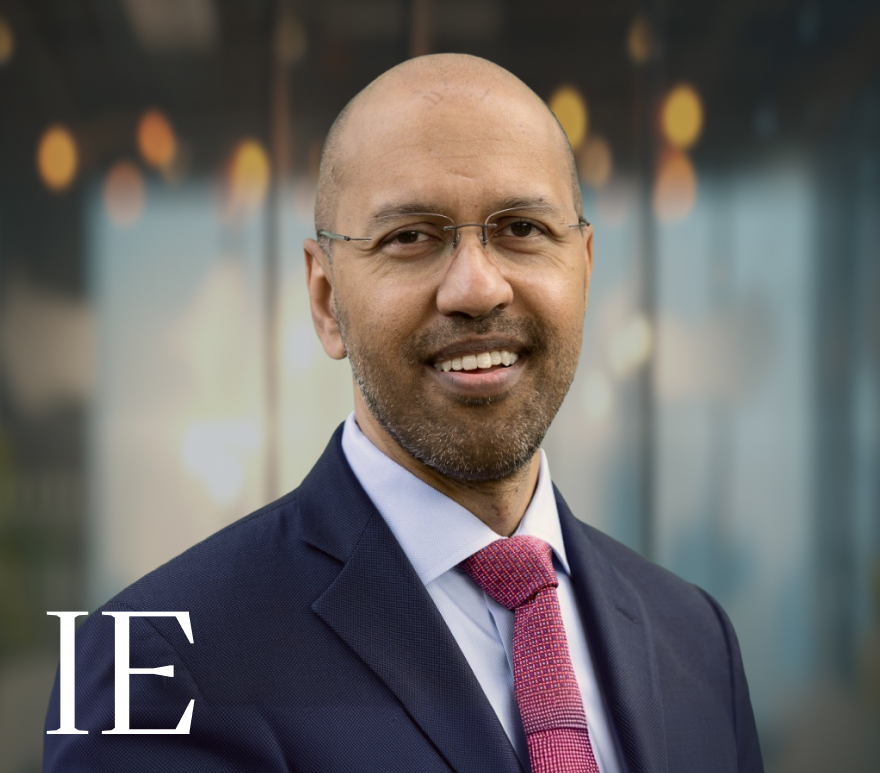
On today's episode of The Innovators' Exchange, I'm delighted to welcome Saugata Saha. Saugata is the president of the Market Intelligence Division at S&P Global, as well as serving as its Chief Data Officer. When Saugata joined S&P Global back in 2014, it was a roughly $20 billion market cap company. Over the next decade, Saugata has been at the heart of the evolution and the innovation that's taken place at S&P that now makes an industry leader in over $125 billion market cap company. We look forward to exploring that journey and what might come next with Saugata in today's conversation. Thank you for being here.
Saugata Saha:
Thank you for having me here, Hiten.
Hiten:
Why don't we start with you introducing yourself and the role that you currently serve at the company?
Saugata:
Well, at S&P Global, I have two roles. One, I run the Market Intelligence Division, which is about a $5 billion revenue business focused on largely capital markets, but increasingly well beyond capital markets. We do data research, software managed services, and I'm also the chief data officer for the company. And that's a new role I took on around the same time I started the Market Intelligence role. And the goal there is to really bring together all of the data assets from across the company and leverage scale, speed, and efficiency, as we think about the new AI-driven era.
Hiten:
We'll get into some of the exciting things you must see in that seat. It's $5 billion of revenue. It's probably bigger than most companies out there in one singular division. But before we go there, I always like to hear a little bit about what preceded this. You know, there was a Saugata Saha before there was a president and Chief Data Officer. So, perhaps take us through your journey to date, maybe when you were growing up, your education in India. Maybe start there.
Saugata:
So, I was born and raised in India, Hiten. I worked in Mumbai for several years. My first job out of college was at a large Indian conglomerate called the Godrej Group. Not very well known outside of India, but they're very, very well known in India. And I had a bunch of different roles there. My first job was in sales, which I hated at that time, but in hindsight, it's probably the most enriching role I've had in terms of how much I've learned in a two-and-a-half-year period. My second job at the company was billing e-commerce product for B2B [Business To Business] sales and automatic product distribution, which was way ahead of its time. I'm talking about, you know, really early 2000s. My third job at the company, I was fortunate enough to work for the chairman of the company, Mr. Mr. Godrej, the third generation of the founding family.
Learned a lot and he encouraged me to apply to business school. So that got me to business school in the US where I spent two years getting my degree. And then I decided to go work for McKinsey and Company in New York. Another fine firm, just as fine as Oliver Wyman. And I did that for about six and a half, seven years. Most of my work there was around financial services and a little bit on the FinTech side as well. The FinTech side was what was interesting and exciting, and the financial services side to some extent kept me off a plane, because in New York there's a lot of financial services work. One of the companies I was serving back then was called McGraw Hill Companies, and they had a new CEO come in, Doug Peterson, and I got to know Doug, who was the CEO. Jack Callahan, the CFO, John Harris Ford, who was the head of HR quite well, Martina Cheung, who was back then, you know, had a different role in strategy and operations.
I got to know them quite well. And at some point, an opportunity opened up at the company, and I really bought into Doug's vision of what could be made of that company, which was back then McGraw Hill Companies. And it was just undergoing a massive transformation. It was literally the first part of the first innings. And I signed on for that journey. And I've been at the company for about 12 years now. Had many, many different roles, been very fortunate to be at the right time at the right place. In many of those situations. I came into the company to run strategy for our ratings division, which back in 2014 was undergoing a significant transformation because of change in regulations, et cetera.
Then I ran post-merger integration when we acquired SNL, SNL Financial, not to be mistaken for Saturday Night Live. And that was an incredible learning experience working with Mike Chinn and several others on the leadership team. And then I went into having several other operator roles, including running operations for the global technology team. I run strategy and finance for the company, as I should say, strategy and financial planning for the company FP&A. That is. And then of course I was a CFO for a couple of our divisions. And then for the last five years or so, I've been running businesses before running the Market Intelligence business. I ran our energy business, which is also data research software focused largely on commodity markets. And then, of course, most recently, running the Market Intelligence division, and also the Chief Data Officer of the company. So, quite an interesting and exciting run at the company.
Hiten:
Yeah, amazing run. And let me just, I always like to look at what's happened at the start and if it's influencing what you're doing now, like any parallels between the Godrej Group, which is a, it sounds like a large organization where you held multiple roles. Anything in that learning that's enabled you to quite seamlessly navigate through quite a large organization like S&P?
Saugata:
I'd say a couple of things, Hiten, couple of things come to mind. So, one is the general environment around the business. You know, I worked at the Godrej Group in the late 90s, early 00s, which is when India was undergoing a massive transformation, you know, the backend of the journey of the liberalization, which started in the early 1990s. And it was being in a business where everything was changing around you and you had to change to stay relevant. And that's kind of also been the journey with S&P Global over the last 12 years. And even now. Over the last 12 years, technology in particular has created a lot of opportunities for the business to do things differently. And AI [Artificial Intelligence], of course, is now creating a whole new set of opportunities. So, there's one set of parallels there. The second I would say is, you know, from a formative experience perspective, I think some of my richest learning years with the two and a half years I spent in sales, in consumer products in India.
The joke is, you know, when I graduated in university in India, you get hired by, you know, straight from school by one of these large companies, and you go there and you spend a first year doing a management training program where you're really learning the ropes, and then they give you an assignment. And my boss slash mentor who was kind of steering me through the management training program, I basically told him one thing that I'll do anything other than sales. And you know, when it came for assignments at the end of the year, he called me into his office and say, you know, I have an assignment for you, you won't like it now, but you'll thank me 20 years later and I want you to go to sales because you're highly analytical. You do a lot of things very well, cutting your teeth in sales will do you really good. And he was right. And you know, I think that was a job where I learned so much that I'm still, you know, utilizing what I'm learning.
Hiten:
Sent him a thank you letter? Did you tell him?
Saugata:
I did. I'm still in touch with him. You know, he is retired now. You know, when he comes to New York, he visits me and if I find myself in Mumbai, I try to go meet with him. But yeah, I owe him a lot. And you know, I've also been very fortunate to have a lot of mentors and sponsors throughout my, you know, years, who've looked out for me, given me good advice, opened doors for me, and kind of, you know, created opportunities that I'm very, very grateful for.
Hiten:
Super. The other thing I want to pick upon is this India-US bridge link. If I look at many of the leading FITS companies, many of the financial services or technology companies now are growing, and larger employee bases in India, even though they're global companies or US-headquartered. Talk to me about the transition, what it was like back then moving from, from India to the US? What's it like now, given huge parts of your team and organization are there? Like what was it like then? What's it like now? How helpful is it that you're one of these key bridges?
Saugata:
So, in my case, the transition when I moved from India, having worked there for, call it seven years, to the US, the transition was a bit of a soft landing, because I had two years in this bubble called, you know, the business school where it is a bit of a bubble. It's not quite a different culture because, you know, I went to business school at Harvard, and the class is very international. And it is a bit of a bubble, because it's not really the workplace in the US. The real quasi culture shock happened when I showed up in McKinsey the first day and I said, oh, this is very different compared to working in India. Of course, you know, this is way back when, you know, this is 2007. And working in the US was quite different from working in India. McKinsey was quite different from working in a large industrial family-owned company. And also as a consultant, you know, I was starting at pretty much the entry level post MBA [Master of Business Administration] role.
That was also quite different, you know, with a job I gave up, I was already quite senior in the organization having been there for seven years. So, my first year at McKinsey was incredibly tough. And as I say, you know, if you get past the first year in McKinsey, it progressively gets better. That was true for me, but more so for me than I think most others. Just given so many adjustments I was making, settling in, and you know, and then it all worked out.
Hiten:
Fantastic. And then last one on this, when you've arrived at S&P, describe how the organization felt then? So, it's still pretty substantial, it's still pretty at scale, kind of what, paint the picture of what it looked like then, what would be still familiar to those who are employed there now? Or what would be noticeably different if you, you know, when you walk the halls a decade later?
Saugata:
I think more things are different than familiar. I think what's still the same is probably a focus on values and ethics and doing right, which is kind of, you know, what we were always trying to do, if I look back at 2014 when I joined the company. But if you look at the fundamental company that we are today, we are way more efficient. We are way more customer focused, we are way more technology savvy. We are bigger, we have a lot more influence and you know, we are far more successful, you know, in terms of client metrics, the impact we have on clients, if you look at financial metrics, if you look at what we do to kind of grow and develop our people. So it's been a massive change. And I would say, you know, it's not just a business card that's changed the name or the logos, which has changed, but I think people, if you put both companies side by side, I think they would be unrecognizable to each other.
12 years is a long time. And I think, you know, for people who've been on that journey, the change has happened slowly, but the change was important and essential for us to kind of be successful in the new era that we live in.
Hiten:
Super, super. Let's get to your current seat now. You have an incredibly privileged seat, $5 billion of revenue nearly that you're managing, you're one of the giants in the ecosystem. When you look at what's going on out there, AI, data, all of the shifts and patterns that are out there. Like what excites you the most? Like where do you see most opportunity?
Saugata:
I think AI fundamentally, Hiten, creates massive amount of opportunity for us as a company. And in particular for the Market Intelligence division that I run. I know there's a lot of consternation out there around what AI will mean for businesses like ours. But let me break it down into a few simple terms of, you know, why I think it's a huge opportunity for us. First is, AI fundamentally will help us get a lot more efficient, like it will with every other company. And efficiency just doesn't mean, you know, we will have eight people doing the work of 10. It means 10 people can do the work of 20, and frankly we'd never be able to go hire 20 people, because the business model would break down pretty quickly. So that's one, and that, that's across the board. And that truly applies to a lot of knowledge-based industries. It's not that unique to S&P Global.
The second thing that's going to happen is if you look at each of our businesses, let me give you some color around why we think AI will be a tailwind. So first is the data business.
In data, and also to some extent in research, it's basically what fuels AI models, not just from a training perspective, but for those models to do, you know, you train a model, it becomes, generally speaking smart, but to answer useful questions or answer questions usefully in the business context, it needs relevant data. And that relevant data is typically sitting on only one of two places. With data providers like us or within large organizations. And both of them present a huge unlock. So, you take a fundamental, you know, a good model, you take proprietary data from a company like us and you take the data that's sitting within the organization, you put the three together, that's a huge value unlock, which would not have been possible in the past. And that's why I think businesses like ours, which have proprietary data, data that you really can't find elsewhere, or it's incredibly hard to find, are sitting on a gold mine.
So that's one. If you look at some of our software solutions, we've got quite a few software solutions within the Market Intelligence business. Firstly, I'd say, you know, we don't do a lot of horizontal software solutions. All of ours are vertical. Our solutions apply to a very specific niche. And within that niche, they are kind of the go-to products like take bank, syndicated bank loans, right? Very esoteric. You need a lot of subject matter 'know-how' and expertise. You need associated data sets, you need network effect of everybody wanting to use that product. And that's what makes these products, you know, relevant. And there we can repower a lot of our software solutions using new AI-driven technology. And that creates a huge tailwind for us to serve our customers even better. So, I could go on, as you can see, but you know, just to give you a sense of how and why we think AI will be a net tailwind to the business.
Hiten:
And what does, when you're thinking about innovating, responding to some of those opportunities, what does that look like when you have such a large- scale organization? There's clearly going to be some advantages of being the giant you are and the perspective it brings you. What are also some of the trade-offs that you've got to navigate? What does it look like to innovate in such a giant that you're kind of steering?
Saugata:
I'd say, Hiten, that's something I think about all the time. And there are three, broadly three fundamental things I think any organization needs to have to be innovative and successful in today's days. Number one is, being nimble, really nimble. And I'll come back to that. Number two is, be very close to the customer. And number three, put decision making where you can take advantage of being nimble, have a culture of being able to move quickly, and a culture of being able to listen to customers and translate that into what solutions do customers need tomorrow or day after tomorrow and the year after. Right? And those three in combination create magic and it's not, neither of them is easy, you know, nimble is, I think even probably the most important attribute in today's day and age, a nimble, agile, whatever, you know, a lot of objectives which get used for it. But, you know, I like to remind people that I'll wage a good money that if you go back to 2019 and look at the, you know, business plans, contingency plans and whatever strategic plans of any large company, you won't find a COVID-19 scenario. Right?
Hiten:
Yes.
Saugata:
But COVID-19 happened and the companies which dealt with it well and came out shining on the other end were the ones who were nimble, could make decisions quickly and didn't get gummed up in kind of, you know, trying to overthink solutions. The second is, you know, what's happening with customers. I think right now, right now, especially we are in a world where even customers are unsure of what the future's gonna look like. And that creates an opportunity for companies like us to spend time with customers to understand how these workflows can and will change and create products which will be relevant tomorrow and day after. And if we can do that with the right decision makers in an organization making the right long-term decisions, I think that's a winning success formula.
Hiten:
Let's go a bit deeper there because I think your point on customers is key, and often a lot of this part of the world has kind of been product, product, product, capability, capability, capability. And actually, now people are realizing that there needs to be tied to sync up with the customers. So, what are you hearing from customers about their needs, their requirements, them navigating the AI journey? Where is their, the new frontier of cooperation or collaboration where they're going to need help from someone like yourself or an equivalent organization?
Saugata:
I think customers, at least our large financial services customers, you know, they're trying to figure out what the future looks like in the context of how far this technology will change their own workflows, will change their customers. Because, you know, we are a B2B business, and our customers eventually are buying our product generally not for their own consumption, but to serve another stakeholder, which is almost always a customer. So, they're trying to figure out how those customers will change. I think very quickly the realization has dawned that workflows in the future will be fundamentally different from what it looks like today. Two, that new workflow will be powered by AI in some way, shape, or form. Three, they need to unlock the data within their organizations and externally to be able to get to that future vision. And four, I think most organizations are struggling with the path to getting to that, where they don't want to be disruptive to their existing workflows and businesses, but at the same time they want to be building for the future. And what I'm seeing across the board is a pretty broad-based small innovation, small fonts of innovation where customers are trying a lot of different things. And that's probably happening at a rate and pace I haven't seen in the last 10 years.
Hiten:
And then if you didn't have enough on your plate running Market Intelligence, you took on the extra hat of being the group’s Chief Data Officer. Talk to me about your priorities and your objectives with that arm.
Saugata:
Sure. And maybe some context would be helpful. So, at S&P Global, we've always been managed. We are a large company, and this is not rocket science. We are large companies who manage as multiple business units or divisions. So, we've been managed as multiple divisions. You know, up until the recent past, we had five divisions. With the spin out of the mobility business, which was announced last year, we'll have four divisions. Each of these divisions historically has managed their own data sets and data capabilities independently. When Martina Chung became the CEO in late 2024, part of her vision for the company was to find ways to leverage the scale and capabilities we can have with data as a horizontal capability. And therein, she asked me to kind of take on this new role and find out, you know, how we can explore the art of the possible here. And what we set forth is kind of a strategy, which has essentially, you know, call it four main parts to it.
The first is, how do you take data from across the company and drive growth? So, call that the growth pillar. The second one is around speed, which is, we know there is a lot of new tools coming in online, which will dramatically change the speed and pace at which we can work with data. How do we make that happen? So, call that the speed pillar. The third is around efficiency, which is we know that there is the holy grail of STP as we call it, in data, which is Stay Through Processing, which is, you know, data comes in, goes out, humans don't touch it. We are very far from that. So, for the foreseeable future we'll be, you know, human in the loop, but how do we kind of march towards a vision where we can get more efficient? And that could mean, you know, 10 people are doing the work of 20 people or instead of 10 people, you have eight people either way.
And then the last one is around, you know, how do you think about quality and excellence, which is, we are already very, very well known for the quality of what we produce, but is there a way to amp it up in a way that becomes even more of a differentiator with the competitors? So that's kind of the strategy of, you know, what we are doing with data across the company and what we are working on. The first one, which is around driving growth is the most exciting one. And it's even more exciting right now because of all the possibilities that are opened up by AI.
It sounds easy; it's incredibly challenging to do. Because data sets don't talk to each other. Forget different divisions within a company. Sometimes data sets from different products don't talk to each other. And you know, people might think that, hey, why can't you just use, you know, the simple mapping field like you would do in Excel to do a quote unquote a VLOOKUP. Well, it turns out, you know, they don't even have a common data sets, don't have a common identifier across. So, you got to use things like, you know, in the past, fuzzy matching, but increasingly AI-driven matching to map data sets. And we've built a lot of capabilities around that with proprietary tools, like one we talk about called Gearbox or Kensho Link, which help us do that. And so, it's very exciting, you know, you map all the data, create this one large data repository. So, we are putting all of our data into a single data fabric where we are going to distribute data from.
We are also working on creating metadata for our data and a lot of what I'm talking about then nobody would have thought relevant even three years ago
We are also working on creating metadata for our data. And a lot of what I'm talking about, Hiten, nobody would've thought relevant even three years ago. Yeah. Because the big, big reason for having metadata, which is data, which describes data, is to make sure that agents and machines, when they're consuming our data directly can interpret and understand it correctly. So, humans, you know, have the knack to look at a data set and say, hey, you know, this column says revenues and given the names of the company, it looks like it's US dollar billions. Yes. A machine would never be able to tell that. It might think it's Japanese Yen. So, metadata describes what the data is and helps machines work with it. Again, you know, sounds easy. Doing it across thousands of data sets requires a fair amount of investment of time, coordination, program management. And then, of course, you know, we've got to be commercially astute how we do it, because we don't want to do everything in one go. We want to do it in a sequence manner from highest commercial value to lowest.
Hiten:
Well, it feels like it's an incredibly critical cause, right? Laying the foundations for everything else that's going to be built on. So, sounds like another key initiative on your plate. Last question in this section, there's forever interest in what we call the desktop product. So, whether that be your own Capital IQ Pro, whether that be a Bloomberg, or a Factiva, or an LSEG equivalent, lots and lots of interest in the industry around desktop. Your views on the, how the desktop product may evolve in the coming years, particularly in the context of AI?
Saugata:
So, in our case, and I think in the case of many of the players in the industry, Hiten, the desktop has been evolving over the last several years. I should put it in the context that, you know, people get very fixated on what's happening in the industry. What's changing. If you look at the industry itself, if you go back over the last two decades, it has undergone multiple transformations. You know, 20 years ago for companies like ours, a significant line item on the expense roster would be FedEx or USPS, because USPS being United States Postal Service, because primary means of distribution was mailing out booklets, right? You and I might remember the early days when, you know, that used to happen that eventually became a web-based distribution platform. Soon we were distributing directly to computers, clients' computers, and that's when the feeds businesses started to take off. Started with flat files, the most primitive form of distribution, then came APIs [Application Programming Interface], then came Databricks and Snowflake. Now we are distributing through via MCP [Model Context Protocol] servers, you know, we've got our LLM [Large Language Model] ready data, which is also being distributed through APIs. So it's a bit of an evolution that's happened. What has happened, what I'd call machine to machine distribution has taken off is that the desktop growth has slowed down, right?
So if you look at a business like ours as well, our machine-to-machine distribution business, which we sometimes colloquially call feeds or data management solutions, that has been growing really, really fast and the desktop business, the desktop growth has slowed down. And that's okay because ultimately our job or our value creation proposition is not about putting a proprietary desktop in front of clients. It is about making our data available to clients in a format that they can use.
And as we move into a more of an AI-driven and agentic world, the machine-to-machine consumption will compound, the growth will compound even more and desktop won't grow as fast. And that's okay, because I think there's even more value creation opportunity for us. But in the meantime, you know, we have several hundred thousand users who are very loyal users of, you know, our desktop. And what we are doing for them is we are enhancing the desktop. So, what we are doing is we are building in a lot of AI capabilities natively into the desktop. These include features like ChatIQ, which is essentially a conversational interface, but it can pull from our proprietary data set, which if you went just onto a LLMs web-based interface, you wouldn't have access to a proprietary database. We've got a tool called Document Intel. Document intelligence, Doc Intel in short we call it, which can work with our documents, Ks and Qs and all of the good stuff you find in the Capital IQ solutions database.
Clients can also upload their database, and you can run synthesis and, you know, Q&A [Questions & Answers], and conversational search, and queries, and inference on those documents. Again, you couldn't do that with just a, you know, regular LLMs web-based interface. So, we are building in fairly advanced capabilities into our desktop platform. We are modernizing our data feeds capabilities. As I mentioned, we are building out a data fabric with, you know, semantic layer metadata, et cetera. And then we've also built out LLM-ready APIs, LRAs, as we call it for short, which clients can use to pull data directly into their LLMs.
Hiten:
This might be an unfair question, but it is one that's on everyone's mind. So, we'll ask it. A lot of people are trying to wrestle with how do they think about how the value of that data then evolves as the distribution changes. A lot of people point to how much more valuable data came when it went from being in a PDF, or an eyeballs into a feed, and an API, and now lots of people are trying to understand and explore how valuable is that data when you're, under these new more modern distribution channels that you described. Any initial thoughts or guidelines that you're trying to, as you try and work this one out?
Saugata:
I take, based on the last few years of history in terms of, as I mentioned then, you know, this transition's been going on for a while. Our take on the last few years is that the data remains just as valuable. The sources of value changes. With a desktop, what happens is that you're taking your own data or we are taking our own data, layering on top of it, certain proprietary workflow tools, which clients come to love and kind of memorize and it becomes a part of their, you know, muscle memory, institutional memory in many cases, which they use. And there's value there.
When we do a machine-to-machine distribution, the value is firstly in the core data, but then it's also in how clients take that data and build it into their workflow solutions, because the data is not being consumed raw, for most part. It's being built into their own workflow solutions very often combined with their own data or other data from other sources. So, in combination that becomes also very valuable. So, our senses both are incredibly valuable and sticky for our clients. And just looking at, you know, how clients work with our data and looking forward at, into their plans around how they want to continue to work with that data, it's apparent that they find value in both.
Hiten:
It's going to be a fascinating journey ahead and as I said, I think you guys are going to come even more critically important to enable in the ecosystem. So, look, I think it's going to be another, another exciting decade ahead, it seems. I'm going to switch tack for a moment and go back to some of your personal learnings and reflections, as listeners often benefit from hearing some of the things you've picked up along the way. So, I wanted to first ask like, the most interesting challenge, or lesson learned from the journey that you've had to date?
Saugata:
Building for the future while running a business for the present. I think that tends to be always the interesting challenge I have where, you know, I'm trying to satisfy stakeholders with near-term outcomes, but my eyes are solely on the ball, which is, you know, year, two years, three years down the road.
Hiten:
Yeah. And does that show up as well when you are, you know, we talked about a lot about your public ownership and some of the commitments there. A lot of your competitors are privately-owned and are probably fighting against you at a smaller perimeter, like, you know, 50 million, 100 million perimeter. How does it feel when you're trying to, you're driving like the airship and you're trying to, you know, you're almost competing with the drones. Is that, how do you kind of balance that challenge?
Saugata:
My view on that, Hiten, always has been that you go to battle with the army you have. And the army you have is the important one. Not the army you want. And the army you have always has strengths. It's for the General, and not to get too deep into military metaphors, but it's up to the General to figure out what's the strengths in my army. And you know, if you have a large army, that's a strength in itself, but you're not going to be good at, you know, you are at a warfare. So, you figure out what's your strength and how do you leverage that, and then how do you fight whoever you're fighting on the battlefield. So, you know, I think we find ways to be successful with the attributes we have and we find ways to use those same strengths to offset the strengths that we don't have.
Hiten:
I love that. Love that. You should set, put that on the mugs and hand them out. Find ways to be successful with the attributes you have. I think that's very wise words for many. Outside of work. Is there any hobbies or interests that you partake in that kind of enable you to be successful in the day job?
Saugata:
I, well hobbies that enable me to be successful in my day job. Certainly not music, because I love listening to music of various kinds, but, you know, I'm a bit of a geek. I like doing strange things like coding on weekends, occasionally. I have less and less time for that, I'll be honest with you. But, you know, just very, very interested in technology and what's happening, and how it's evolving and all of that. I spend a disproportionate amount of time reading blogs and, you know, Substack, and listening to YouTube videos and a lot of that does flow into kind of having a deeper understanding of how these technologies are evolving, going to evolve and generally helps me have a better view on, you know, where this ship is going.
Hiten:
And if we flick open your phone now and looked at that playlist of what you've been listening to since your flight over. What are the, what are some of the highlights that you're willing to share in terms of your go-to music?
Saugata:
I have my music, my music tastes are very, very esoteric. It goes all the way from, you know, Abba, all the way to Mika, which is a French singer, all the way to, I don't know, it's like, you know, Taylor Swift. So, I'm not ashamed to admit it. I've never been to a concert though, and I don't think I could. But yeah, my music tastes are pretty esoteric and I love all kinds of music.
Hiten:
All the feel-good vibes in there.
Saugata:
Pretty much.
Hiten:
Last one. We invite guests to throw and share the spotlight. So, call out an individual or a company that you'd like listeners to look up and pay attention to.
Saugata:
You know, I think there's a huge cast of creators on YouTube who are creating some incredible content at the confluence of technology and, you know, where the world's going. So, there are two I'll put out there, one not really related to work, one quasi related to work. The quasi related to work is Dwarkesh Patel. It's a, you know, podcaster, young guy, does incredibly deep podcasts on topics related to technology, and I always learn a lot when I listen to them. And then the second one is, you know, there's this guy called MKBHD who reviews stuff, reviews consumer electronics, essentially. I haven't been able to put a finger, you know, a finger on the pulse of what makes him so great, but there something in his reviews about how he talks about technology in a way that it's both appeals to somebody who really geeks out on that stuff and also appeals to somebody who's just going to be a casual consumer of that technology.
Hiten:
It feels like the Patels have gone from motels and shopkeeping to podcasts it seems. So that's probably our new expertise.
Saugata:
Patels have come a long way.
Hiten:
Well, look, thank you very much for taking the time. You've got an incredibly busy schedule, you've got a lot going on, and I know that the listeners in the audience will really benefit from hearing your perspectives and views. So, Saugata, thank you for taking the time and joining us on the show today.
Saugata:
Thank you, Hiten.
This transcript was edited for clarity.