


The executives who lead co-brand and private-label credit card programs have a wide range of roles and responsibilities, but they’re all working to answer the same questions: How are their programs currently faring? Where should they invest to grow and improve performance? What will it take to ensure lasting success in the future? And that’s just the starting point. These leaders need to go deep on countless details, from analyzing cardholder spending trends to refining the value proposition to optimizing contract models.
A proper effort to address these issues must begin with hard data on the state of partner card programs. That’s why we recently surveyed card program leaders at major brands in travel, retail, automotive, and other sectors, revealing a detailed view of their top priorities and challenges. Some of the results were surprising and some confirmed our expectations, but all of them can help provide program leaders and card issuers with a solid foundation for making strategic decisions moving forward. Below are some of the most noteworthy findings from the research.
Credit card programs are growing, but adoption remains low
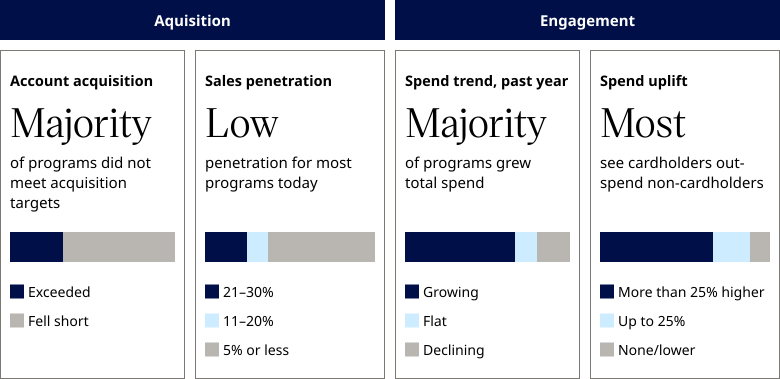
Indisputably, credit card programs drive significant value. A majority of survey respondents’ card programs boosted total spend volume in the past year. Most also reported that their cardholders outspend their other customers, often by more than 25%.
At the same time, most programs did not meet their acquisition targets. Multiple factors are to blame. For instance, a low risk appetite may cause issuers to cap approvals below levels that merchants would prefer. Clunky, antiquated application processes also hinder activation. As a result, the sales penetration rate for many programs remains in the single digits, showing there’s considerable untapped potential.
Digital customer experience remains a weak spot for card programs
Card program leaders ranked digital experience as their single biggest pain point. While customers might have positive shopping experiences that build brand affinity and encourage them to apply, unwieldy application flows, outdated processes, and poorly embedded card experiences within the customer journey discourage sign-ups and ongoing card use.
The survey also found that customer engagement is the top card program priority for merchants. They’re making efforts to modernize the digital and app experience while investing in stronger reward offerings. Other areas of focus include reducing costs, increasing remuneration from issuers, and boosting brand awareness.
Earn rates remain the biggest driver of credit card loyalty
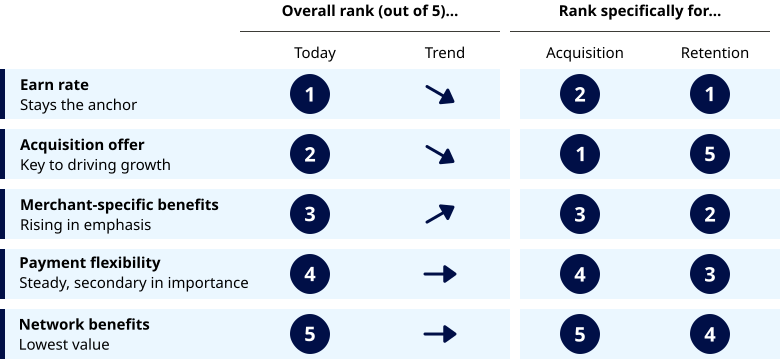
Merchants ranked earn rate above (in order) acquisition offers, merchant-specific benefits, payment flexibility, and network benefits. They also placed earn rate in the top spot for achieving customer retention. That reinforces the notion that consistent rewards keep a card top-of-wallet, though few partner cards achieve that status. Finally, earn rate ranked a close second when it comes to driving new customer acquisition, trailing only acquisition offers.
Survey respondents said they expect merchant-specific benefits to play a greater role in the next two to three years as they try to differentiate themselves in a highly competitive market. Delivering high perceived value at low marginal cost with unique perks, exclusives, and experiences is already second in importance for driving retention and third for acquisition.
Merchants remain open to switching card issuers
Despite widespread satisfaction with issuers, very few respondents ruled out switching upon the expiration of their current contracts. That goes to show that merchants are opportunistic — they now tend to view issuers as vendors as much as partners, and will be quick to explore new ones if there’s potential for greater upside.
Gaps in service quality and cultural fit have led to merchants’ openness to more responsive and better-aligned issuers. Overall, economic and technology concerns are the primary drivers of their interest in switching. Merchants are moving away from models that feature fixed royalties and acquisition bounties in favor of more holistic value-sharing agreements that incentivize acquisition and share profits with issuers.
How merchants and issuers can strengthen credit card programs
Both sides of the credit card program partnership have the same ambition: to ramp up engagement and convert it into top-of-wallet spend. For merchants, that means promoting loyalty through a customer-friendly digital experience and ample experiential benefits. Issuers, meanwhile, need to align economic models to merchants’ evolving preferences, optimize underwriting rules, and invest in elements of the value proposition that will drive customer retention. The more the two groups commit to removing traditional friction points and innovating their programs together, the closer they’ll come to achieving their common goals.
