


Shaky consumer confidence hasn’t dampened the appetite for travel among Chinese consumers. But they are more discerning in how and where they spend money. Long-haul trips are down, domestic travel is up, and even the highest earners are rethinking spending on personal luxury goods.
Our consumer sentiment index for high-income households fell to 69 in May 2025, down from 81 in October 2022. Confidence in the year ahead and even five years from now has also declined. The steepest drop is among affluent Gen Z in Tier 1 cities, who are now the most pessimistic segment, according to our 2025 Chinese Traveler Survey. We surveyed 2,000 high-income consumers — defined as households with a monthly income exceeding ¥30,000 (approximately USD $4,000) — across Tier 1 to Tier 5 cities to understand how shifting sentiment is reshaping travel and shopping behavior.
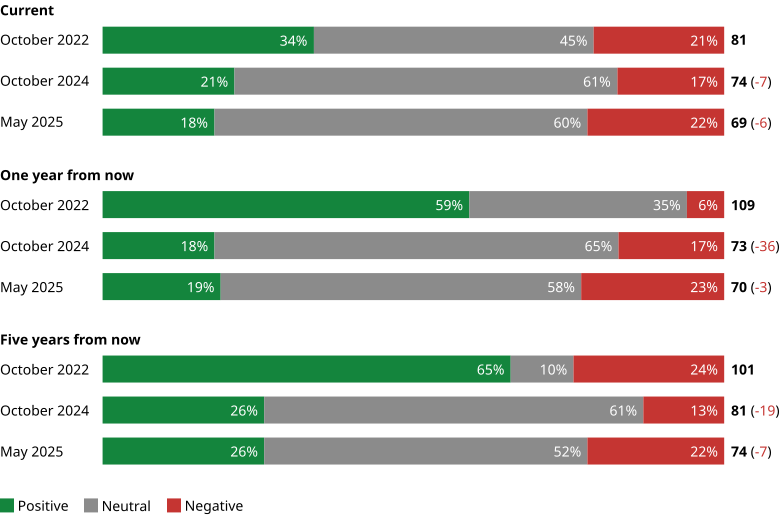
This shift in sentiment is more than just a short-term dip, it’s a change in mindset. Many had expected economic conditions to improve after the COVID-19 pandemic. But that recovery failed to materialize, further eroding confidence that things will get better. As a result, people are saving more and spending less.
Chinese travel demand remains strong despite economic uncertainty
Despite this uncertainty, the desire to travel remains high, but people are doing it more carefully. International travel among high-income households is starting to inch up, with 27% of respondents saying they have already traveled or plan to travel abroad this year. On the other hand, domestic travel demand remains strong, consistent with our observations since 2019.
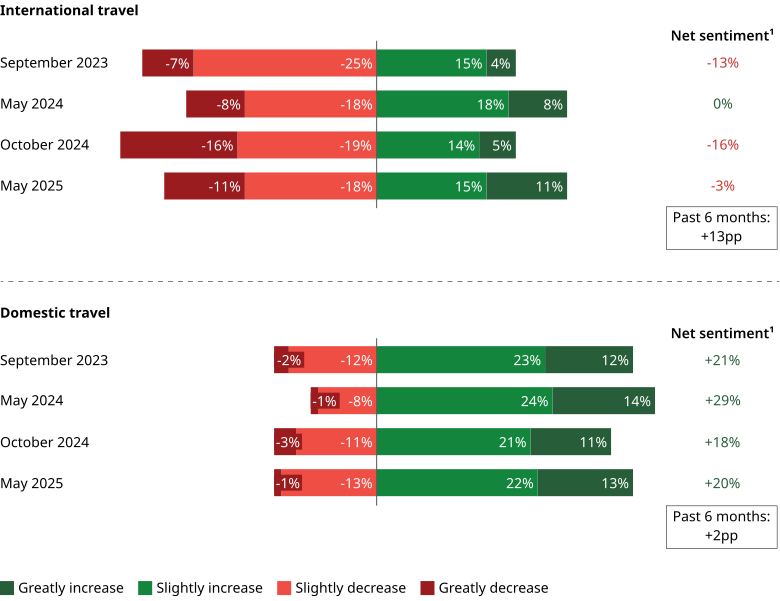
When travel abroad does happen, closer destinations are gaining favor. Japan is seeing a surge in interest, helped by its 10-year visa for affluent travelers and a favorable exchange rate. In contrast, Hong Kong is seeing less interest, particularly among experienced travelers, as visitor numbers are declining and average spending has dropped. Macau is performing slightly better, with stable average spending and rising visitor traffic.
Spending habits while traveling are changing as well. Instead of buying personal luxury goods, people are spending on experiences, food, and activities that feel more personal. For many, this is a shift in perspective. In the past, people expected their income to grow, so splurging on a luxury item felt justifiable. Now that confidence in the future has dropped, especially among younger generations, many prefer to spend on things that bring immediate enjoyment.
Why luxury spending habits have declined among Chinese Gen Zers
While some high-income consumers are still spending, the overall picture is more cautious and more polarized. Our survey reveals that casual luxury shoppers — defined as those spending less than ¥40,000 annually on luxury goods — have significantly reduced their luxury spending compared to a year ago. In contrast, the spending behavior of core luxury shoppers — those spending ¥40,000 or more annually — has remained largely unchanged.
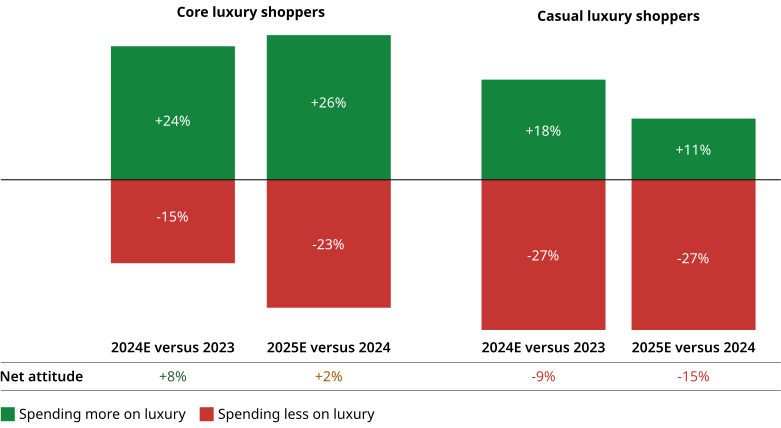
The share of luxury purchases made overseas has stabilized at 25% of total luxury spend across affluent consumers. In other words, shopping abroad is no longer the default. Many consumers — especially younger ones — are simply spending less.
Among Gen Z travelers, the shift is even more pronounced. This group was once a key driver of luxury’s post-pandemic rebound, but that momentum is fading. Instead of shopping for high-end items, Gen Z travelers are redirecting their budgets toward food, local cultural activities, and wellness-focused experiences. For this generation, luxury is no longer about labels. They now expect brands to offer more than just products: they are looking for connection, relevance, and personal value, and they are quicker to walk away when those expectations are not met.
Consumer brands must adjust their strategies to better engage Chinese travelers
While travel is back, it looks different. People are more selective about how often they travel, where they go, and what they spend. They still want meaningful experiences, but they are making more deliberate choices along the way.
Luxury brands must deliver clear value through brand experience as consumers now require more justification for spending. The polarized behavior of luxury shoppers means brands must build more immersive, experience-led engagement for both consumer acquisition and retention. Since the pre-COVID-19 luxury frenzy is unlikely to return, luxury brands should refine their expansion plans to reflect the moderate growth expected in the future.
The opportunity is still there, but the path to growth looks very different. Success will depend on how well brands can respond to changing expectations and meet travelers where they are now — not where they were three years ago.
Unlock more in-depth travel and spending insights to understand the affluent Chinese consumer better — contact us for the full 2025 Chinese Traveler Survey results below.