


How An Insurtech Unicorn Closes The Global Protection Gap
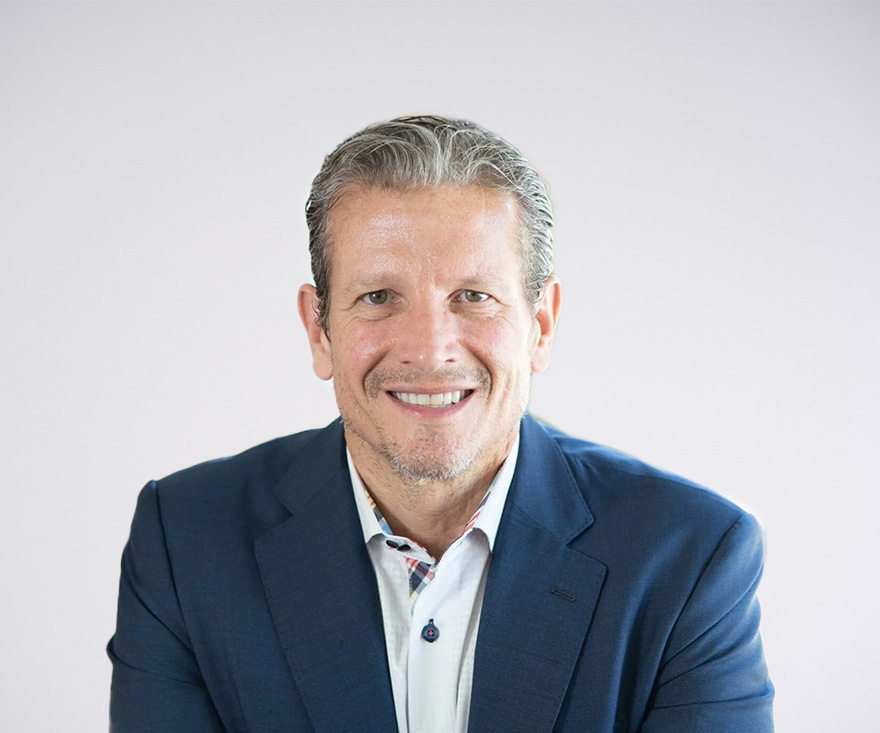
 The most important piece of advice I would give to anyone is to become a real student of the problem. If you understand the problem, I guarantee you can find a solutionRob Schimek, Founder and Group CEO, bolttech
- About The Podcast
- Transcript
- Featured In This Episode
In this episode of Reinventing Insurance, Rob Schimek, founder and group CEO of bolttech, shares his journey from working at leading insurers to building a global Insurtech unicorn. Rob explains how his experience inside large incumbents shaped bolttech’s strategy, and why the company focuses on closing the global protection gap rather than disrupting the industry for its own sake.
The conversation explores how ecosystems, embedded insurance, and AI are reshaping insurers' roles from claim payers to problem solvers. Rob also shares his partnership playbook, his views on online safety and cyber risk, and his advice for the next generation of insurance talent on using AI wisely while maintaining a balance between life and work.
Key talking points:
The career journey from incumbent executive to Insurtech founder and CEO.
Reasons behind the increasing global protection gap, influenced by demographics, climate change, and technology.
The role of embedded insurance, exchanges, and ecosystem partnerships in bridging protection gaps.
The shift toward prediction, prevention, online safety, and service-led insurance models.
The potential of AI to empower agents, enhance customer service, and influence the future skills needed in the insurance industry.
This episode is part of our Reinventing Insurance series, a series that explores best practices for taking a CustomerFirst approach to innovation within Insurance. Throughout this series, host Paul Ricard discusses lessons, challenges, and new ways of working with guests who will share their first-hand experiences.
Subscribe for more on: Apple Podcasts | Spotify
This episode was first broadcast in January 2026.
From Incumbent to Unicorn, And Where Insurance Goes Next
Paul Ricard: Welcome to Reinventing Insurance. Today, I’m thrilled to welcome Rob Schimek, founder and group CEO of bolttech. Welcome, Rob.
Rob Schimek: Paul, thanks for having me. It’s great to be here today.
Paul: For the benefit of our listeners, why don’t you give us a quick intro about yourself?
Rob: I have a long career; these days, it feels like it’s too long a career in insurance. I’m from the US. I spent 18 years with Deloitte & Touche, and my main clients were insurance clients. I helped to take MetLife public back in 2000 – that was really my primary insurance client.
But I couldn’t wait to get my hands on the steering wheel and actually get into the action. So, I left Deloitte and went into a really interesting company, AIG, in 2005 after 18 years at Deloitte, then did a 12-year tour of duty at AIG – I loved it and had a great experience, great company, great people, but boy, did I see a lot in 12 years, as you know from 2005 until 2017. In 2017, I decided that it would be time for me to try to do something on my own. I want to take all those lessons from the things that I saw in those years at AIG and in Deloitte. I wanted to try to do them myself as the founder of a business, which is how bolttech came to be.
Paul: So you went from essentially consulting, to very much the leadership positions at an incumbent, to now the startup life. I’m curious, what does a day in the life of Rob look like nowadays?
Rob: It’s very interesting when you are the founder and the CEO of a startup — your mind is always racing about what it could be that you have to be looking for. The entire team is counting on me to make sure that I’m thinking about what’s coming around the next corner and what’s ahead. I have to be honest and say, I usually don’t need an alarm to wake up in the mornings. Just my mind is already racing. I already have ideas that there are things I want to get to.
Like today: no alarm, just woke up. Of course, I knew I would be here with you. So maybe it was the great anticipation of this opportunity. Really, I try to spend as much of my time focused on my team and supporting them, as well as focusing on really setting the course for the company’s future strategy. And the big picture things that the team depends on me to do. I don’t want to do their job. I want to set the future so that they can do their job and feel really good that the things that they’re doing will have an outcome that will make a difference.
Paul: What about outside of work? I believe you’re quite an active person outside of running one of the largest Insurtech companies in the world.
Rob: I do have a somewhat adventurous physical calendar also. My wife is a great partner for me. She’s my training partner. One of the things that we do a lot together is training for big races. I think she likes to push me to achieve my next goal. Right now, we are training for seven marathons on seven continents in seven consecutive days. It’s called the World Marathon Challenge 777. That is what occupies me outside of work.
Paul: You had me already at seven marathons on seven continents in seven consecutive days. It is definitely taking it to the next level! Good luck with that for sure.
Diving in, talking about the evolution of insurance, I would love to get your take on some of the big shifts that you have seen in the last few years that have been, and still are, impacting the insurance industry. What are the big things that come to mind for you?
Rob: I think the thing that always jumps out at me whenever I talk about what’s happening in the industry is, I like to ground myself in the big driver of what really makes me get up every day: you’re seeing this growing protection gap. Imagine it being like you’re swimming in a swimming pool, and it’s one of those pools where they have the tide going against you. You’re swimming against it, but no matter how fast you swim, it seems like you’re losing ground, and that is actually true. The global protection gap is getting bigger. It’s not like it is a new trend. It is just an interesting observation that even with many companies focused on this, and as many resources that get poured into it, it is as though the further behind it seems we get as an industry.
Paul: Where do you see the biggest challenge, in terms of what are some of the biggest needs, if you will, that are making up this growing protection gap? What do you think is the biggest cause for that gap increasing on the industry’s end?
Rob: I typically think about the protection gap, maybe in three pieces of the pie. The first one is, I would say, it evolves because of the evolution of the population of the world. We’re getting bigger. There are more of us. A hundred years ago, there were two billion people on the planet. Today, there are eight billion. We’re getting older as an overall global population. You have this aging effect that we’re seeing. As a result of that, there’s just more stuff [to think about]. There is this growing divide between how many years you’ll live to be chronologically and how long your body will hold up biologically. I’d say that’s one of three drivers.
The second big driver of the protection gap, in my view, is the climate, the world, the globe itself. It’s very hard to deny that there is global warming, that there is climate change. You’re getting an increased level of natural catastrophes. Those natural catastrophes drive real problems for people who have homes in the [catastrophe-prone] areas to protect their homes. And that’s a big challenge.
The third driver that I look to is technology. Technology has such an amazing, positive influence on the world for us today. But it also comes with so many big challenges. Cyber is one of the great examples of where you’ve got a risk that is continuing to grow, and the needs of that risk are not being met. We didn’t even think about AI in the same way that we think about it today, just a few years ago. The pace of evolution of that is so fast. The risks associated with it are moving so fast, and it’s really hard for the industry to keep up to provide solutions at the pace at which technology is evolving.
Paul: Totally agree with the three points you brought up. Whether we’re talking about property and casualty risks, life insurance, or health insurance, that protection gap is being impacted across all of these. Really across all three of the elements you mentioned, but especially as you talk about climate, natural catastrophes, and technology, it’s not just individuals, it is also corporations that are impacted. It’s interesting because obviously you have the big [companies] that get bigger. But resilience is not something that is an infinite supply. They need to become more resilient, because we all depend on them. You also have a flurry of small businesses that also have needs and have only so much budget and time for all these things. So, two challenges that I see on the insurance industry side. One is, you’re now asking insurers to play so many different roles because it’s not just about, “Here’s a loss. Let me pay a check.” There’s an element of now we need to provide support, we need to predict, and we need to prevent a lot of the risks that you mentioned. It is all about prevention.
Rob: 100% correct.
Paul: So, there’s an element of how you actually play in that ecosystem. What role does the insurer play versus others? I think that’s one big challenge that I’m seeing: we’re at a time where the entire ecosystem has not yet figured out how these different pieces come together.
Rob: I love the point that you made. I think that a big picture comment that I make is when I think about bolttech, the company that we’ve created, is that we don’t come here with hubris that says, we’re here to disrupt all of you incumbents, because you don’t know what you’re doing. Yes, they do. Trust me, I’ve been in the industry. When you live with the problem for as long as you do, you can see how hard everyone’s working to try to solve it.
The problem is that it’s impossible to run your existing business, take care of all the things you’ve got to take care of, and morph into what it will take to survive and thrive and help the world in the future. That’s really hard. So we have a view that we are an enabling capability, not a disrupting capability. And it’s very much the mindset that we take.
I also really like your point about the evolution of change from being “an event happens, and we pay your claim, and maybe we pay your claim super-fast”. Take an example of how customer expectations are evolving. If you were, for example, locked out of your Airbnb and you had your sleeping child on your shoulder. It’s midnight, and everyone’s tired. Do you really think that it excites you to know that you’re going to get a claim payment really fast? That does nothing. Actually, what I would rather have is a solution – I’d rather have someone come unlock the door. Let me in. Let me put the kid to bed, and then we can have a really good experience that would be more meaningful.
The nature of what these solutions are doesn’t just simply become “I’m going to pay your claim, and I’m going to pay it fast”, but it is “I’m going to actually provide a service element to what I do.” As you said, if you go back even further, what if I could actually stop that event from happening in the first place? And boy, that concept of prediction and prevention is really such an important element of where the world is going. It is very hard for all of the incumbent players to suddenly become prediction and prevention experts at the exact same time. They’re pretty well suited for it, because they understand a lot about where the claims come from and what’s the source of the problems. But coming up with a way to predict and prevent it, now that’s even a different skill set. We all should be open-minded to any great ideas, great technologies, or great ways to predict and prevent that complement what we as an existing industry are already doing.
Paul: I want to ask you, also, maybe to tell us a little bit about bolttech and just share a little bit about what you do. Before I do this, I just want to tell you about a funny anecdote, building on top of this. One of my colleagues was describing his experience of breaking his iPhone in the middle of a trip overseas and rushing to try to find an Apple store and get all these things figured out. The phone got changed relatively fast; the experience was okay. But what he was telling me – back to your point and I love your Airbnb anecdote – it was not so much about the phone breaking down, it was about he broke down because nowadays, if you don’t have your phone, suddenly you can’t contact anybody, can’t orient yourself, can’t pay for anything, can’t order a car, can’t do anything. So back to the job to be done and the problem side – it is like, how do you orient yourself around solving that end-to-end customer need, versus just “This loss happened. Let me pay something.”
Rob: Exactly. Maybe I should do exactly as you just said and rewind for a moment. What is it that bolttech is doing in the first place? I think if I summarized for you, I’d say we are the world’s most internationally scaled Insurtech focused on distribution. We operate at the intersection of technology and insurance distribution. Our real mission is to create the world’s leading technology-enabled ecosystem. We’re an ecosystem player for protection and insurance.
In the US, we operate one of the most robust insurance exchanges in the country. We quote US$75 billion of premium every 12 months on behalf of our ecosystem partners, meaning we are B2B2C. If it is some distribution partner who’s asking for a premium quote, we’re getting that quote from the incumbent insurance carriers. Our technology is helping to facilitate that. To keep it in context, we quote US$150 million in property insurance, homeowners' or renters’ insurance, every day, 365 days a year. We quote US$50 million of auto insurance every day, 365 days a year. And we do that through really big ecosystem partners. Now the US has more than 330 million people. It is a big ecosystem; it’s a very sophisticated insurance market.
But our view is that this global protection gap is exactly, as I say, global. It extends well beyond the US. When we go to take some of what we have learned in America and bring it to Asia and Europe, the question is: how does that fit? Can you really just pick something up from the US and magically descend upon Europe or Asia like “hey, it works”? No, it requires you to have a somewhat different approach.
In Asia, in particular, I live day to day in Singapore. This is a great place where you can see what’s happening in the world and where the future of the world is headed. The real connection point – back to the point you made earlier – is how do the human beings in Asia relate to their day-to-day life in their most important way? Usually, that tends to be through their electronic device, through their cell phone. You’ll see in the US it begins with an insurance exchange, where maybe the first product will offer its property insurance, homeowners’ insurance, or automobile insurance, but in Europe or in Asia, maybe that’s not the protection at all. Here in Asia, somebody really has a cell phone that might be the most important connection point that they have to the world, [such as] all the points you made: it’s how I make payments, it’s how I stay close to my family, it’s how I’m connected to the world. It’s where my entire life is. If anything happens to that, we need to be able to get you back online immediately. And so, in my description of who we are, I say we provide this ecosystem for protection and insurance.
Paul: It’s been great to see bolttech growing. On your latest fundraising, you were valued at over US$2 billion. I think that makes you the largest Insurtech in the world. Congratulations on that.
It’s been really interesting seeing things evolving, where the first wave was almost tech-first, insurance second, and was missing some of the fundamentals, either direct carriers or solution providers that were not quite achieving what they were supposed to do. I think now there’s a lot more of a blend between insurance and protection expertise and technology expertise that’s achieving everything you’re mentioning. Insurers are definitely not the only members of that ecosystem. You mentioned other solution providers. What I’m also seeing is there are plenty more assistance and service-type solutions that are circumventing all of this altogether. Where do you see that going? Do you see insurers almost doubling down on their role in the value chain? Do you see the ecosystem just becoming a lot more diversified with players like bolttech?
Rob: It’s a great question, and you’re correct when you think about it from the perspective of this evolution, where you’re seeing services and the protection come together. Think about it, even from a simplistic example of auto insurance – there is the auto accident that you know when there’s an accident, someone then has to potentially get the car towed, then you need a ride home from where you are. There are other things that have to happen besides just getting your claim paid and getting your car repaired, and there are some really great examples in the insurance industry where the incumbents have done a great job of building service capabilities. I think you would see that with Allianz Partners providing assistance capabilities that complement their insurance capabilities. You see that with Generali doing something in a very similar manner to Europ Assistance. There are great examples of where this assistance capability is complementing traditional insurance.
I just think that [complement] will continue to really expand. As an example, when we think about personal cyber, we actually refer to it as online safety. If you really wanted to get it right, you would actually stop someone from getting hacked in the first place. There are great companies that already specialize in that, and there’s no need in the marketplace for someone to recreate it. Why would I try to recreate what McAfee does, or what Norton Utilities does? It doesn’t make any sense. But we should try to partner with capabilities like that to stop the attack from happening in the first place.
If it happens, or what if, for example, you provide a cell phone to your young child? If I give my kid a phone, Lord knows what’s going to happen when they get access to that phone and all the devious things that can happen in the market. There are also companies that help with monitoring your child, monitoring what their activity has been, preventing them from getting access to things that you don’t want them to have access to, and actually using technology to observe. Do we see the signs of cyberbullying? What if you could take a capability that prevents an issue, again, like a McAfee or Norton Utilities, and put it together with something like the monitoring of your child’s behavior, and put that together with an assistance capability that says, “in the event that you did get hacked, maybe we need to restore your social media pages”. Maybe there is a monetary need in the event that you made a mistake, and someone got access to one of your accounts. It’s that combination. It’s not just one element that is the solution. Customers these days have greater expectations for what our capabilities are, and that range of capabilities includes things that no one was thinking about 10 years ago, maybe a little bit more, but just starting to think of them five years ago, but they are becoming the real-life expectation today.
Paul: By the way, I love that you’re calling it “online safety” rather than “personal cyber”, because if you take 10 people in the street and talk to them about “personal cyber”, I don’t think anybody would understand what that means.
Rob: I agree that they would not.
Paul: It’s also interesting because the combination of all the elements you mentioned – from a customer standpoint, it makes a lot of sense, but also from a risk provider and a risk backer standpoint, it also means that I have a much deeper and broader understanding of the risk. I can underwrite it a lot more accurately and consciously than just providing the coverage without having all these peripherals.
Rob: Absolutely. You can think of it for sure, as there is no insurance company that just wants you to have a lawsuit; they can pay your claim. I think they’re quite happy to pay the claim. They’re very good at it. But certainly, everyone benefits if you can avoid the claim. There are going to be many more advancements in how technologically savvy we can be to help avoid a claim from happening in the first place.
Paul: I want to talk about your playbook and your hard-earned lessons learned through the years. You’ve been in the insurance industry for a long time. You’ve been in many different leadership seats, and you are now leading a global Insurtech. What are some of the biggest forks in the road for you? What are some of the things that either you had to unlearn through the years, or things that have really become part of your day-to-day nowadays, from all these years in the industry? What are the biggest tricks of the trade of Rob Schimek?
Rob: It’s hard to say any one thing. You’re right. It’s tricks, plural of the trade or experiences, but some of these experiences just remind you that in your lifetime, it’s important to learn all the time, learn things that you want to repeat, and also learn things that you do not want to repeat.
When I left New York, I moved out here to Singapore, because that’s where the capital is, which attracted me to create bolttech. It came from here in Asia. I was proud to have the opportunity to say I have so many experiences. I can’t wait to deploy them, but I had to ask myself, which lessons do I want to repeat? And which lessons do I not want to repeat? There are some lessons that I felt were useful for me to repeat. One of them, for example, having worked in a large incumbent, was the power of this international footprint. To try to provide my solution to the global protection gap, but focusing on a single geography did not resonate with me. So, number one, I would say I fell in love with the idea of this global footprint, a global problem in a global solution. It also became very clear to me, by the way, to never lose track of what it is that you set out to do. Like the old Yogi Berra analogy, if you don’t know where you’re going, be careful because you might just get there. You had to be super clear on your north star. We understand at bolttech what it is we’re trying to do. We are here to help close a global protection gap. We focus on six very clear distribution channels, not seven, not 10, not a hundred, but six. We do that because we want to not lose track of that north star. We’re always thinking about everything we’re doing, really helping to address this global protection gap.
One of the things I had to unlearn, maybe two things I had to unlearn. One was the DIY, “do it yourself” mentality that exists many times in established players, maybe sometimes in players who have resources that are greater than what a little Insurtech startup like bolttech would have had. We didn’t have the ability to have a DIY mentality. Instead, ours was [a mentality of] ecosystem, collaboration, partnership. Because I don’t have time. I want to die of old age. I just don’t want to die of old age building bolttech.
You have to do it at pace, and you have to be able to do it at scale. It means that you’re going to have to work with others who will help you to do that. In my previous experience, I had to do things myself way too much. The only solution is that we build it ourselves; that we’re the best provider. Insurance companies are great at understanding risk, protecting risk, and handling the claims. They are, however, not the best technology providers in the world. You know that is true. We try to be at that place where they could use some help to enable what they’re trying to do. [Things could] happen better, faster, and smarter than they otherwise would have happened on their own. Over time, if we’re successful together, I’m fine with once you’ve proven the concept and you’re ready to build it yourself, then go ahead and build it yourself. But why should a customer wait for years for us to do everything over and over again as an industry, when, in fact, we could collaborate differently as an industry and make everything happen faster? And so really, this DIY mentality, do-it-yourself mentality, is one thing I really had to overcome.
The other thing is just the bureaucracy of not being agile. I think the concept of agility is so important in today’s environment. When you do everything yourself, or you have a big, bureaucratic environment where you can’t get decisions made, then you can’t get from decision to execution and implementation; it's just too long for the customer to wait. Who wants to hear – “I’ve got a problem.” “Ok, no problem. I’ll be back. I’ll solve your problem for you. Come back in a few years.” Nobody wants to be told to come back in a few years. They want it solved yesterday.
Paul: I’m sure if we put a bunch of large incumbent executives in this room, they would probably all say that they do want a partner and they do want to be more agile. These companies are more than 100 years old. It’s a DNA in a culture built over time with a lot of really great things. But now things are accelerating exponentially. That cultural change is really important.
It is interesting what you were saying about technology. There’s been a lot of trial and error. A lot of insurance companies also have looked at what big tech companies have done, and think: how can we emulate this? There’s been big tech investments and all these other things, but these haven’t necessarily panned out the way they should. Now there seems to be more appetite for: “ok, maybe let’s rethink the way we operate.” Especially now in the age of AI, is there an opportunity for these companies to do things differently? What I would love to ask you is, what do you think if you were to wind back the clock, what would you potentially do differently to accelerate that journey?
Rob: If I had one item that I could choose for what I would do differently, and I wish that I were smarter about this earlier in my career, it would be to become an expert in the problem before trying to implement the solution. We encounter this all the time. For example, in conversations regarding AI today, there are AI solutions for almost everything you can imagine. The only problem is, do those solutions really address the problem? The most important piece of advice I would give to anyone is to become a real student of the problem. If you understand the problem, I guarantee you can find a solution. The problem is that people tend to go backwards. They start with: “I’ve got a great solution, or I have the answer. Now let me figure out if that actually fits the problem.” I think that’s a big mistake.
Paul: This is not unique to the insurance industry for sure. In a way, insurance companies are product manufacturers, so you have assembly lines around different types of products. And to your point, there’s the element of how we incrementally innovate around what we’ve done, versus let’s try to create a breakthrough, market-defining innovation. So, I appreciate very much the challenge that you’re saying.
We talked a lot about partnerships, and you’ve developed a flurry of partnerships as part of bolttech. What are the ingredients that are really, really making the difference, not just between a good and a bad partnership, but also between a good and a really great category-defining partnership?
Rob: I love the question. The very first thing that I would say is that at bolttech, we are a B2B2C player. Everything we do is about partnerships. We access the end customer through a distribution partnership. By definition, it is that partnership that is the starting point for how we’re even going to come to market in the first place. This is actually in the lifeblood of what we do.
We have an interesting example of what I think it has taken to be super successful with a partnership. We have a partnership in Korea with LG U+. Everyone would know LG Electronics, a fantastic organization. We began working with LG U+, even though they were already working with an incumbent insurer. We are not the first player to come in, but the very first thing that we did was come up with an innovative solution. The innovative solution was different than a typical insurance solution because what we wanted was an answer that was always going to be “yes, we can solve your problem,” not “let me evaluate the claim, and if the problem meets the claim, the claim will be solved or not solved”. We came to Korea with a first-ever solution. It requires a lot of homework, a lot of hard work, a lot of research, and a lot of regulatory compliance, because we’re in a highly regulated industry. But that was the starting point. Every period, since then, we continue to raise the bar on ourselves with that partner. So that was the innovation, and it’s not that now we can sit back and all is good. Other players see that innovation and will emulate it. By the way, I welcome that because that’s how the whole industry will get better. But as they emulate, you then have to think about what’s next and always be innovating. So constant innovation, not day one, but all the time.
The second thing is shared goals. It is not enough for me to have KPIs, or for my partner to have KPIs; we need to have joint KPIs. If we have joint KPIs, their success is my success, my success is their success. That’s win, win, win. And that’s how you’re going to really make this work.
The third thing that I’ll say is that you said this earlier, Paul, and you’re quite right – many times we think of ourselves as an industry from the product-first lens. It should be that I start with the customer in mind, and I work backward to what the product that I need is. We have done that exceptionally well. We are always focused on providing tailored products, which means we start with the customer and say, “What do you need?” We’ll then work backward to what the supply is that’s out there. Do we have to cobble a few things together to create a very specific, very tailored solution for the marketplace? But as much as we like tailored, we also need it to be affordable. I can have a solution, but if you can’t afford to buy it, then it doesn’t matter. It also has to be hyper accessible. At the exact point that you need it, I want that capability to be at your fingertips. You don’t even have to think. That’s the concept of embedded insurance. Sometimes people throw all these words together like they’re one thing. They’ll sometimes talk about embedded insurance like buying the pack of chewing gum at the checkout counter at that very end. No, sometimes buying embedded insurance for us is homeowners’ insurance or auto insurance that’s embedded into the journey, and that’s not a low-ticket item like buying your chewing gum.
When you think about making those partners succeed, I think it is about those three primary drivers: keep raising the bar on themselves, innovate, innovate, innovate; this joint KPI; and work backward from the client needs.
Paul: I love that, and your point about KPIs not being successful if the innovation is going to come from one side, but not from the other, right? And the working backward from the customer needs is probably taking another dimension from that partner. So that point on shared KPIs and shared alignment, and how crucial a priority those are, is something that’s not lost on me. What I find, oftentimes, that might be lost on people is that these things are actually hard, and they’re almost hard by design. Again, I’m not saying everything about it is hard, but really cracking that challenge is not something that happens without much effort.
Rob: There are so many things that we really, really believe in, but making that happen overnight, it’s not fantasy land. This is real life. I’ll use an example that everyone, especially here in Asia, is familiar with: the concept of bancassurance. The banks are a great distribution channel for protection products, life insurance, health insurance, etc. I believe that you’ll continue to see the emergence of other classes that are very similar.
An example is, I think you’ll see telco assurance really emerge. You pay them for the access to your Wi-Fi, you pay them for access to your broadband, so they’re in a perfectly trusted position. They also know information about you. They know if you’ve changed your address, that’s the right time to offer you renters’ insurance or homeowners’ insurance. They know that if you bought your broadband, that’s the right time to offer you online safety protection. They know that if you put your roaming on, you’re going to be traveling. There are things that they know. If they use this information smartly, it creates the future of what insurance would be. But that concept is something we’ve believed in since the entire existence of bolttech. Did it happen overnight? Is it happening overnight? No. Again, this is real life. This is not fantasy land. Is it happening today in front of our eyes? Yes, in a really big way: there are great players who are really sophisticated with this. I think of MasOrange in Spain as a great example of a company; they get it, they are on it, they are sophisticated, they are smart, they are paving the way. But someone had to be the pioneer. They are more of an example of a pioneer. Many people had to figure out years before that you could work with the telco to provide protection for the cell phone itself. That’s true. It’s quite important. But if that’s both your starting position and your end destination, this is not going to be a great long-term solution.
Paul: Interestingly, the point you just made reminds me, in all these Silicon Valley companies, you see the gamut of exactly what you said. I’ll share a bad example first: Theranos. Theranos’ vision was: we want all these medical tests to happen with a single drop of blood. That’s a fantastic vision. That’s a beautiful vision. And by the way, that should be the vision for the entire lab testing industry, for a lot of the healthcare industry. But it’s almost like they went for the starting point to be that vision. As we know, it has all unraveled in a very dramatic way. I think that, in a way, it probably slowed down a lot of things along the way, because probably a lot of startups in that ecosystem that would have marched towards a similar vision have been blocked from funding and all these other things for a long period of time.
Then on the flip side of this, you have SpaceX, where the vision is: we want to colonize other planets, colonize Mars. Great. You’re not going to do this on day one – what do you need to do first? You need to build the rockets. You need the rocket to be able to lift off and land. They’re marching towards this right step after step, which I think is a much more interesting way. It doesn’t happen overnight, but I like the relentless focus on achieving that vision.
If you fast-forward five or 10 years, how will it feel to a customer? There are also a lot of companies that are trying to – I don’t like the word – but to “own” the customer or to be the primary relationship with the customer. AI is opening new front doors as well. I know you said you’re enabling more than disrupting, but AI is potentially disrupting the way we think about this. My question is, with all of this, how do you see five, 10 years from now? How could this look like?
Rob: I love the point that you made about not trying to make day one fit what the long-term vision is. The fact of life is, it will be a journey, it will be an evolution. Let’s keep it for a moment on AI. I’ll make a couple of observations. When I think about the insurance industry, the first thing that we both know is that AI will affect every element of the value stream. From the way that we take the original customer information and understand the risk, to the way that we underwrite the risk, to the way that we service the client that puts out all of the policy documentation necessary for the client, and ultimately, to the way that we adjudicate the claims. The very first thing I’m going to say is: big picture, everything is going to change, and they will all be enabled by AI. But I think people who think about the demise of the agent, or the end of people being involved, I think they are talking as though day one is the end game. I think it’s not a realistic or practical element. As a matter of fact, I don’t think it’s even the desirable element.
What I think you’re going to see is so much more enablement by an agent. As you say, do I need a full robo-advisor? Or do I need an AI-enabled assisted agent? If I got the combination of those two, will that really work? I think in the next five years, we’ll really begin to perfect this AI-enabled agent in a much better way. Better trained. Better answers. Faster. Take more of the administration away from that agent and let the agent become a real problem solver and work with the customer. That’s one. Another one is that we’ll have 24/7 customer service. I live in Asia, but I contact the US to try to get customer service for anything. It’s a nightmare, right? Very hard to do when I’m 12 hours or 13 hours ahead of you, sitting in Singapore versus in New York City. There will be a whole change to where that is in real time, 24/7, better than ever. It will be AI-enabled, but it will not be a full-out replacement for the human being. It will be an enablement or complement to human capability. That’s what I think we all want to see. The science fiction movie of “I quickly jumped past the human [element], and it’s just all AI” – I don’t believe that is really what will happen.
Paul: I completely agree with you on this. It’s often discussed that AI is almost reduced to an automation device and cost reduction device, which I think is way too narrow compared to the augmentation of the enablement that we’re talking about.
Looking at players today, there are two clear paths: where “we’re very strong somewhere. Let’s build scale.” From a balance sheet standpoint, having scale matters. But the other path is the specialization path, where it’s “I’m very good at solving these problems and understanding this population, whether it’s individuals or corporates.” I think we see a lot of this in the insurance industry. How can you continuously build your competitive modes to continue augmenting your expertise? I think that’s a lot of what we’ll see.
The other point I was going to make, when you were talking about agents or individuals that could engage with customers, what was going through my head is, again, the shift from product pushing or product selling to problem solving as well, which is what we were discussing earlier. I think there is a shift towards that generally in the financial advice industry. That’s something that AI has more and more capabilities in. There’s a focus on specialization and enablement. That’s also the shift that can happen for these individuals. There’s great potential for talent, and to your point, to become great, increasingly better problem solvers and solve a broad set of customer needs rather than just insurance or banking. The question I have is one on talent: where do you see things going in the industry from a talent standpoint? What advice would you have for the next generation on what to focus on?
Rob: Again, this is really such a great question, because it’s very much around where the world is headed. This is just where the world is headed, in my view. I believe that the future workforce doesn’t have to be an expert in how to do what it is that AI does. You have to be an expert in how to use AI to make sure that you’re doing things as efficiently and as effectively as possible.
My advice to anyone coming into the industry is, if you are in school today and thinking about how to program these things, or how to actually build AI solutions. I wouldn’t make that my number one priority. I would make it so that I understood how to use all of these tools. I could use them so smartly and so efficiently that whenever the new ones come out, I’m able to experiment with them. I’m able to implement them. I’m able to augment my capability with that. I think it’s a little bit like a kids’ soccer game – football for those of you who would be from the non-North American side of the house – when you think about a kids’ soccer game, everyone has a tendency to go one direction, or maybe they go the other direction, because that’s where the ball is today. Don’t think about where the ball is today, think about where the ball is going to be. Where I think the ball is going to be is: I didn’t follow today’s trend around AI, but instead, I was a student of how to absorb all of the things that were going on around me and be able to use what I see to make myself as important on that playing field as possible. I think you can do that if you really observe the entire game; if you get mesmerized in one little part of the game, you’re going to get lost.
Paul: Theoretically or in practice, over the next five years, where would you personally invest your chips in the industry? What are you really backing? What would you love to help accelerate in the industry?
Rob: I really believe in following what the key problems are that we have as a society, and who’s really solving those problems. You used SpaceX earlier [as an example]. I love it, because I’m not a great science expert, but here’s what I know that eventually, mankind depends on something besides the planet Earth. There have to be solutions that look to what is the next chapter. I love companies that are focused on big problems. There is no question that I would put my chips on things like closing the gap between your chronological age and your biological age. I love these longevity places – so I think solutions for the Earth, solutions for mankind, humanity, in the aging and the growing population needs, and then I think of solutions for helping to address the challenges that come along with technology.
If you think of it , there’s the great side and the challenging side of technology. We know that the great side is all the things that we’re seeing with AI; we know that’s going to create a mirror image of challenging problems that happen at the same time. So, fall in love with the problem, really understand these three or four. My three are very clear: the human race, the Earth, and technology. Those are one, two, three for me. But it doesn’t matter – choose anything that you believe is really the driver, but get back to “did I really understand the root cause?” If you focus on things that solve the root cause or focus on being a part of the future of the root cause, it’s going to go great. If you’re just out there with solutions and saying, I don’t know, I better figure out what the solution applies to, I think it will be an unfortunate crash and burn for your ship.
Paul: Rob, it’s been super inspiring to discuss these themes with you. Before we wrap, as we go into this new year, what final words of wisdom would you have for our audience?
Rob: I love what I do for a living. I’m very much dedicated to what we’re doing at bolttech, and I love this insurance industry. I love to be a part of it. But my wife is always reminding me of this need for balance. I would have to remind everybody that you exercise your body, like you exercise your mind, exercise your devotion to family, the same way you exercise your devotion to your career. It’s like being a bodybuilder and having just a strong left bicep. That looks strange, don’t do that. Have balance. Have strong left and right biceps, which means balance your brain and your body, or your family and your work. But if you don’t do those things, you will have an outcome that I think is a very suboptimal outcome. You find that balance, that you find happiness in that balance, and that’s my wish for everyone.
Paul: I’m definitely taking these words away myself for sure. Rob, thank you so much for joining us. It has really been a pleasure and a privilege to discuss these things with you today.
Rob: Paul, thanks for having me. I loved it, and I look forward to getting a chance to get more time with you in the future or maybe in a future episode.
Paul: Thank you, everyone, for listening. That was Rob Schimek, Founder and Group CEO of bolttech. That was the Reinventing Insurance Podcast, and I’ll speak to you next time.
This transcript was edited for clarity.
Rob Schimek is the founder and group CEO of bolttech, an insurtech company, where he leads global operations and drives growth and partnership opportunities. With more than 35 years of international leadership experience in the insurance industry, Rob’s previous roles include managing director and group chief operating officer at FWD Group, and president and CEO of AIG’s commercial insurance businesses worldwide.
Outside of work, Rob can be found in the gym or competing in some of the world’s toughest endurance competitions, such as the Ironman World Championships and the Antarctic Ice Marathon.
Oliver Wyman Partner and Head of Asia Pacific Insurance and Asset Management, Paul Ricard, is based in Singapore. Paul works closely with businesses to reinvent their strategies, products, and services — and to fuel top-line growth opportunities.
He works with clients across the Asia Pacific, as well as the Americas and Europe. He regularly partners with firms to reinvent their business strategy, rethink their priorities, and modernize their technology while accounting for rapidly changing customer needs. He understands his clients’ realities and thrives on helping them innovate and strengthen relationships with their customers while factoring in existing challenges.
- About The Podcast
The career journey from incumbent executive to Insurtech founder and CEO.
Reasons behind the increasing global protection gap, influenced by demographics, climate change, and technology.
The role of embedded insurance, exchanges, and ecosystem partnerships in bridging protection gaps.
The shift toward prediction, prevention, online safety, and service-led insurance models.
The potential of AI to empower agents, enhance customer service, and influence the future skills needed in the insurance industry.
- Transcript
The career journey from incumbent executive to Insurtech founder and CEO.
Reasons behind the increasing global protection gap, influenced by demographics, climate change, and technology.
The role of embedded insurance, exchanges, and ecosystem partnerships in bridging protection gaps.
The shift toward prediction, prevention, online safety, and service-led insurance models.
The potential of AI to empower agents, enhance customer service, and influence the future skills needed in the insurance industry.
- Featured In This Episode
The career journey from incumbent executive to Insurtech founder and CEO.
Reasons behind the increasing global protection gap, influenced by demographics, climate change, and technology.
The role of embedded insurance, exchanges, and ecosystem partnerships in bridging protection gaps.
The shift toward prediction, prevention, online safety, and service-led insurance models.
The potential of AI to empower agents, enhance customer service, and influence the future skills needed in the insurance industry.
In this episode of Reinventing Insurance, Rob Schimek, founder and group CEO of bolttech, shares his journey from working at leading insurers to building a global Insurtech unicorn. Rob explains how his experience inside large incumbents shaped bolttech’s strategy, and why the company focuses on closing the global protection gap rather than disrupting the industry for its own sake.
The conversation explores how ecosystems, embedded insurance, and AI are reshaping insurers' roles from claim payers to problem solvers. Rob also shares his partnership playbook, his views on online safety and cyber risk, and his advice for the next generation of insurance talent on using AI wisely while maintaining a balance between life and work.
Key talking points:
This episode is part of our Reinventing Insurance series, a series that explores best practices for taking a CustomerFirst approach to innovation within Insurance. Throughout this series, host Paul Ricard discusses lessons, challenges, and new ways of working with guests who will share their first-hand experiences.
Subscribe for more on: Apple Podcasts | Spotify
This episode was first broadcast in January 2026.
From Incumbent to Unicorn, And Where Insurance Goes Next
Paul Ricard: Welcome to Reinventing Insurance. Today, I’m thrilled to welcome Rob Schimek, founder and group CEO of bolttech. Welcome, Rob.
Rob Schimek: Paul, thanks for having me. It’s great to be here today.
Paul: For the benefit of our listeners, why don’t you give us a quick intro about yourself?
Rob: I have a long career; these days, it feels like it’s too long a career in insurance. I’m from the US. I spent 18 years with Deloitte & Touche, and my main clients were insurance clients. I helped to take MetLife public back in 2000 – that was really my primary insurance client.
But I couldn’t wait to get my hands on the steering wheel and actually get into the action. So, I left Deloitte and went into a really interesting company, AIG, in 2005 after 18 years at Deloitte, then did a 12-year tour of duty at AIG – I loved it and had a great experience, great company, great people, but boy, did I see a lot in 12 years, as you know from 2005 until 2017. In 2017, I decided that it would be time for me to try to do something on my own. I want to take all those lessons from the things that I saw in those years at AIG and in Deloitte. I wanted to try to do them myself as the founder of a business, which is how bolttech came to be.
Paul: So you went from essentially consulting, to very much the leadership positions at an incumbent, to now the startup life. I’m curious, what does a day in the life of Rob look like nowadays?
Rob: It’s very interesting when you are the founder and the CEO of a startup — your mind is always racing about what it could be that you have to be looking for. The entire team is counting on me to make sure that I’m thinking about what’s coming around the next corner and what’s ahead. I have to be honest and say, I usually don’t need an alarm to wake up in the mornings. Just my mind is already racing. I already have ideas that there are things I want to get to.
Like today: no alarm, just woke up. Of course, I knew I would be here with you. So maybe it was the great anticipation of this opportunity. Really, I try to spend as much of my time focused on my team and supporting them, as well as focusing on really setting the course for the company’s future strategy. And the big picture things that the team depends on me to do. I don’t want to do their job. I want to set the future so that they can do their job and feel really good that the things that they’re doing will have an outcome that will make a difference.
Paul: What about outside of work? I believe you’re quite an active person outside of running one of the largest Insurtech companies in the world.
Rob: I do have a somewhat adventurous physical calendar also. My wife is a great partner for me. She’s my training partner. One of the things that we do a lot together is training for big races. I think she likes to push me to achieve my next goal. Right now, we are training for seven marathons on seven continents in seven consecutive days. It’s called the World Marathon Challenge 777. That is what occupies me outside of work.
Paul: You had me already at seven marathons on seven continents in seven consecutive days. It is definitely taking it to the next level! Good luck with that for sure.
Diving in, talking about the evolution of insurance, I would love to get your take on some of the big shifts that you have seen in the last few years that have been, and still are, impacting the insurance industry. What are the big things that come to mind for you?
Rob: I think the thing that always jumps out at me whenever I talk about what’s happening in the industry is, I like to ground myself in the big driver of what really makes me get up every day: you’re seeing this growing protection gap. Imagine it being like you’re swimming in a swimming pool, and it’s one of those pools where they have the tide going against you. You’re swimming against it, but no matter how fast you swim, it seems like you’re losing ground, and that is actually true. The global protection gap is getting bigger. It’s not like it is a new trend. It is just an interesting observation that even with many companies focused on this, and as many resources that get poured into it, it is as though the further behind it seems we get as an industry.
Paul: Where do you see the biggest challenge, in terms of what are some of the biggest needs, if you will, that are making up this growing protection gap? What do you think is the biggest cause for that gap increasing on the industry’s end?
Rob: I typically think about the protection gap, maybe in three pieces of the pie. The first one is, I would say, it evolves because of the evolution of the population of the world. We’re getting bigger. There are more of us. A hundred years ago, there were two billion people on the planet. Today, there are eight billion. We’re getting older as an overall global population. You have this aging effect that we’re seeing. As a result of that, there’s just more stuff [to think about]. There is this growing divide between how many years you’ll live to be chronologically and how long your body will hold up biologically. I’d say that’s one of three drivers.
The second big driver of the protection gap, in my view, is the climate, the world, the globe itself. It’s very hard to deny that there is global warming, that there is climate change. You’re getting an increased level of natural catastrophes. Those natural catastrophes drive real problems for people who have homes in the [catastrophe-prone] areas to protect their homes. And that’s a big challenge.
The third driver that I look to is technology. Technology has such an amazing, positive influence on the world for us today. But it also comes with so many big challenges. Cyber is one of the great examples of where you’ve got a risk that is continuing to grow, and the needs of that risk are not being met. We didn’t even think about AI in the same way that we think about it today, just a few years ago. The pace of evolution of that is so fast. The risks associated with it are moving so fast, and it’s really hard for the industry to keep up to provide solutions at the pace at which technology is evolving.
Paul: Totally agree with the three points you brought up. Whether we’re talking about property and casualty risks, life insurance, or health insurance, that protection gap is being impacted across all of these. Really across all three of the elements you mentioned, but especially as you talk about climate, natural catastrophes, and technology, it’s not just individuals, it is also corporations that are impacted. It’s interesting because obviously you have the big [companies] that get bigger. But resilience is not something that is an infinite supply. They need to become more resilient, because we all depend on them. You also have a flurry of small businesses that also have needs and have only so much budget and time for all these things. So, two challenges that I see on the insurance industry side. One is, you’re now asking insurers to play so many different roles because it’s not just about, “Here’s a loss. Let me pay a check.” There’s an element of now we need to provide support, we need to predict, and we need to prevent a lot of the risks that you mentioned. It is all about prevention.
Rob: 100% correct.
Paul: So, there’s an element of how you actually play in that ecosystem. What role does the insurer play versus others? I think that’s one big challenge that I’m seeing: we’re at a time where the entire ecosystem has not yet figured out how these different pieces come together.
Rob: I love the point that you made. I think that a big picture comment that I make is when I think about bolttech, the company that we’ve created, is that we don’t come here with hubris that says, we’re here to disrupt all of you incumbents, because you don’t know what you’re doing. Yes, they do. Trust me, I’ve been in the industry. When you live with the problem for as long as you do, you can see how hard everyone’s working to try to solve it.
The problem is that it’s impossible to run your existing business, take care of all the things you’ve got to take care of, and morph into what it will take to survive and thrive and help the world in the future. That’s really hard. So we have a view that we are an enabling capability, not a disrupting capability. And it’s very much the mindset that we take.
I also really like your point about the evolution of change from being “an event happens, and we pay your claim, and maybe we pay your claim super-fast”. Take an example of how customer expectations are evolving. If you were, for example, locked out of your Airbnb and you had your sleeping child on your shoulder. It’s midnight, and everyone’s tired. Do you really think that it excites you to know that you’re going to get a claim payment really fast? That does nothing. Actually, what I would rather have is a solution – I’d rather have someone come unlock the door. Let me in. Let me put the kid to bed, and then we can have a really good experience that would be more meaningful.
The nature of what these solutions are doesn’t just simply become “I’m going to pay your claim, and I’m going to pay it fast”, but it is “I’m going to actually provide a service element to what I do.” As you said, if you go back even further, what if I could actually stop that event from happening in the first place? And boy, that concept of prediction and prevention is really such an important element of where the world is going. It is very hard for all of the incumbent players to suddenly become prediction and prevention experts at the exact same time. They’re pretty well suited for it, because they understand a lot about where the claims come from and what’s the source of the problems. But coming up with a way to predict and prevent it, now that’s even a different skill set. We all should be open-minded to any great ideas, great technologies, or great ways to predict and prevent that complement what we as an existing industry are already doing.
Paul: I want to ask you, also, maybe to tell us a little bit about bolttech and just share a little bit about what you do. Before I do this, I just want to tell you about a funny anecdote, building on top of this. One of my colleagues was describing his experience of breaking his iPhone in the middle of a trip overseas and rushing to try to find an Apple store and get all these things figured out. The phone got changed relatively fast; the experience was okay. But what he was telling me – back to your point and I love your Airbnb anecdote – it was not so much about the phone breaking down, it was about he broke down because nowadays, if you don’t have your phone, suddenly you can’t contact anybody, can’t orient yourself, can’t pay for anything, can’t order a car, can’t do anything. So back to the job to be done and the problem side – it is like, how do you orient yourself around solving that end-to-end customer need, versus just “This loss happened. Let me pay something.”
Rob: Exactly. Maybe I should do exactly as you just said and rewind for a moment. What is it that bolttech is doing in the first place? I think if I summarized for you, I’d say we are the world’s most internationally scaled Insurtech focused on distribution. We operate at the intersection of technology and insurance distribution. Our real mission is to create the world’s leading technology-enabled ecosystem. We’re an ecosystem player for protection and insurance.
In the US, we operate one of the most robust insurance exchanges in the country. We quote US$75 billion of premium every 12 months on behalf of our ecosystem partners, meaning we are B2B2C. If it is some distribution partner who’s asking for a premium quote, we’re getting that quote from the incumbent insurance carriers. Our technology is helping to facilitate that. To keep it in context, we quote US$150 million in property insurance, homeowners' or renters’ insurance, every day, 365 days a year. We quote US$50 million of auto insurance every day, 365 days a year. And we do that through really big ecosystem partners. Now the US has more than 330 million people. It is a big ecosystem; it’s a very sophisticated insurance market.
But our view is that this global protection gap is exactly, as I say, global. It extends well beyond the US. When we go to take some of what we have learned in America and bring it to Asia and Europe, the question is: how does that fit? Can you really just pick something up from the US and magically descend upon Europe or Asia like “hey, it works”? No, it requires you to have a somewhat different approach.
In Asia, in particular, I live day to day in Singapore. This is a great place where you can see what’s happening in the world and where the future of the world is headed. The real connection point – back to the point you made earlier – is how do the human beings in Asia relate to their day-to-day life in their most important way? Usually, that tends to be through their electronic device, through their cell phone. You’ll see in the US it begins with an insurance exchange, where maybe the first product will offer its property insurance, homeowners’ insurance, or automobile insurance, but in Europe or in Asia, maybe that’s not the protection at all. Here in Asia, somebody really has a cell phone that might be the most important connection point that they have to the world, [such as] all the points you made: it’s how I make payments, it’s how I stay close to my family, it’s how I’m connected to the world. It’s where my entire life is. If anything happens to that, we need to be able to get you back online immediately. And so, in my description of who we are, I say we provide this ecosystem for protection and insurance.
Paul: It’s been great to see bolttech growing. On your latest fundraising, you were valued at over US$2 billion. I think that makes you the largest Insurtech in the world. Congratulations on that.
It’s been really interesting seeing things evolving, where the first wave was almost tech-first, insurance second, and was missing some of the fundamentals, either direct carriers or solution providers that were not quite achieving what they were supposed to do. I think now there’s a lot more of a blend between insurance and protection expertise and technology expertise that’s achieving everything you’re mentioning. Insurers are definitely not the only members of that ecosystem. You mentioned other solution providers. What I’m also seeing is there are plenty more assistance and service-type solutions that are circumventing all of this altogether. Where do you see that going? Do you see insurers almost doubling down on their role in the value chain? Do you see the ecosystem just becoming a lot more diversified with players like bolttech?
Rob: It’s a great question, and you’re correct when you think about it from the perspective of this evolution, where you’re seeing services and the protection come together. Think about it, even from a simplistic example of auto insurance – there is the auto accident that you know when there’s an accident, someone then has to potentially get the car towed, then you need a ride home from where you are. There are other things that have to happen besides just getting your claim paid and getting your car repaired, and there are some really great examples in the insurance industry where the incumbents have done a great job of building service capabilities. I think you would see that with Allianz Partners providing assistance capabilities that complement their insurance capabilities. You see that with Generali doing something in a very similar manner to Europ Assistance. There are great examples of where this assistance capability is complementing traditional insurance.
I just think that [complement] will continue to really expand. As an example, when we think about personal cyber, we actually refer to it as online safety. If you really wanted to get it right, you would actually stop someone from getting hacked in the first place. There are great companies that already specialize in that, and there’s no need in the marketplace for someone to recreate it. Why would I try to recreate what McAfee does, or what Norton Utilities does? It doesn’t make any sense. But we should try to partner with capabilities like that to stop the attack from happening in the first place.
If it happens, or what if, for example, you provide a cell phone to your young child? If I give my kid a phone, Lord knows what’s going to happen when they get access to that phone and all the devious things that can happen in the market. There are also companies that help with monitoring your child, monitoring what their activity has been, preventing them from getting access to things that you don’t want them to have access to, and actually using technology to observe. Do we see the signs of cyberbullying? What if you could take a capability that prevents an issue, again, like a McAfee or Norton Utilities, and put it together with something like the monitoring of your child’s behavior, and put that together with an assistance capability that says, “in the event that you did get hacked, maybe we need to restore your social media pages”. Maybe there is a monetary need in the event that you made a mistake, and someone got access to one of your accounts. It’s that combination. It’s not just one element that is the solution. Customers these days have greater expectations for what our capabilities are, and that range of capabilities includes things that no one was thinking about 10 years ago, maybe a little bit more, but just starting to think of them five years ago, but they are becoming the real-life expectation today.
Paul: By the way, I love that you’re calling it “online safety” rather than “personal cyber”, because if you take 10 people in the street and talk to them about “personal cyber”, I don’t think anybody would understand what that means.
Rob: I agree that they would not.
Paul: It’s also interesting because the combination of all the elements you mentioned – from a customer standpoint, it makes a lot of sense, but also from a risk provider and a risk backer standpoint, it also means that I have a much deeper and broader understanding of the risk. I can underwrite it a lot more accurately and consciously than just providing the coverage without having all these peripherals.
Rob: Absolutely. You can think of it for sure, as there is no insurance company that just wants you to have a lawsuit; they can pay your claim. I think they’re quite happy to pay the claim. They’re very good at it. But certainly, everyone benefits if you can avoid the claim. There are going to be many more advancements in how technologically savvy we can be to help avoid a claim from happening in the first place.
Paul: I want to talk about your playbook and your hard-earned lessons learned through the years. You’ve been in the insurance industry for a long time. You’ve been in many different leadership seats, and you are now leading a global Insurtech. What are some of the biggest forks in the road for you? What are some of the things that either you had to unlearn through the years, or things that have really become part of your day-to-day nowadays, from all these years in the industry? What are the biggest tricks of the trade of Rob Schimek?
Rob: It’s hard to say any one thing. You’re right. It’s tricks, plural of the trade or experiences, but some of these experiences just remind you that in your lifetime, it’s important to learn all the time, learn things that you want to repeat, and also learn things that you do not want to repeat.
When I left New York, I moved out here to Singapore, because that’s where the capital is, which attracted me to create bolttech. It came from here in Asia. I was proud to have the opportunity to say I have so many experiences. I can’t wait to deploy them, but I had to ask myself, which lessons do I want to repeat? And which lessons do I not want to repeat? There are some lessons that I felt were useful for me to repeat. One of them, for example, having worked in a large incumbent, was the power of this international footprint. To try to provide my solution to the global protection gap, but focusing on a single geography did not resonate with me. So, number one, I would say I fell in love with the idea of this global footprint, a global problem in a global solution. It also became very clear to me, by the way, to never lose track of what it is that you set out to do. Like the old Yogi Berra analogy, if you don’t know where you’re going, be careful because you might just get there. You had to be super clear on your north star. We understand at bolttech what it is we’re trying to do. We are here to help close a global protection gap. We focus on six very clear distribution channels, not seven, not 10, not a hundred, but six. We do that because we want to not lose track of that north star. We’re always thinking about everything we’re doing, really helping to address this global protection gap.
One of the things I had to unlearn, maybe two things I had to unlearn. One was the DIY, “do it yourself” mentality that exists many times in established players, maybe sometimes in players who have resources that are greater than what a little Insurtech startup like bolttech would have had. We didn’t have the ability to have a DIY mentality. Instead, ours was [a mentality of] ecosystem, collaboration, partnership. Because I don’t have time. I want to die of old age. I just don’t want to die of old age building bolttech.
You have to do it at pace, and you have to be able to do it at scale. It means that you’re going to have to work with others who will help you to do that. In my previous experience, I had to do things myself way too much. The only solution is that we build it ourselves; that we’re the best provider. Insurance companies are great at understanding risk, protecting risk, and handling the claims. They are, however, not the best technology providers in the world. You know that is true. We try to be at that place where they could use some help to enable what they’re trying to do. [Things could] happen better, faster, and smarter than they otherwise would have happened on their own. Over time, if we’re successful together, I’m fine with once you’ve proven the concept and you’re ready to build it yourself, then go ahead and build it yourself. But why should a customer wait for years for us to do everything over and over again as an industry, when, in fact, we could collaborate differently as an industry and make everything happen faster? And so really, this DIY mentality, do-it-yourself mentality, is one thing I really had to overcome.
The other thing is just the bureaucracy of not being agile. I think the concept of agility is so important in today’s environment. When you do everything yourself, or you have a big, bureaucratic environment where you can’t get decisions made, then you can’t get from decision to execution and implementation; it's just too long for the customer to wait. Who wants to hear – “I’ve got a problem.” “Ok, no problem. I’ll be back. I’ll solve your problem for you. Come back in a few years.” Nobody wants to be told to come back in a few years. They want it solved yesterday.
Paul: I’m sure if we put a bunch of large incumbent executives in this room, they would probably all say that they do want a partner and they do want to be more agile. These companies are more than 100 years old. It’s a DNA in a culture built over time with a lot of really great things. But now things are accelerating exponentially. That cultural change is really important.
It is interesting what you were saying about technology. There’s been a lot of trial and error. A lot of insurance companies also have looked at what big tech companies have done, and think: how can we emulate this? There’s been big tech investments and all these other things, but these haven’t necessarily panned out the way they should. Now there seems to be more appetite for: “ok, maybe let’s rethink the way we operate.” Especially now in the age of AI, is there an opportunity for these companies to do things differently? What I would love to ask you is, what do you think if you were to wind back the clock, what would you potentially do differently to accelerate that journey?
Rob: If I had one item that I could choose for what I would do differently, and I wish that I were smarter about this earlier in my career, it would be to become an expert in the problem before trying to implement the solution. We encounter this all the time. For example, in conversations regarding AI today, there are AI solutions for almost everything you can imagine. The only problem is, do those solutions really address the problem? The most important piece of advice I would give to anyone is to become a real student of the problem. If you understand the problem, I guarantee you can find a solution. The problem is that people tend to go backwards. They start with: “I’ve got a great solution, or I have the answer. Now let me figure out if that actually fits the problem.” I think that’s a big mistake.
Paul: This is not unique to the insurance industry for sure. In a way, insurance companies are product manufacturers, so you have assembly lines around different types of products. And to your point, there’s the element of how we incrementally innovate around what we’ve done, versus let’s try to create a breakthrough, market-defining innovation. So, I appreciate very much the challenge that you’re saying.
We talked a lot about partnerships, and you’ve developed a flurry of partnerships as part of bolttech. What are the ingredients that are really, really making the difference, not just between a good and a bad partnership, but also between a good and a really great category-defining partnership?
Rob: I love the question. The very first thing that I would say is that at bolttech, we are a B2B2C player. Everything we do is about partnerships. We access the end customer through a distribution partnership. By definition, it is that partnership that is the starting point for how we’re even going to come to market in the first place. This is actually in the lifeblood of what we do.
We have an interesting example of what I think it has taken to be super successful with a partnership. We have a partnership in Korea with LG U+. Everyone would know LG Electronics, a fantastic organization. We began working with LG U+, even though they were already working with an incumbent insurer. We are not the first player to come in, but the very first thing that we did was come up with an innovative solution. The innovative solution was different than a typical insurance solution because what we wanted was an answer that was always going to be “yes, we can solve your problem,” not “let me evaluate the claim, and if the problem meets the claim, the claim will be solved or not solved”. We came to Korea with a first-ever solution. It requires a lot of homework, a lot of hard work, a lot of research, and a lot of regulatory compliance, because we’re in a highly regulated industry. But that was the starting point. Every period, since then, we continue to raise the bar on ourselves with that partner. So that was the innovation, and it’s not that now we can sit back and all is good. Other players see that innovation and will emulate it. By the way, I welcome that because that’s how the whole industry will get better. But as they emulate, you then have to think about what’s next and always be innovating. So constant innovation, not day one, but all the time.
The second thing is shared goals. It is not enough for me to have KPIs, or for my partner to have KPIs; we need to have joint KPIs. If we have joint KPIs, their success is my success, my success is their success. That’s win, win, win. And that’s how you’re going to really make this work.
The third thing that I’ll say is that you said this earlier, Paul, and you’re quite right – many times we think of ourselves as an industry from the product-first lens. It should be that I start with the customer in mind, and I work backward to what the product that I need is. We have done that exceptionally well. We are always focused on providing tailored products, which means we start with the customer and say, “What do you need?” We’ll then work backward to what the supply is that’s out there. Do we have to cobble a few things together to create a very specific, very tailored solution for the marketplace? But as much as we like tailored, we also need it to be affordable. I can have a solution, but if you can’t afford to buy it, then it doesn’t matter. It also has to be hyper accessible. At the exact point that you need it, I want that capability to be at your fingertips. You don’t even have to think. That’s the concept of embedded insurance. Sometimes people throw all these words together like they’re one thing. They’ll sometimes talk about embedded insurance like buying the pack of chewing gum at the checkout counter at that very end. No, sometimes buying embedded insurance for us is homeowners’ insurance or auto insurance that’s embedded into the journey, and that’s not a low-ticket item like buying your chewing gum.
When you think about making those partners succeed, I think it is about those three primary drivers: keep raising the bar on themselves, innovate, innovate, innovate; this joint KPI; and work backward from the client needs.
Paul: I love that, and your point about KPIs not being successful if the innovation is going to come from one side, but not from the other, right? And the working backward from the customer needs is probably taking another dimension from that partner. So that point on shared KPIs and shared alignment, and how crucial a priority those are, is something that’s not lost on me. What I find, oftentimes, that might be lost on people is that these things are actually hard, and they’re almost hard by design. Again, I’m not saying everything about it is hard, but really cracking that challenge is not something that happens without much effort.
Rob: There are so many things that we really, really believe in, but making that happen overnight, it’s not fantasy land. This is real life. I’ll use an example that everyone, especially here in Asia, is familiar with: the concept of bancassurance. The banks are a great distribution channel for protection products, life insurance, health insurance, etc. I believe that you’ll continue to see the emergence of other classes that are very similar.
An example is, I think you’ll see telco assurance really emerge. You pay them for the access to your Wi-Fi, you pay them for access to your broadband, so they’re in a perfectly trusted position. They also know information about you. They know if you’ve changed your address, that’s the right time to offer you renters’ insurance or homeowners’ insurance. They know that if you bought your broadband, that’s the right time to offer you online safety protection. They know that if you put your roaming on, you’re going to be traveling. There are things that they know. If they use this information smartly, it creates the future of what insurance would be. But that concept is something we’ve believed in since the entire existence of bolttech. Did it happen overnight? Is it happening overnight? No. Again, this is real life. This is not fantasy land. Is it happening today in front of our eyes? Yes, in a really big way: there are great players who are really sophisticated with this. I think of MasOrange in Spain as a great example of a company; they get it, they are on it, they are sophisticated, they are smart, they are paving the way. But someone had to be the pioneer. They are more of an example of a pioneer. Many people had to figure out years before that you could work with the telco to provide protection for the cell phone itself. That’s true. It’s quite important. But if that’s both your starting position and your end destination, this is not going to be a great long-term solution.
Paul: Interestingly, the point you just made reminds me, in all these Silicon Valley companies, you see the gamut of exactly what you said. I’ll share a bad example first: Theranos. Theranos’ vision was: we want all these medical tests to happen with a single drop of blood. That’s a fantastic vision. That’s a beautiful vision. And by the way, that should be the vision for the entire lab testing industry, for a lot of the healthcare industry. But it’s almost like they went for the starting point to be that vision. As we know, it has all unraveled in a very dramatic way. I think that, in a way, it probably slowed down a lot of things along the way, because probably a lot of startups in that ecosystem that would have marched towards a similar vision have been blocked from funding and all these other things for a long period of time.
Then on the flip side of this, you have SpaceX, where the vision is: we want to colonize other planets, colonize Mars. Great. You’re not going to do this on day one – what do you need to do first? You need to build the rockets. You need the rocket to be able to lift off and land. They’re marching towards this right step after step, which I think is a much more interesting way. It doesn’t happen overnight, but I like the relentless focus on achieving that vision.
If you fast-forward five or 10 years, how will it feel to a customer? There are also a lot of companies that are trying to – I don’t like the word – but to “own” the customer or to be the primary relationship with the customer. AI is opening new front doors as well. I know you said you’re enabling more than disrupting, but AI is potentially disrupting the way we think about this. My question is, with all of this, how do you see five, 10 years from now? How could this look like?
Rob: I love the point that you made about not trying to make day one fit what the long-term vision is. The fact of life is, it will be a journey, it will be an evolution. Let’s keep it for a moment on AI. I’ll make a couple of observations. When I think about the insurance industry, the first thing that we both know is that AI will affect every element of the value stream. From the way that we take the original customer information and understand the risk, to the way that we underwrite the risk, to the way that we service the client that puts out all of the policy documentation necessary for the client, and ultimately, to the way that we adjudicate the claims. The very first thing I’m going to say is: big picture, everything is going to change, and they will all be enabled by AI. But I think people who think about the demise of the agent, or the end of people being involved, I think they are talking as though day one is the end game. I think it’s not a realistic or practical element. As a matter of fact, I don’t think it’s even the desirable element.
What I think you’re going to see is so much more enablement by an agent. As you say, do I need a full robo-advisor? Or do I need an AI-enabled assisted agent? If I got the combination of those two, will that really work? I think in the next five years, we’ll really begin to perfect this AI-enabled agent in a much better way. Better trained. Better answers. Faster. Take more of the administration away from that agent and let the agent become a real problem solver and work with the customer. That’s one. Another one is that we’ll have 24/7 customer service. I live in Asia, but I contact the US to try to get customer service for anything. It’s a nightmare, right? Very hard to do when I’m 12 hours or 13 hours ahead of you, sitting in Singapore versus in New York City. There will be a whole change to where that is in real time, 24/7, better than ever. It will be AI-enabled, but it will not be a full-out replacement for the human being. It will be an enablement or complement to human capability. That’s what I think we all want to see. The science fiction movie of “I quickly jumped past the human [element], and it’s just all AI” – I don’t believe that is really what will happen.
Paul: I completely agree with you on this. It’s often discussed that AI is almost reduced to an automation device and cost reduction device, which I think is way too narrow compared to the augmentation of the enablement that we’re talking about.
Looking at players today, there are two clear paths: where “we’re very strong somewhere. Let’s build scale.” From a balance sheet standpoint, having scale matters. But the other path is the specialization path, where it’s “I’m very good at solving these problems and understanding this population, whether it’s individuals or corporates.” I think we see a lot of this in the insurance industry. How can you continuously build your competitive modes to continue augmenting your expertise? I think that’s a lot of what we’ll see.
The other point I was going to make, when you were talking about agents or individuals that could engage with customers, what was going through my head is, again, the shift from product pushing or product selling to problem solving as well, which is what we were discussing earlier. I think there is a shift towards that generally in the financial advice industry. That’s something that AI has more and more capabilities in. There’s a focus on specialization and enablement. That’s also the shift that can happen for these individuals. There’s great potential for talent, and to your point, to become great, increasingly better problem solvers and solve a broad set of customer needs rather than just insurance or banking. The question I have is one on talent: where do you see things going in the industry from a talent standpoint? What advice would you have for the next generation on what to focus on?
Rob: Again, this is really such a great question, because it’s very much around where the world is headed. This is just where the world is headed, in my view. I believe that the future workforce doesn’t have to be an expert in how to do what it is that AI does. You have to be an expert in how to use AI to make sure that you’re doing things as efficiently and as effectively as possible.
My advice to anyone coming into the industry is, if you are in school today and thinking about how to program these things, or how to actually build AI solutions. I wouldn’t make that my number one priority. I would make it so that I understood how to use all of these tools. I could use them so smartly and so efficiently that whenever the new ones come out, I’m able to experiment with them. I’m able to implement them. I’m able to augment my capability with that. I think it’s a little bit like a kids’ soccer game – football for those of you who would be from the non-North American side of the house – when you think about a kids’ soccer game, everyone has a tendency to go one direction, or maybe they go the other direction, because that’s where the ball is today. Don’t think about where the ball is today, think about where the ball is going to be. Where I think the ball is going to be is: I didn’t follow today’s trend around AI, but instead, I was a student of how to absorb all of the things that were going on around me and be able to use what I see to make myself as important on that playing field as possible. I think you can do that if you really observe the entire game; if you get mesmerized in one little part of the game, you’re going to get lost.
Paul: Theoretically or in practice, over the next five years, where would you personally invest your chips in the industry? What are you really backing? What would you love to help accelerate in the industry?
Rob: I really believe in following what the key problems are that we have as a society, and who’s really solving those problems. You used SpaceX earlier [as an example]. I love it, because I’m not a great science expert, but here’s what I know that eventually, mankind depends on something besides the planet Earth. There have to be solutions that look to what is the next chapter. I love companies that are focused on big problems. There is no question that I would put my chips on things like closing the gap between your chronological age and your biological age. I love these longevity places – so I think solutions for the Earth, solutions for mankind, humanity, in the aging and the growing population needs, and then I think of solutions for helping to address the challenges that come along with technology.
If you think of it , there’s the great side and the challenging side of technology. We know that the great side is all the things that we’re seeing with AI; we know that’s going to create a mirror image of challenging problems that happen at the same time. So, fall in love with the problem, really understand these three or four. My three are very clear: the human race, the Earth, and technology. Those are one, two, three for me. But it doesn’t matter – choose anything that you believe is really the driver, but get back to “did I really understand the root cause?” If you focus on things that solve the root cause or focus on being a part of the future of the root cause, it’s going to go great. If you’re just out there with solutions and saying, I don’t know, I better figure out what the solution applies to, I think it will be an unfortunate crash and burn for your ship.
Paul: Rob, it’s been super inspiring to discuss these themes with you. Before we wrap, as we go into this new year, what final words of wisdom would you have for our audience?
Rob: I love what I do for a living. I’m very much dedicated to what we’re doing at bolttech, and I love this insurance industry. I love to be a part of it. But my wife is always reminding me of this need for balance. I would have to remind everybody that you exercise your body, like you exercise your mind, exercise your devotion to family, the same way you exercise your devotion to your career. It’s like being a bodybuilder and having just a strong left bicep. That looks strange, don’t do that. Have balance. Have strong left and right biceps, which means balance your brain and your body, or your family and your work. But if you don’t do those things, you will have an outcome that I think is a very suboptimal outcome. You find that balance, that you find happiness in that balance, and that’s my wish for everyone.
Paul: I’m definitely taking these words away myself for sure. Rob, thank you so much for joining us. It has really been a pleasure and a privilege to discuss these things with you today.
Rob: Paul, thanks for having me. I loved it, and I look forward to getting a chance to get more time with you in the future or maybe in a future episode.
Paul: Thank you, everyone, for listening. That was Rob Schimek, Founder and Group CEO of bolttech. That was the Reinventing Insurance Podcast, and I’ll speak to you next time.
This transcript was edited for clarity.
Rob Schimek is the founder and group CEO of bolttech, an insurtech company, where he leads global operations and drives growth and partnership opportunities. With more than 35 years of international leadership experience in the insurance industry, Rob’s previous roles include managing director and group chief operating officer at FWD Group, and president and CEO of AIG’s commercial insurance businesses worldwide.
Outside of work, Rob can be found in the gym or competing in some of the world’s toughest endurance competitions, such as the Ironman World Championships and the Antarctic Ice Marathon.
Oliver Wyman Partner and Head of Asia Pacific Insurance and Asset Management, Paul Ricard, is based in Singapore. Paul works closely with businesses to reinvent their strategies, products, and services — and to fuel top-line growth opportunities.
He works with clients across the Asia Pacific, as well as the Americas and Europe. He regularly partners with firms to reinvent their business strategy, rethink their priorities, and modernize their technology while accounting for rapidly changing customer needs. He understands his clients’ realities and thrives on helping them innovate and strengthen relationships with their customers while factoring in existing challenges.
In this episode of Reinventing Insurance, Rob Schimek, founder and group CEO of bolttech, shares his journey from working at leading insurers to building a global Insurtech unicorn. Rob explains how his experience inside large incumbents shaped bolttech’s strategy, and why the company focuses on closing the global protection gap rather than disrupting the industry for its own sake.
The conversation explores how ecosystems, embedded insurance, and AI are reshaping insurers' roles from claim payers to problem solvers. Rob also shares his partnership playbook, his views on online safety and cyber risk, and his advice for the next generation of insurance talent on using AI wisely while maintaining a balance between life and work.
Key talking points:
This episode is part of our Reinventing Insurance series, a series that explores best practices for taking a CustomerFirst approach to innovation within Insurance. Throughout this series, host Paul Ricard discusses lessons, challenges, and new ways of working with guests who will share their first-hand experiences.
Subscribe for more on: Apple Podcasts | Spotify
This episode was first broadcast in January 2026.
From Incumbent to Unicorn, And Where Insurance Goes Next
Paul Ricard: Welcome to Reinventing Insurance. Today, I’m thrilled to welcome Rob Schimek, founder and group CEO of bolttech. Welcome, Rob.
Rob Schimek: Paul, thanks for having me. It’s great to be here today.
Paul: For the benefit of our listeners, why don’t you give us a quick intro about yourself?
Rob: I have a long career; these days, it feels like it’s too long a career in insurance. I’m from the US. I spent 18 years with Deloitte & Touche, and my main clients were insurance clients. I helped to take MetLife public back in 2000 – that was really my primary insurance client.
But I couldn’t wait to get my hands on the steering wheel and actually get into the action. So, I left Deloitte and went into a really interesting company, AIG, in 2005 after 18 years at Deloitte, then did a 12-year tour of duty at AIG – I loved it and had a great experience, great company, great people, but boy, did I see a lot in 12 years, as you know from 2005 until 2017. In 2017, I decided that it would be time for me to try to do something on my own. I want to take all those lessons from the things that I saw in those years at AIG and in Deloitte. I wanted to try to do them myself as the founder of a business, which is how bolttech came to be.
Paul: So you went from essentially consulting, to very much the leadership positions at an incumbent, to now the startup life. I’m curious, what does a day in the life of Rob look like nowadays?
Rob: It’s very interesting when you are the founder and the CEO of a startup — your mind is always racing about what it could be that you have to be looking for. The entire team is counting on me to make sure that I’m thinking about what’s coming around the next corner and what’s ahead. I have to be honest and say, I usually don’t need an alarm to wake up in the mornings. Just my mind is already racing. I already have ideas that there are things I want to get to.
Like today: no alarm, just woke up. Of course, I knew I would be here with you. So maybe it was the great anticipation of this opportunity. Really, I try to spend as much of my time focused on my team and supporting them, as well as focusing on really setting the course for the company’s future strategy. And the big picture things that the team depends on me to do. I don’t want to do their job. I want to set the future so that they can do their job and feel really good that the things that they’re doing will have an outcome that will make a difference.
Paul: What about outside of work? I believe you’re quite an active person outside of running one of the largest Insurtech companies in the world.
Rob: I do have a somewhat adventurous physical calendar also. My wife is a great partner for me. She’s my training partner. One of the things that we do a lot together is training for big races. I think she likes to push me to achieve my next goal. Right now, we are training for seven marathons on seven continents in seven consecutive days. It’s called the World Marathon Challenge 777. That is what occupies me outside of work.
Paul: You had me already at seven marathons on seven continents in seven consecutive days. It is definitely taking it to the next level! Good luck with that for sure.
Diving in, talking about the evolution of insurance, I would love to get your take on some of the big shifts that you have seen in the last few years that have been, and still are, impacting the insurance industry. What are the big things that come to mind for you?
Rob: I think the thing that always jumps out at me whenever I talk about what’s happening in the industry is, I like to ground myself in the big driver of what really makes me get up every day: you’re seeing this growing protection gap. Imagine it being like you’re swimming in a swimming pool, and it’s one of those pools where they have the tide going against you. You’re swimming against it, but no matter how fast you swim, it seems like you’re losing ground, and that is actually true. The global protection gap is getting bigger. It’s not like it is a new trend. It is just an interesting observation that even with many companies focused on this, and as many resources that get poured into it, it is as though the further behind it seems we get as an industry.
Paul: Where do you see the biggest challenge, in terms of what are some of the biggest needs, if you will, that are making up this growing protection gap? What do you think is the biggest cause for that gap increasing on the industry’s end?
Rob: I typically think about the protection gap, maybe in three pieces of the pie. The first one is, I would say, it evolves because of the evolution of the population of the world. We’re getting bigger. There are more of us. A hundred years ago, there were two billion people on the planet. Today, there are eight billion. We’re getting older as an overall global population. You have this aging effect that we’re seeing. As a result of that, there’s just more stuff [to think about]. There is this growing divide between how many years you’ll live to be chronologically and how long your body will hold up biologically. I’d say that’s one of three drivers.
The second big driver of the protection gap, in my view, is the climate, the world, the globe itself. It’s very hard to deny that there is global warming, that there is climate change. You’re getting an increased level of natural catastrophes. Those natural catastrophes drive real problems for people who have homes in the [catastrophe-prone] areas to protect their homes. And that’s a big challenge.
The third driver that I look to is technology. Technology has such an amazing, positive influence on the world for us today. But it also comes with so many big challenges. Cyber is one of the great examples of where you’ve got a risk that is continuing to grow, and the needs of that risk are not being met. We didn’t even think about AI in the same way that we think about it today, just a few years ago. The pace of evolution of that is so fast. The risks associated with it are moving so fast, and it’s really hard for the industry to keep up to provide solutions at the pace at which technology is evolving.
Paul: Totally agree with the three points you brought up. Whether we’re talking about property and casualty risks, life insurance, or health insurance, that protection gap is being impacted across all of these. Really across all three of the elements you mentioned, but especially as you talk about climate, natural catastrophes, and technology, it’s not just individuals, it is also corporations that are impacted. It’s interesting because obviously you have the big [companies] that get bigger. But resilience is not something that is an infinite supply. They need to become more resilient, because we all depend on them. You also have a flurry of small businesses that also have needs and have only so much budget and time for all these things. So, two challenges that I see on the insurance industry side. One is, you’re now asking insurers to play so many different roles because it’s not just about, “Here’s a loss. Let me pay a check.” There’s an element of now we need to provide support, we need to predict, and we need to prevent a lot of the risks that you mentioned. It is all about prevention.
Rob: 100% correct.
Paul: So, there’s an element of how you actually play in that ecosystem. What role does the insurer play versus others? I think that’s one big challenge that I’m seeing: we’re at a time where the entire ecosystem has not yet figured out how these different pieces come together.
Rob: I love the point that you made. I think that a big picture comment that I make is when I think about bolttech, the company that we’ve created, is that we don’t come here with hubris that says, we’re here to disrupt all of you incumbents, because you don’t know what you’re doing. Yes, they do. Trust me, I’ve been in the industry. When you live with the problem for as long as you do, you can see how hard everyone’s working to try to solve it.
The problem is that it’s impossible to run your existing business, take care of all the things you’ve got to take care of, and morph into what it will take to survive and thrive and help the world in the future. That’s really hard. So we have a view that we are an enabling capability, not a disrupting capability. And it’s very much the mindset that we take.
I also really like your point about the evolution of change from being “an event happens, and we pay your claim, and maybe we pay your claim super-fast”. Take an example of how customer expectations are evolving. If you were, for example, locked out of your Airbnb and you had your sleeping child on your shoulder. It’s midnight, and everyone’s tired. Do you really think that it excites you to know that you’re going to get a claim payment really fast? That does nothing. Actually, what I would rather have is a solution – I’d rather have someone come unlock the door. Let me in. Let me put the kid to bed, and then we can have a really good experience that would be more meaningful.
The nature of what these solutions are doesn’t just simply become “I’m going to pay your claim, and I’m going to pay it fast”, but it is “I’m going to actually provide a service element to what I do.” As you said, if you go back even further, what if I could actually stop that event from happening in the first place? And boy, that concept of prediction and prevention is really such an important element of where the world is going. It is very hard for all of the incumbent players to suddenly become prediction and prevention experts at the exact same time. They’re pretty well suited for it, because they understand a lot about where the claims come from and what’s the source of the problems. But coming up with a way to predict and prevent it, now that’s even a different skill set. We all should be open-minded to any great ideas, great technologies, or great ways to predict and prevent that complement what we as an existing industry are already doing.
Paul: I want to ask you, also, maybe to tell us a little bit about bolttech and just share a little bit about what you do. Before I do this, I just want to tell you about a funny anecdote, building on top of this. One of my colleagues was describing his experience of breaking his iPhone in the middle of a trip overseas and rushing to try to find an Apple store and get all these things figured out. The phone got changed relatively fast; the experience was okay. But what he was telling me – back to your point and I love your Airbnb anecdote – it was not so much about the phone breaking down, it was about he broke down because nowadays, if you don’t have your phone, suddenly you can’t contact anybody, can’t orient yourself, can’t pay for anything, can’t order a car, can’t do anything. So back to the job to be done and the problem side – it is like, how do you orient yourself around solving that end-to-end customer need, versus just “This loss happened. Let me pay something.”
Rob: Exactly. Maybe I should do exactly as you just said and rewind for a moment. What is it that bolttech is doing in the first place? I think if I summarized for you, I’d say we are the world’s most internationally scaled Insurtech focused on distribution. We operate at the intersection of technology and insurance distribution. Our real mission is to create the world’s leading technology-enabled ecosystem. We’re an ecosystem player for protection and insurance.
In the US, we operate one of the most robust insurance exchanges in the country. We quote US$75 billion of premium every 12 months on behalf of our ecosystem partners, meaning we are B2B2C. If it is some distribution partner who’s asking for a premium quote, we’re getting that quote from the incumbent insurance carriers. Our technology is helping to facilitate that. To keep it in context, we quote US$150 million in property insurance, homeowners' or renters’ insurance, every day, 365 days a year. We quote US$50 million of auto insurance every day, 365 days a year. And we do that through really big ecosystem partners. Now the US has more than 330 million people. It is a big ecosystem; it’s a very sophisticated insurance market.
But our view is that this global protection gap is exactly, as I say, global. It extends well beyond the US. When we go to take some of what we have learned in America and bring it to Asia and Europe, the question is: how does that fit? Can you really just pick something up from the US and magically descend upon Europe or Asia like “hey, it works”? No, it requires you to have a somewhat different approach.
In Asia, in particular, I live day to day in Singapore. This is a great place where you can see what’s happening in the world and where the future of the world is headed. The real connection point – back to the point you made earlier – is how do the human beings in Asia relate to their day-to-day life in their most important way? Usually, that tends to be through their electronic device, through their cell phone. You’ll see in the US it begins with an insurance exchange, where maybe the first product will offer its property insurance, homeowners’ insurance, or automobile insurance, but in Europe or in Asia, maybe that’s not the protection at all. Here in Asia, somebody really has a cell phone that might be the most important connection point that they have to the world, [such as] all the points you made: it’s how I make payments, it’s how I stay close to my family, it’s how I’m connected to the world. It’s where my entire life is. If anything happens to that, we need to be able to get you back online immediately. And so, in my description of who we are, I say we provide this ecosystem for protection and insurance.
Paul: It’s been great to see bolttech growing. On your latest fundraising, you were valued at over US$2 billion. I think that makes you the largest Insurtech in the world. Congratulations on that.
It’s been really interesting seeing things evolving, where the first wave was almost tech-first, insurance second, and was missing some of the fundamentals, either direct carriers or solution providers that were not quite achieving what they were supposed to do. I think now there’s a lot more of a blend between insurance and protection expertise and technology expertise that’s achieving everything you’re mentioning. Insurers are definitely not the only members of that ecosystem. You mentioned other solution providers. What I’m also seeing is there are plenty more assistance and service-type solutions that are circumventing all of this altogether. Where do you see that going? Do you see insurers almost doubling down on their role in the value chain? Do you see the ecosystem just becoming a lot more diversified with players like bolttech?
Rob: It’s a great question, and you’re correct when you think about it from the perspective of this evolution, where you’re seeing services and the protection come together. Think about it, even from a simplistic example of auto insurance – there is the auto accident that you know when there’s an accident, someone then has to potentially get the car towed, then you need a ride home from where you are. There are other things that have to happen besides just getting your claim paid and getting your car repaired, and there are some really great examples in the insurance industry where the incumbents have done a great job of building service capabilities. I think you would see that with Allianz Partners providing assistance capabilities that complement their insurance capabilities. You see that with Generali doing something in a very similar manner to Europ Assistance. There are great examples of where this assistance capability is complementing traditional insurance.
I just think that [complement] will continue to really expand. As an example, when we think about personal cyber, we actually refer to it as online safety. If you really wanted to get it right, you would actually stop someone from getting hacked in the first place. There are great companies that already specialize in that, and there’s no need in the marketplace for someone to recreate it. Why would I try to recreate what McAfee does, or what Norton Utilities does? It doesn’t make any sense. But we should try to partner with capabilities like that to stop the attack from happening in the first place.
If it happens, or what if, for example, you provide a cell phone to your young child? If I give my kid a phone, Lord knows what’s going to happen when they get access to that phone and all the devious things that can happen in the market. There are also companies that help with monitoring your child, monitoring what their activity has been, preventing them from getting access to things that you don’t want them to have access to, and actually using technology to observe. Do we see the signs of cyberbullying? What if you could take a capability that prevents an issue, again, like a McAfee or Norton Utilities, and put it together with something like the monitoring of your child’s behavior, and put that together with an assistance capability that says, “in the event that you did get hacked, maybe we need to restore your social media pages”. Maybe there is a monetary need in the event that you made a mistake, and someone got access to one of your accounts. It’s that combination. It’s not just one element that is the solution. Customers these days have greater expectations for what our capabilities are, and that range of capabilities includes things that no one was thinking about 10 years ago, maybe a little bit more, but just starting to think of them five years ago, but they are becoming the real-life expectation today.
Paul: By the way, I love that you’re calling it “online safety” rather than “personal cyber”, because if you take 10 people in the street and talk to them about “personal cyber”, I don’t think anybody would understand what that means.
Rob: I agree that they would not.
Paul: It’s also interesting because the combination of all the elements you mentioned – from a customer standpoint, it makes a lot of sense, but also from a risk provider and a risk backer standpoint, it also means that I have a much deeper and broader understanding of the risk. I can underwrite it a lot more accurately and consciously than just providing the coverage without having all these peripherals.
Rob: Absolutely. You can think of it for sure, as there is no insurance company that just wants you to have a lawsuit; they can pay your claim. I think they’re quite happy to pay the claim. They’re very good at it. But certainly, everyone benefits if you can avoid the claim. There are going to be many more advancements in how technologically savvy we can be to help avoid a claim from happening in the first place.
Paul: I want to talk about your playbook and your hard-earned lessons learned through the years. You’ve been in the insurance industry for a long time. You’ve been in many different leadership seats, and you are now leading a global Insurtech. What are some of the biggest forks in the road for you? What are some of the things that either you had to unlearn through the years, or things that have really become part of your day-to-day nowadays, from all these years in the industry? What are the biggest tricks of the trade of Rob Schimek?
Rob: It’s hard to say any one thing. You’re right. It’s tricks, plural of the trade or experiences, but some of these experiences just remind you that in your lifetime, it’s important to learn all the time, learn things that you want to repeat, and also learn things that you do not want to repeat.
When I left New York, I moved out here to Singapore, because that’s where the capital is, which attracted me to create bolttech. It came from here in Asia. I was proud to have the opportunity to say I have so many experiences. I can’t wait to deploy them, but I had to ask myself, which lessons do I want to repeat? And which lessons do I not want to repeat? There are some lessons that I felt were useful for me to repeat. One of them, for example, having worked in a large incumbent, was the power of this international footprint. To try to provide my solution to the global protection gap, but focusing on a single geography did not resonate with me. So, number one, I would say I fell in love with the idea of this global footprint, a global problem in a global solution. It also became very clear to me, by the way, to never lose track of what it is that you set out to do. Like the old Yogi Berra analogy, if you don’t know where you’re going, be careful because you might just get there. You had to be super clear on your north star. We understand at bolttech what it is we’re trying to do. We are here to help close a global protection gap. We focus on six very clear distribution channels, not seven, not 10, not a hundred, but six. We do that because we want to not lose track of that north star. We’re always thinking about everything we’re doing, really helping to address this global protection gap.
One of the things I had to unlearn, maybe two things I had to unlearn. One was the DIY, “do it yourself” mentality that exists many times in established players, maybe sometimes in players who have resources that are greater than what a little Insurtech startup like bolttech would have had. We didn’t have the ability to have a DIY mentality. Instead, ours was [a mentality of] ecosystem, collaboration, partnership. Because I don’t have time. I want to die of old age. I just don’t want to die of old age building bolttech.
You have to do it at pace, and you have to be able to do it at scale. It means that you’re going to have to work with others who will help you to do that. In my previous experience, I had to do things myself way too much. The only solution is that we build it ourselves; that we’re the best provider. Insurance companies are great at understanding risk, protecting risk, and handling the claims. They are, however, not the best technology providers in the world. You know that is true. We try to be at that place where they could use some help to enable what they’re trying to do. [Things could] happen better, faster, and smarter than they otherwise would have happened on their own. Over time, if we’re successful together, I’m fine with once you’ve proven the concept and you’re ready to build it yourself, then go ahead and build it yourself. But why should a customer wait for years for us to do everything over and over again as an industry, when, in fact, we could collaborate differently as an industry and make everything happen faster? And so really, this DIY mentality, do-it-yourself mentality, is one thing I really had to overcome.
The other thing is just the bureaucracy of not being agile. I think the concept of agility is so important in today’s environment. When you do everything yourself, or you have a big, bureaucratic environment where you can’t get decisions made, then you can’t get from decision to execution and implementation; it's just too long for the customer to wait. Who wants to hear – “I’ve got a problem.” “Ok, no problem. I’ll be back. I’ll solve your problem for you. Come back in a few years.” Nobody wants to be told to come back in a few years. They want it solved yesterday.
Paul: I’m sure if we put a bunch of large incumbent executives in this room, they would probably all say that they do want a partner and they do want to be more agile. These companies are more than 100 years old. It’s a DNA in a culture built over time with a lot of really great things. But now things are accelerating exponentially. That cultural change is really important.
It is interesting what you were saying about technology. There’s been a lot of trial and error. A lot of insurance companies also have looked at what big tech companies have done, and think: how can we emulate this? There’s been big tech investments and all these other things, but these haven’t necessarily panned out the way they should. Now there seems to be more appetite for: “ok, maybe let’s rethink the way we operate.” Especially now in the age of AI, is there an opportunity for these companies to do things differently? What I would love to ask you is, what do you think if you were to wind back the clock, what would you potentially do differently to accelerate that journey?
Rob: If I had one item that I could choose for what I would do differently, and I wish that I were smarter about this earlier in my career, it would be to become an expert in the problem before trying to implement the solution. We encounter this all the time. For example, in conversations regarding AI today, there are AI solutions for almost everything you can imagine. The only problem is, do those solutions really address the problem? The most important piece of advice I would give to anyone is to become a real student of the problem. If you understand the problem, I guarantee you can find a solution. The problem is that people tend to go backwards. They start with: “I’ve got a great solution, or I have the answer. Now let me figure out if that actually fits the problem.” I think that’s a big mistake.
Paul: This is not unique to the insurance industry for sure. In a way, insurance companies are product manufacturers, so you have assembly lines around different types of products. And to your point, there’s the element of how we incrementally innovate around what we’ve done, versus let’s try to create a breakthrough, market-defining innovation. So, I appreciate very much the challenge that you’re saying.
We talked a lot about partnerships, and you’ve developed a flurry of partnerships as part of bolttech. What are the ingredients that are really, really making the difference, not just between a good and a bad partnership, but also between a good and a really great category-defining partnership?
Rob: I love the question. The very first thing that I would say is that at bolttech, we are a B2B2C player. Everything we do is about partnerships. We access the end customer through a distribution partnership. By definition, it is that partnership that is the starting point for how we’re even going to come to market in the first place. This is actually in the lifeblood of what we do.
We have an interesting example of what I think it has taken to be super successful with a partnership. We have a partnership in Korea with LG U+. Everyone would know LG Electronics, a fantastic organization. We began working with LG U+, even though they were already working with an incumbent insurer. We are not the first player to come in, but the very first thing that we did was come up with an innovative solution. The innovative solution was different than a typical insurance solution because what we wanted was an answer that was always going to be “yes, we can solve your problem,” not “let me evaluate the claim, and if the problem meets the claim, the claim will be solved or not solved”. We came to Korea with a first-ever solution. It requires a lot of homework, a lot of hard work, a lot of research, and a lot of regulatory compliance, because we’re in a highly regulated industry. But that was the starting point. Every period, since then, we continue to raise the bar on ourselves with that partner. So that was the innovation, and it’s not that now we can sit back and all is good. Other players see that innovation and will emulate it. By the way, I welcome that because that’s how the whole industry will get better. But as they emulate, you then have to think about what’s next and always be innovating. So constant innovation, not day one, but all the time.
The second thing is shared goals. It is not enough for me to have KPIs, or for my partner to have KPIs; we need to have joint KPIs. If we have joint KPIs, their success is my success, my success is their success. That’s win, win, win. And that’s how you’re going to really make this work.
The third thing that I’ll say is that you said this earlier, Paul, and you’re quite right – many times we think of ourselves as an industry from the product-first lens. It should be that I start with the customer in mind, and I work backward to what the product that I need is. We have done that exceptionally well. We are always focused on providing tailored products, which means we start with the customer and say, “What do you need?” We’ll then work backward to what the supply is that’s out there. Do we have to cobble a few things together to create a very specific, very tailored solution for the marketplace? But as much as we like tailored, we also need it to be affordable. I can have a solution, but if you can’t afford to buy it, then it doesn’t matter. It also has to be hyper accessible. At the exact point that you need it, I want that capability to be at your fingertips. You don’t even have to think. That’s the concept of embedded insurance. Sometimes people throw all these words together like they’re one thing. They’ll sometimes talk about embedded insurance like buying the pack of chewing gum at the checkout counter at that very end. No, sometimes buying embedded insurance for us is homeowners’ insurance or auto insurance that’s embedded into the journey, and that’s not a low-ticket item like buying your chewing gum.
When you think about making those partners succeed, I think it is about those three primary drivers: keep raising the bar on themselves, innovate, innovate, innovate; this joint KPI; and work backward from the client needs.
Paul: I love that, and your point about KPIs not being successful if the innovation is going to come from one side, but not from the other, right? And the working backward from the customer needs is probably taking another dimension from that partner. So that point on shared KPIs and shared alignment, and how crucial a priority those are, is something that’s not lost on me. What I find, oftentimes, that might be lost on people is that these things are actually hard, and they’re almost hard by design. Again, I’m not saying everything about it is hard, but really cracking that challenge is not something that happens without much effort.
Rob: There are so many things that we really, really believe in, but making that happen overnight, it’s not fantasy land. This is real life. I’ll use an example that everyone, especially here in Asia, is familiar with: the concept of bancassurance. The banks are a great distribution channel for protection products, life insurance, health insurance, etc. I believe that you’ll continue to see the emergence of other classes that are very similar.
An example is, I think you’ll see telco assurance really emerge. You pay them for the access to your Wi-Fi, you pay them for access to your broadband, so they’re in a perfectly trusted position. They also know information about you. They know if you’ve changed your address, that’s the right time to offer you renters’ insurance or homeowners’ insurance. They know that if you bought your broadband, that’s the right time to offer you online safety protection. They know that if you put your roaming on, you’re going to be traveling. There are things that they know. If they use this information smartly, it creates the future of what insurance would be. But that concept is something we’ve believed in since the entire existence of bolttech. Did it happen overnight? Is it happening overnight? No. Again, this is real life. This is not fantasy land. Is it happening today in front of our eyes? Yes, in a really big way: there are great players who are really sophisticated with this. I think of MasOrange in Spain as a great example of a company; they get it, they are on it, they are sophisticated, they are smart, they are paving the way. But someone had to be the pioneer. They are more of an example of a pioneer. Many people had to figure out years before that you could work with the telco to provide protection for the cell phone itself. That’s true. It’s quite important. But if that’s both your starting position and your end destination, this is not going to be a great long-term solution.
Paul: Interestingly, the point you just made reminds me, in all these Silicon Valley companies, you see the gamut of exactly what you said. I’ll share a bad example first: Theranos. Theranos’ vision was: we want all these medical tests to happen with a single drop of blood. That’s a fantastic vision. That’s a beautiful vision. And by the way, that should be the vision for the entire lab testing industry, for a lot of the healthcare industry. But it’s almost like they went for the starting point to be that vision. As we know, it has all unraveled in a very dramatic way. I think that, in a way, it probably slowed down a lot of things along the way, because probably a lot of startups in that ecosystem that would have marched towards a similar vision have been blocked from funding and all these other things for a long period of time.
Then on the flip side of this, you have SpaceX, where the vision is: we want to colonize other planets, colonize Mars. Great. You’re not going to do this on day one – what do you need to do first? You need to build the rockets. You need the rocket to be able to lift off and land. They’re marching towards this right step after step, which I think is a much more interesting way. It doesn’t happen overnight, but I like the relentless focus on achieving that vision.
If you fast-forward five or 10 years, how will it feel to a customer? There are also a lot of companies that are trying to – I don’t like the word – but to “own” the customer or to be the primary relationship with the customer. AI is opening new front doors as well. I know you said you’re enabling more than disrupting, but AI is potentially disrupting the way we think about this. My question is, with all of this, how do you see five, 10 years from now? How could this look like?
Rob: I love the point that you made about not trying to make day one fit what the long-term vision is. The fact of life is, it will be a journey, it will be an evolution. Let’s keep it for a moment on AI. I’ll make a couple of observations. When I think about the insurance industry, the first thing that we both know is that AI will affect every element of the value stream. From the way that we take the original customer information and understand the risk, to the way that we underwrite the risk, to the way that we service the client that puts out all of the policy documentation necessary for the client, and ultimately, to the way that we adjudicate the claims. The very first thing I’m going to say is: big picture, everything is going to change, and they will all be enabled by AI. But I think people who think about the demise of the agent, or the end of people being involved, I think they are talking as though day one is the end game. I think it’s not a realistic or practical element. As a matter of fact, I don’t think it’s even the desirable element.
What I think you’re going to see is so much more enablement by an agent. As you say, do I need a full robo-advisor? Or do I need an AI-enabled assisted agent? If I got the combination of those two, will that really work? I think in the next five years, we’ll really begin to perfect this AI-enabled agent in a much better way. Better trained. Better answers. Faster. Take more of the administration away from that agent and let the agent become a real problem solver and work with the customer. That’s one. Another one is that we’ll have 24/7 customer service. I live in Asia, but I contact the US to try to get customer service for anything. It’s a nightmare, right? Very hard to do when I’m 12 hours or 13 hours ahead of you, sitting in Singapore versus in New York City. There will be a whole change to where that is in real time, 24/7, better than ever. It will be AI-enabled, but it will not be a full-out replacement for the human being. It will be an enablement or complement to human capability. That’s what I think we all want to see. The science fiction movie of “I quickly jumped past the human [element], and it’s just all AI” – I don’t believe that is really what will happen.
Paul: I completely agree with you on this. It’s often discussed that AI is almost reduced to an automation device and cost reduction device, which I think is way too narrow compared to the augmentation of the enablement that we’re talking about.
Looking at players today, there are two clear paths: where “we’re very strong somewhere. Let’s build scale.” From a balance sheet standpoint, having scale matters. But the other path is the specialization path, where it’s “I’m very good at solving these problems and understanding this population, whether it’s individuals or corporates.” I think we see a lot of this in the insurance industry. How can you continuously build your competitive modes to continue augmenting your expertise? I think that’s a lot of what we’ll see.
The other point I was going to make, when you were talking about agents or individuals that could engage with customers, what was going through my head is, again, the shift from product pushing or product selling to problem solving as well, which is what we were discussing earlier. I think there is a shift towards that generally in the financial advice industry. That’s something that AI has more and more capabilities in. There’s a focus on specialization and enablement. That’s also the shift that can happen for these individuals. There’s great potential for talent, and to your point, to become great, increasingly better problem solvers and solve a broad set of customer needs rather than just insurance or banking. The question I have is one on talent: where do you see things going in the industry from a talent standpoint? What advice would you have for the next generation on what to focus on?
Rob: Again, this is really such a great question, because it’s very much around where the world is headed. This is just where the world is headed, in my view. I believe that the future workforce doesn’t have to be an expert in how to do what it is that AI does. You have to be an expert in how to use AI to make sure that you’re doing things as efficiently and as effectively as possible.
My advice to anyone coming into the industry is, if you are in school today and thinking about how to program these things, or how to actually build AI solutions. I wouldn’t make that my number one priority. I would make it so that I understood how to use all of these tools. I could use them so smartly and so efficiently that whenever the new ones come out, I’m able to experiment with them. I’m able to implement them. I’m able to augment my capability with that. I think it’s a little bit like a kids’ soccer game – football for those of you who would be from the non-North American side of the house – when you think about a kids’ soccer game, everyone has a tendency to go one direction, or maybe they go the other direction, because that’s where the ball is today. Don’t think about where the ball is today, think about where the ball is going to be. Where I think the ball is going to be is: I didn’t follow today’s trend around AI, but instead, I was a student of how to absorb all of the things that were going on around me and be able to use what I see to make myself as important on that playing field as possible. I think you can do that if you really observe the entire game; if you get mesmerized in one little part of the game, you’re going to get lost.
Paul: Theoretically or in practice, over the next five years, where would you personally invest your chips in the industry? What are you really backing? What would you love to help accelerate in the industry?
Rob: I really believe in following what the key problems are that we have as a society, and who’s really solving those problems. You used SpaceX earlier [as an example]. I love it, because I’m not a great science expert, but here’s what I know that eventually, mankind depends on something besides the planet Earth. There have to be solutions that look to what is the next chapter. I love companies that are focused on big problems. There is no question that I would put my chips on things like closing the gap between your chronological age and your biological age. I love these longevity places – so I think solutions for the Earth, solutions for mankind, humanity, in the aging and the growing population needs, and then I think of solutions for helping to address the challenges that come along with technology.
If you think of it , there’s the great side and the challenging side of technology. We know that the great side is all the things that we’re seeing with AI; we know that’s going to create a mirror image of challenging problems that happen at the same time. So, fall in love with the problem, really understand these three or four. My three are very clear: the human race, the Earth, and technology. Those are one, two, three for me. But it doesn’t matter – choose anything that you believe is really the driver, but get back to “did I really understand the root cause?” If you focus on things that solve the root cause or focus on being a part of the future of the root cause, it’s going to go great. If you’re just out there with solutions and saying, I don’t know, I better figure out what the solution applies to, I think it will be an unfortunate crash and burn for your ship.
Paul: Rob, it’s been super inspiring to discuss these themes with you. Before we wrap, as we go into this new year, what final words of wisdom would you have for our audience?
Rob: I love what I do for a living. I’m very much dedicated to what we’re doing at bolttech, and I love this insurance industry. I love to be a part of it. But my wife is always reminding me of this need for balance. I would have to remind everybody that you exercise your body, like you exercise your mind, exercise your devotion to family, the same way you exercise your devotion to your career. It’s like being a bodybuilder and having just a strong left bicep. That looks strange, don’t do that. Have balance. Have strong left and right biceps, which means balance your brain and your body, or your family and your work. But if you don’t do those things, you will have an outcome that I think is a very suboptimal outcome. You find that balance, that you find happiness in that balance, and that’s my wish for everyone.
Paul: I’m definitely taking these words away myself for sure. Rob, thank you so much for joining us. It has really been a pleasure and a privilege to discuss these things with you today.
Rob: Paul, thanks for having me. I loved it, and I look forward to getting a chance to get more time with you in the future or maybe in a future episode.
Paul: Thank you, everyone, for listening. That was Rob Schimek, Founder and Group CEO of bolttech. That was the Reinventing Insurance Podcast, and I’ll speak to you next time.
This transcript was edited for clarity.
Rob Schimek is the founder and group CEO of bolttech, an insurtech company, where he leads global operations and drives growth and partnership opportunities. With more than 35 years of international leadership experience in the insurance industry, Rob’s previous roles include managing director and group chief operating officer at FWD Group, and president and CEO of AIG’s commercial insurance businesses worldwide.
Outside of work, Rob can be found in the gym or competing in some of the world’s toughest endurance competitions, such as the Ironman World Championships and the Antarctic Ice Marathon.
Oliver Wyman Partner and Head of Asia Pacific Insurance and Asset Management, Paul Ricard, is based in Singapore. Paul works closely with businesses to reinvent their strategies, products, and services — and to fuel top-line growth opportunities.
He works with clients across the Asia Pacific, as well as the Americas and Europe. He regularly partners with firms to reinvent their business strategy, rethink their priorities, and modernize their technology while accounting for rapidly changing customer needs. He understands his clients’ realities and thrives on helping them innovate and strengthen relationships with their customers while factoring in existing challenges.
In this episode of Reinventing Insurance, Rob Schimek, founder and group CEO of bolttech, shares his journey from working at leading insurers to building a global Insurtech unicorn. Rob explains how his experience inside large incumbents shaped bolttech’s strategy, and why the company focuses on closing the global protection gap rather than disrupting the industry for its own sake.
The conversation explores how ecosystems, embedded insurance, and AI are reshaping insurers' roles from claim payers to problem solvers. Rob also shares his partnership playbook, his views on online safety and cyber risk, and his advice for the next generation of insurance talent on using AI wisely while maintaining a balance between life and work.
Key talking points:
This episode is part of our Reinventing Insurance series, a series that explores best practices for taking a CustomerFirst approach to innovation within Insurance. Throughout this series, host Paul Ricard discusses lessons, challenges, and new ways of working with guests who will share their first-hand experiences.
Subscribe for more on: Apple Podcasts | Spotify
This episode was first broadcast in January 2026.
From Incumbent to Unicorn, And Where Insurance Goes Next
Paul Ricard: Welcome to Reinventing Insurance. Today, I’m thrilled to welcome Rob Schimek, founder and group CEO of bolttech. Welcome, Rob.
Rob Schimek: Paul, thanks for having me. It’s great to be here today.
Paul: For the benefit of our listeners, why don’t you give us a quick intro about yourself?
Rob: I have a long career; these days, it feels like it’s too long a career in insurance. I’m from the US. I spent 18 years with Deloitte & Touche, and my main clients were insurance clients. I helped to take MetLife public back in 2000 – that was really my primary insurance client.
But I couldn’t wait to get my hands on the steering wheel and actually get into the action. So, I left Deloitte and went into a really interesting company, AIG, in 2005 after 18 years at Deloitte, then did a 12-year tour of duty at AIG – I loved it and had a great experience, great company, great people, but boy, did I see a lot in 12 years, as you know from 2005 until 2017. In 2017, I decided that it would be time for me to try to do something on my own. I want to take all those lessons from the things that I saw in those years at AIG and in Deloitte. I wanted to try to do them myself as the founder of a business, which is how bolttech came to be.
Paul: So you went from essentially consulting, to very much the leadership positions at an incumbent, to now the startup life. I’m curious, what does a day in the life of Rob look like nowadays?
Rob: It’s very interesting when you are the founder and the CEO of a startup — your mind is always racing about what it could be that you have to be looking for. The entire team is counting on me to make sure that I’m thinking about what’s coming around the next corner and what’s ahead. I have to be honest and say, I usually don’t need an alarm to wake up in the mornings. Just my mind is already racing. I already have ideas that there are things I want to get to.
Like today: no alarm, just woke up. Of course, I knew I would be here with you. So maybe it was the great anticipation of this opportunity. Really, I try to spend as much of my time focused on my team and supporting them, as well as focusing on really setting the course for the company’s future strategy. And the big picture things that the team depends on me to do. I don’t want to do their job. I want to set the future so that they can do their job and feel really good that the things that they’re doing will have an outcome that will make a difference.
Paul: What about outside of work? I believe you’re quite an active person outside of running one of the largest Insurtech companies in the world.
Rob: I do have a somewhat adventurous physical calendar also. My wife is a great partner for me. She’s my training partner. One of the things that we do a lot together is training for big races. I think she likes to push me to achieve my next goal. Right now, we are training for seven marathons on seven continents in seven consecutive days. It’s called the World Marathon Challenge 777. That is what occupies me outside of work.
Paul: You had me already at seven marathons on seven continents in seven consecutive days. It is definitely taking it to the next level! Good luck with that for sure.
Diving in, talking about the evolution of insurance, I would love to get your take on some of the big shifts that you have seen in the last few years that have been, and still are, impacting the insurance industry. What are the big things that come to mind for you?
Rob: I think the thing that always jumps out at me whenever I talk about what’s happening in the industry is, I like to ground myself in the big driver of what really makes me get up every day: you’re seeing this growing protection gap. Imagine it being like you’re swimming in a swimming pool, and it’s one of those pools where they have the tide going against you. You’re swimming against it, but no matter how fast you swim, it seems like you’re losing ground, and that is actually true. The global protection gap is getting bigger. It’s not like it is a new trend. It is just an interesting observation that even with many companies focused on this, and as many resources that get poured into it, it is as though the further behind it seems we get as an industry.
Paul: Where do you see the biggest challenge, in terms of what are some of the biggest needs, if you will, that are making up this growing protection gap? What do you think is the biggest cause for that gap increasing on the industry’s end?
Rob: I typically think about the protection gap, maybe in three pieces of the pie. The first one is, I would say, it evolves because of the evolution of the population of the world. We’re getting bigger. There are more of us. A hundred years ago, there were two billion people on the planet. Today, there are eight billion. We’re getting older as an overall global population. You have this aging effect that we’re seeing. As a result of that, there’s just more stuff [to think about]. There is this growing divide between how many years you’ll live to be chronologically and how long your body will hold up biologically. I’d say that’s one of three drivers.
The second big driver of the protection gap, in my view, is the climate, the world, the globe itself. It’s very hard to deny that there is global warming, that there is climate change. You’re getting an increased level of natural catastrophes. Those natural catastrophes drive real problems for people who have homes in the [catastrophe-prone] areas to protect their homes. And that’s a big challenge.
The third driver that I look to is technology. Technology has such an amazing, positive influence on the world for us today. But it also comes with so many big challenges. Cyber is one of the great examples of where you’ve got a risk that is continuing to grow, and the needs of that risk are not being met. We didn’t even think about AI in the same way that we think about it today, just a few years ago. The pace of evolution of that is so fast. The risks associated with it are moving so fast, and it’s really hard for the industry to keep up to provide solutions at the pace at which technology is evolving.
Paul: Totally agree with the three points you brought up. Whether we’re talking about property and casualty risks, life insurance, or health insurance, that protection gap is being impacted across all of these. Really across all three of the elements you mentioned, but especially as you talk about climate, natural catastrophes, and technology, it’s not just individuals, it is also corporations that are impacted. It’s interesting because obviously you have the big [companies] that get bigger. But resilience is not something that is an infinite supply. They need to become more resilient, because we all depend on them. You also have a flurry of small businesses that also have needs and have only so much budget and time for all these things. So, two challenges that I see on the insurance industry side. One is, you’re now asking insurers to play so many different roles because it’s not just about, “Here’s a loss. Let me pay a check.” There’s an element of now we need to provide support, we need to predict, and we need to prevent a lot of the risks that you mentioned. It is all about prevention.
Rob: 100% correct.
Paul: So, there’s an element of how you actually play in that ecosystem. What role does the insurer play versus others? I think that’s one big challenge that I’m seeing: we’re at a time where the entire ecosystem has not yet figured out how these different pieces come together.
Rob: I love the point that you made. I think that a big picture comment that I make is when I think about bolttech, the company that we’ve created, is that we don’t come here with hubris that says, we’re here to disrupt all of you incumbents, because you don’t know what you’re doing. Yes, they do. Trust me, I’ve been in the industry. When you live with the problem for as long as you do, you can see how hard everyone’s working to try to solve it.
The problem is that it’s impossible to run your existing business, take care of all the things you’ve got to take care of, and morph into what it will take to survive and thrive and help the world in the future. That’s really hard. So we have a view that we are an enabling capability, not a disrupting capability. And it’s very much the mindset that we take.
I also really like your point about the evolution of change from being “an event happens, and we pay your claim, and maybe we pay your claim super-fast”. Take an example of how customer expectations are evolving. If you were, for example, locked out of your Airbnb and you had your sleeping child on your shoulder. It’s midnight, and everyone’s tired. Do you really think that it excites you to know that you’re going to get a claim payment really fast? That does nothing. Actually, what I would rather have is a solution – I’d rather have someone come unlock the door. Let me in. Let me put the kid to bed, and then we can have a really good experience that would be more meaningful.
The nature of what these solutions are doesn’t just simply become “I’m going to pay your claim, and I’m going to pay it fast”, but it is “I’m going to actually provide a service element to what I do.” As you said, if you go back even further, what if I could actually stop that event from happening in the first place? And boy, that concept of prediction and prevention is really such an important element of where the world is going. It is very hard for all of the incumbent players to suddenly become prediction and prevention experts at the exact same time. They’re pretty well suited for it, because they understand a lot about where the claims come from and what’s the source of the problems. But coming up with a way to predict and prevent it, now that’s even a different skill set. We all should be open-minded to any great ideas, great technologies, or great ways to predict and prevent that complement what we as an existing industry are already doing.
Paul: I want to ask you, also, maybe to tell us a little bit about bolttech and just share a little bit about what you do. Before I do this, I just want to tell you about a funny anecdote, building on top of this. One of my colleagues was describing his experience of breaking his iPhone in the middle of a trip overseas and rushing to try to find an Apple store and get all these things figured out. The phone got changed relatively fast; the experience was okay. But what he was telling me – back to your point and I love your Airbnb anecdote – it was not so much about the phone breaking down, it was about he broke down because nowadays, if you don’t have your phone, suddenly you can’t contact anybody, can’t orient yourself, can’t pay for anything, can’t order a car, can’t do anything. So back to the job to be done and the problem side – it is like, how do you orient yourself around solving that end-to-end customer need, versus just “This loss happened. Let me pay something.”
Rob: Exactly. Maybe I should do exactly as you just said and rewind for a moment. What is it that bolttech is doing in the first place? I think if I summarized for you, I’d say we are the world’s most internationally scaled Insurtech focused on distribution. We operate at the intersection of technology and insurance distribution. Our real mission is to create the world’s leading technology-enabled ecosystem. We’re an ecosystem player for protection and insurance.
In the US, we operate one of the most robust insurance exchanges in the country. We quote US$75 billion of premium every 12 months on behalf of our ecosystem partners, meaning we are B2B2C. If it is some distribution partner who’s asking for a premium quote, we’re getting that quote from the incumbent insurance carriers. Our technology is helping to facilitate that. To keep it in context, we quote US$150 million in property insurance, homeowners' or renters’ insurance, every day, 365 days a year. We quote US$50 million of auto insurance every day, 365 days a year. And we do that through really big ecosystem partners. Now the US has more than 330 million people. It is a big ecosystem; it’s a very sophisticated insurance market.
But our view is that this global protection gap is exactly, as I say, global. It extends well beyond the US. When we go to take some of what we have learned in America and bring it to Asia and Europe, the question is: how does that fit? Can you really just pick something up from the US and magically descend upon Europe or Asia like “hey, it works”? No, it requires you to have a somewhat different approach.
In Asia, in particular, I live day to day in Singapore. This is a great place where you can see what’s happening in the world and where the future of the world is headed. The real connection point – back to the point you made earlier – is how do the human beings in Asia relate to their day-to-day life in their most important way? Usually, that tends to be through their electronic device, through their cell phone. You’ll see in the US it begins with an insurance exchange, where maybe the first product will offer its property insurance, homeowners’ insurance, or automobile insurance, but in Europe or in Asia, maybe that’s not the protection at all. Here in Asia, somebody really has a cell phone that might be the most important connection point that they have to the world, [such as] all the points you made: it’s how I make payments, it’s how I stay close to my family, it’s how I’m connected to the world. It’s where my entire life is. If anything happens to that, we need to be able to get you back online immediately. And so, in my description of who we are, I say we provide this ecosystem for protection and insurance.
Paul: It’s been great to see bolttech growing. On your latest fundraising, you were valued at over US$2 billion. I think that makes you the largest Insurtech in the world. Congratulations on that.
It’s been really interesting seeing things evolving, where the first wave was almost tech-first, insurance second, and was missing some of the fundamentals, either direct carriers or solution providers that were not quite achieving what they were supposed to do. I think now there’s a lot more of a blend between insurance and protection expertise and technology expertise that’s achieving everything you’re mentioning. Insurers are definitely not the only members of that ecosystem. You mentioned other solution providers. What I’m also seeing is there are plenty more assistance and service-type solutions that are circumventing all of this altogether. Where do you see that going? Do you see insurers almost doubling down on their role in the value chain? Do you see the ecosystem just becoming a lot more diversified with players like bolttech?
Rob: It’s a great question, and you’re correct when you think about it from the perspective of this evolution, where you’re seeing services and the protection come together. Think about it, even from a simplistic example of auto insurance – there is the auto accident that you know when there’s an accident, someone then has to potentially get the car towed, then you need a ride home from where you are. There are other things that have to happen besides just getting your claim paid and getting your car repaired, and there are some really great examples in the insurance industry where the incumbents have done a great job of building service capabilities. I think you would see that with Allianz Partners providing assistance capabilities that complement their insurance capabilities. You see that with Generali doing something in a very similar manner to Europ Assistance. There are great examples of where this assistance capability is complementing traditional insurance.
I just think that [complement] will continue to really expand. As an example, when we think about personal cyber, we actually refer to it as online safety. If you really wanted to get it right, you would actually stop someone from getting hacked in the first place. There are great companies that already specialize in that, and there’s no need in the marketplace for someone to recreate it. Why would I try to recreate what McAfee does, or what Norton Utilities does? It doesn’t make any sense. But we should try to partner with capabilities like that to stop the attack from happening in the first place.
If it happens, or what if, for example, you provide a cell phone to your young child? If I give my kid a phone, Lord knows what’s going to happen when they get access to that phone and all the devious things that can happen in the market. There are also companies that help with monitoring your child, monitoring what their activity has been, preventing them from getting access to things that you don’t want them to have access to, and actually using technology to observe. Do we see the signs of cyberbullying? What if you could take a capability that prevents an issue, again, like a McAfee or Norton Utilities, and put it together with something like the monitoring of your child’s behavior, and put that together with an assistance capability that says, “in the event that you did get hacked, maybe we need to restore your social media pages”. Maybe there is a monetary need in the event that you made a mistake, and someone got access to one of your accounts. It’s that combination. It’s not just one element that is the solution. Customers these days have greater expectations for what our capabilities are, and that range of capabilities includes things that no one was thinking about 10 years ago, maybe a little bit more, but just starting to think of them five years ago, but they are becoming the real-life expectation today.
Paul: By the way, I love that you’re calling it “online safety” rather than “personal cyber”, because if you take 10 people in the street and talk to them about “personal cyber”, I don’t think anybody would understand what that means.
Rob: I agree that they would not.
Paul: It’s also interesting because the combination of all the elements you mentioned – from a customer standpoint, it makes a lot of sense, but also from a risk provider and a risk backer standpoint, it also means that I have a much deeper and broader understanding of the risk. I can underwrite it a lot more accurately and consciously than just providing the coverage without having all these peripherals.
Rob: Absolutely. You can think of it for sure, as there is no insurance company that just wants you to have a lawsuit; they can pay your claim. I think they’re quite happy to pay the claim. They’re very good at it. But certainly, everyone benefits if you can avoid the claim. There are going to be many more advancements in how technologically savvy we can be to help avoid a claim from happening in the first place.
Paul: I want to talk about your playbook and your hard-earned lessons learned through the years. You’ve been in the insurance industry for a long time. You’ve been in many different leadership seats, and you are now leading a global Insurtech. What are some of the biggest forks in the road for you? What are some of the things that either you had to unlearn through the years, or things that have really become part of your day-to-day nowadays, from all these years in the industry? What are the biggest tricks of the trade of Rob Schimek?
Rob: It’s hard to say any one thing. You’re right. It’s tricks, plural of the trade or experiences, but some of these experiences just remind you that in your lifetime, it’s important to learn all the time, learn things that you want to repeat, and also learn things that you do not want to repeat.
When I left New York, I moved out here to Singapore, because that’s where the capital is, which attracted me to create bolttech. It came from here in Asia. I was proud to have the opportunity to say I have so many experiences. I can’t wait to deploy them, but I had to ask myself, which lessons do I want to repeat? And which lessons do I not want to repeat? There are some lessons that I felt were useful for me to repeat. One of them, for example, having worked in a large incumbent, was the power of this international footprint. To try to provide my solution to the global protection gap, but focusing on a single geography did not resonate with me. So, number one, I would say I fell in love with the idea of this global footprint, a global problem in a global solution. It also became very clear to me, by the way, to never lose track of what it is that you set out to do. Like the old Yogi Berra analogy, if you don’t know where you’re going, be careful because you might just get there. You had to be super clear on your north star. We understand at bolttech what it is we’re trying to do. We are here to help close a global protection gap. We focus on six very clear distribution channels, not seven, not 10, not a hundred, but six. We do that because we want to not lose track of that north star. We’re always thinking about everything we’re doing, really helping to address this global protection gap.
One of the things I had to unlearn, maybe two things I had to unlearn. One was the DIY, “do it yourself” mentality that exists many times in established players, maybe sometimes in players who have resources that are greater than what a little Insurtech startup like bolttech would have had. We didn’t have the ability to have a DIY mentality. Instead, ours was [a mentality of] ecosystem, collaboration, partnership. Because I don’t have time. I want to die of old age. I just don’t want to die of old age building bolttech.
You have to do it at pace, and you have to be able to do it at scale. It means that you’re going to have to work with others who will help you to do that. In my previous experience, I had to do things myself way too much. The only solution is that we build it ourselves; that we’re the best provider. Insurance companies are great at understanding risk, protecting risk, and handling the claims. They are, however, not the best technology providers in the world. You know that is true. We try to be at that place where they could use some help to enable what they’re trying to do. [Things could] happen better, faster, and smarter than they otherwise would have happened on their own. Over time, if we’re successful together, I’m fine with once you’ve proven the concept and you’re ready to build it yourself, then go ahead and build it yourself. But why should a customer wait for years for us to do everything over and over again as an industry, when, in fact, we could collaborate differently as an industry and make everything happen faster? And so really, this DIY mentality, do-it-yourself mentality, is one thing I really had to overcome.
The other thing is just the bureaucracy of not being agile. I think the concept of agility is so important in today’s environment. When you do everything yourself, or you have a big, bureaucratic environment where you can’t get decisions made, then you can’t get from decision to execution and implementation; it's just too long for the customer to wait. Who wants to hear – “I’ve got a problem.” “Ok, no problem. I’ll be back. I’ll solve your problem for you. Come back in a few years.” Nobody wants to be told to come back in a few years. They want it solved yesterday.
Paul: I’m sure if we put a bunch of large incumbent executives in this room, they would probably all say that they do want a partner and they do want to be more agile. These companies are more than 100 years old. It’s a DNA in a culture built over time with a lot of really great things. But now things are accelerating exponentially. That cultural change is really important.
It is interesting what you were saying about technology. There’s been a lot of trial and error. A lot of insurance companies also have looked at what big tech companies have done, and think: how can we emulate this? There’s been big tech investments and all these other things, but these haven’t necessarily panned out the way they should. Now there seems to be more appetite for: “ok, maybe let’s rethink the way we operate.” Especially now in the age of AI, is there an opportunity for these companies to do things differently? What I would love to ask you is, what do you think if you were to wind back the clock, what would you potentially do differently to accelerate that journey?
Rob: If I had one item that I could choose for what I would do differently, and I wish that I were smarter about this earlier in my career, it would be to become an expert in the problem before trying to implement the solution. We encounter this all the time. For example, in conversations regarding AI today, there are AI solutions for almost everything you can imagine. The only problem is, do those solutions really address the problem? The most important piece of advice I would give to anyone is to become a real student of the problem. If you understand the problem, I guarantee you can find a solution. The problem is that people tend to go backwards. They start with: “I’ve got a great solution, or I have the answer. Now let me figure out if that actually fits the problem.” I think that’s a big mistake.
Paul: This is not unique to the insurance industry for sure. In a way, insurance companies are product manufacturers, so you have assembly lines around different types of products. And to your point, there’s the element of how we incrementally innovate around what we’ve done, versus let’s try to create a breakthrough, market-defining innovation. So, I appreciate very much the challenge that you’re saying.
We talked a lot about partnerships, and you’ve developed a flurry of partnerships as part of bolttech. What are the ingredients that are really, really making the difference, not just between a good and a bad partnership, but also between a good and a really great category-defining partnership?
Rob: I love the question. The very first thing that I would say is that at bolttech, we are a B2B2C player. Everything we do is about partnerships. We access the end customer through a distribution partnership. By definition, it is that partnership that is the starting point for how we’re even going to come to market in the first place. This is actually in the lifeblood of what we do.
We have an interesting example of what I think it has taken to be super successful with a partnership. We have a partnership in Korea with LG U+. Everyone would know LG Electronics, a fantastic organization. We began working with LG U+, even though they were already working with an incumbent insurer. We are not the first player to come in, but the very first thing that we did was come up with an innovative solution. The innovative solution was different than a typical insurance solution because what we wanted was an answer that was always going to be “yes, we can solve your problem,” not “let me evaluate the claim, and if the problem meets the claim, the claim will be solved or not solved”. We came to Korea with a first-ever solution. It requires a lot of homework, a lot of hard work, a lot of research, and a lot of regulatory compliance, because we’re in a highly regulated industry. But that was the starting point. Every period, since then, we continue to raise the bar on ourselves with that partner. So that was the innovation, and it’s not that now we can sit back and all is good. Other players see that innovation and will emulate it. By the way, I welcome that because that’s how the whole industry will get better. But as they emulate, you then have to think about what’s next and always be innovating. So constant innovation, not day one, but all the time.
The second thing is shared goals. It is not enough for me to have KPIs, or for my partner to have KPIs; we need to have joint KPIs. If we have joint KPIs, their success is my success, my success is their success. That’s win, win, win. And that’s how you’re going to really make this work.
The third thing that I’ll say is that you said this earlier, Paul, and you’re quite right – many times we think of ourselves as an industry from the product-first lens. It should be that I start with the customer in mind, and I work backward to what the product that I need is. We have done that exceptionally well. We are always focused on providing tailored products, which means we start with the customer and say, “What do you need?” We’ll then work backward to what the supply is that’s out there. Do we have to cobble a few things together to create a very specific, very tailored solution for the marketplace? But as much as we like tailored, we also need it to be affordable. I can have a solution, but if you can’t afford to buy it, then it doesn’t matter. It also has to be hyper accessible. At the exact point that you need it, I want that capability to be at your fingertips. You don’t even have to think. That’s the concept of embedded insurance. Sometimes people throw all these words together like they’re one thing. They’ll sometimes talk about embedded insurance like buying the pack of chewing gum at the checkout counter at that very end. No, sometimes buying embedded insurance for us is homeowners’ insurance or auto insurance that’s embedded into the journey, and that’s not a low-ticket item like buying your chewing gum.
When you think about making those partners succeed, I think it is about those three primary drivers: keep raising the bar on themselves, innovate, innovate, innovate; this joint KPI; and work backward from the client needs.
Paul: I love that, and your point about KPIs not being successful if the innovation is going to come from one side, but not from the other, right? And the working backward from the customer needs is probably taking another dimension from that partner. So that point on shared KPIs and shared alignment, and how crucial a priority those are, is something that’s not lost on me. What I find, oftentimes, that might be lost on people is that these things are actually hard, and they’re almost hard by design. Again, I’m not saying everything about it is hard, but really cracking that challenge is not something that happens without much effort.
Rob: There are so many things that we really, really believe in, but making that happen overnight, it’s not fantasy land. This is real life. I’ll use an example that everyone, especially here in Asia, is familiar with: the concept of bancassurance. The banks are a great distribution channel for protection products, life insurance, health insurance, etc. I believe that you’ll continue to see the emergence of other classes that are very similar.
An example is, I think you’ll see telco assurance really emerge. You pay them for the access to your Wi-Fi, you pay them for access to your broadband, so they’re in a perfectly trusted position. They also know information about you. They know if you’ve changed your address, that’s the right time to offer you renters’ insurance or homeowners’ insurance. They know that if you bought your broadband, that’s the right time to offer you online safety protection. They know that if you put your roaming on, you’re going to be traveling. There are things that they know. If they use this information smartly, it creates the future of what insurance would be. But that concept is something we’ve believed in since the entire existence of bolttech. Did it happen overnight? Is it happening overnight? No. Again, this is real life. This is not fantasy land. Is it happening today in front of our eyes? Yes, in a really big way: there are great players who are really sophisticated with this. I think of MasOrange in Spain as a great example of a company; they get it, they are on it, they are sophisticated, they are smart, they are paving the way. But someone had to be the pioneer. They are more of an example of a pioneer. Many people had to figure out years before that you could work with the telco to provide protection for the cell phone itself. That’s true. It’s quite important. But if that’s both your starting position and your end destination, this is not going to be a great long-term solution.
Paul: Interestingly, the point you just made reminds me, in all these Silicon Valley companies, you see the gamut of exactly what you said. I’ll share a bad example first: Theranos. Theranos’ vision was: we want all these medical tests to happen with a single drop of blood. That’s a fantastic vision. That’s a beautiful vision. And by the way, that should be the vision for the entire lab testing industry, for a lot of the healthcare industry. But it’s almost like they went for the starting point to be that vision. As we know, it has all unraveled in a very dramatic way. I think that, in a way, it probably slowed down a lot of things along the way, because probably a lot of startups in that ecosystem that would have marched towards a similar vision have been blocked from funding and all these other things for a long period of time.
Then on the flip side of this, you have SpaceX, where the vision is: we want to colonize other planets, colonize Mars. Great. You’re not going to do this on day one – what do you need to do first? You need to build the rockets. You need the rocket to be able to lift off and land. They’re marching towards this right step after step, which I think is a much more interesting way. It doesn’t happen overnight, but I like the relentless focus on achieving that vision.
If you fast-forward five or 10 years, how will it feel to a customer? There are also a lot of companies that are trying to – I don’t like the word – but to “own” the customer or to be the primary relationship with the customer. AI is opening new front doors as well. I know you said you’re enabling more than disrupting, but AI is potentially disrupting the way we think about this. My question is, with all of this, how do you see five, 10 years from now? How could this look like?
Rob: I love the point that you made about not trying to make day one fit what the long-term vision is. The fact of life is, it will be a journey, it will be an evolution. Let’s keep it for a moment on AI. I’ll make a couple of observations. When I think about the insurance industry, the first thing that we both know is that AI will affect every element of the value stream. From the way that we take the original customer information and understand the risk, to the way that we underwrite the risk, to the way that we service the client that puts out all of the policy documentation necessary for the client, and ultimately, to the way that we adjudicate the claims. The very first thing I’m going to say is: big picture, everything is going to change, and they will all be enabled by AI. But I think people who think about the demise of the agent, or the end of people being involved, I think they are talking as though day one is the end game. I think it’s not a realistic or practical element. As a matter of fact, I don’t think it’s even the desirable element.
What I think you’re going to see is so much more enablement by an agent. As you say, do I need a full robo-advisor? Or do I need an AI-enabled assisted agent? If I got the combination of those two, will that really work? I think in the next five years, we’ll really begin to perfect this AI-enabled agent in a much better way. Better trained. Better answers. Faster. Take more of the administration away from that agent and let the agent become a real problem solver and work with the customer. That’s one. Another one is that we’ll have 24/7 customer service. I live in Asia, but I contact the US to try to get customer service for anything. It’s a nightmare, right? Very hard to do when I’m 12 hours or 13 hours ahead of you, sitting in Singapore versus in New York City. There will be a whole change to where that is in real time, 24/7, better than ever. It will be AI-enabled, but it will not be a full-out replacement for the human being. It will be an enablement or complement to human capability. That’s what I think we all want to see. The science fiction movie of “I quickly jumped past the human [element], and it’s just all AI” – I don’t believe that is really what will happen.
Paul: I completely agree with you on this. It’s often discussed that AI is almost reduced to an automation device and cost reduction device, which I think is way too narrow compared to the augmentation of the enablement that we’re talking about.
Looking at players today, there are two clear paths: where “we’re very strong somewhere. Let’s build scale.” From a balance sheet standpoint, having scale matters. But the other path is the specialization path, where it’s “I’m very good at solving these problems and understanding this population, whether it’s individuals or corporates.” I think we see a lot of this in the insurance industry. How can you continuously build your competitive modes to continue augmenting your expertise? I think that’s a lot of what we’ll see.
The other point I was going to make, when you were talking about agents or individuals that could engage with customers, what was going through my head is, again, the shift from product pushing or product selling to problem solving as well, which is what we were discussing earlier. I think there is a shift towards that generally in the financial advice industry. That’s something that AI has more and more capabilities in. There’s a focus on specialization and enablement. That’s also the shift that can happen for these individuals. There’s great potential for talent, and to your point, to become great, increasingly better problem solvers and solve a broad set of customer needs rather than just insurance or banking. The question I have is one on talent: where do you see things going in the industry from a talent standpoint? What advice would you have for the next generation on what to focus on?
Rob: Again, this is really such a great question, because it’s very much around where the world is headed. This is just where the world is headed, in my view. I believe that the future workforce doesn’t have to be an expert in how to do what it is that AI does. You have to be an expert in how to use AI to make sure that you’re doing things as efficiently and as effectively as possible.
My advice to anyone coming into the industry is, if you are in school today and thinking about how to program these things, or how to actually build AI solutions. I wouldn’t make that my number one priority. I would make it so that I understood how to use all of these tools. I could use them so smartly and so efficiently that whenever the new ones come out, I’m able to experiment with them. I’m able to implement them. I’m able to augment my capability with that. I think it’s a little bit like a kids’ soccer game – football for those of you who would be from the non-North American side of the house – when you think about a kids’ soccer game, everyone has a tendency to go one direction, or maybe they go the other direction, because that’s where the ball is today. Don’t think about where the ball is today, think about where the ball is going to be. Where I think the ball is going to be is: I didn’t follow today’s trend around AI, but instead, I was a student of how to absorb all of the things that were going on around me and be able to use what I see to make myself as important on that playing field as possible. I think you can do that if you really observe the entire game; if you get mesmerized in one little part of the game, you’re going to get lost.
Paul: Theoretically or in practice, over the next five years, where would you personally invest your chips in the industry? What are you really backing? What would you love to help accelerate in the industry?
Rob: I really believe in following what the key problems are that we have as a society, and who’s really solving those problems. You used SpaceX earlier [as an example]. I love it, because I’m not a great science expert, but here’s what I know that eventually, mankind depends on something besides the planet Earth. There have to be solutions that look to what is the next chapter. I love companies that are focused on big problems. There is no question that I would put my chips on things like closing the gap between your chronological age and your biological age. I love these longevity places – so I think solutions for the Earth, solutions for mankind, humanity, in the aging and the growing population needs, and then I think of solutions for helping to address the challenges that come along with technology.
If you think of it , there’s the great side and the challenging side of technology. We know that the great side is all the things that we’re seeing with AI; we know that’s going to create a mirror image of challenging problems that happen at the same time. So, fall in love with the problem, really understand these three or four. My three are very clear: the human race, the Earth, and technology. Those are one, two, three for me. But it doesn’t matter – choose anything that you believe is really the driver, but get back to “did I really understand the root cause?” If you focus on things that solve the root cause or focus on being a part of the future of the root cause, it’s going to go great. If you’re just out there with solutions and saying, I don’t know, I better figure out what the solution applies to, I think it will be an unfortunate crash and burn for your ship.
Paul: Rob, it’s been super inspiring to discuss these themes with you. Before we wrap, as we go into this new year, what final words of wisdom would you have for our audience?
Rob: I love what I do for a living. I’m very much dedicated to what we’re doing at bolttech, and I love this insurance industry. I love to be a part of it. But my wife is always reminding me of this need for balance. I would have to remind everybody that you exercise your body, like you exercise your mind, exercise your devotion to family, the same way you exercise your devotion to your career. It’s like being a bodybuilder and having just a strong left bicep. That looks strange, don’t do that. Have balance. Have strong left and right biceps, which means balance your brain and your body, or your family and your work. But if you don’t do those things, you will have an outcome that I think is a very suboptimal outcome. You find that balance, that you find happiness in that balance, and that’s my wish for everyone.
Paul: I’m definitely taking these words away myself for sure. Rob, thank you so much for joining us. It has really been a pleasure and a privilege to discuss these things with you today.
Rob: Paul, thanks for having me. I loved it, and I look forward to getting a chance to get more time with you in the future or maybe in a future episode.
Paul: Thank you, everyone, for listening. That was Rob Schimek, Founder and Group CEO of bolttech. That was the Reinventing Insurance Podcast, and I’ll speak to you next time.
This transcript was edited for clarity.
Rob Schimek is the founder and group CEO of bolttech, an insurtech company, where he leads global operations and drives growth and partnership opportunities. With more than 35 years of international leadership experience in the insurance industry, Rob’s previous roles include managing director and group chief operating officer at FWD Group, and president and CEO of AIG’s commercial insurance businesses worldwide.
Outside of work, Rob can be found in the gym or competing in some of the world’s toughest endurance competitions, such as the Ironman World Championships and the Antarctic Ice Marathon.
Oliver Wyman Partner and Head of Asia Pacific Insurance and Asset Management, Paul Ricard, is based in Singapore. Paul works closely with businesses to reinvent their strategies, products, and services — and to fuel top-line growth opportunities.
He works with clients across the Asia Pacific, as well as the Americas and Europe. He regularly partners with firms to reinvent their business strategy, rethink their priorities, and modernize their technology while accounting for rapidly changing customer needs. He understands his clients’ realities and thrives on helping them innovate and strengthen relationships with their customers while factoring in existing challenges.