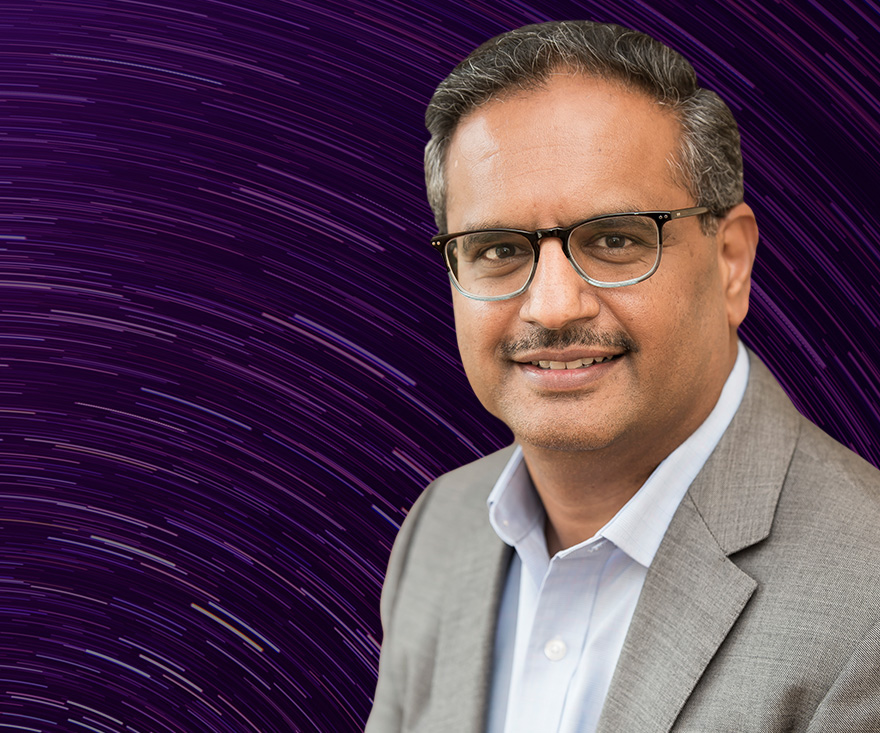
A new chapter begins

A new chapter begins

Learn More

Navigating Innovations In Payment Technologies

Exploring the future of payments

Hiten Patel, Cosimo Schiavone, and Manish Gurukula

11 min read

Double Quotes
The payment landscape has evolved dramatically over the last two decades, but the complexity of building reliable systems remains
Manish Gurukula, CEO, Alacriti

In this episode of the Innovators' Exchange, Hiten Patel and Cosimo Schiavone interview Manish Gurukula, co-founder and CEO of Alacriti, a fintech company revolutionizing payment technologies. Manish shares his journey from software engineer to CEO, highlighting the importance of adaptability in today’s rapidly changing payments landscape. 

Key topics include:

  • Understanding payment ecosystems: Where Alacriti fits within the payment ecosystem and the critical technological infrastructure needed for seamless money movements.

  • Career journey: From Manish’s education at IIT in India to modernizing payment technologies at Western Union and building Alacriti. 

  • Challenges in payment modernization: Obstacles financial institutions face in modernizing their payment infrastructures while navigating legacy systems.

  • Future trends in payments: Emerging trends, including real-time payments, and the growing expectations of consumers and businesses for faster and more efficient financial interactions.

This episode is part of Innovators’ Exchange, a series that explores the financial infrastructure and technology landscape. Tune in for a captivating exploration of AI's transformative potential in financial markets, touching on key themes and opportunities for both professionals and retail investors.

This episode was recorded in May 2025.

Subscribe for more on: Apple Podcasts | Spotify | Youtube | Podscribe

Hiten Patel: Hi, and welcome to today's episode of the Innovators' Exchange. I'm co-hosting today with Cosimo Schiavone, who leads a lot of our banking technology work in the Americas. And today's special guest is Manish Gurukula, who is the co-founder and CEO of Alacriti. Welcome, Manish.  

Manish Gurukula: Hey, thank you, Hiten and Cosimo. Thanks for having me here.  

Hiten: Awesome. Manish, why don't you just start with a brief intro to your role and the company that you lead? 

Manish: Sure. I am the co-founder and CEO of Alacriti. I'm responsible for driving the vision, overall strategy, growing and scaling the company into 100 million ARR [Annual Recurring Revenue] business over the next few years. In terms of the company as such, Alacriti is a fintech company specializing in payments. We operate a cloud native money moment platform called RBP [Regional Booking Platform] that we sell into financial institutions and businesses under software as a service operating model. We help financial institutions and businesses modernize their payments infrastructure and deliver outstanding money moment experiences to their customers. 

Hiten: Awesome. So, I know a lot of listeners will be familiar with payments and users. A lot of listeners will be familiar with the large incumbent payment providers of Visa or MasterCard. For the layman out there, for the end listener, Manish, just help explain where you guys fit in the overall ecosystem. How would the listeners be able to think about where you exist in this system?  

Manish: Think of us as a company that provides the technology infrastructure for financial institutions that basically enables consumers such as you and myself to move money. So, let's say you want to move money from your Bank of America account to your Chase account. We provide the underlying technology infrastructure that enables that kind of money moment. Or if  you want to use Zelle from Bank of America or some other institution, then we would actually be providing the technology to enable those Zelle transactions. 

Hiten: Got it. And I'll let Cosimo dig a little bit deeper in some of that stuff in a moment, but why don't we start off with you as Manish, the person and the leader. You weren't born into the seat that you lead now. Talk to me a little bit about the start of your career, how you got here from software engineer through to banking and to payments. Take us on that journey.  

Manish: Sure, absolutely. So, I did my undergrad from a school called IIT [Indian Institute of Technology] in India and then moved to the U.S. in December of 1997 and worked in the financial services space for the first few years. My first opportunity in the payment space came in at Western Union, where I was part of a team that was responsible for technology modernization of Western Union's money transfer platform. 

And subsequent to that, when we started Alacriti in 2003, we positioned ourselves as a boutique firm that specialized in payments and were building custom software, payment software for banks. During our formative years, we were extremely fortunate to land HSBC Bank as our first anchor customer. And during our first five to seven years of our relationship with HSBC, we were fortunate to have had the opportunity to build several large-scale payment platforms for HSBC Bank. And all of these products involved taking an idea from a drawing board and building an entire payment platform from the ground up. I mean, some of the examples are that we actually helped design and build the world's first global instant account-to-account fund transfer service for HSBC Premier customers. So, these are high net worth individuals of HSBC and this platform basically enabled these HSBC Premier customers to move funds in real time between any of their multi-currency accounts all over the world. So obviously, that taught us a lot of things around how to build mission-critical software, global payment software, and things of that nature.  

And then we also helped the bank with a modernization of a wire transfer platform and then also an enterprise bill payment platform for the U.S. market that helped the bank deliver unified bill payment experience to customers across seven different business lines in North America. I mean, basically in a nutshell, our work on these kinds of projects for banks such as HSBC greatly helped us build a strong foundation and expertise in the payments and banking space.  

Hiten: A lot to take in there, Manish. I'll just start with your opening statement, which must be one of the biggest understatements in the world. “I went to a school called IIT”. Come on, do it justice, Manish. Tell it properly. One of the leading institutions in the world. Talk about the admissions rates, the people who go there, the world needs to better understand some of these schools in India. Do us a minute on that, please, properly.  

Manish: Yeah, I mean, it's supposedly one of the toughest undergrad programs in the whole world to get into. I mean, back in the day, I think it was 500,000 students or so would actually take the entrance exam and you would have about 2,000 or 2,500 seats.  

Hiten: Amazing. I mean, I did a little bit of time in the U.S. in my postgrad, and one thing that struck me is that they're really good at advertising how good they are to people. So clearly your time in the U.S. has not bashed out the humility and the humbleness you show. But that's amazing. You mentioned a couple of dates there, 1997-2003, when you're starting that journey. How has the payment landscape differed? 

You know, when you look at it in 97-03 and we think about the pace of change and the rest of some of the financial technology space and the data space, there's been various leaps and jumps. When you look at the payments world, you go back to 97-03, what were like some of the big pain points you were solving for and how far has the world come on since then?  

Manish: Yeah, I think from a macro themes perspective, the world has come quite far, especially in the last decade, I think. If you see markets like India and Brazil and the U.K., there has been a massive migration or a massive innovation around real-time payments, like India, the UPI [Unified Payments Interface] infrastructure in India or the infrastructure in Brazil and those things are massive. I think U.S. in general has been a little bit slow in that regard, but I think the payment modalities, the consumer expectations and businesses' expectations around money movement and stuff have changed quite a bit from 20-25 years ago. In general, I think. 

Hiten: Awesome. Cosimo, I'm going to bring you in here to go a little bit deeper into the payments world with Manish. 

Cosimo Schiavone: Yeah, thanks Hiten. Manish, great to see you and thank you for agreeing [to join us]. Maybe to continue on that topic, we'll be curious if you can talk a little bit more about the infrastructure side of things. What is triggering financial institutions in the U.S. today to modernize their payment stack? You mentioned real-time payments, but we'll be curious if you can share a little bit more about what is behind some of those programs? 

Manish: Yeah, absolutely. I think in general, like I said, the consumer and business expectations around money movement are changing and evolving. From an FI [Financial Institution] perspective, they want to deliver modern money movement experiences to their customers and they all want to win the battle for financial primacy, deepen the primary financial relationship with their customer, be it a consumer, SMB [Small and Medium-sized Business] or commercial banking customer.  

But the bigger problem is when it comes to payments infrastructure and money movement technology at financial institutions; they all run legacy products. The entire infrastructure is monolithic, siloed, and fragmented. And we see this across the board within the financial institution segment from large banks to regional banks to credit unions and community banks. It's a common theme across the board. And because of this, the underlying technology and infrastructure, this obviously brings a lot of challenges to these guys. Their ability to drive modern money movement experiences to their customers is limited. Their inability to innovate faster and respond to market and customer demands quickly.  

Take the example of what's happening in the U.S. right now with the wires. Everybody wants to move to ISO [International Organization for Standardization] 20 or 22 with the Fedwire and then being able to support the emerging needs of corporate and fintech customers. They all want APIs [Application Programming Interface], so API enablement. And those are some of the things which are huge limitations with existing technologies that they have. And lastly, the payments infrastructure in the U.S. is at an inflection point. You've got instant payment networks such as TCH [The Clearing House], RTP [Real-Time Payments] and FedNow who have already adopted modern standards such as ISO 20 or 22. You've got Fedwire moving to ISO 20 or 22 and you've got SWIFT who has plans to move to ISO 20 or 22. So all of these trends and factors are really driving FIs to look at payments modernization.  

Cosimo: Got it. And I want to go back to real-time payments because you made an interesting point on some of the differences between other geographies where real-time payments have been more successful in terms of adoption compared to the U.S. Are we finally at the inflection point as you call it? We have several rails in the U.S., but it feels like adoption is still a little bit slow and lagging. So how are things? Can you share a little bit more about what you're seeing in terms of use cases? Is it more on the business side of things versus consumer? That would be helpful.  

Manish: Sure. Yeah, I think if you look at the market research, even the most recent ones, that actually shows that real-time payments are expected to grow at a rate of 27% annually over the next few years. You're absolutely right. I think the overall adoption for instant payments has been a bit slow in the U.S., but having said that, it's actually picking up. If you look at the adoption and prominent use cases, some of the things that we actually see are digital wallets. So consumers and businesses moving money from digital wallets back into their bank accounts. So it could be Cosimo trying to move money from his PayPal account back to his Bank of America account, or a Venmo or a Cash App. That's one of the prominent use cases. 

Faster payouts or disbursements is also a very prominent use case. So you get approved for a personal loan and you want to get the money into your bank account instantly. So loan disbursements from platforms, seller payouts and those kinds of things from platforms such as Etsy and other platforms. And then the one that is actually picking up really well is account-to-account transfers. So this is both on the consumer as well as SMB, so inter-institution transfers. So if Cosimo wants to move money from his Bank of America account to his JPMorgan Chase account, account-to-account transfers through the digital banking infrastructure, those are getting enabled as we speak. And then we are also seeing quite a good adoption on SMB side as well. So some of the financial institutions are actually enabling their SMB customers to make B2B [Business To Business] payments. So if you want to make a vendor payment after the cutoff times, you don't have wire available or even on a weekend, you want to make an urgent payment. You could use, you know, instant transfers. 

And then we are also seeing some of the platforms, such as bill.com, you know, are enabling instant B2B payments for SMBs. So, when a small business wants to pay their vendor instantly. So those are some of the payment flows that are getting enabled. So I think as more and more financial institutions get connected to the network, I think the most recent stat was, you know, FedNow has about thousand institutions connected to FedNow. As more and more institutions get connected, and as these financial institutions start enabling the different kinds of payment flows for consumers and small businesses and corporates, we're going to see more and more adoption, I think. But I think in terms of the major adoption right now, we are going to see, starting with consumers, whether it's consumer payment flows or business to consumer payment flows, and then followed by SMB. And then, you know, obviously corporates, as well. 

Cosimo: That's interesting. It's also interesting that in the list of your use cases, or adoption, you haven't mentioned the Pay by Bank, right? So checking out the merchants and Pay by Bank, which I think in the US, probably, it's going to take a while, given where we are with interchanges. And would you agree with that? 

Manish: No, absolutely I think. So, I think that's a really good point. We are going to see Pay by Bank. But, you know, you first need the first step towards that is all the major institutions need to support requests for pay, you know, within their digital banking channels. And once that is enabled, we are going to see, you know, an adoption, but it'll actually be very interesting to see how Pay by Bank sits alongside the traditional payment methods. And, you know, how the commercial aspects of Pay by Bank come into play in the U.S. market.  

Cosimo: We talked a lot about payments, but obviously, payments touch a lot of other systems, right, around it. We'll be curious, you know, when you think about fraud, loyalty, and all the other things that sit around, what else would you be interested in, right, from an Alacriti perspective, right? What excites you outside of the pure, you know, money movements and payments have?  

Manish: Yeah, I think there are plenty of opportunities, you know, even for Alacriti, outside of the money movement. The thing is, fraud is a major concern for institutions. And we see some, you know, opportunities in that area. Apart from that, you know, with things like ISO 20 or 22, there's a lot of innovation that could be built just around analytics insights, and harnessing the data that's coming, you know, as part of the ISO 20 or 22, messaging and delivering value added services for FI's customers. I would say those are some of the areas.  

The other one is also being able to deliver innovations around real time payment flows, such as Pay by Bank and, you know, a few other use cases around instant payments.  

Cosimo: Okay, maybe one last, thank you, Manish, maybe one last question from my end. So, from a financial institution's perspective, you know, if I think about the CIO [Chief Information Officer], the CTO [Chief Technology Officer], the head of payments or enterprise payments, what are they really asking you to help with today?  

Manish: So, a couple of things, just going back to what I said. One is, you know, they're all asking help with, hey, how can I actually modernize my payments infrastructure, you know, because they're all struggling with the legacy fermented siloed payments and money movement infrastructure. Some of their infrastructure is very old, like runs on mainframes built 30, 40 years ago, like ACH [Automated Clearing House] as an example and stuff. 

And, you know, with people retiring and all of those other challenges and changes being made over the past 30, 40 years, you know, they're all looking at modernization very, very actively. And then the ability to deliver unified money movement experiences, you know, across different channels and products, just like how FinTech would actually do, like a Chime or, you know, some of the major fintechs, or Square, or those guys. And then lastly, you know, centralization of payments processing operations and risk management. So, you know, through this progressive modernization approach, how can I actually centralize all of that stuff so that I can actually consolidate and streamline payment processing. I can consolidate, simplify my operations and risk management, you know, I can manage fraud centrally and, you know, effectively be able to manage cross-product and cross-channel fraud and those kinds of things. 

Cosimo: Got it. So, this is an opportunity to sort of drive efficiency also from back-office operations.  

Manish: Absolutely. 

Cosimo: Okay. Thank you. Well, maybe Hiten, I'll turn over to you.  

Hiten: Thanks, guys. That was fascinating. Thank you for sharing. Manish, I mean, you've clearly built a very successful company in Alacriti and I recognize that journeys are rarely linear in the path that's built. I'd love for you to talk to us about one of the biggest challenges you've overcome on this journey to what you've built today.  

Manish: So when you're in a high growth mode, such as Alacriti, you know, it's become really important. Implementing processes, frameworks and playbooks are extremely important to scale the business to the next level. But at the same time, I've come to realize that it's equally important that you allow for a fair bit of flexibility within your processes to adapt to dynamic situations. And the biggest lesson for me is to have an operating and execution model that allows for a degree of adaptability and flexibility in every aspect of business and execution. So this is from product, engineering, sales, marketing, operations. And I feel like this kind of a model basically allows businesses to pivot and adapt quickly to market opportunities and risks. So that would be my biggest lesson.  

Hiten: That's awesome. Hearing you talk, I've got this picture in my head of one of those skyscrapers they build in Japan that flexes in the wind. So, you know, robust and able to go high, but also able to take some of the strains and blow with the wind. What are some of the biggest surprises that have come along the way? Or perhaps kind of, what did you think, what are the areas that you think are not particularly well understood about the space that you have kind of discovered from your journey to date?  

Manish: I think the people grossly underestimate the complexity around payments infrastructure and all the nuances just around regulatory compliance and all of those things that come into building a pretty rock-solid payments infrastructure that is also future proof. So, I think that's, you know, one thing that I feel like a lot of people grossly underestimate when they get into payments business in general. 

Hiten: Yeah, I think for me as a user, the more that something works and the less time it fails, you just assume there must be some simplicity to it, right? There's an amount of time we make payment after payment after payment, and always just seems to work again in the right place. I guess it gives the mainstream world a view that, hey, that must be relatively straightforward to do, hence it always happens. But I guess you're saying there's a lot going on in the background to make these thousands of millions of payments each day kind of land in the right place at the right time.  

Manish: Absolutely.  

Hiten: Talk to me, Manish, about outside of work. Is there any hobby or interest that you're active in that helps support do what you do in your day-to-day job?  

Manish: Yeah, outside of Alacriti, on the personal side, I like playing tennis. So, playing tennis has positively impacted my decision making by fostering strategic thinking, adaptability, and resilience. I think the game requires players to analyze situations, make quick decisions and adjust their strategies in real time, skills that are directly applicable in the business world. So I think that has helped me quite a bit in terms of my decision making. 

Hiten: I love it. Someone once gave me the book, The Inner Game of Tennis, which I think was from a few decades ago, which I read. And I think the main takeaway I got from that was to try and think less and let yourself be in a flow state. So I'm not sure I always managed to deliver that at work, but there's definitely lots of lessons to take from the day-to-day job. Finally, Manish, I'd invite you to share the spotlight. So we ask guests to kind of bring to the attention to listeners, an individual or a company that they may not have noticed that is worthy of them paying attention to.  

Manish: So, I mean, lately, I've been impressed with this company called Cursor, the coding co-pilot, which grew to 100 million revenue in a year with just about 20 people. That is remarkably impressive. So, I've been a great admirer of that company. We actually use Cursor at Alacriti and it's just like remarkably, I mean, they shattered all the records that we know about fast growing companies. So, very impressed.  

Hiten: Awesome. Well, look, Manish, thank you for being so generous with your time and coming on and sharing your story. It's been great to speak with you. And Cosimo, thanks for coming on also.  

Cosimo: Thank you. Thanks, Manish.  

Hiten: Thanks, guys. Have a great day.  

Manish: Thanks so much for having me. Pleasure being with you.  

This transcript has been edited for clarity purposes.

    In this episode of the Innovators' Exchange, Hiten Patel and Cosimo Schiavone interview Manish Gurukula, co-founder and CEO of Alacriti, a fintech company revolutionizing payment technologies. Manish shares his journey from software engineer to CEO, highlighting the importance of adaptability in today’s rapidly changing payments landscape. 

    Key topics include:

    • Understanding payment ecosystems: Where Alacriti fits within the payment ecosystem and the critical technological infrastructure needed for seamless money movements.

    • Career journey: From Manish’s education at IIT in India to modernizing payment technologies at Western Union and building Alacriti. 

    • Challenges in payment modernization: Obstacles financial institutions face in modernizing their payment infrastructures while navigating legacy systems.

    • Future trends in payments: Emerging trends, including real-time payments, and the growing expectations of consumers and businesses for faster and more efficient financial interactions.

    This episode is part of Innovators’ Exchange, a series that explores the financial infrastructure and technology landscape. Tune in for a captivating exploration of AI's transformative potential in financial markets, touching on key themes and opportunities for both professionals and retail investors.

    This episode was recorded in May 2025.

    Subscribe for more on: Apple Podcasts | Spotify | Youtube | Podscribe

    Hiten Patel: Hi, and welcome to today's episode of the Innovators' Exchange. I'm co-hosting today with Cosimo Schiavone, who leads a lot of our banking technology work in the Americas. And today's special guest is Manish Gurukula, who is the co-founder and CEO of Alacriti. Welcome, Manish.  

    Manish Gurukula: Hey, thank you, Hiten and Cosimo. Thanks for having me here.  

    Hiten: Awesome. Manish, why don't you just start with a brief intro to your role and the company that you lead? 

    Manish: Sure. I am the co-founder and CEO of Alacriti. I'm responsible for driving the vision, overall strategy, growing and scaling the company into 100 million ARR [Annual Recurring Revenue] business over the next few years. In terms of the company as such, Alacriti is a fintech company specializing in payments. We operate a cloud native money moment platform called RBP [Regional Booking Platform] that we sell into financial institutions and businesses under software as a service operating model. We help financial institutions and businesses modernize their payments infrastructure and deliver outstanding money moment experiences to their customers. 

    Hiten: Awesome. So, I know a lot of listeners will be familiar with payments and users. A lot of listeners will be familiar with the large incumbent payment providers of Visa or MasterCard. For the layman out there, for the end listener, Manish, just help explain where you guys fit in the overall ecosystem. How would the listeners be able to think about where you exist in this system?  

    Manish: Think of us as a company that provides the technology infrastructure for financial institutions that basically enables consumers such as you and myself to move money. So, let's say you want to move money from your Bank of America account to your Chase account. We provide the underlying technology infrastructure that enables that kind of money moment. Or if  you want to use Zelle from Bank of America or some other institution, then we would actually be providing the technology to enable those Zelle transactions. 

    Hiten: Got it. And I'll let Cosimo dig a little bit deeper in some of that stuff in a moment, but why don't we start off with you as Manish, the person and the leader. You weren't born into the seat that you lead now. Talk to me a little bit about the start of your career, how you got here from software engineer through to banking and to payments. Take us on that journey.  

    Manish: Sure, absolutely. So, I did my undergrad from a school called IIT [Indian Institute of Technology] in India and then moved to the U.S. in December of 1997 and worked in the financial services space for the first few years. My first opportunity in the payment space came in at Western Union, where I was part of a team that was responsible for technology modernization of Western Union's money transfer platform. 

    And subsequent to that, when we started Alacriti in 2003, we positioned ourselves as a boutique firm that specialized in payments and were building custom software, payment software for banks. During our formative years, we were extremely fortunate to land HSBC Bank as our first anchor customer. And during our first five to seven years of our relationship with HSBC, we were fortunate to have had the opportunity to build several large-scale payment platforms for HSBC Bank. And all of these products involved taking an idea from a drawing board and building an entire payment platform from the ground up. I mean, some of the examples are that we actually helped design and build the world's first global instant account-to-account fund transfer service for HSBC Premier customers. So, these are high net worth individuals of HSBC and this platform basically enabled these HSBC Premier customers to move funds in real time between any of their multi-currency accounts all over the world. So obviously, that taught us a lot of things around how to build mission-critical software, global payment software, and things of that nature.  

    And then we also helped the bank with a modernization of a wire transfer platform and then also an enterprise bill payment platform for the U.S. market that helped the bank deliver unified bill payment experience to customers across seven different business lines in North America. I mean, basically in a nutshell, our work on these kinds of projects for banks such as HSBC greatly helped us build a strong foundation and expertise in the payments and banking space.  

    Hiten: A lot to take in there, Manish. I'll just start with your opening statement, which must be one of the biggest understatements in the world. “I went to a school called IIT”. Come on, do it justice, Manish. Tell it properly. One of the leading institutions in the world. Talk about the admissions rates, the people who go there, the world needs to better understand some of these schools in India. Do us a minute on that, please, properly.  

    Manish: Yeah, I mean, it's supposedly one of the toughest undergrad programs in the whole world to get into. I mean, back in the day, I think it was 500,000 students or so would actually take the entrance exam and you would have about 2,000 or 2,500 seats.  

    Hiten: Amazing. I mean, I did a little bit of time in the U.S. in my postgrad, and one thing that struck me is that they're really good at advertising how good they are to people. So clearly your time in the U.S. has not bashed out the humility and the humbleness you show. But that's amazing. You mentioned a couple of dates there, 1997-2003, when you're starting that journey. How has the payment landscape differed? 

    You know, when you look at it in 97-03 and we think about the pace of change and the rest of some of the financial technology space and the data space, there's been various leaps and jumps. When you look at the payments world, you go back to 97-03, what were like some of the big pain points you were solving for and how far has the world come on since then?  

    Manish: Yeah, I think from a macro themes perspective, the world has come quite far, especially in the last decade, I think. If you see markets like India and Brazil and the U.K., there has been a massive migration or a massive innovation around real-time payments, like India, the UPI [Unified Payments Interface] infrastructure in India or the infrastructure in Brazil and those things are massive. I think U.S. in general has been a little bit slow in that regard, but I think the payment modalities, the consumer expectations and businesses' expectations around money movement and stuff have changed quite a bit from 20-25 years ago. In general, I think. 

    Hiten: Awesome. Cosimo, I'm going to bring you in here to go a little bit deeper into the payments world with Manish. 

    Cosimo Schiavone: Yeah, thanks Hiten. Manish, great to see you and thank you for agreeing [to join us]. Maybe to continue on that topic, we'll be curious if you can talk a little bit more about the infrastructure side of things. What is triggering financial institutions in the U.S. today to modernize their payment stack? You mentioned real-time payments, but we'll be curious if you can share a little bit more about what is behind some of those programs? 

    Manish: Yeah, absolutely. I think in general, like I said, the consumer and business expectations around money movement are changing and evolving. From an FI [Financial Institution] perspective, they want to deliver modern money movement experiences to their customers and they all want to win the battle for financial primacy, deepen the primary financial relationship with their customer, be it a consumer, SMB [Small and Medium-sized Business] or commercial banking customer.  

    But the bigger problem is when it comes to payments infrastructure and money movement technology at financial institutions; they all run legacy products. The entire infrastructure is monolithic, siloed, and fragmented. And we see this across the board within the financial institution segment from large banks to regional banks to credit unions and community banks. It's a common theme across the board. And because of this, the underlying technology and infrastructure, this obviously brings a lot of challenges to these guys. Their ability to drive modern money movement experiences to their customers is limited. Their inability to innovate faster and respond to market and customer demands quickly.  

    Take the example of what's happening in the U.S. right now with the wires. Everybody wants to move to ISO [International Organization for Standardization] 20 or 22 with the Fedwire and then being able to support the emerging needs of corporate and fintech customers. They all want APIs [Application Programming Interface], so API enablement. And those are some of the things which are huge limitations with existing technologies that they have. And lastly, the payments infrastructure in the U.S. is at an inflection point. You've got instant payment networks such as TCH [The Clearing House], RTP [Real-Time Payments] and FedNow who have already adopted modern standards such as ISO 20 or 22. You've got Fedwire moving to ISO 20 or 22 and you've got SWIFT who has plans to move to ISO 20 or 22. So all of these trends and factors are really driving FIs to look at payments modernization.  

    Cosimo: Got it. And I want to go back to real-time payments because you made an interesting point on some of the differences between other geographies where real-time payments have been more successful in terms of adoption compared to the U.S. Are we finally at the inflection point as you call it? We have several rails in the U.S., but it feels like adoption is still a little bit slow and lagging. So how are things? Can you share a little bit more about what you're seeing in terms of use cases? Is it more on the business side of things versus consumer? That would be helpful.  

    Manish: Sure. Yeah, I think if you look at the market research, even the most recent ones, that actually shows that real-time payments are expected to grow at a rate of 27% annually over the next few years. You're absolutely right. I think the overall adoption for instant payments has been a bit slow in the U.S., but having said that, it's actually picking up. If you look at the adoption and prominent use cases, some of the things that we actually see are digital wallets. So consumers and businesses moving money from digital wallets back into their bank accounts. So it could be Cosimo trying to move money from his PayPal account back to his Bank of America account, or a Venmo or a Cash App. That's one of the prominent use cases. 

    Faster payouts or disbursements is also a very prominent use case. So you get approved for a personal loan and you want to get the money into your bank account instantly. So loan disbursements from platforms, seller payouts and those kinds of things from platforms such as Etsy and other platforms. And then the one that is actually picking up really well is account-to-account transfers. So this is both on the consumer as well as SMB, so inter-institution transfers. So if Cosimo wants to move money from his Bank of America account to his JPMorgan Chase account, account-to-account transfers through the digital banking infrastructure, those are getting enabled as we speak. And then we are also seeing quite a good adoption on SMB side as well. So some of the financial institutions are actually enabling their SMB customers to make B2B [Business To Business] payments. So if you want to make a vendor payment after the cutoff times, you don't have wire available or even on a weekend, you want to make an urgent payment. You could use, you know, instant transfers. 

    And then we are also seeing some of the platforms, such as bill.com, you know, are enabling instant B2B payments for SMBs. So, when a small business wants to pay their vendor instantly. So those are some of the payment flows that are getting enabled. So I think as more and more financial institutions get connected to the network, I think the most recent stat was, you know, FedNow has about thousand institutions connected to FedNow. As more and more institutions get connected, and as these financial institutions start enabling the different kinds of payment flows for consumers and small businesses and corporates, we're going to see more and more adoption, I think. But I think in terms of the major adoption right now, we are going to see, starting with consumers, whether it's consumer payment flows or business to consumer payment flows, and then followed by SMB. And then, you know, obviously corporates, as well. 

    Cosimo: That's interesting. It's also interesting that in the list of your use cases, or adoption, you haven't mentioned the Pay by Bank, right? So checking out the merchants and Pay by Bank, which I think in the US, probably, it's going to take a while, given where we are with interchanges. And would you agree with that? 

    Manish: No, absolutely I think. So, I think that's a really good point. We are going to see Pay by Bank. But, you know, you first need the first step towards that is all the major institutions need to support requests for pay, you know, within their digital banking channels. And once that is enabled, we are going to see, you know, an adoption, but it'll actually be very interesting to see how Pay by Bank sits alongside the traditional payment methods. And, you know, how the commercial aspects of Pay by Bank come into play in the U.S. market.  

    Cosimo: We talked a lot about payments, but obviously, payments touch a lot of other systems, right, around it. We'll be curious, you know, when you think about fraud, loyalty, and all the other things that sit around, what else would you be interested in, right, from an Alacriti perspective, right? What excites you outside of the pure, you know, money movements and payments have?  

    Manish: Yeah, I think there are plenty of opportunities, you know, even for Alacriti, outside of the money movement. The thing is, fraud is a major concern for institutions. And we see some, you know, opportunities in that area. Apart from that, you know, with things like ISO 20 or 22, there's a lot of innovation that could be built just around analytics insights, and harnessing the data that's coming, you know, as part of the ISO 20 or 22, messaging and delivering value added services for FI's customers. I would say those are some of the areas.  

    The other one is also being able to deliver innovations around real time payment flows, such as Pay by Bank and, you know, a few other use cases around instant payments.  

    Cosimo: Okay, maybe one last, thank you, Manish, maybe one last question from my end. So, from a financial institution's perspective, you know, if I think about the CIO [Chief Information Officer], the CTO [Chief Technology Officer], the head of payments or enterprise payments, what are they really asking you to help with today?  

    Manish: So, a couple of things, just going back to what I said. One is, you know, they're all asking help with, hey, how can I actually modernize my payments infrastructure, you know, because they're all struggling with the legacy fermented siloed payments and money movement infrastructure. Some of their infrastructure is very old, like runs on mainframes built 30, 40 years ago, like ACH [Automated Clearing House] as an example and stuff. 

    And, you know, with people retiring and all of those other challenges and changes being made over the past 30, 40 years, you know, they're all looking at modernization very, very actively. And then the ability to deliver unified money movement experiences, you know, across different channels and products, just like how FinTech would actually do, like a Chime or, you know, some of the major fintechs, or Square, or those guys. And then lastly, you know, centralization of payments processing operations and risk management. So, you know, through this progressive modernization approach, how can I actually centralize all of that stuff so that I can actually consolidate and streamline payment processing. I can consolidate, simplify my operations and risk management, you know, I can manage fraud centrally and, you know, effectively be able to manage cross-product and cross-channel fraud and those kinds of things. 

    Cosimo: Got it. So, this is an opportunity to sort of drive efficiency also from back-office operations.  

    Manish: Absolutely. 

    Cosimo: Okay. Thank you. Well, maybe Hiten, I'll turn over to you.  

    Hiten: Thanks, guys. That was fascinating. Thank you for sharing. Manish, I mean, you've clearly built a very successful company in Alacriti and I recognize that journeys are rarely linear in the path that's built. I'd love for you to talk to us about one of the biggest challenges you've overcome on this journey to what you've built today.  

    Manish: So when you're in a high growth mode, such as Alacriti, you know, it's become really important. Implementing processes, frameworks and playbooks are extremely important to scale the business to the next level. But at the same time, I've come to realize that it's equally important that you allow for a fair bit of flexibility within your processes to adapt to dynamic situations. And the biggest lesson for me is to have an operating and execution model that allows for a degree of adaptability and flexibility in every aspect of business and execution. So this is from product, engineering, sales, marketing, operations. And I feel like this kind of a model basically allows businesses to pivot and adapt quickly to market opportunities and risks. So that would be my biggest lesson.  

    Hiten: That's awesome. Hearing you talk, I've got this picture in my head of one of those skyscrapers they build in Japan that flexes in the wind. So, you know, robust and able to go high, but also able to take some of the strains and blow with the wind. What are some of the biggest surprises that have come along the way? Or perhaps kind of, what did you think, what are the areas that you think are not particularly well understood about the space that you have kind of discovered from your journey to date?  

    Manish: I think the people grossly underestimate the complexity around payments infrastructure and all the nuances just around regulatory compliance and all of those things that come into building a pretty rock-solid payments infrastructure that is also future proof. So, I think that's, you know, one thing that I feel like a lot of people grossly underestimate when they get into payments business in general. 

    Hiten: Yeah, I think for me as a user, the more that something works and the less time it fails, you just assume there must be some simplicity to it, right? There's an amount of time we make payment after payment after payment, and always just seems to work again in the right place. I guess it gives the mainstream world a view that, hey, that must be relatively straightforward to do, hence it always happens. But I guess you're saying there's a lot going on in the background to make these thousands of millions of payments each day kind of land in the right place at the right time.  

    Manish: Absolutely.  

    Hiten: Talk to me, Manish, about outside of work. Is there any hobby or interest that you're active in that helps support do what you do in your day-to-day job?  

    Manish: Yeah, outside of Alacriti, on the personal side, I like playing tennis. So, playing tennis has positively impacted my decision making by fostering strategic thinking, adaptability, and resilience. I think the game requires players to analyze situations, make quick decisions and adjust their strategies in real time, skills that are directly applicable in the business world. So I think that has helped me quite a bit in terms of my decision making. 

    Hiten: I love it. Someone once gave me the book, The Inner Game of Tennis, which I think was from a few decades ago, which I read. And I think the main takeaway I got from that was to try and think less and let yourself be in a flow state. So I'm not sure I always managed to deliver that at work, but there's definitely lots of lessons to take from the day-to-day job. Finally, Manish, I'd invite you to share the spotlight. So we ask guests to kind of bring to the attention to listeners, an individual or a company that they may not have noticed that is worthy of them paying attention to.  

    Manish: So, I mean, lately, I've been impressed with this company called Cursor, the coding co-pilot, which grew to 100 million revenue in a year with just about 20 people. That is remarkably impressive. So, I've been a great admirer of that company. We actually use Cursor at Alacriti and it's just like remarkably, I mean, they shattered all the records that we know about fast growing companies. So, very impressed.  

    Hiten: Awesome. Well, look, Manish, thank you for being so generous with your time and coming on and sharing your story. It's been great to speak with you. And Cosimo, thanks for coming on also.  

    Cosimo: Thank you. Thanks, Manish.  

    Hiten: Thanks, guys. Have a great day.  

    Manish: Thanks so much for having me. Pleasure being with you.  

    This transcript has been edited for clarity purposes.

    In this episode of the Innovators' Exchange, Hiten Patel and Cosimo Schiavone interview Manish Gurukula, co-founder and CEO of Alacriti, a fintech company revolutionizing payment technologies. Manish shares his journey from software engineer to CEO, highlighting the importance of adaptability in today’s rapidly changing payments landscape. 

    Key topics include:

    • Understanding payment ecosystems: Where Alacriti fits within the payment ecosystem and the critical technological infrastructure needed for seamless money movements.

    • Career journey: From Manish’s education at IIT in India to modernizing payment technologies at Western Union and building Alacriti. 

    • Challenges in payment modernization: Obstacles financial institutions face in modernizing their payment infrastructures while navigating legacy systems.

    • Future trends in payments: Emerging trends, including real-time payments, and the growing expectations of consumers and businesses for faster and more efficient financial interactions.

    This episode is part of Innovators’ Exchange, a series that explores the financial infrastructure and technology landscape. Tune in for a captivating exploration of AI's transformative potential in financial markets, touching on key themes and opportunities for both professionals and retail investors.

    This episode was recorded in May 2025.

    Subscribe for more on: Apple Podcasts | Spotify | Youtube | Podscribe

    Hiten Patel: Hi, and welcome to today's episode of the Innovators' Exchange. I'm co-hosting today with Cosimo Schiavone, who leads a lot of our banking technology work in the Americas. And today's special guest is Manish Gurukula, who is the co-founder and CEO of Alacriti. Welcome, Manish.  

    Manish Gurukula: Hey, thank you, Hiten and Cosimo. Thanks for having me here.  

    Hiten: Awesome. Manish, why don't you just start with a brief intro to your role and the company that you lead? 

    Manish: Sure. I am the co-founder and CEO of Alacriti. I'm responsible for driving the vision, overall strategy, growing and scaling the company into 100 million ARR [Annual Recurring Revenue] business over the next few years. In terms of the company as such, Alacriti is a fintech company specializing in payments. We operate a cloud native money moment platform called RBP [Regional Booking Platform] that we sell into financial institutions and businesses under software as a service operating model. We help financial institutions and businesses modernize their payments infrastructure and deliver outstanding money moment experiences to their customers. 

    Hiten: Awesome. So, I know a lot of listeners will be familiar with payments and users. A lot of listeners will be familiar with the large incumbent payment providers of Visa or MasterCard. For the layman out there, for the end listener, Manish, just help explain where you guys fit in the overall ecosystem. How would the listeners be able to think about where you exist in this system?  

    Manish: Think of us as a company that provides the technology infrastructure for financial institutions that basically enables consumers such as you and myself to move money. So, let's say you want to move money from your Bank of America account to your Chase account. We provide the underlying technology infrastructure that enables that kind of money moment. Or if  you want to use Zelle from Bank of America or some other institution, then we would actually be providing the technology to enable those Zelle transactions. 

    Hiten: Got it. And I'll let Cosimo dig a little bit deeper in some of that stuff in a moment, but why don't we start off with you as Manish, the person and the leader. You weren't born into the seat that you lead now. Talk to me a little bit about the start of your career, how you got here from software engineer through to banking and to payments. Take us on that journey.  

    Manish: Sure, absolutely. So, I did my undergrad from a school called IIT [Indian Institute of Technology] in India and then moved to the U.S. in December of 1997 and worked in the financial services space for the first few years. My first opportunity in the payment space came in at Western Union, where I was part of a team that was responsible for technology modernization of Western Union's money transfer platform. 

    And subsequent to that, when we started Alacriti in 2003, we positioned ourselves as a boutique firm that specialized in payments and were building custom software, payment software for banks. During our formative years, we were extremely fortunate to land HSBC Bank as our first anchor customer. And during our first five to seven years of our relationship with HSBC, we were fortunate to have had the opportunity to build several large-scale payment platforms for HSBC Bank. And all of these products involved taking an idea from a drawing board and building an entire payment platform from the ground up. I mean, some of the examples are that we actually helped design and build the world's first global instant account-to-account fund transfer service for HSBC Premier customers. So, these are high net worth individuals of HSBC and this platform basically enabled these HSBC Premier customers to move funds in real time between any of their multi-currency accounts all over the world. So obviously, that taught us a lot of things around how to build mission-critical software, global payment software, and things of that nature.  

    And then we also helped the bank with a modernization of a wire transfer platform and then also an enterprise bill payment platform for the U.S. market that helped the bank deliver unified bill payment experience to customers across seven different business lines in North America. I mean, basically in a nutshell, our work on these kinds of projects for banks such as HSBC greatly helped us build a strong foundation and expertise in the payments and banking space.  

    Hiten: A lot to take in there, Manish. I'll just start with your opening statement, which must be one of the biggest understatements in the world. “I went to a school called IIT”. Come on, do it justice, Manish. Tell it properly. One of the leading institutions in the world. Talk about the admissions rates, the people who go there, the world needs to better understand some of these schools in India. Do us a minute on that, please, properly.  

    Manish: Yeah, I mean, it's supposedly one of the toughest undergrad programs in the whole world to get into. I mean, back in the day, I think it was 500,000 students or so would actually take the entrance exam and you would have about 2,000 or 2,500 seats.  

    Hiten: Amazing. I mean, I did a little bit of time in the U.S. in my postgrad, and one thing that struck me is that they're really good at advertising how good they are to people. So clearly your time in the U.S. has not bashed out the humility and the humbleness you show. But that's amazing. You mentioned a couple of dates there, 1997-2003, when you're starting that journey. How has the payment landscape differed? 

    You know, when you look at it in 97-03 and we think about the pace of change and the rest of some of the financial technology space and the data space, there's been various leaps and jumps. When you look at the payments world, you go back to 97-03, what were like some of the big pain points you were solving for and how far has the world come on since then?  

    Manish: Yeah, I think from a macro themes perspective, the world has come quite far, especially in the last decade, I think. If you see markets like India and Brazil and the U.K., there has been a massive migration or a massive innovation around real-time payments, like India, the UPI [Unified Payments Interface] infrastructure in India or the infrastructure in Brazil and those things are massive. I think U.S. in general has been a little bit slow in that regard, but I think the payment modalities, the consumer expectations and businesses' expectations around money movement and stuff have changed quite a bit from 20-25 years ago. In general, I think. 

    Hiten: Awesome. Cosimo, I'm going to bring you in here to go a little bit deeper into the payments world with Manish. 

    Cosimo Schiavone: Yeah, thanks Hiten. Manish, great to see you and thank you for agreeing [to join us]. Maybe to continue on that topic, we'll be curious if you can talk a little bit more about the infrastructure side of things. What is triggering financial institutions in the U.S. today to modernize their payment stack? You mentioned real-time payments, but we'll be curious if you can share a little bit more about what is behind some of those programs? 

    Manish: Yeah, absolutely. I think in general, like I said, the consumer and business expectations around money movement are changing and evolving. From an FI [Financial Institution] perspective, they want to deliver modern money movement experiences to their customers and they all want to win the battle for financial primacy, deepen the primary financial relationship with their customer, be it a consumer, SMB [Small and Medium-sized Business] or commercial banking customer.  

    But the bigger problem is when it comes to payments infrastructure and money movement technology at financial institutions; they all run legacy products. The entire infrastructure is monolithic, siloed, and fragmented. And we see this across the board within the financial institution segment from large banks to regional banks to credit unions and community banks. It's a common theme across the board. And because of this, the underlying technology and infrastructure, this obviously brings a lot of challenges to these guys. Their ability to drive modern money movement experiences to their customers is limited. Their inability to innovate faster and respond to market and customer demands quickly.  

    Take the example of what's happening in the U.S. right now with the wires. Everybody wants to move to ISO [International Organization for Standardization] 20 or 22 with the Fedwire and then being able to support the emerging needs of corporate and fintech customers. They all want APIs [Application Programming Interface], so API enablement. And those are some of the things which are huge limitations with existing technologies that they have. And lastly, the payments infrastructure in the U.S. is at an inflection point. You've got instant payment networks such as TCH [The Clearing House], RTP [Real-Time Payments] and FedNow who have already adopted modern standards such as ISO 20 or 22. You've got Fedwire moving to ISO 20 or 22 and you've got SWIFT who has plans to move to ISO 20 or 22. So all of these trends and factors are really driving FIs to look at payments modernization.  

    Cosimo: Got it. And I want to go back to real-time payments because you made an interesting point on some of the differences between other geographies where real-time payments have been more successful in terms of adoption compared to the U.S. Are we finally at the inflection point as you call it? We have several rails in the U.S., but it feels like adoption is still a little bit slow and lagging. So how are things? Can you share a little bit more about what you're seeing in terms of use cases? Is it more on the business side of things versus consumer? That would be helpful.  

    Manish: Sure. Yeah, I think if you look at the market research, even the most recent ones, that actually shows that real-time payments are expected to grow at a rate of 27% annually over the next few years. You're absolutely right. I think the overall adoption for instant payments has been a bit slow in the U.S., but having said that, it's actually picking up. If you look at the adoption and prominent use cases, some of the things that we actually see are digital wallets. So consumers and businesses moving money from digital wallets back into their bank accounts. So it could be Cosimo trying to move money from his PayPal account back to his Bank of America account, or a Venmo or a Cash App. That's one of the prominent use cases. 

    Faster payouts or disbursements is also a very prominent use case. So you get approved for a personal loan and you want to get the money into your bank account instantly. So loan disbursements from platforms, seller payouts and those kinds of things from platforms such as Etsy and other platforms. And then the one that is actually picking up really well is account-to-account transfers. So this is both on the consumer as well as SMB, so inter-institution transfers. So if Cosimo wants to move money from his Bank of America account to his JPMorgan Chase account, account-to-account transfers through the digital banking infrastructure, those are getting enabled as we speak. And then we are also seeing quite a good adoption on SMB side as well. So some of the financial institutions are actually enabling their SMB customers to make B2B [Business To Business] payments. So if you want to make a vendor payment after the cutoff times, you don't have wire available or even on a weekend, you want to make an urgent payment. You could use, you know, instant transfers. 

    And then we are also seeing some of the platforms, such as bill.com, you know, are enabling instant B2B payments for SMBs. So, when a small business wants to pay their vendor instantly. So those are some of the payment flows that are getting enabled. So I think as more and more financial institutions get connected to the network, I think the most recent stat was, you know, FedNow has about thousand institutions connected to FedNow. As more and more institutions get connected, and as these financial institutions start enabling the different kinds of payment flows for consumers and small businesses and corporates, we're going to see more and more adoption, I think. But I think in terms of the major adoption right now, we are going to see, starting with consumers, whether it's consumer payment flows or business to consumer payment flows, and then followed by SMB. And then, you know, obviously corporates, as well. 

    Cosimo: That's interesting. It's also interesting that in the list of your use cases, or adoption, you haven't mentioned the Pay by Bank, right? So checking out the merchants and Pay by Bank, which I think in the US, probably, it's going to take a while, given where we are with interchanges. And would you agree with that? 

    Manish: No, absolutely I think. So, I think that's a really good point. We are going to see Pay by Bank. But, you know, you first need the first step towards that is all the major institutions need to support requests for pay, you know, within their digital banking channels. And once that is enabled, we are going to see, you know, an adoption, but it'll actually be very interesting to see how Pay by Bank sits alongside the traditional payment methods. And, you know, how the commercial aspects of Pay by Bank come into play in the U.S. market.  

    Cosimo: We talked a lot about payments, but obviously, payments touch a lot of other systems, right, around it. We'll be curious, you know, when you think about fraud, loyalty, and all the other things that sit around, what else would you be interested in, right, from an Alacriti perspective, right? What excites you outside of the pure, you know, money movements and payments have?  

    Manish: Yeah, I think there are plenty of opportunities, you know, even for Alacriti, outside of the money movement. The thing is, fraud is a major concern for institutions. And we see some, you know, opportunities in that area. Apart from that, you know, with things like ISO 20 or 22, there's a lot of innovation that could be built just around analytics insights, and harnessing the data that's coming, you know, as part of the ISO 20 or 22, messaging and delivering value added services for FI's customers. I would say those are some of the areas.  

    The other one is also being able to deliver innovations around real time payment flows, such as Pay by Bank and, you know, a few other use cases around instant payments.  

    Cosimo: Okay, maybe one last, thank you, Manish, maybe one last question from my end. So, from a financial institution's perspective, you know, if I think about the CIO [Chief Information Officer], the CTO [Chief Technology Officer], the head of payments or enterprise payments, what are they really asking you to help with today?  

    Manish: So, a couple of things, just going back to what I said. One is, you know, they're all asking help with, hey, how can I actually modernize my payments infrastructure, you know, because they're all struggling with the legacy fermented siloed payments and money movement infrastructure. Some of their infrastructure is very old, like runs on mainframes built 30, 40 years ago, like ACH [Automated Clearing House] as an example and stuff. 

    And, you know, with people retiring and all of those other challenges and changes being made over the past 30, 40 years, you know, they're all looking at modernization very, very actively. And then the ability to deliver unified money movement experiences, you know, across different channels and products, just like how FinTech would actually do, like a Chime or, you know, some of the major fintechs, or Square, or those guys. And then lastly, you know, centralization of payments processing operations and risk management. So, you know, through this progressive modernization approach, how can I actually centralize all of that stuff so that I can actually consolidate and streamline payment processing. I can consolidate, simplify my operations and risk management, you know, I can manage fraud centrally and, you know, effectively be able to manage cross-product and cross-channel fraud and those kinds of things. 

    Cosimo: Got it. So, this is an opportunity to sort of drive efficiency also from back-office operations.  

    Manish: Absolutely. 

    Cosimo: Okay. Thank you. Well, maybe Hiten, I'll turn over to you.  

    Hiten: Thanks, guys. That was fascinating. Thank you for sharing. Manish, I mean, you've clearly built a very successful company in Alacriti and I recognize that journeys are rarely linear in the path that's built. I'd love for you to talk to us about one of the biggest challenges you've overcome on this journey to what you've built today.  

    Manish: So when you're in a high growth mode, such as Alacriti, you know, it's become really important. Implementing processes, frameworks and playbooks are extremely important to scale the business to the next level. But at the same time, I've come to realize that it's equally important that you allow for a fair bit of flexibility within your processes to adapt to dynamic situations. And the biggest lesson for me is to have an operating and execution model that allows for a degree of adaptability and flexibility in every aspect of business and execution. So this is from product, engineering, sales, marketing, operations. And I feel like this kind of a model basically allows businesses to pivot and adapt quickly to market opportunities and risks. So that would be my biggest lesson.  

    Hiten: That's awesome. Hearing you talk, I've got this picture in my head of one of those skyscrapers they build in Japan that flexes in the wind. So, you know, robust and able to go high, but also able to take some of the strains and blow with the wind. What are some of the biggest surprises that have come along the way? Or perhaps kind of, what did you think, what are the areas that you think are not particularly well understood about the space that you have kind of discovered from your journey to date?  

    Manish: I think the people grossly underestimate the complexity around payments infrastructure and all the nuances just around regulatory compliance and all of those things that come into building a pretty rock-solid payments infrastructure that is also future proof. So, I think that's, you know, one thing that I feel like a lot of people grossly underestimate when they get into payments business in general. 

    Hiten: Yeah, I think for me as a user, the more that something works and the less time it fails, you just assume there must be some simplicity to it, right? There's an amount of time we make payment after payment after payment, and always just seems to work again in the right place. I guess it gives the mainstream world a view that, hey, that must be relatively straightforward to do, hence it always happens. But I guess you're saying there's a lot going on in the background to make these thousands of millions of payments each day kind of land in the right place at the right time.  

    Manish: Absolutely.  

    Hiten: Talk to me, Manish, about outside of work. Is there any hobby or interest that you're active in that helps support do what you do in your day-to-day job?  

    Manish: Yeah, outside of Alacriti, on the personal side, I like playing tennis. So, playing tennis has positively impacted my decision making by fostering strategic thinking, adaptability, and resilience. I think the game requires players to analyze situations, make quick decisions and adjust their strategies in real time, skills that are directly applicable in the business world. So I think that has helped me quite a bit in terms of my decision making. 

    Hiten: I love it. Someone once gave me the book, The Inner Game of Tennis, which I think was from a few decades ago, which I read. And I think the main takeaway I got from that was to try and think less and let yourself be in a flow state. So I'm not sure I always managed to deliver that at work, but there's definitely lots of lessons to take from the day-to-day job. Finally, Manish, I'd invite you to share the spotlight. So we ask guests to kind of bring to the attention to listeners, an individual or a company that they may not have noticed that is worthy of them paying attention to.  

    Manish: So, I mean, lately, I've been impressed with this company called Cursor, the coding co-pilot, which grew to 100 million revenue in a year with just about 20 people. That is remarkably impressive. So, I've been a great admirer of that company. We actually use Cursor at Alacriti and it's just like remarkably, I mean, they shattered all the records that we know about fast growing companies. So, very impressed.  

    Hiten: Awesome. Well, look, Manish, thank you for being so generous with your time and coming on and sharing your story. It's been great to speak with you. And Cosimo, thanks for coming on also.  

    Cosimo: Thank you. Thanks, Manish.  

    Hiten: Thanks, guys. Have a great day.  

    Manish: Thanks so much for having me. Pleasure being with you.  

    This transcript has been edited for clarity purposes.