Leading a financial services giant through change and growth

Acquisitions, private markets, and tech shaping the future

Hiten Patel and Kunal Kapoor

16 min read

Double Quotes
We want to be where our clients are — that mantra has driven our global expansion and acquisitions
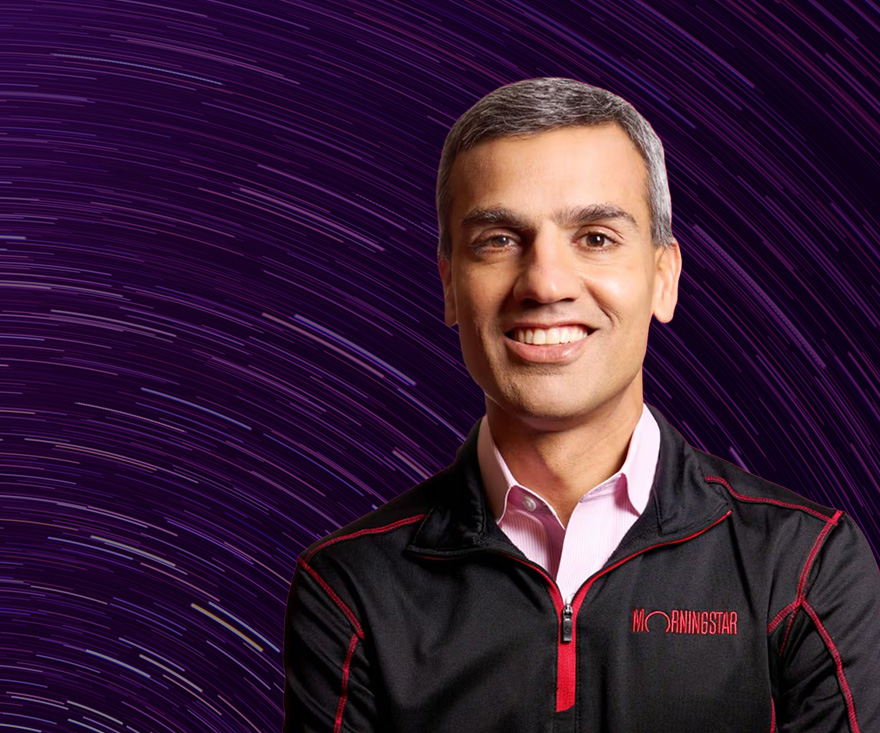
Kunal Kapoor, CEO, Morningstar

On the latest episode of the Innovators' Exchange, Hiten Patel interviews Kunal Kapoor, CEO of Morningstar, a leading provider of independent investment research and financial services. Kunal shares his unique journey from joining Morningstar as a fresh college graduate in 1997, when the company had just over 200 employees, to leading it today as a global firm with more than 10,000 employees. 

The conversation dives into Morningstar’s evolution from a mutual fund data provider to a diversified financial services company through strategic acquisitions such as Aspect Huntley, Micropal, DBRS, and PitchBook, and through expansion into investment management and credit ratings. Kunal shares his insights on navigating industry disruptions, including AI transformation, the growing importance of private markets, and shifting wealth management dynamics. He also reflects on how his leadership style was shaped by deep company experience, a founder’s mindset, and a commitment to embracing change. 

Key topics include: 

  • Early years: Kunal reflects on his upbringing, being born and raised in India, and gaining early independence through boarding school experience. He then moved to the US in 1993 for college education and joined Morningstar’s data collection team right after graduation in 1997. 
  • Morningstar’s growth: Initially a small company (about 200 employees in 1997) focused on Mutual Fund Binder and early software products; Morningstar’s growth was driven by a culture of ownership. Acquisitions of Aspect Huntley, Micropal, DBRS and PitchBook further allowed for international and capability expansion.
  • Investment management and credit ratings: Kunal shares how responding to financial advisors’ needs by building portfolio management and managed account services and developing a global investment management business across multiple countries positioned Morningstar as the world’s fourth-largest credit rating agency.
  • Views on AI, private markets, and wealth: Kunal argues AI disruption is real, but market reactions may overestimate short-term impact, with AI significantly enhancing personalization in investment management. He notes that private markets are growing due to companies staying private longer and changing capital raising, but emphasizes the need for investors to understand liquidity and fee structures in these markets. As for wealth management, fees are likely to decline due to technological advances, so advisors must scale and add value.
  • Leadership lessons: From Kunal’s experience, an insider perspective offers deep cultural and client understanding but requires an outside-in mindset to avoid complacency. He emphasizes the importance of adaptability and embracing change for both personal and professional growth.  


This episode is part of Innovators’ Exchange, a series that explores the financial infrastructure and technology landscape. Tune in for a captivating exploration of key themes and opportunities for both professionals and retail investors, touching on AI's transformative potential in financial markets. 

Subscribe for more on: Apple Podcasts | Spotify | Youtube | Podscribe

Hiten Patel: Welcome to today's episode of the Innovators' Exchange, and I'm delighted to welcome Kunal, the CEO of Morningstar. Welcome.

Kunal Kapoor: Good to be here. Good morning.

Hiten: Thank you for making the time. It'd be great to start with just a brief intro to your current role as the CEO of Morningstar for listeners.

Kunal: Sure. I've been at Morningstar for more than 25 years now, and this is my tenth year leading the firm. I've spent the entirety of my career actually at Morningstar, joining when we were a much smaller company. And today, having an opportunity to lead the firm.

Hiten: Wonderful. And before we get into Morningstar and what goes on there, I always like to have leaders talk about their growth journey to today, and in particular, pre-professional. So, talk to us a little bit about what growing up was like, what education was like and what some of the influences were through that period that have kind of shaped the leader that you are today?

Kunal: I was born in India and grew up in India. I went to boarding school very early in my life, actually, when I was five years old. So, I didn't have any siblings, but my parents very much believed, especially my dad, in the notion of creating a lot of independence for me. And so, he sent me off to boarding school when I was just over five. And so, I was in boarding school all my early life, on through high school. And that had a pretty big influence on me, as you can imagine. I think that notion again of independence, of trying to figure things out yourself, and I think being very open to new experiences.

And even though my family was not obviously with me, and my parents were super supportive, and I was very close to them throughout my life, throughout their life, I should say. Then, when I was 18, I came to the US for college and went through college here, had an amazing time at a small college called Monmouth, which is a few hours southwest of Chicago. And I had a really terrific time going to college there, small liberal arts school, had really deep relationships with many students and professors that I've maintained to this day. And yeah, just had a good opportunity in that sense.

Hiten: What were the big changes when you arrived on the US shores following an Indian boarding school education? Any standout changes, that kind of.

Kunal: I mean, I think probably relative to others. I went to a boarding school that was an American international school. And so maybe the culture shock was not as significant for me as it might be for others, but I will say that the bigness of America surprised me, the largeness of it, the vastness of it. And you sort of only think about it, but if you've ever been to India and you've ever seen a truck in India, and then you come to the US, and you see what a truck looks like here. I remember my first day just being wowed by the sheer size of it. I think the vastness of America and what it stood for has always been amazing to me. And the thing that, from my first day to this day, has left an impression and keeps leaving one.

Hiten: Just put a date on it for listeners, what year was it when you arrived on the shores here?

Kunal: I came to the US in 1993.

Hiten: 1993. And was it Morningstar straight out of college? Was that the first role?

Kunal: Yes, I went to college for four years and then, in 1997, graduated and applied for a job at multiple places. And Morningstar was one place that I landed, and it's where I wanted to work. And I can get into why later on. But I remember Morningstar was still a small company that was sort of all hands on deck. They needed everybody. And so, the gentleman who hired me told me that I needed to start the week after I graduated from college. So, I had this vision of taking some time off, and he's like, "No, you're starting in a week." So yeah, I started the week after I graduated.

Hiten: And describe to me, so you said it was what, 1997?

Kunal: Yeah.

Hiten: So, describe to me what Morningstar was like in 1997.

Kunal: We were a small company, around 200-250 people, and really one major product, which was called the Mutual Fund Binder. It was a print product. We were also in the early days of Principia, which was our software disc product. And so, I joined in those days to collect data, and it was pretty rudimentary. Looking back on it, we used to use fax machines, and we used to pick up the phone and call people to collect the data.

And it's interesting, today everybody assumes that it's so easy to get mutual fund data. And in some ways, it has become a lot less labor-intensive to go get that data. But back in those days, it was pretty hard to get it. And you had managers who didn't want to give the data; they didn't want to expose it because they didn't want to give away their secret sauce, which is what they always used to say, which is kind of ironic when you fast-forward to today, and you have ETFs and real-time disclosure and all of that. And so, it was pretty amazing.

Hiten: For the benefit of those listeners who are not totally familiar with Morningstar, just explain the value of the product back then, the original product, why would people want that?

Kunal: The original product was to help individuals and advisors look across the mutual fund universe and to be able to compare mutual funds, to decide which ones they wanted to invest in. We had also started investing in stock coverage, and so we had a US equity database, and we'd started to invest in that. Morningstar.com launched right about the time that I had come into the company. And so those were also sort of the early days of the internet. And that's when we really put a product together that brought our equity coverage together with our mutual fund coverage. And so, you started to see what Morningstar could be because we'd gone just from being mutual funds to adding stocks. And obviously, over time, we've been able to add different types of investments that allow people to have a broader sense of the investments available to them.

Hiten: And I guess over the next decades, both you and the company had a pretty meteoric rise. I don't know if you want to take them internally, but tell the story of them as a collective. I guess as the company evolved and you evolved, what were some of the key punctuation chapters that kind of culminated?

Kunal: I mean, I think this is true of any company, but when you're a small company, and you start to grow, it's all hands on deck. You do everything. It's not a choice of like, "My job is X, and I'm only doing X." I'll say to this day, that drives me insane. I feel like we're all owner operators, and you have to show ownership of the business you're involved in. And that sometimes means stepping out of your lane.

And in the early days, we were all stepping out of our lanes, kind of trying to help just keep things going. So, I remember we all even used to man the phones to take orders from clients, because there used to be a surge in June for whatever reason in those days of orders. And so in June, we'd all kind of go down to the phones and cover for extra calls and stuff, which by the way, I found terrifying being on the phones and I got over it, but to this day, I admire people who are able to do that and do it with such aplomb, and also just provides you with empathy when you're calling them and they're trying to figure things out. It's really easy to get frustrated with somebody on the phone when they're just trying to help you.

Anyway, so the company kind of started to grow, and a few things happened. I started to go down the research track at that time, but Morningstar also made a decision to start growing outside the US. And after being on the research side for several years, in about 2005, I moved over to what we called our international operations, because we had decided that we were going to start looking to grow overseas, including making acquisitions. And I was tasked with going out and finding companies that might make sense to be part of Morningstar. And so, we bought Aspect Huntley in Australia. We bought the Micropal business from S&P, which really was, I think, transformative for us at that time because it gave us the international part of the mutual fund business that we didn't have.

And we continued to invest in design and technology. And one of the early learnings for me was just that our IP [Intellectual Property] was valuable, not only because we did things differently, but also because our design allowed us to communicate it in a way that allowed people to consume it in a much more relevant, understandable, accessible manner. And to this day, that is very much the case.

Hiten: And in that first wave of acquisitions and expansion, what was it that you were looking for? It sounded like it was versions of the business that you were doing across a broader geographic perimeter? 

Kunal: Exactly.

Hiten: And at what stage did you then decide, "Hey, I want to do even more that's beyond that proposition"?

Kunal: Well, it was definitely to ensure that we rounded up our US database or rounded out our US database. Our US database was very strong , but obviously focused entirely on the US. And so, buying Aspect Huntley did that, buying the Micropal business, obviously did that. And then we had some smaller acquisitions elsewhere.

It was because our clients were going overseas as well, whether that was European clients trying to go to the US, Asian clients trying to move out of Asia, or American clients starting to think about selling into other parts of the world. And so that period was pretty transformative, I think, for businesses because globalization was in full swing and no different in financial services, that was happening as well. And so that's kind of a mantra we've always tried to use at Morningstar, which is we want to be where our clients are. And so that kind of drove things.

Hiten: And talk to me about when you started to expand on the product front, and you started to diversify. Talk us through that era.

Kunal: What I would highlight is that you diversify because you think your clients are going to find new use cases to be relevant to what they're trying to do. And so, we, first of all, really started to get into the investment management side in the early 2000s. And we did that because financial advisors started to tell us that, "Hey, we're starting to outsource more of our investment management. Historically, we've partnered with you, Morningstar, because you've helped us pick the funds, pick the stocks and then helped build a portfolio. Now, as we start to outsource our business, wouldn't it be great if Morningstar also built portfolios?"

And so, we started to do that. We started to do it within 401ks, this concept here in the US of managed accounts and retirement plans started to take off, and so we started to invest in those as well. And so that kind of led to the creation of our investment management business, which today is now a global business, including in the UK, Australia and South Africa. So, across the world, we've been able to grow that business.

So that was the first step. The second thing we started to do is you had the global financial crisis. The global financial crisis hit. It's very clear that the three legacy credit rating agencies have done a poor job. And our founder and CEO at the time, Joe Mansueto, decided that it was a good time to get into credit ratings since everybody else had done such a poor job, and he thought there was a chance to disrupt them. So, I think Joe's thesis was exactly right. And to this day, I think it is the right one. Just a thesis that takes time to play out because the incumbents have some natural barriers that they've been able to erect, but we're chipping away at them, and we bought DBRS [Dominion Bond Rating Service] sometime back. And so now we are the world's fourth-largest credit rating agency.

And then a really big thing we did about 10 years ago was, we just had the insight that private markets were going to be more relevant to investors and VC [Venture Capital] markets were going to be more relevant. And so, we were investors in PitchBook , and we basically ended up buying PitchBook about a decade ago. And we did that because we saw that our clients were going to essentially experience this convergence between public and private markets. And if you fast-forward to today, everybody just sort of knows things. I can tell you, 10 years ago, people did not think that. And so, you have to think about where your clients are going and try to build a business around that more than anything else.

Hiten: You're definitely at least five years ahead of the curve and done well out of that. Through that period, talk to me about the evolution of your role and what some of the roles that you held or lessons that you learned that equipped you to kind of assume the complete leadership of the company? Because it's quite a fascinating journey, right? To go from walking in somewhere with 200 people, first job out of college. And then, I mean, I can't imagine how many employees there were when you took the helm in 2017. It'd be great just to kind of do the pod history of your own growth journey through that period.

Kunal: Change is a concept that comes up very frequently in business and life. And I think on paper, everybody loves the notion of change. I think the reality of change is much tougher for most people to absorb and deal with, and for most companies as well. I think Morningstar is the reverse. We've changed. We've had many upstarts, and that has, I think, kept the company in good standing. The company I walked into in 1997 is not the same company today. The values are the same. The mission feels very much the same, but it's not the same company, because we're doing different things, we're serving different clients, and we have different people here.

And so, things always keep changing on the margin. And we've gotten larger , and we've evolved with time because we've been okay with changing. And it's true of me as well. I think if I had written kind of my story when I first came in here, I would have said, “I'm going to be a research analyst of some type for my career”.

And to this day, I will argue that that is a fantastic job and on weekends, and when I have free time, I love being a research analyst, to this day. I love learning about other companies, other investments, and I study others whom I admire in that capacity. But I think I, too, have a great appetite for change, and maybe it goes back to what you talked about earlier in this conversation about going to boarding school and having those formative years.

My life has been marked by change at a personal level, and I think professionally it's come to me pretty naturally as well to want to kind of step in and embrace change. And the reality is that it's easy to say that, but it's very difficult to do it. And I feel comfortable and good that we've been able to do that as a company. And boy, if we hadn't done some of the things we did, the addressable market for us would not have expanded to the extent that it has today.

And similarly, for my personal growth story, if I hadn't changed, if I hadn't worn different hats, worked in different parts of the business, I wouldn't be, I think, in a spot where I could lead the business. And obviously, that changed pretty dramatically.

Hiten: And is there something in that you've had so many roles, you talked earlier about being an owner operator, you talked earlier about manning the phones, doing some of the research. If I look at some of the other companies in the broader peer set, very often they'll go for an M&A banker who's an advisor in the space and drop someone in. They've not necessarily grown through the ranks and lived through the roles. Is there something in the way that you can then have a deeper understanding of what's going on? I think you're over 10,000, maybe 11,000 employees now.

What do you think about your leadership style? How has it been shaped by 20 years growing up through a firm, seeing it grow from 200 people to 11,000 people? How does that make you feel about that leadership style? For me, from the outside, it's probably a whole different set of traits that really brings them to bear.

Kunal: Yeah, it has its pros and cons, and you have to be aware of both of them. I think there are some real benefits to being an insider. You sort of bleed the culture, you lead by example in the way you want to, you live the mission, and you know your clients. Anyone can walk up today, and I will give them a full demo of our products. I just know the firm from the inside out, and I know it to a good degree of detail, because I've been here for so long and it's what I think about in a very deep way.

On the other hand, you have to be careful as an insider because you can very easily get trapped in the notion of "Well, we always do things this way or that way." And you can get caught in that.

And so, I learned very early on, and I have been very practiced at having kind of an outside-in view of the firm. And I asked myself if we were owned by a private equity firm, what would we be doing, and how would we be operating if we were owned as part of a bigger conglomerate? What would it be like? And so, I put ourselves in different situations, and I think about how we grow value, and what the things we could be doing are to do that.

And so, in many ways, the core of the firm, what we stand for, what we believe in, how we serve customers, has been omnipresent, and I can represent that easily. But a big part of my job is to make sure we don't get trapped in that ‘it's always been this way’ type of mentality. And I wake up, and I think about that all the time, and I try to lead in a way that shows people that I'm not trapped by that either. And so, I think that's sort of been important with bringing the outside in.

Hiten: And one of the things I wanted to talk about was how you've preserved that DNA of a founder mindset whilst being a public company, and in particular over the last, I don't know, six to 12 months, public markets have got very noisy, very volatile over things like potential impact of AI and that noise.

How do you navigate and balance knowing your own mission, knowing it better than anyone else, knowing the DNA, knowing the values, with the noise that comes with being publicly listed? I guess you said earlier that you continue to be a weekend hobbyist as a research analyst. What is it when you look outside-in at Morningstar? How do you navigate all of that, like looking outside-in, noisy public markets?

Kunal: Noise is best tuned out. And I think it's really important not to get caught in the day-to-day of what's happening in the markets. If you're an investor, it's a sure recipe for poor long-term performance if you were sitting there and trying to determine what you should or shouldn't be doing over short-term periods. And so, I would never recommend that in any capacity to anybody. Having said that, when markets move, and they move in ways that cause dislocation sometimes, there's information there that is valuable.

When I look at what is happening in the markets right now, there's a lot of dislocation related to AI and a sort of feeling about whether business models are going to be impacted and whatnot. And I think there's good information in that, because disruption right now is real. It is happening. Things are changing very rapidly, and I think the markets are right that different firms will be winners and losers, and things will shift.

Where I think the markets are wrong is potentially that the markets are essentially overreacting to the period over which change may impact different companies, as well as what the moats are that certain companies will be able to grow in this environment. So, there's sort of a belief that SaaS-based [Software as a Service] models will entirely disappear, that customers who have sort of built embedded workflows with certain software companies won't have those, and that data will become free.

I think there are a lot of nuances to that. And so, at times like this, you have to lead with clarity of thought. You have to acknowledge that the world is changing, but you have to have a view. And for me, the focus is to look at the things where we have an edge and to grow our value by leaning into that edge. But I think you will do yourself a disservice if you spend too much time worrying about what's happening in the markets day-to-day.

Hiten: I'd love to get your thoughts on some of the specific ecosystems that you play in, which include wealth, private markets and credit. I guess your outlook for that ecosystem in terms of the role that technology, data, and infrastructure will play when we deliberately take a five-year lens, as you're right, short-term is too noisy.

But given the changes you've seen over the multi-decade period, you talked about telephones and fax machines, you've seen market structure change play through in some of these markets. When you draw upon that history and that experience, start with wealth. Where do you think some of the big shifts and changes are set to come?

Kunal: Wealth is a great place to focus because the relationship between an individual and their advisor is changing all the time. And look, if you just even look at what an advisor used to do 20 years ago versus what an advisor is doing today, it's very different. And so, tech is a great enabler for people to, I think, have more confidence in the way they're building portfolios and aiming to hit their goals.

And I think if you're a financial advisor, the bar for what you need to deliver to earn your fee is moving up. I think individuals will be able to do more themselves, and so the advisor has to be able to deliver more. It's also true that, in general, technology has a deflationary effect on things. And I am of the mindset that fees are going to keep coming down, even in the advice side.

And I think this is a minority view because fees on the advice/wealth side have generally held steady, if not increased, even as asset management fees have come down in the past couple of decades. My view is that with some of the changes happening in technology, fees on wealth are going to come down as well. And so, advisors are going to have to scale who they work with and how they work with their clients.

Hiten: That trend is definitely emerging, and it's definitely one that sees momentum growing. You talked earlier about how you called a private markets opportunity 10 years ago. There's now every man and their dog can't stop talking about it. Your views on where it goes from here?

Kunal: I mean, we certainly saw it was going to happen, but I don't think I anticipated the pace at which it happened. And so sometimes it's better to be lucky in that context. Let me just start by saying not everyone needs to be in the private markets. The best thing about a portfolio is that you can sleep at night with it. And if you're comfortable with the portfolio you have, there's no reason to have FOMO [fear of missing out]. And I think a lot of people try to put things in their portfolio because of FOMO.

You hear this particularly with crypto and a lot of what I'd consider to be more speculative asset classes. When you actually ask people why it's in their portfolio or how they think about it, they don't have a deep answer other than they're fearful of missing out on something.

Hiten: Reddit.

Kunal: And so private markets, I think, there are a couple of interesting things happening. First of all, there's no doubt that the way companies are raising capital is changing. And so, it used to be that if you were a company and you wanted to raise capital, you looked to traditional commercial lenders, banks, etcetera, to raise the money. That's still a very viable source today, but you can now look at private sources like PE [Private Equity] funds and raise from there. And so that's happening. You also have this phenomenon on the equity side, where companies are staying private longer.

And so, what it means is that when you look at the pool of investments available to investors, private markets, both on the credit and debt side, have started to account for a larger share of the overall market. And so, it's my belief that over time, if you're an investor, you should have some access to those types of markets if you're going to own the whole market, so to speak. Otherwise, I think in the public markets, increasingly, especially on the equity side, things are more concentrated than they historically have been.

And so, I think the trend is inevitable. What I would say is most investors should be very conscious if they're going to invest in private markets, that liquidity is not instant, that you are going to put money away for longer time periods. And I think most investors are best served owning private credit or private equity in some type of an overall managed account, managed portfolio, a target date fund, that kind of thing. I think it's a good way to enter into it versus going directly to own it without fully understanding what it may be able to do for you.

Hiten: Got it. And in both of those instances. Well, in particular, in private markets, there is an endless amount of commentary, right? Lots of people like to talk about the space and the opportunities. One of the things I'm keen to do on this show is to get the voice of the practitioner or the leader to be better heard. What's most misunderstood? When you see everybody talking and speaking about these spaces, whether it be the impact of AI, the role it's going to play, or technology. But when you think about wealth, you think about private markets. As someone who is one of the leading providers of services and data in this space, what do you think is missing from the narrative, misunderstood or overlooked?

Kunal: I think what's misunderstood or not fully understood is, especially in private markets, the different structures that exist today and the different ways that fees are earned. And so, if you're an investor, to actually understand and compare investments in the private markets is very difficult. Compare that to public markets. Morningstar and others have made it really easy for you to be able to do those types of comparisons and understand what the differences are. And we want to do that in private markets as well.

I think with AI, I'm not sure that anything is misunderstood as much as people are not sure what it's going to lead to. And I think in a world that's more agentic in general and where workflows are set up to run more automatically, I don't know if this is a misunderstanding or not, but I think people don't fully appreciate as yet how much more personalization is going to be available in investments, and I think how technology is going to bring that to life even more so than exists today. Personalization has sort of been a concept that's been out there for a while, and there've been strides made in it, but I think AI is just going to blow it off the top and really drive it.

Hiten: Awesome. Thank you for all your reflections on that section. I'm just going to change tack slightly and talk again about some of your leadership experiences. I just want to start with the observation that you're one of quite an elite handful of Indian born or Indian origin CEOs, particularly in America. And go back to the start of the journey you shared when you were at boarding school. What is it that you think that Indian heritage, Indian upbringing, particularly the American context, allows so many successful leaders to take the helm of these leading companies?

Kunal: Obviously, I think everyone has their own journey, and there are different reasons, but I think the commonality probably exists in the rigor of what you're taught growing up and sort of what that embeds in you. And I think that had a lot to do... I think you're pushed at every level when you are going to school in India, at least when I was. And I think that's probably true of a lot of the other leaders you're thinking about. And it felt very competitive and difficult at that point, but I think there are some real positives that came out of that as well.

Hiten: Amazing. And talk to me about what the most interesting challenges you've navigated through that journey are, something that the listeners would benefit from having a candid view on, as you've gone on this journey.

Kunal: I mean, I think especially when you grow up in India, I think there's always sort of a belief you're going to have a very linear journey. And I don't know that this is unique to Indians, although in many ways the education system in India sets you up that way, but I would actually argue that more and more around the world you see this. People are taking more linear journeys in their academic careers and in what they end up doing in their jobs. And I think that's all wrong, and I think it will be magnified even more so in the age of AI.

And what I mean by that is I think right now in the age of artificial intelligence, education systems like the one we have in America, for example, such as a liberal arts education, which kind of focuses on teaching you to think, teaches you to think critically, teaches you to ask questions critically, is going to be incredibly valuable.

And I think it's this notion of having the expertise in certain fields and then adding on that sort of thinking mind to be able to not only take the information and report on it carte blanche, but also then to be able to engage with it in a very different fashion. I'll tell you, for me, going to a small liberal arts college was really, really important, because it opened up the aperture as to how I approached things, how I thought about things. And even coming to Morningstar and becoming an analyst, I very quickly could do the work of an analyst in terms of looking at something and thinking about whether it was a good investment or not.

But one of the things we stressed here at Morningstar is that you needed to be able to write, and you need to be able to write concisely. We had to write a 40-ish line analysis when I started. And if you think about how concise you have to be to do that, and the style, it's amazing how hard that is. And so today, ironically, we live in a world where people want to consume short-form stuff. So, something that existed when I started at Morningstar, then went out of fashion because people wanted to have lengthier research pieces, is back now because people want quick summaries because of attention spans or what have you.

And so, I would just say, going back to your main question, expertise is really important, but your ability not only to deploy that expertise, but to apply it in a critical manner is so critical in this world that we live in, and it has been really important in my own journey.

Hiten: We have it a little bit when we're writing our own reports as consultants, it's harder to write something shorter than longer because you have to really distill it down to the bit that matters. But I guess, Kunal, also hearing your reflections there, I was just going to inherit my own parents' hierarchy of subjects for my kids. It was going to be medicine, engineering and math. There was an Indian hierarchy, and I guess you're suggesting that needs to be revisited in the future.

Kunal: Probably. My dad was an engineer, and so the one rule in our house was like, "You can't be an engineer, Kunal." It's kind of interesting. He just decided, he's like, "You should have a different career."

Hiten: Love it. Whatever angle we like to take, we also invite our guests to share what they do outside of work, maybe a hobby or an interest that kind of shapes who they are as a leader.

Kunal: I don't know if it's shaped me as a leader, but in the last 15-20 years, I've become an avid runner. I love running. It's just the way I start my day. People know this about me.

Hiten: Has this been recorded pre- or post-run?

Kunal: This is post-run.

Hiten: Oh, wow.

Kunal: I was up at 3:30 this morning, got my seven-mile run in before I came in to do this. And yeah, it's important to me, and that's a key part of it. My family life is very important to me, and I think it creates a lot of space there. I like being out in nature. I absolutely love that. We've gone through a cold spell here in Chicago, where it's been hard to get out. And so, I don't know who's felt more constrained in the house, the dogs or me. 

And so, we've all been trying to get out there. And then I love reading and just listening to podcasts and just learning from others. I think there's so much to be gained by not only reading things that you have an interest in, but finding things you know very little about and just trying to figure them out. And I think reading is just a massive gift to kind of better yourself.

Hiten: Given how busy you must be with your day job, it shows great hunger and ability to manage your time to still find time to read and consume. Any particular recent highlights on your reading list that you want to call out?

Kunal: I've been reading more fiction recently, and I just read a really nice book, set in Maine, called “The Midcoast” by Adam White. I really enjoyed it. I thought it was a good book. I forgot where it was recommended, and I really enjoyed it.

Hiten: Good to sometimes escape the world of hard facts and opinions. 

Kunal: I've got Andrew Ross Sorkin's book about the Depression sitting there as my next read. I haven't gotten to it.

Hiten: There are some things that you think could be AI-synthesized, but with a good fiction book, you want to go through the whole journey. That's something you want to take the time with.

Kunal: Also, what do you take from it? Actually, it's an interesting exercise. I should ask AI to synthesize some of my favorite books and see what it takes from them relative to what I've taken from them. It's an interesting idea, actually.

Hiten: I suspect I'll get quite bastardized. Final question. We like to invite guests to throw the spotlight. So, call out an individual, a company that you think listeners should go look up and pay some attention to.

Kunal: I'm going to say something deeply unoriginal in this context. I think there are very few better examples of what it takes to build a good business, what it takes to be a great leader, than what Warren Buffett has done over the decades. Berkshire is a fantastic company and a great one for people to be looking at.

I will say that there are many great businesses and great leaders. And I'm often asked the question of what makes a great leader, what makes a great business. And the ingredients are often different. And it's always sort of occurred to me that there's not one particular answer in that context. And so, I always tell people to make sure they have a big range of people that they admire and a big range of businesses that they look at because you can learn a little bit from a lot of people and a lot of other businesses.

And so, it's something I've come to realize. And part of my leadership style, obviously, I want to be as authentic as possible, but I freely borrow from people I admire and try to make some of those things that they do relevant to my own leadership style in a way that feels comfortable to me. So, it's important.

Hiten: Amazing. Thank you for sharing. You've woken up super early post Super Bowl morning. You've been very generous with your time, and it's been great to reflect.

Kunal: Had to wait five years to get back in the Super Bowl. We made good progress this year.

Hiten: And it's been great to reflect on walking into a 200-person organization at Morningstar in 1997, taking over 20 years later, and so much more exciting to come. So, look, thank you so much for coming on the show and sharing your thoughts. We really appreciate it.

Kunal: Absolutely. Thanks for having me. I appreciate it.

This transcript was edited for clarity purposes.

    On the latest episode of the Innovators' Exchange, Hiten Patel interviews Kunal Kapoor, CEO of Morningstar, a leading provider of independent investment research and financial services. Kunal shares his unique journey from joining Morningstar as a fresh college graduate in 1997, when the company had just over 200 employees, to leading it today as a global firm with more than 10,000 employees. 

    The conversation dives into Morningstar’s evolution from a mutual fund data provider to a diversified financial services company through strategic acquisitions such as Aspect Huntley, Micropal, DBRS, and PitchBook, and through expansion into investment management and credit ratings. Kunal shares his insights on navigating industry disruptions, including AI transformation, the growing importance of private markets, and shifting wealth management dynamics. He also reflects on how his leadership style was shaped by deep company experience, a founder’s mindset, and a commitment to embracing change. 

    Key topics include: 

    • Early years: Kunal reflects on his upbringing, being born and raised in India, and gaining early independence through boarding school experience. He then moved to the US in 1993 for college education and joined Morningstar’s data collection team right after graduation in 1997. 
    • Morningstar’s growth: Initially a small company (about 200 employees in 1997) focused on Mutual Fund Binder and early software products; Morningstar’s growth was driven by a culture of ownership. Acquisitions of Aspect Huntley, Micropal, DBRS and PitchBook further allowed for international and capability expansion.
    • Investment management and credit ratings: Kunal shares how responding to financial advisors’ needs by building portfolio management and managed account services and developing a global investment management business across multiple countries positioned Morningstar as the world’s fourth-largest credit rating agency.
    • Views on AI, private markets, and wealth: Kunal argues AI disruption is real, but market reactions may overestimate short-term impact, with AI significantly enhancing personalization in investment management. He notes that private markets are growing due to companies staying private longer and changing capital raising, but emphasizes the need for investors to understand liquidity and fee structures in these markets. As for wealth management, fees are likely to decline due to technological advances, so advisors must scale and add value.
    • Leadership lessons: From Kunal’s experience, an insider perspective offers deep cultural and client understanding but requires an outside-in mindset to avoid complacency. He emphasizes the importance of adaptability and embracing change for both personal and professional growth.  


    This episode is part of Innovators’ Exchange, a series that explores the financial infrastructure and technology landscape. Tune in for a captivating exploration of key themes and opportunities for both professionals and retail investors, touching on AI's transformative potential in financial markets. 

    Subscribe for more on: Apple Podcasts | Spotify | Youtube | Podscribe

    Hiten Patel: Welcome to today's episode of the Innovators' Exchange, and I'm delighted to welcome Kunal, the CEO of Morningstar. Welcome.

    Kunal Kapoor: Good to be here. Good morning.

    Hiten: Thank you for making the time. It'd be great to start with just a brief intro to your current role as the CEO of Morningstar for listeners.

    Kunal: Sure. I've been at Morningstar for more than 25 years now, and this is my tenth year leading the firm. I've spent the entirety of my career actually at Morningstar, joining when we were a much smaller company. And today, having an opportunity to lead the firm.

    Hiten: Wonderful. And before we get into Morningstar and what goes on there, I always like to have leaders talk about their growth journey to today, and in particular, pre-professional. So, talk to us a little bit about what growing up was like, what education was like and what some of the influences were through that period that have kind of shaped the leader that you are today?

    Kunal: I was born in India and grew up in India. I went to boarding school very early in my life, actually, when I was five years old. So, I didn't have any siblings, but my parents very much believed, especially my dad, in the notion of creating a lot of independence for me. And so, he sent me off to boarding school when I was just over five. And so, I was in boarding school all my early life, on through high school. And that had a pretty big influence on me, as you can imagine. I think that notion again of independence, of trying to figure things out yourself, and I think being very open to new experiences.

    And even though my family was not obviously with me, and my parents were super supportive, and I was very close to them throughout my life, throughout their life, I should say. Then, when I was 18, I came to the US for college and went through college here, had an amazing time at a small college called Monmouth, which is a few hours southwest of Chicago. And I had a really terrific time going to college there, small liberal arts school, had really deep relationships with many students and professors that I've maintained to this day. And yeah, just had a good opportunity in that sense.

    Hiten: What were the big changes when you arrived on the US shores following an Indian boarding school education? Any standout changes, that kind of.

    Kunal: I mean, I think probably relative to others. I went to a boarding school that was an American international school. And so maybe the culture shock was not as significant for me as it might be for others, but I will say that the bigness of America surprised me, the largeness of it, the vastness of it. And you sort of only think about it, but if you've ever been to India and you've ever seen a truck in India, and then you come to the US, and you see what a truck looks like here. I remember my first day just being wowed by the sheer size of it. I think the vastness of America and what it stood for has always been amazing to me. And the thing that, from my first day to this day, has left an impression and keeps leaving one.

    Hiten: Just put a date on it for listeners, what year was it when you arrived on the shores here?

    Kunal: I came to the US in 1993.

    Hiten: 1993. And was it Morningstar straight out of college? Was that the first role?

    Kunal: Yes, I went to college for four years and then, in 1997, graduated and applied for a job at multiple places. And Morningstar was one place that I landed, and it's where I wanted to work. And I can get into why later on. But I remember Morningstar was still a small company that was sort of all hands on deck. They needed everybody. And so, the gentleman who hired me told me that I needed to start the week after I graduated from college. So, I had this vision of taking some time off, and he's like, "No, you're starting in a week." So yeah, I started the week after I graduated.

    Hiten: And describe to me, so you said it was what, 1997?

    Kunal: Yeah.

    Hiten: So, describe to me what Morningstar was like in 1997.

    Kunal: We were a small company, around 200-250 people, and really one major product, which was called the Mutual Fund Binder. It was a print product. We were also in the early days of Principia, which was our software disc product. And so, I joined in those days to collect data, and it was pretty rudimentary. Looking back on it, we used to use fax machines, and we used to pick up the phone and call people to collect the data.

    And it's interesting, today everybody assumes that it's so easy to get mutual fund data. And in some ways, it has become a lot less labor-intensive to go get that data. But back in those days, it was pretty hard to get it. And you had managers who didn't want to give the data; they didn't want to expose it because they didn't want to give away their secret sauce, which is what they always used to say, which is kind of ironic when you fast-forward to today, and you have ETFs and real-time disclosure and all of that. And so, it was pretty amazing.

    Hiten: For the benefit of those listeners who are not totally familiar with Morningstar, just explain the value of the product back then, the original product, why would people want that?

    Kunal: The original product was to help individuals and advisors look across the mutual fund universe and to be able to compare mutual funds, to decide which ones they wanted to invest in. We had also started investing in stock coverage, and so we had a US equity database, and we'd started to invest in that. Morningstar.com launched right about the time that I had come into the company. And so those were also sort of the early days of the internet. And that's when we really put a product together that brought our equity coverage together with our mutual fund coverage. And so, you started to see what Morningstar could be because we'd gone just from being mutual funds to adding stocks. And obviously, over time, we've been able to add different types of investments that allow people to have a broader sense of the investments available to them.

    Hiten: And I guess over the next decades, both you and the company had a pretty meteoric rise. I don't know if you want to take them internally, but tell the story of them as a collective. I guess as the company evolved and you evolved, what were some of the key punctuation chapters that kind of culminated?

    Kunal: I mean, I think this is true of any company, but when you're a small company, and you start to grow, it's all hands on deck. You do everything. It's not a choice of like, "My job is X, and I'm only doing X." I'll say to this day, that drives me insane. I feel like we're all owner operators, and you have to show ownership of the business you're involved in. And that sometimes means stepping out of your lane.

    And in the early days, we were all stepping out of our lanes, kind of trying to help just keep things going. So, I remember we all even used to man the phones to take orders from clients, because there used to be a surge in June for whatever reason in those days of orders. And so in June, we'd all kind of go down to the phones and cover for extra calls and stuff, which by the way, I found terrifying being on the phones and I got over it, but to this day, I admire people who are able to do that and do it with such aplomb, and also just provides you with empathy when you're calling them and they're trying to figure things out. It's really easy to get frustrated with somebody on the phone when they're just trying to help you.

    Anyway, so the company kind of started to grow, and a few things happened. I started to go down the research track at that time, but Morningstar also made a decision to start growing outside the US. And after being on the research side for several years, in about 2005, I moved over to what we called our international operations, because we had decided that we were going to start looking to grow overseas, including making acquisitions. And I was tasked with going out and finding companies that might make sense to be part of Morningstar. And so, we bought Aspect Huntley in Australia. We bought the Micropal business from S&P, which really was, I think, transformative for us at that time because it gave us the international part of the mutual fund business that we didn't have.

    And we continued to invest in design and technology. And one of the early learnings for me was just that our IP [Intellectual Property] was valuable, not only because we did things differently, but also because our design allowed us to communicate it in a way that allowed people to consume it in a much more relevant, understandable, accessible manner. And to this day, that is very much the case.

    Hiten: And in that first wave of acquisitions and expansion, what was it that you were looking for? It sounded like it was versions of the business that you were doing across a broader geographic perimeter? 

    Kunal: Exactly.

    Hiten: And at what stage did you then decide, "Hey, I want to do even more that's beyond that proposition"?

    Kunal: Well, it was definitely to ensure that we rounded up our US database or rounded out our US database. Our US database was very strong , but obviously focused entirely on the US. And so, buying Aspect Huntley did that, buying the Micropal business, obviously did that. And then we had some smaller acquisitions elsewhere.

    It was because our clients were going overseas as well, whether that was European clients trying to go to the US, Asian clients trying to move out of Asia, or American clients starting to think about selling into other parts of the world. And so that period was pretty transformative, I think, for businesses because globalization was in full swing and no different in financial services, that was happening as well. And so that's kind of a mantra we've always tried to use at Morningstar, which is we want to be where our clients are. And so that kind of drove things.

    Hiten: And talk to me about when you started to expand on the product front, and you started to diversify. Talk us through that era.

    Kunal: What I would highlight is that you diversify because you think your clients are going to find new use cases to be relevant to what they're trying to do. And so, we, first of all, really started to get into the investment management side in the early 2000s. And we did that because financial advisors started to tell us that, "Hey, we're starting to outsource more of our investment management. Historically, we've partnered with you, Morningstar, because you've helped us pick the funds, pick the stocks and then helped build a portfolio. Now, as we start to outsource our business, wouldn't it be great if Morningstar also built portfolios?"

    And so, we started to do that. We started to do it within 401ks, this concept here in the US of managed accounts and retirement plans started to take off, and so we started to invest in those as well. And so that kind of led to the creation of our investment management business, which today is now a global business, including in the UK, Australia and South Africa. So, across the world, we've been able to grow that business.

    So that was the first step. The second thing we started to do is you had the global financial crisis. The global financial crisis hit. It's very clear that the three legacy credit rating agencies have done a poor job. And our founder and CEO at the time, Joe Mansueto, decided that it was a good time to get into credit ratings since everybody else had done such a poor job, and he thought there was a chance to disrupt them. So, I think Joe's thesis was exactly right. And to this day, I think it is the right one. Just a thesis that takes time to play out because the incumbents have some natural barriers that they've been able to erect, but we're chipping away at them, and we bought DBRS [Dominion Bond Rating Service] sometime back. And so now we are the world's fourth-largest credit rating agency.

    And then a really big thing we did about 10 years ago was, we just had the insight that private markets were going to be more relevant to investors and VC [Venture Capital] markets were going to be more relevant. And so, we were investors in PitchBook , and we basically ended up buying PitchBook about a decade ago. And we did that because we saw that our clients were going to essentially experience this convergence between public and private markets. And if you fast-forward to today, everybody just sort of knows things. I can tell you, 10 years ago, people did not think that. And so, you have to think about where your clients are going and try to build a business around that more than anything else.

    Hiten: You're definitely at least five years ahead of the curve and done well out of that. Through that period, talk to me about the evolution of your role and what some of the roles that you held or lessons that you learned that equipped you to kind of assume the complete leadership of the company? Because it's quite a fascinating journey, right? To go from walking in somewhere with 200 people, first job out of college. And then, I mean, I can't imagine how many employees there were when you took the helm in 2017. It'd be great just to kind of do the pod history of your own growth journey through that period.

    Kunal: Change is a concept that comes up very frequently in business and life. And I think on paper, everybody loves the notion of change. I think the reality of change is much tougher for most people to absorb and deal with, and for most companies as well. I think Morningstar is the reverse. We've changed. We've had many upstarts, and that has, I think, kept the company in good standing. The company I walked into in 1997 is not the same company today. The values are the same. The mission feels very much the same, but it's not the same company, because we're doing different things, we're serving different clients, and we have different people here.

    And so, things always keep changing on the margin. And we've gotten larger , and we've evolved with time because we've been okay with changing. And it's true of me as well. I think if I had written kind of my story when I first came in here, I would have said, “I'm going to be a research analyst of some type for my career”.

    And to this day, I will argue that that is a fantastic job and on weekends, and when I have free time, I love being a research analyst, to this day. I love learning about other companies, other investments, and I study others whom I admire in that capacity. But I think I, too, have a great appetite for change, and maybe it goes back to what you talked about earlier in this conversation about going to boarding school and having those formative years.

    My life has been marked by change at a personal level, and I think professionally it's come to me pretty naturally as well to want to kind of step in and embrace change. And the reality is that it's easy to say that, but it's very difficult to do it. And I feel comfortable and good that we've been able to do that as a company. And boy, if we hadn't done some of the things we did, the addressable market for us would not have expanded to the extent that it has today.

    And similarly, for my personal growth story, if I hadn't changed, if I hadn't worn different hats, worked in different parts of the business, I wouldn't be, I think, in a spot where I could lead the business. And obviously, that changed pretty dramatically.

    Hiten: And is there something in that you've had so many roles, you talked earlier about being an owner operator, you talked earlier about manning the phones, doing some of the research. If I look at some of the other companies in the broader peer set, very often they'll go for an M&A banker who's an advisor in the space and drop someone in. They've not necessarily grown through the ranks and lived through the roles. Is there something in the way that you can then have a deeper understanding of what's going on? I think you're over 10,000, maybe 11,000 employees now.

    What do you think about your leadership style? How has it been shaped by 20 years growing up through a firm, seeing it grow from 200 people to 11,000 people? How does that make you feel about that leadership style? For me, from the outside, it's probably a whole different set of traits that really brings them to bear.

    Kunal: Yeah, it has its pros and cons, and you have to be aware of both of them. I think there are some real benefits to being an insider. You sort of bleed the culture, you lead by example in the way you want to, you live the mission, and you know your clients. Anyone can walk up today, and I will give them a full demo of our products. I just know the firm from the inside out, and I know it to a good degree of detail, because I've been here for so long and it's what I think about in a very deep way.

    On the other hand, you have to be careful as an insider because you can very easily get trapped in the notion of "Well, we always do things this way or that way." And you can get caught in that.

    And so, I learned very early on, and I have been very practiced at having kind of an outside-in view of the firm. And I asked myself if we were owned by a private equity firm, what would we be doing, and how would we be operating if we were owned as part of a bigger conglomerate? What would it be like? And so, I put ourselves in different situations, and I think about how we grow value, and what the things we could be doing are to do that.

    And so, in many ways, the core of the firm, what we stand for, what we believe in, how we serve customers, has been omnipresent, and I can represent that easily. But a big part of my job is to make sure we don't get trapped in that ‘it's always been this way’ type of mentality. And I wake up, and I think about that all the time, and I try to lead in a way that shows people that I'm not trapped by that either. And so, I think that's sort of been important with bringing the outside in.

    Hiten: And one of the things I wanted to talk about was how you've preserved that DNA of a founder mindset whilst being a public company, and in particular over the last, I don't know, six to 12 months, public markets have got very noisy, very volatile over things like potential impact of AI and that noise.

    How do you navigate and balance knowing your own mission, knowing it better than anyone else, knowing the DNA, knowing the values, with the noise that comes with being publicly listed? I guess you said earlier that you continue to be a weekend hobbyist as a research analyst. What is it when you look outside-in at Morningstar? How do you navigate all of that, like looking outside-in, noisy public markets?

    Kunal: Noise is best tuned out. And I think it's really important not to get caught in the day-to-day of what's happening in the markets. If you're an investor, it's a sure recipe for poor long-term performance if you were sitting there and trying to determine what you should or shouldn't be doing over short-term periods. And so, I would never recommend that in any capacity to anybody. Having said that, when markets move, and they move in ways that cause dislocation sometimes, there's information there that is valuable.

    When I look at what is happening in the markets right now, there's a lot of dislocation related to AI and a sort of feeling about whether business models are going to be impacted and whatnot. And I think there's good information in that, because disruption right now is real. It is happening. Things are changing very rapidly, and I think the markets are right that different firms will be winners and losers, and things will shift.

    Where I think the markets are wrong is potentially that the markets are essentially overreacting to the period over which change may impact different companies, as well as what the moats are that certain companies will be able to grow in this environment. So, there's sort of a belief that SaaS-based [Software as a Service] models will entirely disappear, that customers who have sort of built embedded workflows with certain software companies won't have those, and that data will become free.

    I think there are a lot of nuances to that. And so, at times like this, you have to lead with clarity of thought. You have to acknowledge that the world is changing, but you have to have a view. And for me, the focus is to look at the things where we have an edge and to grow our value by leaning into that edge. But I think you will do yourself a disservice if you spend too much time worrying about what's happening in the markets day-to-day.

    Hiten: I'd love to get your thoughts on some of the specific ecosystems that you play in, which include wealth, private markets and credit. I guess your outlook for that ecosystem in terms of the role that technology, data, and infrastructure will play when we deliberately take a five-year lens, as you're right, short-term is too noisy.

    But given the changes you've seen over the multi-decade period, you talked about telephones and fax machines, you've seen market structure change play through in some of these markets. When you draw upon that history and that experience, start with wealth. Where do you think some of the big shifts and changes are set to come?

    Kunal: Wealth is a great place to focus because the relationship between an individual and their advisor is changing all the time. And look, if you just even look at what an advisor used to do 20 years ago versus what an advisor is doing today, it's very different. And so, tech is a great enabler for people to, I think, have more confidence in the way they're building portfolios and aiming to hit their goals.

    And I think if you're a financial advisor, the bar for what you need to deliver to earn your fee is moving up. I think individuals will be able to do more themselves, and so the advisor has to be able to deliver more. It's also true that, in general, technology has a deflationary effect on things. And I am of the mindset that fees are going to keep coming down, even in the advice side.

    And I think this is a minority view because fees on the advice/wealth side have generally held steady, if not increased, even as asset management fees have come down in the past couple of decades. My view is that with some of the changes happening in technology, fees on wealth are going to come down as well. And so, advisors are going to have to scale who they work with and how they work with their clients.

    Hiten: That trend is definitely emerging, and it's definitely one that sees momentum growing. You talked earlier about how you called a private markets opportunity 10 years ago. There's now every man and their dog can't stop talking about it. Your views on where it goes from here?

    Kunal: I mean, we certainly saw it was going to happen, but I don't think I anticipated the pace at which it happened. And so sometimes it's better to be lucky in that context. Let me just start by saying not everyone needs to be in the private markets. The best thing about a portfolio is that you can sleep at night with it. And if you're comfortable with the portfolio you have, there's no reason to have FOMO [fear of missing out]. And I think a lot of people try to put things in their portfolio because of FOMO.

    You hear this particularly with crypto and a lot of what I'd consider to be more speculative asset classes. When you actually ask people why it's in their portfolio or how they think about it, they don't have a deep answer other than they're fearful of missing out on something.

    Hiten: Reddit.

    Kunal: And so private markets, I think, there are a couple of interesting things happening. First of all, there's no doubt that the way companies are raising capital is changing. And so, it used to be that if you were a company and you wanted to raise capital, you looked to traditional commercial lenders, banks, etcetera, to raise the money. That's still a very viable source today, but you can now look at private sources like PE [Private Equity] funds and raise from there. And so that's happening. You also have this phenomenon on the equity side, where companies are staying private longer.

    And so, what it means is that when you look at the pool of investments available to investors, private markets, both on the credit and debt side, have started to account for a larger share of the overall market. And so, it's my belief that over time, if you're an investor, you should have some access to those types of markets if you're going to own the whole market, so to speak. Otherwise, I think in the public markets, increasingly, especially on the equity side, things are more concentrated than they historically have been.

    And so, I think the trend is inevitable. What I would say is most investors should be very conscious if they're going to invest in private markets, that liquidity is not instant, that you are going to put money away for longer time periods. And I think most investors are best served owning private credit or private equity in some type of an overall managed account, managed portfolio, a target date fund, that kind of thing. I think it's a good way to enter into it versus going directly to own it without fully understanding what it may be able to do for you.

    Hiten: Got it. And in both of those instances. Well, in particular, in private markets, there is an endless amount of commentary, right? Lots of people like to talk about the space and the opportunities. One of the things I'm keen to do on this show is to get the voice of the practitioner or the leader to be better heard. What's most misunderstood? When you see everybody talking and speaking about these spaces, whether it be the impact of AI, the role it's going to play, or technology. But when you think about wealth, you think about private markets. As someone who is one of the leading providers of services and data in this space, what do you think is missing from the narrative, misunderstood or overlooked?

    Kunal: I think what's misunderstood or not fully understood is, especially in private markets, the different structures that exist today and the different ways that fees are earned. And so, if you're an investor, to actually understand and compare investments in the private markets is very difficult. Compare that to public markets. Morningstar and others have made it really easy for you to be able to do those types of comparisons and understand what the differences are. And we want to do that in private markets as well.

    I think with AI, I'm not sure that anything is misunderstood as much as people are not sure what it's going to lead to. And I think in a world that's more agentic in general and where workflows are set up to run more automatically, I don't know if this is a misunderstanding or not, but I think people don't fully appreciate as yet how much more personalization is going to be available in investments, and I think how technology is going to bring that to life even more so than exists today. Personalization has sort of been a concept that's been out there for a while, and there've been strides made in it, but I think AI is just going to blow it off the top and really drive it.

    Hiten: Awesome. Thank you for all your reflections on that section. I'm just going to change tack slightly and talk again about some of your leadership experiences. I just want to start with the observation that you're one of quite an elite handful of Indian born or Indian origin CEOs, particularly in America. And go back to the start of the journey you shared when you were at boarding school. What is it that you think that Indian heritage, Indian upbringing, particularly the American context, allows so many successful leaders to take the helm of these leading companies?

    Kunal: Obviously, I think everyone has their own journey, and there are different reasons, but I think the commonality probably exists in the rigor of what you're taught growing up and sort of what that embeds in you. And I think that had a lot to do... I think you're pushed at every level when you are going to school in India, at least when I was. And I think that's probably true of a lot of the other leaders you're thinking about. And it felt very competitive and difficult at that point, but I think there are some real positives that came out of that as well.

    Hiten: Amazing. And talk to me about what the most interesting challenges you've navigated through that journey are, something that the listeners would benefit from having a candid view on, as you've gone on this journey.

    Kunal: I mean, I think especially when you grow up in India, I think there's always sort of a belief you're going to have a very linear journey. And I don't know that this is unique to Indians, although in many ways the education system in India sets you up that way, but I would actually argue that more and more around the world you see this. People are taking more linear journeys in their academic careers and in what they end up doing in their jobs. And I think that's all wrong, and I think it will be magnified even more so in the age of AI.

    And what I mean by that is I think right now in the age of artificial intelligence, education systems like the one we have in America, for example, such as a liberal arts education, which kind of focuses on teaching you to think, teaches you to think critically, teaches you to ask questions critically, is going to be incredibly valuable.

    And I think it's this notion of having the expertise in certain fields and then adding on that sort of thinking mind to be able to not only take the information and report on it carte blanche, but also then to be able to engage with it in a very different fashion. I'll tell you, for me, going to a small liberal arts college was really, really important, because it opened up the aperture as to how I approached things, how I thought about things. And even coming to Morningstar and becoming an analyst, I very quickly could do the work of an analyst in terms of looking at something and thinking about whether it was a good investment or not.

    But one of the things we stressed here at Morningstar is that you needed to be able to write, and you need to be able to write concisely. We had to write a 40-ish line analysis when I started. And if you think about how concise you have to be to do that, and the style, it's amazing how hard that is. And so today, ironically, we live in a world where people want to consume short-form stuff. So, something that existed when I started at Morningstar, then went out of fashion because people wanted to have lengthier research pieces, is back now because people want quick summaries because of attention spans or what have you.

    And so, I would just say, going back to your main question, expertise is really important, but your ability not only to deploy that expertise, but to apply it in a critical manner is so critical in this world that we live in, and it has been really important in my own journey.

    Hiten: We have it a little bit when we're writing our own reports as consultants, it's harder to write something shorter than longer because you have to really distill it down to the bit that matters. But I guess, Kunal, also hearing your reflections there, I was just going to inherit my own parents' hierarchy of subjects for my kids. It was going to be medicine, engineering and math. There was an Indian hierarchy, and I guess you're suggesting that needs to be revisited in the future.

    Kunal: Probably. My dad was an engineer, and so the one rule in our house was like, "You can't be an engineer, Kunal." It's kind of interesting. He just decided, he's like, "You should have a different career."

    Hiten: Love it. Whatever angle we like to take, we also invite our guests to share what they do outside of work, maybe a hobby or an interest that kind of shapes who they are as a leader.

    Kunal: I don't know if it's shaped me as a leader, but in the last 15-20 years, I've become an avid runner. I love running. It's just the way I start my day. People know this about me.

    Hiten: Has this been recorded pre- or post-run?

    Kunal: This is post-run.

    Hiten: Oh, wow.

    Kunal: I was up at 3:30 this morning, got my seven-mile run in before I came in to do this. And yeah, it's important to me, and that's a key part of it. My family life is very important to me, and I think it creates a lot of space there. I like being out in nature. I absolutely love that. We've gone through a cold spell here in Chicago, where it's been hard to get out. And so, I don't know who's felt more constrained in the house, the dogs or me. 

    And so, we've all been trying to get out there. And then I love reading and just listening to podcasts and just learning from others. I think there's so much to be gained by not only reading things that you have an interest in, but finding things you know very little about and just trying to figure them out. And I think reading is just a massive gift to kind of better yourself.

    Hiten: Given how busy you must be with your day job, it shows great hunger and ability to manage your time to still find time to read and consume. Any particular recent highlights on your reading list that you want to call out?

    Kunal: I've been reading more fiction recently, and I just read a really nice book, set in Maine, called “The Midcoast” by Adam White. I really enjoyed it. I thought it was a good book. I forgot where it was recommended, and I really enjoyed it.

    Hiten: Good to sometimes escape the world of hard facts and opinions. 

    Kunal: I've got Andrew Ross Sorkin's book about the Depression sitting there as my next read. I haven't gotten to it.

    Hiten: There are some things that you think could be AI-synthesized, but with a good fiction book, you want to go through the whole journey. That's something you want to take the time with.

    Kunal: Also, what do you take from it? Actually, it's an interesting exercise. I should ask AI to synthesize some of my favorite books and see what it takes from them relative to what I've taken from them. It's an interesting idea, actually.

    Hiten: I suspect I'll get quite bastardized. Final question. We like to invite guests to throw the spotlight. So, call out an individual, a company that you think listeners should go look up and pay some attention to.

    Kunal: I'm going to say something deeply unoriginal in this context. I think there are very few better examples of what it takes to build a good business, what it takes to be a great leader, than what Warren Buffett has done over the decades. Berkshire is a fantastic company and a great one for people to be looking at.

    I will say that there are many great businesses and great leaders. And I'm often asked the question of what makes a great leader, what makes a great business. And the ingredients are often different. And it's always sort of occurred to me that there's not one particular answer in that context. And so, I always tell people to make sure they have a big range of people that they admire and a big range of businesses that they look at because you can learn a little bit from a lot of people and a lot of other businesses.

    And so, it's something I've come to realize. And part of my leadership style, obviously, I want to be as authentic as possible, but I freely borrow from people I admire and try to make some of those things that they do relevant to my own leadership style in a way that feels comfortable to me. So, it's important.

    Hiten: Amazing. Thank you for sharing. You've woken up super early post Super Bowl morning. You've been very generous with your time, and it's been great to reflect.

    Kunal: Had to wait five years to get back in the Super Bowl. We made good progress this year.

    Hiten: And it's been great to reflect on walking into a 200-person organization at Morningstar in 1997, taking over 20 years later, and so much more exciting to come. So, look, thank you so much for coming on the show and sharing your thoughts. We really appreciate it.

    Kunal: Absolutely. Thanks for having me. I appreciate it.

    This transcript was edited for clarity purposes.

    On the latest episode of the Innovators' Exchange, Hiten Patel interviews Kunal Kapoor, CEO of Morningstar, a leading provider of independent investment research and financial services. Kunal shares his unique journey from joining Morningstar as a fresh college graduate in 1997, when the company had just over 200 employees, to leading it today as a global firm with more than 10,000 employees. 

    The conversation dives into Morningstar’s evolution from a mutual fund data provider to a diversified financial services company through strategic acquisitions such as Aspect Huntley, Micropal, DBRS, and PitchBook, and through expansion into investment management and credit ratings. Kunal shares his insights on navigating industry disruptions, including AI transformation, the growing importance of private markets, and shifting wealth management dynamics. He also reflects on how his leadership style was shaped by deep company experience, a founder’s mindset, and a commitment to embracing change. 

    Key topics include: 

    • Early years: Kunal reflects on his upbringing, being born and raised in India, and gaining early independence through boarding school experience. He then moved to the US in 1993 for college education and joined Morningstar’s data collection team right after graduation in 1997. 
    • Morningstar’s growth: Initially a small company (about 200 employees in 1997) focused on Mutual Fund Binder and early software products; Morningstar’s growth was driven by a culture of ownership. Acquisitions of Aspect Huntley, Micropal, DBRS and PitchBook further allowed for international and capability expansion.
    • Investment management and credit ratings: Kunal shares how responding to financial advisors’ needs by building portfolio management and managed account services and developing a global investment management business across multiple countries positioned Morningstar as the world’s fourth-largest credit rating agency.
    • Views on AI, private markets, and wealth: Kunal argues AI disruption is real, but market reactions may overestimate short-term impact, with AI significantly enhancing personalization in investment management. He notes that private markets are growing due to companies staying private longer and changing capital raising, but emphasizes the need for investors to understand liquidity and fee structures in these markets. As for wealth management, fees are likely to decline due to technological advances, so advisors must scale and add value.
    • Leadership lessons: From Kunal’s experience, an insider perspective offers deep cultural and client understanding but requires an outside-in mindset to avoid complacency. He emphasizes the importance of adaptability and embracing change for both personal and professional growth.  


    This episode is part of Innovators’ Exchange, a series that explores the financial infrastructure and technology landscape. Tune in for a captivating exploration of key themes and opportunities for both professionals and retail investors, touching on AI's transformative potential in financial markets. 

    Subscribe for more on: Apple Podcasts | Spotify | Youtube | Podscribe

    Hiten Patel: Welcome to today's episode of the Innovators' Exchange, and I'm delighted to welcome Kunal, the CEO of Morningstar. Welcome.

    Kunal Kapoor: Good to be here. Good morning.

    Hiten: Thank you for making the time. It'd be great to start with just a brief intro to your current role as the CEO of Morningstar for listeners.

    Kunal: Sure. I've been at Morningstar for more than 25 years now, and this is my tenth year leading the firm. I've spent the entirety of my career actually at Morningstar, joining when we were a much smaller company. And today, having an opportunity to lead the firm.

    Hiten: Wonderful. And before we get into Morningstar and what goes on there, I always like to have leaders talk about their growth journey to today, and in particular, pre-professional. So, talk to us a little bit about what growing up was like, what education was like and what some of the influences were through that period that have kind of shaped the leader that you are today?

    Kunal: I was born in India and grew up in India. I went to boarding school very early in my life, actually, when I was five years old. So, I didn't have any siblings, but my parents very much believed, especially my dad, in the notion of creating a lot of independence for me. And so, he sent me off to boarding school when I was just over five. And so, I was in boarding school all my early life, on through high school. And that had a pretty big influence on me, as you can imagine. I think that notion again of independence, of trying to figure things out yourself, and I think being very open to new experiences.

    And even though my family was not obviously with me, and my parents were super supportive, and I was very close to them throughout my life, throughout their life, I should say. Then, when I was 18, I came to the US for college and went through college here, had an amazing time at a small college called Monmouth, which is a few hours southwest of Chicago. And I had a really terrific time going to college there, small liberal arts school, had really deep relationships with many students and professors that I've maintained to this day. And yeah, just had a good opportunity in that sense.

    Hiten: What were the big changes when you arrived on the US shores following an Indian boarding school education? Any standout changes, that kind of.

    Kunal: I mean, I think probably relative to others. I went to a boarding school that was an American international school. And so maybe the culture shock was not as significant for me as it might be for others, but I will say that the bigness of America surprised me, the largeness of it, the vastness of it. And you sort of only think about it, but if you've ever been to India and you've ever seen a truck in India, and then you come to the US, and you see what a truck looks like here. I remember my first day just being wowed by the sheer size of it. I think the vastness of America and what it stood for has always been amazing to me. And the thing that, from my first day to this day, has left an impression and keeps leaving one.

    Hiten: Just put a date on it for listeners, what year was it when you arrived on the shores here?

    Kunal: I came to the US in 1993.

    Hiten: 1993. And was it Morningstar straight out of college? Was that the first role?

    Kunal: Yes, I went to college for four years and then, in 1997, graduated and applied for a job at multiple places. And Morningstar was one place that I landed, and it's where I wanted to work. And I can get into why later on. But I remember Morningstar was still a small company that was sort of all hands on deck. They needed everybody. And so, the gentleman who hired me told me that I needed to start the week after I graduated from college. So, I had this vision of taking some time off, and he's like, "No, you're starting in a week." So yeah, I started the week after I graduated.

    Hiten: And describe to me, so you said it was what, 1997?

    Kunal: Yeah.

    Hiten: So, describe to me what Morningstar was like in 1997.

    Kunal: We were a small company, around 200-250 people, and really one major product, which was called the Mutual Fund Binder. It was a print product. We were also in the early days of Principia, which was our software disc product. And so, I joined in those days to collect data, and it was pretty rudimentary. Looking back on it, we used to use fax machines, and we used to pick up the phone and call people to collect the data.

    And it's interesting, today everybody assumes that it's so easy to get mutual fund data. And in some ways, it has become a lot less labor-intensive to go get that data. But back in those days, it was pretty hard to get it. And you had managers who didn't want to give the data; they didn't want to expose it because they didn't want to give away their secret sauce, which is what they always used to say, which is kind of ironic when you fast-forward to today, and you have ETFs and real-time disclosure and all of that. And so, it was pretty amazing.

    Hiten: For the benefit of those listeners who are not totally familiar with Morningstar, just explain the value of the product back then, the original product, why would people want that?

    Kunal: The original product was to help individuals and advisors look across the mutual fund universe and to be able to compare mutual funds, to decide which ones they wanted to invest in. We had also started investing in stock coverage, and so we had a US equity database, and we'd started to invest in that. Morningstar.com launched right about the time that I had come into the company. And so those were also sort of the early days of the internet. And that's when we really put a product together that brought our equity coverage together with our mutual fund coverage. And so, you started to see what Morningstar could be because we'd gone just from being mutual funds to adding stocks. And obviously, over time, we've been able to add different types of investments that allow people to have a broader sense of the investments available to them.

    Hiten: And I guess over the next decades, both you and the company had a pretty meteoric rise. I don't know if you want to take them internally, but tell the story of them as a collective. I guess as the company evolved and you evolved, what were some of the key punctuation chapters that kind of culminated?

    Kunal: I mean, I think this is true of any company, but when you're a small company, and you start to grow, it's all hands on deck. You do everything. It's not a choice of like, "My job is X, and I'm only doing X." I'll say to this day, that drives me insane. I feel like we're all owner operators, and you have to show ownership of the business you're involved in. And that sometimes means stepping out of your lane.

    And in the early days, we were all stepping out of our lanes, kind of trying to help just keep things going. So, I remember we all even used to man the phones to take orders from clients, because there used to be a surge in June for whatever reason in those days of orders. And so in June, we'd all kind of go down to the phones and cover for extra calls and stuff, which by the way, I found terrifying being on the phones and I got over it, but to this day, I admire people who are able to do that and do it with such aplomb, and also just provides you with empathy when you're calling them and they're trying to figure things out. It's really easy to get frustrated with somebody on the phone when they're just trying to help you.

    Anyway, so the company kind of started to grow, and a few things happened. I started to go down the research track at that time, but Morningstar also made a decision to start growing outside the US. And after being on the research side for several years, in about 2005, I moved over to what we called our international operations, because we had decided that we were going to start looking to grow overseas, including making acquisitions. And I was tasked with going out and finding companies that might make sense to be part of Morningstar. And so, we bought Aspect Huntley in Australia. We bought the Micropal business from S&P, which really was, I think, transformative for us at that time because it gave us the international part of the mutual fund business that we didn't have.

    And we continued to invest in design and technology. And one of the early learnings for me was just that our IP [Intellectual Property] was valuable, not only because we did things differently, but also because our design allowed us to communicate it in a way that allowed people to consume it in a much more relevant, understandable, accessible manner. And to this day, that is very much the case.

    Hiten: And in that first wave of acquisitions and expansion, what was it that you were looking for? It sounded like it was versions of the business that you were doing across a broader geographic perimeter? 

    Kunal: Exactly.

    Hiten: And at what stage did you then decide, "Hey, I want to do even more that's beyond that proposition"?

    Kunal: Well, it was definitely to ensure that we rounded up our US database or rounded out our US database. Our US database was very strong , but obviously focused entirely on the US. And so, buying Aspect Huntley did that, buying the Micropal business, obviously did that. And then we had some smaller acquisitions elsewhere.

    It was because our clients were going overseas as well, whether that was European clients trying to go to the US, Asian clients trying to move out of Asia, or American clients starting to think about selling into other parts of the world. And so that period was pretty transformative, I think, for businesses because globalization was in full swing and no different in financial services, that was happening as well. And so that's kind of a mantra we've always tried to use at Morningstar, which is we want to be where our clients are. And so that kind of drove things.

    Hiten: And talk to me about when you started to expand on the product front, and you started to diversify. Talk us through that era.

    Kunal: What I would highlight is that you diversify because you think your clients are going to find new use cases to be relevant to what they're trying to do. And so, we, first of all, really started to get into the investment management side in the early 2000s. And we did that because financial advisors started to tell us that, "Hey, we're starting to outsource more of our investment management. Historically, we've partnered with you, Morningstar, because you've helped us pick the funds, pick the stocks and then helped build a portfolio. Now, as we start to outsource our business, wouldn't it be great if Morningstar also built portfolios?"

    And so, we started to do that. We started to do it within 401ks, this concept here in the US of managed accounts and retirement plans started to take off, and so we started to invest in those as well. And so that kind of led to the creation of our investment management business, which today is now a global business, including in the UK, Australia and South Africa. So, across the world, we've been able to grow that business.

    So that was the first step. The second thing we started to do is you had the global financial crisis. The global financial crisis hit. It's very clear that the three legacy credit rating agencies have done a poor job. And our founder and CEO at the time, Joe Mansueto, decided that it was a good time to get into credit ratings since everybody else had done such a poor job, and he thought there was a chance to disrupt them. So, I think Joe's thesis was exactly right. And to this day, I think it is the right one. Just a thesis that takes time to play out because the incumbents have some natural barriers that they've been able to erect, but we're chipping away at them, and we bought DBRS [Dominion Bond Rating Service] sometime back. And so now we are the world's fourth-largest credit rating agency.

    And then a really big thing we did about 10 years ago was, we just had the insight that private markets were going to be more relevant to investors and VC [Venture Capital] markets were going to be more relevant. And so, we were investors in PitchBook , and we basically ended up buying PitchBook about a decade ago. And we did that because we saw that our clients were going to essentially experience this convergence between public and private markets. And if you fast-forward to today, everybody just sort of knows things. I can tell you, 10 years ago, people did not think that. And so, you have to think about where your clients are going and try to build a business around that more than anything else.

    Hiten: You're definitely at least five years ahead of the curve and done well out of that. Through that period, talk to me about the evolution of your role and what some of the roles that you held or lessons that you learned that equipped you to kind of assume the complete leadership of the company? Because it's quite a fascinating journey, right? To go from walking in somewhere with 200 people, first job out of college. And then, I mean, I can't imagine how many employees there were when you took the helm in 2017. It'd be great just to kind of do the pod history of your own growth journey through that period.

    Kunal: Change is a concept that comes up very frequently in business and life. And I think on paper, everybody loves the notion of change. I think the reality of change is much tougher for most people to absorb and deal with, and for most companies as well. I think Morningstar is the reverse. We've changed. We've had many upstarts, and that has, I think, kept the company in good standing. The company I walked into in 1997 is not the same company today. The values are the same. The mission feels very much the same, but it's not the same company, because we're doing different things, we're serving different clients, and we have different people here.

    And so, things always keep changing on the margin. And we've gotten larger , and we've evolved with time because we've been okay with changing. And it's true of me as well. I think if I had written kind of my story when I first came in here, I would have said, “I'm going to be a research analyst of some type for my career”.

    And to this day, I will argue that that is a fantastic job and on weekends, and when I have free time, I love being a research analyst, to this day. I love learning about other companies, other investments, and I study others whom I admire in that capacity. But I think I, too, have a great appetite for change, and maybe it goes back to what you talked about earlier in this conversation about going to boarding school and having those formative years.

    My life has been marked by change at a personal level, and I think professionally it's come to me pretty naturally as well to want to kind of step in and embrace change. And the reality is that it's easy to say that, but it's very difficult to do it. And I feel comfortable and good that we've been able to do that as a company. And boy, if we hadn't done some of the things we did, the addressable market for us would not have expanded to the extent that it has today.

    And similarly, for my personal growth story, if I hadn't changed, if I hadn't worn different hats, worked in different parts of the business, I wouldn't be, I think, in a spot where I could lead the business. And obviously, that changed pretty dramatically.

    Hiten: And is there something in that you've had so many roles, you talked earlier about being an owner operator, you talked earlier about manning the phones, doing some of the research. If I look at some of the other companies in the broader peer set, very often they'll go for an M&A banker who's an advisor in the space and drop someone in. They've not necessarily grown through the ranks and lived through the roles. Is there something in the way that you can then have a deeper understanding of what's going on? I think you're over 10,000, maybe 11,000 employees now.

    What do you think about your leadership style? How has it been shaped by 20 years growing up through a firm, seeing it grow from 200 people to 11,000 people? How does that make you feel about that leadership style? For me, from the outside, it's probably a whole different set of traits that really brings them to bear.

    Kunal: Yeah, it has its pros and cons, and you have to be aware of both of them. I think there are some real benefits to being an insider. You sort of bleed the culture, you lead by example in the way you want to, you live the mission, and you know your clients. Anyone can walk up today, and I will give them a full demo of our products. I just know the firm from the inside out, and I know it to a good degree of detail, because I've been here for so long and it's what I think about in a very deep way.

    On the other hand, you have to be careful as an insider because you can very easily get trapped in the notion of "Well, we always do things this way or that way." And you can get caught in that.

    And so, I learned very early on, and I have been very practiced at having kind of an outside-in view of the firm. And I asked myself if we were owned by a private equity firm, what would we be doing, and how would we be operating if we were owned as part of a bigger conglomerate? What would it be like? And so, I put ourselves in different situations, and I think about how we grow value, and what the things we could be doing are to do that.

    And so, in many ways, the core of the firm, what we stand for, what we believe in, how we serve customers, has been omnipresent, and I can represent that easily. But a big part of my job is to make sure we don't get trapped in that ‘it's always been this way’ type of mentality. And I wake up, and I think about that all the time, and I try to lead in a way that shows people that I'm not trapped by that either. And so, I think that's sort of been important with bringing the outside in.

    Hiten: And one of the things I wanted to talk about was how you've preserved that DNA of a founder mindset whilst being a public company, and in particular over the last, I don't know, six to 12 months, public markets have got very noisy, very volatile over things like potential impact of AI and that noise.

    How do you navigate and balance knowing your own mission, knowing it better than anyone else, knowing the DNA, knowing the values, with the noise that comes with being publicly listed? I guess you said earlier that you continue to be a weekend hobbyist as a research analyst. What is it when you look outside-in at Morningstar? How do you navigate all of that, like looking outside-in, noisy public markets?

    Kunal: Noise is best tuned out. And I think it's really important not to get caught in the day-to-day of what's happening in the markets. If you're an investor, it's a sure recipe for poor long-term performance if you were sitting there and trying to determine what you should or shouldn't be doing over short-term periods. And so, I would never recommend that in any capacity to anybody. Having said that, when markets move, and they move in ways that cause dislocation sometimes, there's information there that is valuable.

    When I look at what is happening in the markets right now, there's a lot of dislocation related to AI and a sort of feeling about whether business models are going to be impacted and whatnot. And I think there's good information in that, because disruption right now is real. It is happening. Things are changing very rapidly, and I think the markets are right that different firms will be winners and losers, and things will shift.

    Where I think the markets are wrong is potentially that the markets are essentially overreacting to the period over which change may impact different companies, as well as what the moats are that certain companies will be able to grow in this environment. So, there's sort of a belief that SaaS-based [Software as a Service] models will entirely disappear, that customers who have sort of built embedded workflows with certain software companies won't have those, and that data will become free.

    I think there are a lot of nuances to that. And so, at times like this, you have to lead with clarity of thought. You have to acknowledge that the world is changing, but you have to have a view. And for me, the focus is to look at the things where we have an edge and to grow our value by leaning into that edge. But I think you will do yourself a disservice if you spend too much time worrying about what's happening in the markets day-to-day.

    Hiten: I'd love to get your thoughts on some of the specific ecosystems that you play in, which include wealth, private markets and credit. I guess your outlook for that ecosystem in terms of the role that technology, data, and infrastructure will play when we deliberately take a five-year lens, as you're right, short-term is too noisy.

    But given the changes you've seen over the multi-decade period, you talked about telephones and fax machines, you've seen market structure change play through in some of these markets. When you draw upon that history and that experience, start with wealth. Where do you think some of the big shifts and changes are set to come?

    Kunal: Wealth is a great place to focus because the relationship between an individual and their advisor is changing all the time. And look, if you just even look at what an advisor used to do 20 years ago versus what an advisor is doing today, it's very different. And so, tech is a great enabler for people to, I think, have more confidence in the way they're building portfolios and aiming to hit their goals.

    And I think if you're a financial advisor, the bar for what you need to deliver to earn your fee is moving up. I think individuals will be able to do more themselves, and so the advisor has to be able to deliver more. It's also true that, in general, technology has a deflationary effect on things. And I am of the mindset that fees are going to keep coming down, even in the advice side.

    And I think this is a minority view because fees on the advice/wealth side have generally held steady, if not increased, even as asset management fees have come down in the past couple of decades. My view is that with some of the changes happening in technology, fees on wealth are going to come down as well. And so, advisors are going to have to scale who they work with and how they work with their clients.

    Hiten: That trend is definitely emerging, and it's definitely one that sees momentum growing. You talked earlier about how you called a private markets opportunity 10 years ago. There's now every man and their dog can't stop talking about it. Your views on where it goes from here?

    Kunal: I mean, we certainly saw it was going to happen, but I don't think I anticipated the pace at which it happened. And so sometimes it's better to be lucky in that context. Let me just start by saying not everyone needs to be in the private markets. The best thing about a portfolio is that you can sleep at night with it. And if you're comfortable with the portfolio you have, there's no reason to have FOMO [fear of missing out]. And I think a lot of people try to put things in their portfolio because of FOMO.

    You hear this particularly with crypto and a lot of what I'd consider to be more speculative asset classes. When you actually ask people why it's in their portfolio or how they think about it, they don't have a deep answer other than they're fearful of missing out on something.

    Hiten: Reddit.

    Kunal: And so private markets, I think, there are a couple of interesting things happening. First of all, there's no doubt that the way companies are raising capital is changing. And so, it used to be that if you were a company and you wanted to raise capital, you looked to traditional commercial lenders, banks, etcetera, to raise the money. That's still a very viable source today, but you can now look at private sources like PE [Private Equity] funds and raise from there. And so that's happening. You also have this phenomenon on the equity side, where companies are staying private longer.

    And so, what it means is that when you look at the pool of investments available to investors, private markets, both on the credit and debt side, have started to account for a larger share of the overall market. And so, it's my belief that over time, if you're an investor, you should have some access to those types of markets if you're going to own the whole market, so to speak. Otherwise, I think in the public markets, increasingly, especially on the equity side, things are more concentrated than they historically have been.

    And so, I think the trend is inevitable. What I would say is most investors should be very conscious if they're going to invest in private markets, that liquidity is not instant, that you are going to put money away for longer time periods. And I think most investors are best served owning private credit or private equity in some type of an overall managed account, managed portfolio, a target date fund, that kind of thing. I think it's a good way to enter into it versus going directly to own it without fully understanding what it may be able to do for you.

    Hiten: Got it. And in both of those instances. Well, in particular, in private markets, there is an endless amount of commentary, right? Lots of people like to talk about the space and the opportunities. One of the things I'm keen to do on this show is to get the voice of the practitioner or the leader to be better heard. What's most misunderstood? When you see everybody talking and speaking about these spaces, whether it be the impact of AI, the role it's going to play, or technology. But when you think about wealth, you think about private markets. As someone who is one of the leading providers of services and data in this space, what do you think is missing from the narrative, misunderstood or overlooked?

    Kunal: I think what's misunderstood or not fully understood is, especially in private markets, the different structures that exist today and the different ways that fees are earned. And so, if you're an investor, to actually understand and compare investments in the private markets is very difficult. Compare that to public markets. Morningstar and others have made it really easy for you to be able to do those types of comparisons and understand what the differences are. And we want to do that in private markets as well.

    I think with AI, I'm not sure that anything is misunderstood as much as people are not sure what it's going to lead to. And I think in a world that's more agentic in general and where workflows are set up to run more automatically, I don't know if this is a misunderstanding or not, but I think people don't fully appreciate as yet how much more personalization is going to be available in investments, and I think how technology is going to bring that to life even more so than exists today. Personalization has sort of been a concept that's been out there for a while, and there've been strides made in it, but I think AI is just going to blow it off the top and really drive it.

    Hiten: Awesome. Thank you for all your reflections on that section. I'm just going to change tack slightly and talk again about some of your leadership experiences. I just want to start with the observation that you're one of quite an elite handful of Indian born or Indian origin CEOs, particularly in America. And go back to the start of the journey you shared when you were at boarding school. What is it that you think that Indian heritage, Indian upbringing, particularly the American context, allows so many successful leaders to take the helm of these leading companies?

    Kunal: Obviously, I think everyone has their own journey, and there are different reasons, but I think the commonality probably exists in the rigor of what you're taught growing up and sort of what that embeds in you. And I think that had a lot to do... I think you're pushed at every level when you are going to school in India, at least when I was. And I think that's probably true of a lot of the other leaders you're thinking about. And it felt very competitive and difficult at that point, but I think there are some real positives that came out of that as well.

    Hiten: Amazing. And talk to me about what the most interesting challenges you've navigated through that journey are, something that the listeners would benefit from having a candid view on, as you've gone on this journey.

    Kunal: I mean, I think especially when you grow up in India, I think there's always sort of a belief you're going to have a very linear journey. And I don't know that this is unique to Indians, although in many ways the education system in India sets you up that way, but I would actually argue that more and more around the world you see this. People are taking more linear journeys in their academic careers and in what they end up doing in their jobs. And I think that's all wrong, and I think it will be magnified even more so in the age of AI.

    And what I mean by that is I think right now in the age of artificial intelligence, education systems like the one we have in America, for example, such as a liberal arts education, which kind of focuses on teaching you to think, teaches you to think critically, teaches you to ask questions critically, is going to be incredibly valuable.

    And I think it's this notion of having the expertise in certain fields and then adding on that sort of thinking mind to be able to not only take the information and report on it carte blanche, but also then to be able to engage with it in a very different fashion. I'll tell you, for me, going to a small liberal arts college was really, really important, because it opened up the aperture as to how I approached things, how I thought about things. And even coming to Morningstar and becoming an analyst, I very quickly could do the work of an analyst in terms of looking at something and thinking about whether it was a good investment or not.

    But one of the things we stressed here at Morningstar is that you needed to be able to write, and you need to be able to write concisely. We had to write a 40-ish line analysis when I started. And if you think about how concise you have to be to do that, and the style, it's amazing how hard that is. And so today, ironically, we live in a world where people want to consume short-form stuff. So, something that existed when I started at Morningstar, then went out of fashion because people wanted to have lengthier research pieces, is back now because people want quick summaries because of attention spans or what have you.

    And so, I would just say, going back to your main question, expertise is really important, but your ability not only to deploy that expertise, but to apply it in a critical manner is so critical in this world that we live in, and it has been really important in my own journey.

    Hiten: We have it a little bit when we're writing our own reports as consultants, it's harder to write something shorter than longer because you have to really distill it down to the bit that matters. But I guess, Kunal, also hearing your reflections there, I was just going to inherit my own parents' hierarchy of subjects for my kids. It was going to be medicine, engineering and math. There was an Indian hierarchy, and I guess you're suggesting that needs to be revisited in the future.

    Kunal: Probably. My dad was an engineer, and so the one rule in our house was like, "You can't be an engineer, Kunal." It's kind of interesting. He just decided, he's like, "You should have a different career."

    Hiten: Love it. Whatever angle we like to take, we also invite our guests to share what they do outside of work, maybe a hobby or an interest that kind of shapes who they are as a leader.

    Kunal: I don't know if it's shaped me as a leader, but in the last 15-20 years, I've become an avid runner. I love running. It's just the way I start my day. People know this about me.

    Hiten: Has this been recorded pre- or post-run?

    Kunal: This is post-run.

    Hiten: Oh, wow.

    Kunal: I was up at 3:30 this morning, got my seven-mile run in before I came in to do this. And yeah, it's important to me, and that's a key part of it. My family life is very important to me, and I think it creates a lot of space there. I like being out in nature. I absolutely love that. We've gone through a cold spell here in Chicago, where it's been hard to get out. And so, I don't know who's felt more constrained in the house, the dogs or me. 

    And so, we've all been trying to get out there. And then I love reading and just listening to podcasts and just learning from others. I think there's so much to be gained by not only reading things that you have an interest in, but finding things you know very little about and just trying to figure them out. And I think reading is just a massive gift to kind of better yourself.

    Hiten: Given how busy you must be with your day job, it shows great hunger and ability to manage your time to still find time to read and consume. Any particular recent highlights on your reading list that you want to call out?

    Kunal: I've been reading more fiction recently, and I just read a really nice book, set in Maine, called “The Midcoast” by Adam White. I really enjoyed it. I thought it was a good book. I forgot where it was recommended, and I really enjoyed it.

    Hiten: Good to sometimes escape the world of hard facts and opinions. 

    Kunal: I've got Andrew Ross Sorkin's book about the Depression sitting there as my next read. I haven't gotten to it.

    Hiten: There are some things that you think could be AI-synthesized, but with a good fiction book, you want to go through the whole journey. That's something you want to take the time with.

    Kunal: Also, what do you take from it? Actually, it's an interesting exercise. I should ask AI to synthesize some of my favorite books and see what it takes from them relative to what I've taken from them. It's an interesting idea, actually.

    Hiten: I suspect I'll get quite bastardized. Final question. We like to invite guests to throw the spotlight. So, call out an individual, a company that you think listeners should go look up and pay some attention to.

    Kunal: I'm going to say something deeply unoriginal in this context. I think there are very few better examples of what it takes to build a good business, what it takes to be a great leader, than what Warren Buffett has done over the decades. Berkshire is a fantastic company and a great one for people to be looking at.

    I will say that there are many great businesses and great leaders. And I'm often asked the question of what makes a great leader, what makes a great business. And the ingredients are often different. And it's always sort of occurred to me that there's not one particular answer in that context. And so, I always tell people to make sure they have a big range of people that they admire and a big range of businesses that they look at because you can learn a little bit from a lot of people and a lot of other businesses.

    And so, it's something I've come to realize. And part of my leadership style, obviously, I want to be as authentic as possible, but I freely borrow from people I admire and try to make some of those things that they do relevant to my own leadership style in a way that feels comfortable to me. So, it's important.

    Hiten: Amazing. Thank you for sharing. You've woken up super early post Super Bowl morning. You've been very generous with your time, and it's been great to reflect.

    Kunal: Had to wait five years to get back in the Super Bowl. We made good progress this year.

    Hiten: And it's been great to reflect on walking into a 200-person organization at Morningstar in 1997, taking over 20 years later, and so much more exciting to come. So, look, thank you so much for coming on the show and sharing your thoughts. We really appreciate it.

    Kunal: Absolutely. Thanks for having me. I appreciate it.

    This transcript was edited for clarity purposes.