

 // . //
Future forces in Asia-Pacific banking
//
Why AI value delivery is banking's next competitive edge
// . //
Future forces in Asia-Pacific banking
//
Why AI value delivery is banking's next competitive edge
Why AI value delivery is banking's next competitive edge
Future Forces in Asia-Pacific Banking
Episode 2: Why AI value delivery is banking's next competitive edge
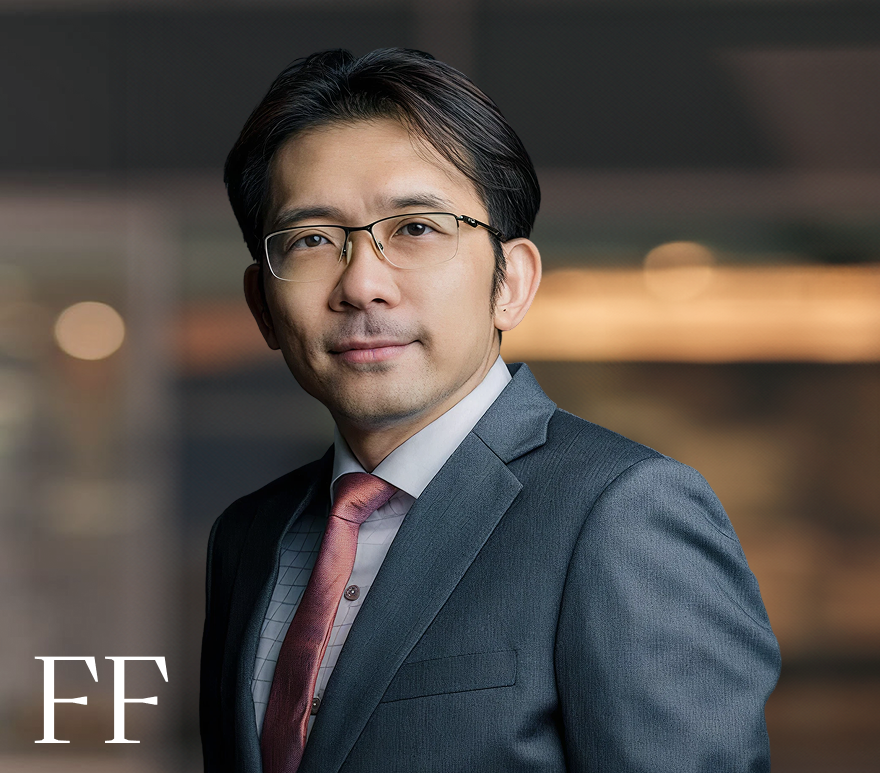
Alvin Eng of UOB unpacks how banks can measure AI value, scale from pilot to production, and treat governance and guardrails as true growth enablers.

 AI has to be treated as a core business capability; it needs to be measured, governed, and managed as such. It's almost like managing capital in a bank — it must become part of the long-term strategy and not just a small innovation agendaAlvin Eng, Head of Enterprise AI, UOB
- About the episode
- Transcript
- Featured in this episode
Most banks in the Asia Pacific are enthusiastic about AI, but few have made it a reality at scale. This challenge is not unique to the region — globally, two-thirds of CEOs are still in planning or pilot mode when it comes to AI deployment, highlighting the persistent gap between ambition and execution.
In this episode of Future forces in Asia-Pacific banking, host Prakhar Sureka is joined by Alvin Eng, Head of Enterprise AI at UOB, to unpack how the bank moved past isolated pilots to deploy more than 300 AI and analytics use cases in production, and the discipline it took to get there.
The conversation covers UOB's pride and AI impact frameworks for measuring and governing AI value, why Alvin sees strong guardrails as an engine for growth rather than an inhibitor, and how banking leaders should be thinking about AI as a long-term strategic capability rather than a side experiment.
Key talking points:
- Why disciplined operating models, not model quality, will separate the AI leaders from the laggards.
- How internal frameworks turn AI ambition into measurable, attributed business value.
- Why strong governance and guardrails accelerate growth rather than slow it down, especially for agentic AI.
- Being adept at change management is just as critical as technical expertise, challenging the myth that enterprise AI leadership is a purely technical job.
This episode is part of our Future forces in Asia-Pacific banking series, which examines the trends, technologies, regulations, business models, and leadership decisions shaping the future of financial services across the Asia-Pacific. The series features conversations with industry experts to unpack the ideas and developments that matter most to senior banking executives.
Subscribe On: Apple Podcasts | Spotify
This episode was recorded in June 2026.
[series intro]
Hello and welcome to another episode of Future Forces in Asia Pacific Banking. In each episode, we will highlight a unique perspective on challenges and opportunities in this dynamic region.
Prakhar Sureka
Welcome everybody to the podcast. Today we will focus on AI, particularly on delivering value from AI at enterprise scale. Alvin, a very, very warm welcome to you and thanks for joining us for the podcast.
Alvin Eng
Thank you for having me on this podcast. It's great to be here.
Prakhar
You have had a varied and vibrant career in Singapore. You were an economist at MAS (Monetary Authority of Singapore), and you represented Singapore at IMF. You then turned to banking, where you've changed roles – you were in finance, and you were then in corporate banking. Has this allowed you to see through a different lens, and how do you approach AI given your varied experience?
Alvin
That's a very interesting question. Thanks for that. I think if I look back, my journey into AI is probably not the most typical path for someone having this front-seat view as the head of enterprise AI at one of the biggest banks in ASEAN.
I actually started my career in public service. I was an MAS scholar, and I graduated with a degree in economics and statistics from NUS (National University of Singapore). In my early years as an economist, my focus was on macroeconomic surveillance and financial stability research. That early lens was really big-picture – how macro forces interact, how they shape financial systems, and how policies are formulated based on rigorous research. After three years, I was quite fortunate to be seconded to the IMF in Washington, DC. I was essentially a diplomat representing Singapore, and I think that experience really shaped me.
As a diplomat, you were sitting in rooms with ex-finance ministers and ex-central bank governors. At that level, everything is about trade-offs, and you learn very quickly. The trade-offs can be growth versus stability, short-term versus long-term, national interest versus global interest. And there's no such thing as a perfect answer. There are no right or wrong answers, only very well-managed trade-offs and very different perspectives. I think that really stayed with me.
I look at AI pretty much through the same lens. After the IMF, I did a master's in Oxford in financial economics, and that was when I pivoted into banking. First, I joined Standard Chartered’s MA program, and then UOB. At UOB, I had the chance to go quite broad. I have had six roles since joining. I started in corporate investment, then moved into core finance, financial strategy, and I was working very closely with the then-CFO to shape the bank's balance sheet with capital organization. Of course, that made me make sure that I was very focused on value and more big-picture strategic thinking.
Around that time, the bank was embarking on an enterprise data journey and the CFO was sponsoring it. I was asked to build the finance analytics team. The bank sponsored my second master's degree, in which I studied business analytics at NYU. That was a very transformative period for me, and that was when I pivoted into AI. From there, I joined the bank's leadership assertion program. I was part of the M&A team, and we did a state bank acquisition that allowed me to really understand the retail business. I was very much focused on valuation and due diligence, and during that time, I joined corporate banking. I was heading up the business management, so I was effectively the COO (Chief Operations Officer) there. That gave me the opportunity to really learn about the wholesale business. I had both the retail lens and the wholesale lens.
Three years ago, this opportunity came up, and I took on my current role as the head of AI. In this role, the mandate is quite broad. The core focus is on AI delivery across the whole AI spectrum; there's traditional AI, but also gen AI and agentic AI. I look after the bank's platforms. I look after the line one governance, but I'm also quite involved in the talent development part. So that's my journey.
If I go back to your question and how all of that has shaped how I think about AI value delivery, the most important thing is what I've learned through my academic training and my experiences – I think it's the ability to flex, in the sense that there are two lenses here.
One is 30,000 feet, big-picture, system-wide impact, strategy, how to make decisions under certainty, but also, I call [the second lens] 30 nanometres – how do you think of micro incentives, human behaviors, or execution details. How do you manage constraints on the ground? So that's the micro level.
I don't see AI necessarily through the lens of technology; I think of it, first and foremost, from an economics lens. It's actually an economics problem that we're solving for, and it's really about value creation. If I go back to that term "AI value delivery", there are two parts to it. There's a value part, which is the “what”, and that is the R in terms of ROI. What are your value drivers? Is it revenue uplift? Is it cost reduction? Is it risk avoidance? What use cases are you trying to prioritize so that AI actually moves the needle for your organization? How do you measure and capture this value in a very systematic way? So that's the “what”.
Then there's a delivery part, which is the “why” or the “how”. How do you monetize AI at scale in a very effective, responsible, and sustainable way? How do you create that long-term value? What are the trade-offs that you need to juggle when you deploy AI? There's no magic to this. It ultimately boils down to this recipe I have in mind: the fundamentals of leadership, governance, the data foundations, the people, the process, the platform. All of these components need to come together. That's what essentially anchors our philosophy of AI in UOB. I’d like to say we deliver AI with PRIDE.
The P stands for purposeful, which means we anchor on the business outcomes aligned with the broader bank strategy, of course. R is responsible for making sure they're in compliance with FEAT (Fairness, Ethics, Accountability, and Transparency) principles and delivering this responsibly. Impactful, and the keyword here is measurable. It has to be something that we can measure, and it moves the needle for the organization, for the business. Dependable, because we want to deliver these production-grade outputs that's very consistent and very repeatable. Last but not least, Explainable, because we're in the banking industry, and we need to make sure that our decisions can be explained. This is what anchors the AI delivery and how I put on my experience and my lens.
Prakhar
I was reading an interesting paper over the weekend that talks about how general-purpose technology takes time to diffuse, how it takes time for general-purpose technologies to deliver value. What is your view when it comes to AI, from a general-purpose technology perspective, and how should organizations think about value creation when it comes to AI?
Alvin
I think we are probably in the midst of something quite profound. The technical term is singularity. I'm sure you have come across this term. AI is indeed going through a very rapid, very exponential phase, so the technology is moving very, very fast, and it's very uncertain where it ultimately leads to. I kind of frame it as two superpositions, if you like, two states. Hopefully, we end up with a state of radical abundance and not dystopia, but we have to see where we end up.
We may not fully feel it today because you and I are in the thick of this every single day, but if I were to fast forward 20 years and look back, we'll see this phase as a very important moment in time. It’s a step change where the way we work, the way we communicate, and the way we learn fundamentally change.
I think we are past the invention phase, but it's the early days of an industrialization phase of AI, where everybody's trying to do this at the industrialization level. The technology clearly works, and it's improving very, very fast, and many organizations are indeed trying to adopt AI. We did a recent business outlook study where we polled a lot of companies, and what we found was seven out of 10 large corporates in ASEAN (Association of Southeast Asian Nations) are adopting AI. Even for SMEs, this number is one in two, so it’s 50%.
But not many people have really found a way to harness AI at scale, safely and reliably, to create tangible value that they can measure. I think that is the real gap today. The next few years won't be defined by who has the best models and how it’s commoditized. It's going to be defined by who has the best operating discipline. That actually means going back to the foundations. The unglamorous things like your data readiness, your operating model, your governance, your talent, all sorts of things.
Because of that, I think the value creation part is going to be quite uneven. The leaders will be the ones who can actually embed the AI into your day-to-day decision making, into your workflows, into how the business runs, because that creates a very powerful flywheel. You actually learn by doing, you demonstrate the value, and you bring everyone on this journey. Of course, you refine it along the way. The key here is the learning velocity within an organization – don’t try to get it perfect, because you never will, but the learning velocity is critical.
There's an interesting emerging new concept that I was reading up on. It's called the organizational singularity, where it essentially creates an intelligence stack with elastic agency. It's a pool of agents in a very continuous loop that allows you to effectively flatten your organizational chart and supercharge your processes at machine speed. I think we're quite early; we're not there yet, but I think that's what people are talking about, and it's pointing to where things could go.
For organizations, if I were to think of the redesign, it shows up in several practical ways: rethinking how your decisions are being made across your organization, [although we may be] hampered by the organizational chart structures. You need to really think about where the critical decisions are being made, and how they should be made in the world of agents, the processes. We need to clarify the operating model itself. We need to strengthen our core foundations, be it data, be it people, be it technology, and we need to embed the risk controls into the workflow, so not as an afterthought that gets voted on.
The point about drawing parallels to previous technology, say, electricity. When electricity was first introduced, the instinct was to replace the steam engine with all these electric motors. But I think that's not what leads to the real productivity gates. It came when factories redesigned the entire way they operated and the new workflows, the new layouts, the new skillsets, and the control systems that allowed the electricity to be usable at scale. That's where AI needs to be, and it's a very similar process.
Prakhar
Let's touch on that dichotomy. You did mention in your survey that seven out of 10 organizations, one in two small businesses, are adopting AI. There's a lot of enthusiasm from boards, management, and investment allocation. That's one side of the picture. Everyone you speak to believes that AI will change things for the better. It is transformative, and we are living in a revolution.
But at the other end, there is also the message that AI has not delivered as much value so far. As an example, in Oliver Wyman Forum’s 2026 CEO survey, which we do in conjunction with NYSE (New York Stock Exchange), 67% of global CEOs say that they're primarily planning or are in the pilot stage when it comes to AI. Not deploying them at scale, but in planning or at the pilot stage. What is hindering AI adoption at scale? If you can throw the light from an Asia Pacific lens, that would be really useful, but why do you think that we see this dichotomy, and what can be done about it?
Alvin
That statistic resonates a lot with what we are seeing on the ground, again, from the business outlook study that we did. I think for most organizations, the ambition around AI is clearly there; everybody wants to adopt it. The question is why the progress to scale is so uneven. Maybe I'll go back to first principles, and if I borrow an analogy from physics, we have kinematics, and we have dynamics. Kinematics is your starting point – your inherent organizational construct, where you are, your starting point in terms of your data foundation, your technology stack, your people’s capabilities, your innovation culture, et cetera. So we have a starting point. Dynamics refer to the execution itself: how you go about driving the AI deployment, how you prioritize a use case, how you govern, and how you drive adoption. And you need both to be right.
In a sense, if your starting conditions are very weak, even the best execution will struggle. If your execution is weak, on the other hand, even if you have the best foundations, you will struggle to scale. So, you need both together. Again, if I quote some of the numbers from the business outlook survey, I think there were three constraints that came up quite consistently: one is data and system readiness – a lot of the companies mentioned that are not there yet and the fragmented architectures make it very difficult to scale AI. The second is talent gaps, and not just data scientists, right? This [gap] is right across the board, especially for leaders or people who can translate AI into business action. Third is the economic clarity. I mean, you mentioned ROI. I think there is indeed a lot of uncertainty about ROI. You need to accept that in the short term, maybe the ROI is not going to be very clear, but it's a journey that everyone should be embarking on, especially in a world where there are such volatile macro conditions, that ROI becomes even more important to be very clear about it.
Also, what we saw from the study is that for organizations where senior management is directly involved in AI initiatives, they are ahead. Higher adoption and higher confidence levels, compared to those where AI is delegated or treated as a pure technical program. This reinforces the point that AI doesn't scale because of the technology – it’s really the leadership, the operating model, and the discipline that matters. You need to frame it as a broad enterprise strategic transformation program. That means a few things in practice.
You need very strong leadership alignment at the top; a clear, sustained intent and sponsorship because this is a multi-year journey, and it costs hundreds of millions of dollars for the big enterprises. Even when the short-term ROI is not that clear, you need board-level KPIs cascaded down because it's important to drive the incentive. [Second,] willingness to rethink the operating model is also very, very important. We talk about organizational singularity, but I guess that’s very far out. But you shouldn't be thinking of layering AI on top of existing processes, you need to rethink the operating model. The third one, which people may overlook somewhat, is having a single execution authority. What I mean is this body that really has a clear mandate to drive this execution. If not, your priorities get fragmented, and standards are unclear, so it becomes quite difficult to scale. So that's how I would frame it.
Prakhar
Got it. This notion of single authority to make decisions, let’s call them AI leads. Of late, I think these AI leads are in short supply, in high demand, and extremely busy, either as individuals or as teams. These teams are inundated with an immense amount of requests from corporate and retail banks and from finance back-office operations. The question really is, how do you prioritize such requests so that you can deliver value to the right stakeholders? When everything is important, how do you ensure that they get value from those?
Alvin
There are two parts to that question. One is a prioritization question, and one is a value measurement question. And it's true, the demand for these use cases far outstrips the supply. I guess for us, we start with a very simple principle, and we go back to the PRIDE framework that we have. And that's the P – being very purposeful about it, very intentional about the purpose. The AI must solve a real business problem. It cannot be a capability in search of relevance. That is the anchor for everything we do.
So when it comes to prioritization, typically, we look at it from two lenses. You have the business impact [lens], and you have the technical feasibility [lens]. On the business side, we ask questions like, "What is the expected value from a use case?" There is actually a financial lens to it. We mentioned revenue uplift, cost savings, research, et cetera, but there's actually also a non-financial lens to this, in terms of the strategic alignment with what you're trying to achieve as a corporation. Is it tied to a regulatory requirement? Is it part of a critical business process that you need to solve for? What is the scope? What is the regional relevance? And what is the extensibility of a use case across different markets, different domains? Those are the important non-financial considerations. What is the extent of the learning activation? If there are a lot of people that's going to be involved in this use case, maybe it's worth considering. Then, of course, there's a technical assessment part of it. The usual question is, do we even have data readily available to do this use case? Do we have the technology or the tools to deliver this use case? Do we have the people capabilities? It all boils down to the speed-to-market and the cost to deliver. It’s about finding that intersection between value and feasibility. That's where I think AI can really scale.
So, post delivery, value measurement then becomes very critical, and I can share more here. Management guru, Peter Drucker, I think he was quite famously talking about this: “If you can't measure something, you can't improve it”. That's our guiding principle, but with AI, it's not as straightforward. You need to measure value holistically, consistently, and you need to report it in a very disciplined way. Actually, as far as I'm aware, and from a banking world, not many banks actually report this, or report value or capture value well. Only a handful of global banks like JP Morgan, RBC, and NatWest actually report AI value. It's something that I think UOB believes we should be doing. We've developed a best-in-class framework for this AI value realization. We've leveraged some of the best market practices to inform this design. For example, we have built a centralized library of levers and KPIs that's tied to business benefits. We also developed a very comprehensive set of attribution methodologies by value type. For example, if we talk about revenue use cases, typically that's A/B testing, but there are a lot of attribution methodologies that we have as well. Of course, establishing a clear governance around how the assumptions are being validated and how they're documented. This is what we have.
At a high level, there are actually three steps in this process. First is about the use case charter, where we document the problem that we're solving for, what value we are expecting, and how it ties to the performance levers and the KPIs. Then, it is about measuring and attributing the economic value and isolating the impact from AI. The final one is to stress test it so we ensure that the value is robust and indefensible.
We are guided by some overarching principles. One is that value is incremental; it's always over a baseline. Number two, it is holistic in the sense that it covers both financial and non-financial, realized and unrealized. Number three, that economic value is tied very closely to the financial value. You don't want a situation where your financial value for financials, for example, is tanking, but your AI value is rising. You want to avoid those kinds of scenarios.
For us, prioritization and measurement go hand in hand, because ultimately the goal is not to build AI per se; it's to translate AI into a very sustained, very measurable business value at scale. And that's what we're trying to do.
Prakhar
On that thought, the whole value measurement makes a lot of sense if you can move use cases or any initiatives or any interventions from pilot production at the velocity at which you move them. What I'm hearing is that as an organization, you have actually moved things to production. The survey that I referred to before, majority of the executives are still in either planning phase or the pilot phase. Most of the discussion is, getting pilots is easy, but moving them to production has multiple challenges. Either there are technological challenges, or there are cultural and change management challenges. What has allowed UOB to actually move from pilot to production? Or what would you say is your secret sauce?
Alvin
I don't think there's a secret sauce, but let me share. When I took on this role about three years ago, one of the first things I realized was that we were treating AI largely as isolated pilots. The team was relatively small, still young. We were still building up the capability. There wasn't always a very clear articulation of business value.
Many of the deployments were not quite production-grade yet. I don't think we even had a very coherent vision and strategy that we were executing against. One of the first things I focused on was resetting the mindset and approach – we brought in a more startup mindset, of course with enterprise discipline, being very clear on the ROI. Both the R and the I, because it's not free to do all these use cases. There was a clear vision that we laid out and that, of course, was the PRIDE philosophy that I spoke about.
Then we had this AI strategy. I call it the AI IMPACT. Maybe let me just explain what IMPACT stands for. The I stands for innovation and research. We are trying to build AI leadership and strategic differentiators for the bank. M is measurable value. Again, the keyword is measurable. Tangible economic value to the business. P is platforms. We're modernizing our enterprise AI data knowledge platforms. A is accountable AI. That's an important part – how do we embed responsible AI and governance at every stage of the AI lifecycle? Culture and Talent – how do we ignite a culture of experimentation, curiosity, and continuous improvement across the bank? How do we then empower our workforce, our staff, to be AI-enabled? There are skills, acceleration, talent mobility, acquisition, and assurance. That's all the things that we need to work on. We then executed against each of the pillars.
Fast forward today, and we have deployed more than 300+ AI and analytics use cases in production. We have more than 30 domain-specific chatbots that are helping people get through the daily world in terms of asking questions and productivity and all that. And more than 30,000 of our colleagues today have Copilot at their fingertips. It's really helping them go through their daily productivity work.
I would say, again, there's no single unlock. A combination of things came together, but I would say maybe a couple of key points. One, it was important to have a shared vision. A shared vision and anchoring everything on business value. That was important for us. If a use case does not improve a decision, or a customer outcome, or productivity, it just doesn't scale. Experiments, experiments. And I think that clarity forces the discipline from day one. That's important.
Secondly, I think having and investing in shared enterprise platforms, standards and processes, that was important. For example, we actually invested – it was three years in the making, in fact – it’s a new state-of-the-art platform. We call it the model analytics platform. Clear decision rights, operating models, strengthening the core foundations, and then controls by design. How do you create that feedback loop into the business process? All these things are what really helped us to unlock and go into production.
Prakhar
Let me touch upon the biggest obstacle whenever there is something new that needs to be in an organization: the change management, or the cultural aspect of it. It's very easy to do things the way you're doing them, and it's very difficult to change them. Was there any particular challenge in getting the teams involved? What was the leadership's view on that?
Alvin
In most cases, I think people do see the potential in AI. The challenge is not so much the willingness to embark on this journey; it's really more about the clarity we give people and the confidence that they have in this process and the incentives. There are three practical friction points. Number one is the differences in terms of the definition of value. If you talk to your technology teams, they'll be much more focused on the architecture, on the model performance, et cetera. If you talk to the business teams, they care about business outcomes, process, and what it means for my business. If you talk to the risk teams, it's all about risk, compliance, and control. You need to somehow get alignment and anchor everyone on this common view of value. Again, you go back to the revenue, the cost, et cetera, but everybody needs to have a shared vision of this. Bringing that village along on this journey actually takes very deliberate effort.
The second point about confidence in scaling. I think many teams are very comfortable experimenting, but when it comes to scaling into production, there'll be natural questions about: is the quality of the data good enough? Is the control sufficient? If things go wrong, who's going to be accountable for that? The accountability matrix is so important. That's where your governance and your platform standardization really help to build that confidence.
Third one is incentives and the ways of working. AI is always going to cut across different functions. So again, we go back to the point about having clear ownership, aligned incentives, and defined decision rights, because everything stalls if you don't have these. We need to be very deliberate about getting there. How we measure success across the teams also becomes very important.
For us, what helped us move forward was actually quite practical. We started with very clear, defined business problems. We proved the value in a very controlled way. We scaled it with the right guardrails and ownership in place. Over time, that creates a flywheel. People see it, they know what works, and they can trust the process. Alignment then doesn't become – and doesn't stop – at a one-off exercise. You build it through clarity on value, the confidence around the guardrails, the consistency and execution. You have these repeated proof points people can take, and they know AI delivers value. That's how your power to production then happens.
Prakhar
I think I'm hearing a lot about governance, guardrails, and controls. It's an extremely important topic. Regulators have released guidelines, multiple regulators across the globe and in Southeast Asia as well, has released guidelines around how AI needs to be governed, model risk management, plus the line one, and the role of line two. Many believe that this governance, controls, and guardrails inhibit innovation. At the same time, you wrote a LinkedIn article about how having the right guardrails can drive growth, which is contrary to what many believe. The guardrails, though important, but at the same time they may slow down progress, whereas you wrote that they can drive growth.
Can you share some of the highlights and lowlights from your experience doing this at UOB, and why do you believe these are enablers to growth? I’d also like to draw a parallel that if you were a non-regulated entity in a way, then you wouldn't have to do that. Would you still believe that these are enablers to growth?
Alvin
Yes, maybe which industry you belong to actually matters. I think the starting point is to reframe responsible AI. It's true, a lot of people do think there is a trade-off between responsible AI and the speed of innovation. It's not a wrong way to think about it because responsible AI does mean you need to introduce some friction to the process. But it's also important to remember that the intent should not be to slow innovation per se. Actually quite the contrary – it’s about creating the conditions so that you have the confidence to scale AI, as safely and confidently. The usual analogy: you have brakes in the car for a reason, you want to be able to drive, you jolly well have brakes in the car. Our approach is essentially anchored on three pillars.
Number one, you mentioned line one, line two. We are very explicit about accountability. Line one is the business. They own the outcomes. They own the AI risks. We don't outsource accountability to technology. Line two is where the independent AI and data risk functions come in. They provide the challenge, the policy setting, the oversight, and the escalations. Then there's line three, the audit, which provides the independent review and the learnings. Ultimately, senior management and the board remain accountable. There's no running away. It's always at the top. We need to make sure that AI decisions are aligned with our risk, appetite, and our values.
The second thing we did was to establish end-to-end lifecycle controls. We maintain a central inventory of use cases because we want to make sure that nothing operates in the shadow. This is a very comprehensive set of inventory that we have. We also perform risk-based materiality assessment, because this determines the level of controls, the validation, the escalation thresholds, et cetera. The big idea there is risk proportionality. There are so many use cases, and we can't really boil the ocean and subject every single one to the same level of rigor. But every model does go through the process of build, test, validation, and deployment. They're in a very controlled process. Once we go live, we'll continuously monitor for performance, buyers, and model drift. Even the change management process is very structured. The whole intent is to make sure that the AI is effective and it's very safe. Not just day one, but throughout the whole AI lifespan. Then, of course, we will embed the guardrails directly into the AI systems. We're talking about very strong privacy and access controls. Those are very foundational stuff, but we also manage the models and their output behavior, especially now as we're dealing with generative AI and autonomous systems.
For the higher use cases, we will make sure that it's human in the loop. Now they call it human on the loop or human in the lead, whatever you want to call it. Kill switches as well, something that we will put in place. We try to surface the issues early on based on predetermined escalation thresholds. We also make sure there's board-level assurance for some of the most material AI applications, so the bot is actually aware. Again, governance is built into the system by design. It's not bolted on after deployment.
When we talk about guardrails, it actually goes beyond the technical guardrails. There are also the process guardrails in terms of where the human needs to intervene and at which point, how the intervention happens, and the enterprise learning and awareness that needs to be promulgated. I think with agentic systems, having these right guardrails is absolutely critical because the agent errors compound and propagate across the system.
If you have one agent that's 95% accurate, it sounds pretty good. But again, if you chain 10 together, that performance quickly degrades to less than 60%, which is not good enough for most cases. Beyond the frameworks and the controls, I think the culture actually matters a lot. As systems become more autonomous, I think organizations need to be ever more intentional about making sure that they're rewarding judgment, they're encouraging responsible escalation, and treating risk management as part and parcel of their daily work. That is actually critical.
Prakhar
Can you share why AI, and in particular AI value delivery at an enterprise scale, stands out right now? What should leaders be thinking about in their long-term strategy? As they lead the organization, what should they be thinking about?
Alvin
I think the conversation has shifted fundamentally from one of potential to proof. A few years ago, we had this podcast a few years back. The question would be, what can AI do for me? But today I think the question is much tougher, and I get a lot of these questions from the board. What value is it delivering? How do you measure it? What are the risks and the trade-offs that you're taking to get there? We're at this moment where AI cost is rising, there's increasing scrutiny, expectations are super, super high, and boards are really asking very hard questions and rightly so. We can no longer justify that AI potential is coming. We must show real attributed business impact. That will fundamentally force leaders to change how they think about AI.
You can no longer see it as an experiment or a side investment. Strategically, AI has to be treated as a core business capability. I think that's the key. It needs to be measured, governed, and managed as such. It's almost like managing capital in a bank. It must become part of your long-term strategy and not just a small innovation agenda. We need to be very intentional – a clear shared vision, being single-minded in terms of delivering business value, clarifying the operating model decisions around a single execution authority, building a core foundation, and instilling the execution discipline.
The real challenge is not building AI; it's how you embed the AI into your daily workflows, how your organization actually runs the operating processes, and how you make decisions at scale.
Prakhar
I think everyone would be interested – what is, in your view, the biggest myth about your job?
Alvin
I think one of the biggest myths is that you need to be extremely technical, and it is very intense and stressful all the time. There is truth in that, but in reality, you don't need to be a super technical person to be in this seat, I would say. It's one part of the job. A lot of my time is actually not spent, for example, reviewing models, building models, or writing code. That's not it. It's about aligning people, aligning teams and stakeholders. It's about making decisions under uncertainty when the future is so unclear. Working through trade-offs, helping people to understand not just the opportunities, but also the limitations of AI. AI transformation isn't really about technical brilliance. It's more about alignment. It's about balancing trade-offs, consistency, and discipline. There's a lot of change management that goes with it.
And, actually, it is quite stressful. People tell me I should be very stressed about it. Sitting in this seat, I find it incredibly energizing as well. Working on something that I genuinely believe will move the needle for the bank. You can create an impact, and it's so transformative, and there's so much to learn every single day. In many ways, it's less about being the smartest person in the room. It's about bringing everyone along on this journey. I count myself very fortunate to be here at this right time, for good or bad, I'm here, and I've been here for three years now.
Prakhar
Thank you so much, Alvin, for the insightful discussion. We heard a lot about PRIDE principles. We heard what it takes to be successful in AI; it's not being technical, but it's taking people along the journey. It's always about the people and what they believe in. We also heard about why governance is an enabler to growth rather than an inhibitor to growth. We raised the topic as to why AI is the defining moment right now and why leaders should embed this into their strategy, just like capital as a scarce resource, how to treat AI as the scarce resource and implement it in the organization.
Thank you so much, everyone.
Alvin
Thank you, Prakhar.
The transcript has been edited for clarity.
Alvin Eng is managing director and head of Enterprise AI at UOB, where he leads the bank’s AI Centre of Excellence and oversees the responsible adoption of artificial intelligence, generative AI, and agentic AI across the organization. In recognition of the real-world impact of his work, Alvin was named to H2O.ai’s 2025 AI 100 list, which recognizes global leaders, innovators, and researchers advancing artificial intelligence across industries worldwide.
Prior to leading Enterprise AI, Alvin held leadership roles across investment management, finance, corporate banking, and data management at UOB. A Monetary Authority of Singapore (MAS) scholar, he began his career as an economist at MAS and later served as Adviser to the Executive Director representing the Southeast Asia Voting Group at the International Monetary Fund in Washington, DC.
Prakhar Sureka is a partner in Oliver Wyman’s Financial Services and Digital Practices, based in Singapore. Specializing in AI and machine learning, he helps leading financial institutions and businesses across the Asia Pacific design innovative solutions.
With more than a decade of consulting experience, Prakhar has led a range of high-impact projects, including helping banking clients implement AI in ways that unlock productivity gains in credit, customer service, and sales effectiveness. He is also an all-India rank-holding Chartered Accountant, a Chartered Financial Analyst charterholder, and a Financial Risk Manager.
- About the episode
- Why disciplined operating models, not model quality, will separate the AI leaders from the laggards.
- How internal frameworks turn AI ambition into measurable, attributed business value.
- Why strong governance and guardrails accelerate growth rather than slow it down, especially for agentic AI.
- Being adept at change management is just as critical as technical expertise, challenging the myth that enterprise AI leadership is a purely technical job.
- Transcript
- Why disciplined operating models, not model quality, will separate the AI leaders from the laggards.
- How internal frameworks turn AI ambition into measurable, attributed business value.
- Why strong governance and guardrails accelerate growth rather than slow it down, especially for agentic AI.
- Being adept at change management is just as critical as technical expertise, challenging the myth that enterprise AI leadership is a purely technical job.
- Featured in this episode
- Why disciplined operating models, not model quality, will separate the AI leaders from the laggards.
- How internal frameworks turn AI ambition into measurable, attributed business value.
- Why strong governance and guardrails accelerate growth rather than slow it down, especially for agentic AI.
- Being adept at change management is just as critical as technical expertise, challenging the myth that enterprise AI leadership is a purely technical job.
Most banks in the Asia Pacific are enthusiastic about AI, but few have made it a reality at scale. This challenge is not unique to the region — globally, two-thirds of CEOs are still in planning or pilot mode when it comes to AI deployment, highlighting the persistent gap between ambition and execution.
In this episode of Future forces in Asia-Pacific banking, host Prakhar Sureka is joined by Alvin Eng, Head of Enterprise AI at UOB, to unpack how the bank moved past isolated pilots to deploy more than 300 AI and analytics use cases in production, and the discipline it took to get there.
The conversation covers UOB's pride and AI impact frameworks for measuring and governing AI value, why Alvin sees strong guardrails as an engine for growth rather than an inhibitor, and how banking leaders should be thinking about AI as a long-term strategic capability rather than a side experiment.
Key talking points:
This episode is part of our Future forces in Asia-Pacific banking series, which examines the trends, technologies, regulations, business models, and leadership decisions shaping the future of financial services across the Asia-Pacific. The series features conversations with industry experts to unpack the ideas and developments that matter most to senior banking executives.
Subscribe On: Apple Podcasts | Spotify
This episode was recorded in June 2026.
[series intro]
Hello and welcome to another episode of Future Forces in Asia Pacific Banking. In each episode, we will highlight a unique perspective on challenges and opportunities in this dynamic region.
Prakhar Sureka
Welcome everybody to the podcast. Today we will focus on AI, particularly on delivering value from AI at enterprise scale. Alvin, a very, very warm welcome to you and thanks for joining us for the podcast.
Alvin Eng
Thank you for having me on this podcast. It's great to be here.
Prakhar
You have had a varied and vibrant career in Singapore. You were an economist at MAS (Monetary Authority of Singapore), and you represented Singapore at IMF. You then turned to banking, where you've changed roles – you were in finance, and you were then in corporate banking. Has this allowed you to see through a different lens, and how do you approach AI given your varied experience?
Alvin
That's a very interesting question. Thanks for that. I think if I look back, my journey into AI is probably not the most typical path for someone having this front-seat view as the head of enterprise AI at one of the biggest banks in ASEAN.
I actually started my career in public service. I was an MAS scholar, and I graduated with a degree in economics and statistics from NUS (National University of Singapore). In my early years as an economist, my focus was on macroeconomic surveillance and financial stability research. That early lens was really big-picture – how macro forces interact, how they shape financial systems, and how policies are formulated based on rigorous research. After three years, I was quite fortunate to be seconded to the IMF in Washington, DC. I was essentially a diplomat representing Singapore, and I think that experience really shaped me.
As a diplomat, you were sitting in rooms with ex-finance ministers and ex-central bank governors. At that level, everything is about trade-offs, and you learn very quickly. The trade-offs can be growth versus stability, short-term versus long-term, national interest versus global interest. And there's no such thing as a perfect answer. There are no right or wrong answers, only very well-managed trade-offs and very different perspectives. I think that really stayed with me.
I look at AI pretty much through the same lens. After the IMF, I did a master's in Oxford in financial economics, and that was when I pivoted into banking. First, I joined Standard Chartered’s MA program, and then UOB. At UOB, I had the chance to go quite broad. I have had six roles since joining. I started in corporate investment, then moved into core finance, financial strategy, and I was working very closely with the then-CFO to shape the bank's balance sheet with capital organization. Of course, that made me make sure that I was very focused on value and more big-picture strategic thinking.
Around that time, the bank was embarking on an enterprise data journey and the CFO was sponsoring it. I was asked to build the finance analytics team. The bank sponsored my second master's degree, in which I studied business analytics at NYU. That was a very transformative period for me, and that was when I pivoted into AI. From there, I joined the bank's leadership assertion program. I was part of the M&A team, and we did a state bank acquisition that allowed me to really understand the retail business. I was very much focused on valuation and due diligence, and during that time, I joined corporate banking. I was heading up the business management, so I was effectively the COO (Chief Operations Officer) there. That gave me the opportunity to really learn about the wholesale business. I had both the retail lens and the wholesale lens.
Three years ago, this opportunity came up, and I took on my current role as the head of AI. In this role, the mandate is quite broad. The core focus is on AI delivery across the whole AI spectrum; there's traditional AI, but also gen AI and agentic AI. I look after the bank's platforms. I look after the line one governance, but I'm also quite involved in the talent development part. So that's my journey.
If I go back to your question and how all of that has shaped how I think about AI value delivery, the most important thing is what I've learned through my academic training and my experiences – I think it's the ability to flex, in the sense that there are two lenses here.
One is 30,000 feet, big-picture, system-wide impact, strategy, how to make decisions under certainty, but also, I call [the second lens] 30 nanometres – how do you think of micro incentives, human behaviors, or execution details. How do you manage constraints on the ground? So that's the micro level.
I don't see AI necessarily through the lens of technology; I think of it, first and foremost, from an economics lens. It's actually an economics problem that we're solving for, and it's really about value creation. If I go back to that term "AI value delivery", there are two parts to it. There's a value part, which is the “what”, and that is the R in terms of ROI. What are your value drivers? Is it revenue uplift? Is it cost reduction? Is it risk avoidance? What use cases are you trying to prioritize so that AI actually moves the needle for your organization? How do you measure and capture this value in a very systematic way? So that's the “what”.
Then there's a delivery part, which is the “why” or the “how”. How do you monetize AI at scale in a very effective, responsible, and sustainable way? How do you create that long-term value? What are the trade-offs that you need to juggle when you deploy AI? There's no magic to this. It ultimately boils down to this recipe I have in mind: the fundamentals of leadership, governance, the data foundations, the people, the process, the platform. All of these components need to come together. That's what essentially anchors our philosophy of AI in UOB. I’d like to say we deliver AI with PRIDE.
The P stands for purposeful, which means we anchor on the business outcomes aligned with the broader bank strategy, of course. R is responsible for making sure they're in compliance with FEAT (Fairness, Ethics, Accountability, and Transparency) principles and delivering this responsibly. Impactful, and the keyword here is measurable. It has to be something that we can measure, and it moves the needle for the organization, for the business. Dependable, because we want to deliver these production-grade outputs that's very consistent and very repeatable. Last but not least, Explainable, because we're in the banking industry, and we need to make sure that our decisions can be explained. This is what anchors the AI delivery and how I put on my experience and my lens.
Prakhar
I was reading an interesting paper over the weekend that talks about how general-purpose technology takes time to diffuse, how it takes time for general-purpose technologies to deliver value. What is your view when it comes to AI, from a general-purpose technology perspective, and how should organizations think about value creation when it comes to AI?
Alvin
I think we are probably in the midst of something quite profound. The technical term is singularity. I'm sure you have come across this term. AI is indeed going through a very rapid, very exponential phase, so the technology is moving very, very fast, and it's very uncertain where it ultimately leads to. I kind of frame it as two superpositions, if you like, two states. Hopefully, we end up with a state of radical abundance and not dystopia, but we have to see where we end up.
We may not fully feel it today because you and I are in the thick of this every single day, but if I were to fast forward 20 years and look back, we'll see this phase as a very important moment in time. It’s a step change where the way we work, the way we communicate, and the way we learn fundamentally change.
I think we are past the invention phase, but it's the early days of an industrialization phase of AI, where everybody's trying to do this at the industrialization level. The technology clearly works, and it's improving very, very fast, and many organizations are indeed trying to adopt AI. We did a recent business outlook study where we polled a lot of companies, and what we found was seven out of 10 large corporates in ASEAN (Association of Southeast Asian Nations) are adopting AI. Even for SMEs, this number is one in two, so it’s 50%.
But not many people have really found a way to harness AI at scale, safely and reliably, to create tangible value that they can measure. I think that is the real gap today. The next few years won't be defined by who has the best models and how it’s commoditized. It's going to be defined by who has the best operating discipline. That actually means going back to the foundations. The unglamorous things like your data readiness, your operating model, your governance, your talent, all sorts of things.
Because of that, I think the value creation part is going to be quite uneven. The leaders will be the ones who can actually embed the AI into your day-to-day decision making, into your workflows, into how the business runs, because that creates a very powerful flywheel. You actually learn by doing, you demonstrate the value, and you bring everyone on this journey. Of course, you refine it along the way. The key here is the learning velocity within an organization – don’t try to get it perfect, because you never will, but the learning velocity is critical.
There's an interesting emerging new concept that I was reading up on. It's called the organizational singularity, where it essentially creates an intelligence stack with elastic agency. It's a pool of agents in a very continuous loop that allows you to effectively flatten your organizational chart and supercharge your processes at machine speed. I think we're quite early; we're not there yet, but I think that's what people are talking about, and it's pointing to where things could go.
For organizations, if I were to think of the redesign, it shows up in several practical ways: rethinking how your decisions are being made across your organization, [although we may be] hampered by the organizational chart structures. You need to really think about where the critical decisions are being made, and how they should be made in the world of agents, the processes. We need to clarify the operating model itself. We need to strengthen our core foundations, be it data, be it people, be it technology, and we need to embed the risk controls into the workflow, so not as an afterthought that gets voted on.
The point about drawing parallels to previous technology, say, electricity. When electricity was first introduced, the instinct was to replace the steam engine with all these electric motors. But I think that's not what leads to the real productivity gates. It came when factories redesigned the entire way they operated and the new workflows, the new layouts, the new skillsets, and the control systems that allowed the electricity to be usable at scale. That's where AI needs to be, and it's a very similar process.
Prakhar
Let's touch on that dichotomy. You did mention in your survey that seven out of 10 organizations, one in two small businesses, are adopting AI. There's a lot of enthusiasm from boards, management, and investment allocation. That's one side of the picture. Everyone you speak to believes that AI will change things for the better. It is transformative, and we are living in a revolution.
But at the other end, there is also the message that AI has not delivered as much value so far. As an example, in Oliver Wyman Forum’s 2026 CEO survey, which we do in conjunction with NYSE (New York Stock Exchange), 67% of global CEOs say that they're primarily planning or are in the pilot stage when it comes to AI. Not deploying them at scale, but in planning or at the pilot stage. What is hindering AI adoption at scale? If you can throw the light from an Asia Pacific lens, that would be really useful, but why do you think that we see this dichotomy, and what can be done about it?
Alvin
That statistic resonates a lot with what we are seeing on the ground, again, from the business outlook study that we did. I think for most organizations, the ambition around AI is clearly there; everybody wants to adopt it. The question is why the progress to scale is so uneven. Maybe I'll go back to first principles, and if I borrow an analogy from physics, we have kinematics, and we have dynamics. Kinematics is your starting point – your inherent organizational construct, where you are, your starting point in terms of your data foundation, your technology stack, your people’s capabilities, your innovation culture, et cetera. So we have a starting point. Dynamics refer to the execution itself: how you go about driving the AI deployment, how you prioritize a use case, how you govern, and how you drive adoption. And you need both to be right.
In a sense, if your starting conditions are very weak, even the best execution will struggle. If your execution is weak, on the other hand, even if you have the best foundations, you will struggle to scale. So, you need both together. Again, if I quote some of the numbers from the business outlook survey, I think there were three constraints that came up quite consistently: one is data and system readiness – a lot of the companies mentioned that are not there yet and the fragmented architectures make it very difficult to scale AI. The second is talent gaps, and not just data scientists, right? This [gap] is right across the board, especially for leaders or people who can translate AI into business action. Third is the economic clarity. I mean, you mentioned ROI. I think there is indeed a lot of uncertainty about ROI. You need to accept that in the short term, maybe the ROI is not going to be very clear, but it's a journey that everyone should be embarking on, especially in a world where there are such volatile macro conditions, that ROI becomes even more important to be very clear about it.
Also, what we saw from the study is that for organizations where senior management is directly involved in AI initiatives, they are ahead. Higher adoption and higher confidence levels, compared to those where AI is delegated or treated as a pure technical program. This reinforces the point that AI doesn't scale because of the technology – it’s really the leadership, the operating model, and the discipline that matters. You need to frame it as a broad enterprise strategic transformation program. That means a few things in practice.
You need very strong leadership alignment at the top; a clear, sustained intent and sponsorship because this is a multi-year journey, and it costs hundreds of millions of dollars for the big enterprises. Even when the short-term ROI is not that clear, you need board-level KPIs cascaded down because it's important to drive the incentive. [Second,] willingness to rethink the operating model is also very, very important. We talk about organizational singularity, but I guess that’s very far out. But you shouldn't be thinking of layering AI on top of existing processes, you need to rethink the operating model. The third one, which people may overlook somewhat, is having a single execution authority. What I mean is this body that really has a clear mandate to drive this execution. If not, your priorities get fragmented, and standards are unclear, so it becomes quite difficult to scale. So that's how I would frame it.
Prakhar
Got it. This notion of single authority to make decisions, let’s call them AI leads. Of late, I think these AI leads are in short supply, in high demand, and extremely busy, either as individuals or as teams. These teams are inundated with an immense amount of requests from corporate and retail banks and from finance back-office operations. The question really is, how do you prioritize such requests so that you can deliver value to the right stakeholders? When everything is important, how do you ensure that they get value from those?
Alvin
There are two parts to that question. One is a prioritization question, and one is a value measurement question. And it's true, the demand for these use cases far outstrips the supply. I guess for us, we start with a very simple principle, and we go back to the PRIDE framework that we have. And that's the P – being very purposeful about it, very intentional about the purpose. The AI must solve a real business problem. It cannot be a capability in search of relevance. That is the anchor for everything we do.
So when it comes to prioritization, typically, we look at it from two lenses. You have the business impact [lens], and you have the technical feasibility [lens]. On the business side, we ask questions like, "What is the expected value from a use case?" There is actually a financial lens to it. We mentioned revenue uplift, cost savings, research, et cetera, but there's actually also a non-financial lens to this, in terms of the strategic alignment with what you're trying to achieve as a corporation. Is it tied to a regulatory requirement? Is it part of a critical business process that you need to solve for? What is the scope? What is the regional relevance? And what is the extensibility of a use case across different markets, different domains? Those are the important non-financial considerations. What is the extent of the learning activation? If there are a lot of people that's going to be involved in this use case, maybe it's worth considering. Then, of course, there's a technical assessment part of it. The usual question is, do we even have data readily available to do this use case? Do we have the technology or the tools to deliver this use case? Do we have the people capabilities? It all boils down to the speed-to-market and the cost to deliver. It’s about finding that intersection between value and feasibility. That's where I think AI can really scale.
So, post delivery, value measurement then becomes very critical, and I can share more here. Management guru, Peter Drucker, I think he was quite famously talking about this: “If you can't measure something, you can't improve it”. That's our guiding principle, but with AI, it's not as straightforward. You need to measure value holistically, consistently, and you need to report it in a very disciplined way. Actually, as far as I'm aware, and from a banking world, not many banks actually report this, or report value or capture value well. Only a handful of global banks like JP Morgan, RBC, and NatWest actually report AI value. It's something that I think UOB believes we should be doing. We've developed a best-in-class framework for this AI value realization. We've leveraged some of the best market practices to inform this design. For example, we have built a centralized library of levers and KPIs that's tied to business benefits. We also developed a very comprehensive set of attribution methodologies by value type. For example, if we talk about revenue use cases, typically that's A/B testing, but there are a lot of attribution methodologies that we have as well. Of course, establishing a clear governance around how the assumptions are being validated and how they're documented. This is what we have.
At a high level, there are actually three steps in this process. First is about the use case charter, where we document the problem that we're solving for, what value we are expecting, and how it ties to the performance levers and the KPIs. Then, it is about measuring and attributing the economic value and isolating the impact from AI. The final one is to stress test it so we ensure that the value is robust and indefensible.
We are guided by some overarching principles. One is that value is incremental; it's always over a baseline. Number two, it is holistic in the sense that it covers both financial and non-financial, realized and unrealized. Number three, that economic value is tied very closely to the financial value. You don't want a situation where your financial value for financials, for example, is tanking, but your AI value is rising. You want to avoid those kinds of scenarios.
For us, prioritization and measurement go hand in hand, because ultimately the goal is not to build AI per se; it's to translate AI into a very sustained, very measurable business value at scale. And that's what we're trying to do.
Prakhar
On that thought, the whole value measurement makes a lot of sense if you can move use cases or any initiatives or any interventions from pilot production at the velocity at which you move them. What I'm hearing is that as an organization, you have actually moved things to production. The survey that I referred to before, majority of the executives are still in either planning phase or the pilot phase. Most of the discussion is, getting pilots is easy, but moving them to production has multiple challenges. Either there are technological challenges, or there are cultural and change management challenges. What has allowed UOB to actually move from pilot to production? Or what would you say is your secret sauce?
Alvin
I don't think there's a secret sauce, but let me share. When I took on this role about three years ago, one of the first things I realized was that we were treating AI largely as isolated pilots. The team was relatively small, still young. We were still building up the capability. There wasn't always a very clear articulation of business value.
Many of the deployments were not quite production-grade yet. I don't think we even had a very coherent vision and strategy that we were executing against. One of the first things I focused on was resetting the mindset and approach – we brought in a more startup mindset, of course with enterprise discipline, being very clear on the ROI. Both the R and the I, because it's not free to do all these use cases. There was a clear vision that we laid out and that, of course, was the PRIDE philosophy that I spoke about.
Then we had this AI strategy. I call it the AI IMPACT. Maybe let me just explain what IMPACT stands for. The I stands for innovation and research. We are trying to build AI leadership and strategic differentiators for the bank. M is measurable value. Again, the keyword is measurable. Tangible economic value to the business. P is platforms. We're modernizing our enterprise AI data knowledge platforms. A is accountable AI. That's an important part – how do we embed responsible AI and governance at every stage of the AI lifecycle? Culture and Talent – how do we ignite a culture of experimentation, curiosity, and continuous improvement across the bank? How do we then empower our workforce, our staff, to be AI-enabled? There are skills, acceleration, talent mobility, acquisition, and assurance. That's all the things that we need to work on. We then executed against each of the pillars.
Fast forward today, and we have deployed more than 300+ AI and analytics use cases in production. We have more than 30 domain-specific chatbots that are helping people get through the daily world in terms of asking questions and productivity and all that. And more than 30,000 of our colleagues today have Copilot at their fingertips. It's really helping them go through their daily productivity work.
I would say, again, there's no single unlock. A combination of things came together, but I would say maybe a couple of key points. One, it was important to have a shared vision. A shared vision and anchoring everything on business value. That was important for us. If a use case does not improve a decision, or a customer outcome, or productivity, it just doesn't scale. Experiments, experiments. And I think that clarity forces the discipline from day one. That's important.
Secondly, I think having and investing in shared enterprise platforms, standards and processes, that was important. For example, we actually invested – it was three years in the making, in fact – it’s a new state-of-the-art platform. We call it the model analytics platform. Clear decision rights, operating models, strengthening the core foundations, and then controls by design. How do you create that feedback loop into the business process? All these things are what really helped us to unlock and go into production.
Prakhar
Let me touch upon the biggest obstacle whenever there is something new that needs to be in an organization: the change management, or the cultural aspect of it. It's very easy to do things the way you're doing them, and it's very difficult to change them. Was there any particular challenge in getting the teams involved? What was the leadership's view on that?
Alvin
In most cases, I think people do see the potential in AI. The challenge is not so much the willingness to embark on this journey; it's really more about the clarity we give people and the confidence that they have in this process and the incentives. There are three practical friction points. Number one is the differences in terms of the definition of value. If you talk to your technology teams, they'll be much more focused on the architecture, on the model performance, et cetera. If you talk to the business teams, they care about business outcomes, process, and what it means for my business. If you talk to the risk teams, it's all about risk, compliance, and control. You need to somehow get alignment and anchor everyone on this common view of value. Again, you go back to the revenue, the cost, et cetera, but everybody needs to have a shared vision of this. Bringing that village along on this journey actually takes very deliberate effort.
The second point about confidence in scaling. I think many teams are very comfortable experimenting, but when it comes to scaling into production, there'll be natural questions about: is the quality of the data good enough? Is the control sufficient? If things go wrong, who's going to be accountable for that? The accountability matrix is so important. That's where your governance and your platform standardization really help to build that confidence.
Third one is incentives and the ways of working. AI is always going to cut across different functions. So again, we go back to the point about having clear ownership, aligned incentives, and defined decision rights, because everything stalls if you don't have these. We need to be very deliberate about getting there. How we measure success across the teams also becomes very important.
For us, what helped us move forward was actually quite practical. We started with very clear, defined business problems. We proved the value in a very controlled way. We scaled it with the right guardrails and ownership in place. Over time, that creates a flywheel. People see it, they know what works, and they can trust the process. Alignment then doesn't become – and doesn't stop – at a one-off exercise. You build it through clarity on value, the confidence around the guardrails, the consistency and execution. You have these repeated proof points people can take, and they know AI delivers value. That's how your power to production then happens.
Prakhar
I think I'm hearing a lot about governance, guardrails, and controls. It's an extremely important topic. Regulators have released guidelines, multiple regulators across the globe and in Southeast Asia as well, has released guidelines around how AI needs to be governed, model risk management, plus the line one, and the role of line two. Many believe that this governance, controls, and guardrails inhibit innovation. At the same time, you wrote a LinkedIn article about how having the right guardrails can drive growth, which is contrary to what many believe. The guardrails, though important, but at the same time they may slow down progress, whereas you wrote that they can drive growth.
Can you share some of the highlights and lowlights from your experience doing this at UOB, and why do you believe these are enablers to growth? I’d also like to draw a parallel that if you were a non-regulated entity in a way, then you wouldn't have to do that. Would you still believe that these are enablers to growth?
Alvin
Yes, maybe which industry you belong to actually matters. I think the starting point is to reframe responsible AI. It's true, a lot of people do think there is a trade-off between responsible AI and the speed of innovation. It's not a wrong way to think about it because responsible AI does mean you need to introduce some friction to the process. But it's also important to remember that the intent should not be to slow innovation per se. Actually quite the contrary – it’s about creating the conditions so that you have the confidence to scale AI, as safely and confidently. The usual analogy: you have brakes in the car for a reason, you want to be able to drive, you jolly well have brakes in the car. Our approach is essentially anchored on three pillars.
Number one, you mentioned line one, line two. We are very explicit about accountability. Line one is the business. They own the outcomes. They own the AI risks. We don't outsource accountability to technology. Line two is where the independent AI and data risk functions come in. They provide the challenge, the policy setting, the oversight, and the escalations. Then there's line three, the audit, which provides the independent review and the learnings. Ultimately, senior management and the board remain accountable. There's no running away. It's always at the top. We need to make sure that AI decisions are aligned with our risk, appetite, and our values.
The second thing we did was to establish end-to-end lifecycle controls. We maintain a central inventory of use cases because we want to make sure that nothing operates in the shadow. This is a very comprehensive set of inventory that we have. We also perform risk-based materiality assessment, because this determines the level of controls, the validation, the escalation thresholds, et cetera. The big idea there is risk proportionality. There are so many use cases, and we can't really boil the ocean and subject every single one to the same level of rigor. But every model does go through the process of build, test, validation, and deployment. They're in a very controlled process. Once we go live, we'll continuously monitor for performance, buyers, and model drift. Even the change management process is very structured. The whole intent is to make sure that the AI is effective and it's very safe. Not just day one, but throughout the whole AI lifespan. Then, of course, we will embed the guardrails directly into the AI systems. We're talking about very strong privacy and access controls. Those are very foundational stuff, but we also manage the models and their output behavior, especially now as we're dealing with generative AI and autonomous systems.
For the higher use cases, we will make sure that it's human in the loop. Now they call it human on the loop or human in the lead, whatever you want to call it. Kill switches as well, something that we will put in place. We try to surface the issues early on based on predetermined escalation thresholds. We also make sure there's board-level assurance for some of the most material AI applications, so the bot is actually aware. Again, governance is built into the system by design. It's not bolted on after deployment.
When we talk about guardrails, it actually goes beyond the technical guardrails. There are also the process guardrails in terms of where the human needs to intervene and at which point, how the intervention happens, and the enterprise learning and awareness that needs to be promulgated. I think with agentic systems, having these right guardrails is absolutely critical because the agent errors compound and propagate across the system.
If you have one agent that's 95% accurate, it sounds pretty good. But again, if you chain 10 together, that performance quickly degrades to less than 60%, which is not good enough for most cases. Beyond the frameworks and the controls, I think the culture actually matters a lot. As systems become more autonomous, I think organizations need to be ever more intentional about making sure that they're rewarding judgment, they're encouraging responsible escalation, and treating risk management as part and parcel of their daily work. That is actually critical.
Prakhar
Can you share why AI, and in particular AI value delivery at an enterprise scale, stands out right now? What should leaders be thinking about in their long-term strategy? As they lead the organization, what should they be thinking about?
Alvin
I think the conversation has shifted fundamentally from one of potential to proof. A few years ago, we had this podcast a few years back. The question would be, what can AI do for me? But today I think the question is much tougher, and I get a lot of these questions from the board. What value is it delivering? How do you measure it? What are the risks and the trade-offs that you're taking to get there? We're at this moment where AI cost is rising, there's increasing scrutiny, expectations are super, super high, and boards are really asking very hard questions and rightly so. We can no longer justify that AI potential is coming. We must show real attributed business impact. That will fundamentally force leaders to change how they think about AI.
You can no longer see it as an experiment or a side investment. Strategically, AI has to be treated as a core business capability. I think that's the key. It needs to be measured, governed, and managed as such. It's almost like managing capital in a bank. It must become part of your long-term strategy and not just a small innovation agenda. We need to be very intentional – a clear shared vision, being single-minded in terms of delivering business value, clarifying the operating model decisions around a single execution authority, building a core foundation, and instilling the execution discipline.
The real challenge is not building AI; it's how you embed the AI into your daily workflows, how your organization actually runs the operating processes, and how you make decisions at scale.
Prakhar
I think everyone would be interested – what is, in your view, the biggest myth about your job?
Alvin
I think one of the biggest myths is that you need to be extremely technical, and it is very intense and stressful all the time. There is truth in that, but in reality, you don't need to be a super technical person to be in this seat, I would say. It's one part of the job. A lot of my time is actually not spent, for example, reviewing models, building models, or writing code. That's not it. It's about aligning people, aligning teams and stakeholders. It's about making decisions under uncertainty when the future is so unclear. Working through trade-offs, helping people to understand not just the opportunities, but also the limitations of AI. AI transformation isn't really about technical brilliance. It's more about alignment. It's about balancing trade-offs, consistency, and discipline. There's a lot of change management that goes with it.
And, actually, it is quite stressful. People tell me I should be very stressed about it. Sitting in this seat, I find it incredibly energizing as well. Working on something that I genuinely believe will move the needle for the bank. You can create an impact, and it's so transformative, and there's so much to learn every single day. In many ways, it's less about being the smartest person in the room. It's about bringing everyone along on this journey. I count myself very fortunate to be here at this right time, for good or bad, I'm here, and I've been here for three years now.
Prakhar
Thank you so much, Alvin, for the insightful discussion. We heard a lot about PRIDE principles. We heard what it takes to be successful in AI; it's not being technical, but it's taking people along the journey. It's always about the people and what they believe in. We also heard about why governance is an enabler to growth rather than an inhibitor to growth. We raised the topic as to why AI is the defining moment right now and why leaders should embed this into their strategy, just like capital as a scarce resource, how to treat AI as the scarce resource and implement it in the organization.
Thank you so much, everyone.
Alvin
Thank you, Prakhar.
The transcript has been edited for clarity.
Alvin Eng is managing director and head of Enterprise AI at UOB, where he leads the bank’s AI Centre of Excellence and oversees the responsible adoption of artificial intelligence, generative AI, and agentic AI across the organization. In recognition of the real-world impact of his work, Alvin was named to H2O.ai’s 2025 AI 100 list, which recognizes global leaders, innovators, and researchers advancing artificial intelligence across industries worldwide.
Prior to leading Enterprise AI, Alvin held leadership roles across investment management, finance, corporate banking, and data management at UOB. A Monetary Authority of Singapore (MAS) scholar, he began his career as an economist at MAS and later served as Adviser to the Executive Director representing the Southeast Asia Voting Group at the International Monetary Fund in Washington, DC.
Prakhar Sureka is a partner in Oliver Wyman’s Financial Services and Digital Practices, based in Singapore. Specializing in AI and machine learning, he helps leading financial institutions and businesses across the Asia Pacific design innovative solutions.
With more than a decade of consulting experience, Prakhar has led a range of high-impact projects, including helping banking clients implement AI in ways that unlock productivity gains in credit, customer service, and sales effectiveness. He is also an all-India rank-holding Chartered Accountant, a Chartered Financial Analyst charterholder, and a Financial Risk Manager.
Most banks in the Asia Pacific are enthusiastic about AI, but few have made it a reality at scale. This challenge is not unique to the region — globally, two-thirds of CEOs are still in planning or pilot mode when it comes to AI deployment, highlighting the persistent gap between ambition and execution.
In this episode of Future forces in Asia-Pacific banking, host Prakhar Sureka is joined by Alvin Eng, Head of Enterprise AI at UOB, to unpack how the bank moved past isolated pilots to deploy more than 300 AI and analytics use cases in production, and the discipline it took to get there.
The conversation covers UOB's pride and AI impact frameworks for measuring and governing AI value, why Alvin sees strong guardrails as an engine for growth rather than an inhibitor, and how banking leaders should be thinking about AI as a long-term strategic capability rather than a side experiment.
Key talking points:
This episode is part of our Future forces in Asia-Pacific banking series, which examines the trends, technologies, regulations, business models, and leadership decisions shaping the future of financial services across the Asia-Pacific. The series features conversations with industry experts to unpack the ideas and developments that matter most to senior banking executives.
Subscribe On: Apple Podcasts | Spotify
This episode was recorded in June 2026.
[series intro]
Hello and welcome to another episode of Future Forces in Asia Pacific Banking. In each episode, we will highlight a unique perspective on challenges and opportunities in this dynamic region.
Prakhar Sureka
Welcome everybody to the podcast. Today we will focus on AI, particularly on delivering value from AI at enterprise scale. Alvin, a very, very warm welcome to you and thanks for joining us for the podcast.
Alvin Eng
Thank you for having me on this podcast. It's great to be here.
Prakhar
You have had a varied and vibrant career in Singapore. You were an economist at MAS (Monetary Authority of Singapore), and you represented Singapore at IMF. You then turned to banking, where you've changed roles – you were in finance, and you were then in corporate banking. Has this allowed you to see through a different lens, and how do you approach AI given your varied experience?
Alvin
That's a very interesting question. Thanks for that. I think if I look back, my journey into AI is probably not the most typical path for someone having this front-seat view as the head of enterprise AI at one of the biggest banks in ASEAN.
I actually started my career in public service. I was an MAS scholar, and I graduated with a degree in economics and statistics from NUS (National University of Singapore). In my early years as an economist, my focus was on macroeconomic surveillance and financial stability research. That early lens was really big-picture – how macro forces interact, how they shape financial systems, and how policies are formulated based on rigorous research. After three years, I was quite fortunate to be seconded to the IMF in Washington, DC. I was essentially a diplomat representing Singapore, and I think that experience really shaped me.
As a diplomat, you were sitting in rooms with ex-finance ministers and ex-central bank governors. At that level, everything is about trade-offs, and you learn very quickly. The trade-offs can be growth versus stability, short-term versus long-term, national interest versus global interest. And there's no such thing as a perfect answer. There are no right or wrong answers, only very well-managed trade-offs and very different perspectives. I think that really stayed with me.
I look at AI pretty much through the same lens. After the IMF, I did a master's in Oxford in financial economics, and that was when I pivoted into banking. First, I joined Standard Chartered’s MA program, and then UOB. At UOB, I had the chance to go quite broad. I have had six roles since joining. I started in corporate investment, then moved into core finance, financial strategy, and I was working very closely with the then-CFO to shape the bank's balance sheet with capital organization. Of course, that made me make sure that I was very focused on value and more big-picture strategic thinking.
Around that time, the bank was embarking on an enterprise data journey and the CFO was sponsoring it. I was asked to build the finance analytics team. The bank sponsored my second master's degree, in which I studied business analytics at NYU. That was a very transformative period for me, and that was when I pivoted into AI. From there, I joined the bank's leadership assertion program. I was part of the M&A team, and we did a state bank acquisition that allowed me to really understand the retail business. I was very much focused on valuation and due diligence, and during that time, I joined corporate banking. I was heading up the business management, so I was effectively the COO (Chief Operations Officer) there. That gave me the opportunity to really learn about the wholesale business. I had both the retail lens and the wholesale lens.
Three years ago, this opportunity came up, and I took on my current role as the head of AI. In this role, the mandate is quite broad. The core focus is on AI delivery across the whole AI spectrum; there's traditional AI, but also gen AI and agentic AI. I look after the bank's platforms. I look after the line one governance, but I'm also quite involved in the talent development part. So that's my journey.
If I go back to your question and how all of that has shaped how I think about AI value delivery, the most important thing is what I've learned through my academic training and my experiences – I think it's the ability to flex, in the sense that there are two lenses here.
One is 30,000 feet, big-picture, system-wide impact, strategy, how to make decisions under certainty, but also, I call [the second lens] 30 nanometres – how do you think of micro incentives, human behaviors, or execution details. How do you manage constraints on the ground? So that's the micro level.
I don't see AI necessarily through the lens of technology; I think of it, first and foremost, from an economics lens. It's actually an economics problem that we're solving for, and it's really about value creation. If I go back to that term "AI value delivery", there are two parts to it. There's a value part, which is the “what”, and that is the R in terms of ROI. What are your value drivers? Is it revenue uplift? Is it cost reduction? Is it risk avoidance? What use cases are you trying to prioritize so that AI actually moves the needle for your organization? How do you measure and capture this value in a very systematic way? So that's the “what”.
Then there's a delivery part, which is the “why” or the “how”. How do you monetize AI at scale in a very effective, responsible, and sustainable way? How do you create that long-term value? What are the trade-offs that you need to juggle when you deploy AI? There's no magic to this. It ultimately boils down to this recipe I have in mind: the fundamentals of leadership, governance, the data foundations, the people, the process, the platform. All of these components need to come together. That's what essentially anchors our philosophy of AI in UOB. I’d like to say we deliver AI with PRIDE.
The P stands for purposeful, which means we anchor on the business outcomes aligned with the broader bank strategy, of course. R is responsible for making sure they're in compliance with FEAT (Fairness, Ethics, Accountability, and Transparency) principles and delivering this responsibly. Impactful, and the keyword here is measurable. It has to be something that we can measure, and it moves the needle for the organization, for the business. Dependable, because we want to deliver these production-grade outputs that's very consistent and very repeatable. Last but not least, Explainable, because we're in the banking industry, and we need to make sure that our decisions can be explained. This is what anchors the AI delivery and how I put on my experience and my lens.
Prakhar
I was reading an interesting paper over the weekend that talks about how general-purpose technology takes time to diffuse, how it takes time for general-purpose technologies to deliver value. What is your view when it comes to AI, from a general-purpose technology perspective, and how should organizations think about value creation when it comes to AI?
Alvin
I think we are probably in the midst of something quite profound. The technical term is singularity. I'm sure you have come across this term. AI is indeed going through a very rapid, very exponential phase, so the technology is moving very, very fast, and it's very uncertain where it ultimately leads to. I kind of frame it as two superpositions, if you like, two states. Hopefully, we end up with a state of radical abundance and not dystopia, but we have to see where we end up.
We may not fully feel it today because you and I are in the thick of this every single day, but if I were to fast forward 20 years and look back, we'll see this phase as a very important moment in time. It’s a step change where the way we work, the way we communicate, and the way we learn fundamentally change.
I think we are past the invention phase, but it's the early days of an industrialization phase of AI, where everybody's trying to do this at the industrialization level. The technology clearly works, and it's improving very, very fast, and many organizations are indeed trying to adopt AI. We did a recent business outlook study where we polled a lot of companies, and what we found was seven out of 10 large corporates in ASEAN (Association of Southeast Asian Nations) are adopting AI. Even for SMEs, this number is one in two, so it’s 50%.
But not many people have really found a way to harness AI at scale, safely and reliably, to create tangible value that they can measure. I think that is the real gap today. The next few years won't be defined by who has the best models and how it’s commoditized. It's going to be defined by who has the best operating discipline. That actually means going back to the foundations. The unglamorous things like your data readiness, your operating model, your governance, your talent, all sorts of things.
Because of that, I think the value creation part is going to be quite uneven. The leaders will be the ones who can actually embed the AI into your day-to-day decision making, into your workflows, into how the business runs, because that creates a very powerful flywheel. You actually learn by doing, you demonstrate the value, and you bring everyone on this journey. Of course, you refine it along the way. The key here is the learning velocity within an organization – don’t try to get it perfect, because you never will, but the learning velocity is critical.
There's an interesting emerging new concept that I was reading up on. It's called the organizational singularity, where it essentially creates an intelligence stack with elastic agency. It's a pool of agents in a very continuous loop that allows you to effectively flatten your organizational chart and supercharge your processes at machine speed. I think we're quite early; we're not there yet, but I think that's what people are talking about, and it's pointing to where things could go.
For organizations, if I were to think of the redesign, it shows up in several practical ways: rethinking how your decisions are being made across your organization, [although we may be] hampered by the organizational chart structures. You need to really think about where the critical decisions are being made, and how they should be made in the world of agents, the processes. We need to clarify the operating model itself. We need to strengthen our core foundations, be it data, be it people, be it technology, and we need to embed the risk controls into the workflow, so not as an afterthought that gets voted on.
The point about drawing parallels to previous technology, say, electricity. When electricity was first introduced, the instinct was to replace the steam engine with all these electric motors. But I think that's not what leads to the real productivity gates. It came when factories redesigned the entire way they operated and the new workflows, the new layouts, the new skillsets, and the control systems that allowed the electricity to be usable at scale. That's where AI needs to be, and it's a very similar process.
Prakhar
Let's touch on that dichotomy. You did mention in your survey that seven out of 10 organizations, one in two small businesses, are adopting AI. There's a lot of enthusiasm from boards, management, and investment allocation. That's one side of the picture. Everyone you speak to believes that AI will change things for the better. It is transformative, and we are living in a revolution.
But at the other end, there is also the message that AI has not delivered as much value so far. As an example, in Oliver Wyman Forum’s 2026 CEO survey, which we do in conjunction with NYSE (New York Stock Exchange), 67% of global CEOs say that they're primarily planning or are in the pilot stage when it comes to AI. Not deploying them at scale, but in planning or at the pilot stage. What is hindering AI adoption at scale? If you can throw the light from an Asia Pacific lens, that would be really useful, but why do you think that we see this dichotomy, and what can be done about it?
Alvin
That statistic resonates a lot with what we are seeing on the ground, again, from the business outlook study that we did. I think for most organizations, the ambition around AI is clearly there; everybody wants to adopt it. The question is why the progress to scale is so uneven. Maybe I'll go back to first principles, and if I borrow an analogy from physics, we have kinematics, and we have dynamics. Kinematics is your starting point – your inherent organizational construct, where you are, your starting point in terms of your data foundation, your technology stack, your people’s capabilities, your innovation culture, et cetera. So we have a starting point. Dynamics refer to the execution itself: how you go about driving the AI deployment, how you prioritize a use case, how you govern, and how you drive adoption. And you need both to be right.
In a sense, if your starting conditions are very weak, even the best execution will struggle. If your execution is weak, on the other hand, even if you have the best foundations, you will struggle to scale. So, you need both together. Again, if I quote some of the numbers from the business outlook survey, I think there were three constraints that came up quite consistently: one is data and system readiness – a lot of the companies mentioned that are not there yet and the fragmented architectures make it very difficult to scale AI. The second is talent gaps, and not just data scientists, right? This [gap] is right across the board, especially for leaders or people who can translate AI into business action. Third is the economic clarity. I mean, you mentioned ROI. I think there is indeed a lot of uncertainty about ROI. You need to accept that in the short term, maybe the ROI is not going to be very clear, but it's a journey that everyone should be embarking on, especially in a world where there are such volatile macro conditions, that ROI becomes even more important to be very clear about it.
Also, what we saw from the study is that for organizations where senior management is directly involved in AI initiatives, they are ahead. Higher adoption and higher confidence levels, compared to those where AI is delegated or treated as a pure technical program. This reinforces the point that AI doesn't scale because of the technology – it’s really the leadership, the operating model, and the discipline that matters. You need to frame it as a broad enterprise strategic transformation program. That means a few things in practice.
You need very strong leadership alignment at the top; a clear, sustained intent and sponsorship because this is a multi-year journey, and it costs hundreds of millions of dollars for the big enterprises. Even when the short-term ROI is not that clear, you need board-level KPIs cascaded down because it's important to drive the incentive. [Second,] willingness to rethink the operating model is also very, very important. We talk about organizational singularity, but I guess that’s very far out. But you shouldn't be thinking of layering AI on top of existing processes, you need to rethink the operating model. The third one, which people may overlook somewhat, is having a single execution authority. What I mean is this body that really has a clear mandate to drive this execution. If not, your priorities get fragmented, and standards are unclear, so it becomes quite difficult to scale. So that's how I would frame it.
Prakhar
Got it. This notion of single authority to make decisions, let’s call them AI leads. Of late, I think these AI leads are in short supply, in high demand, and extremely busy, either as individuals or as teams. These teams are inundated with an immense amount of requests from corporate and retail banks and from finance back-office operations. The question really is, how do you prioritize such requests so that you can deliver value to the right stakeholders? When everything is important, how do you ensure that they get value from those?
Alvin
There are two parts to that question. One is a prioritization question, and one is a value measurement question. And it's true, the demand for these use cases far outstrips the supply. I guess for us, we start with a very simple principle, and we go back to the PRIDE framework that we have. And that's the P – being very purposeful about it, very intentional about the purpose. The AI must solve a real business problem. It cannot be a capability in search of relevance. That is the anchor for everything we do.
So when it comes to prioritization, typically, we look at it from two lenses. You have the business impact [lens], and you have the technical feasibility [lens]. On the business side, we ask questions like, "What is the expected value from a use case?" There is actually a financial lens to it. We mentioned revenue uplift, cost savings, research, et cetera, but there's actually also a non-financial lens to this, in terms of the strategic alignment with what you're trying to achieve as a corporation. Is it tied to a regulatory requirement? Is it part of a critical business process that you need to solve for? What is the scope? What is the regional relevance? And what is the extensibility of a use case across different markets, different domains? Those are the important non-financial considerations. What is the extent of the learning activation? If there are a lot of people that's going to be involved in this use case, maybe it's worth considering. Then, of course, there's a technical assessment part of it. The usual question is, do we even have data readily available to do this use case? Do we have the technology or the tools to deliver this use case? Do we have the people capabilities? It all boils down to the speed-to-market and the cost to deliver. It’s about finding that intersection between value and feasibility. That's where I think AI can really scale.
So, post delivery, value measurement then becomes very critical, and I can share more here. Management guru, Peter Drucker, I think he was quite famously talking about this: “If you can't measure something, you can't improve it”. That's our guiding principle, but with AI, it's not as straightforward. You need to measure value holistically, consistently, and you need to report it in a very disciplined way. Actually, as far as I'm aware, and from a banking world, not many banks actually report this, or report value or capture value well. Only a handful of global banks like JP Morgan, RBC, and NatWest actually report AI value. It's something that I think UOB believes we should be doing. We've developed a best-in-class framework for this AI value realization. We've leveraged some of the best market practices to inform this design. For example, we have built a centralized library of levers and KPIs that's tied to business benefits. We also developed a very comprehensive set of attribution methodologies by value type. For example, if we talk about revenue use cases, typically that's A/B testing, but there are a lot of attribution methodologies that we have as well. Of course, establishing a clear governance around how the assumptions are being validated and how they're documented. This is what we have.
At a high level, there are actually three steps in this process. First is about the use case charter, where we document the problem that we're solving for, what value we are expecting, and how it ties to the performance levers and the KPIs. Then, it is about measuring and attributing the economic value and isolating the impact from AI. The final one is to stress test it so we ensure that the value is robust and indefensible.
We are guided by some overarching principles. One is that value is incremental; it's always over a baseline. Number two, it is holistic in the sense that it covers both financial and non-financial, realized and unrealized. Number three, that economic value is tied very closely to the financial value. You don't want a situation where your financial value for financials, for example, is tanking, but your AI value is rising. You want to avoid those kinds of scenarios.
For us, prioritization and measurement go hand in hand, because ultimately the goal is not to build AI per se; it's to translate AI into a very sustained, very measurable business value at scale. And that's what we're trying to do.
Prakhar
On that thought, the whole value measurement makes a lot of sense if you can move use cases or any initiatives or any interventions from pilot production at the velocity at which you move them. What I'm hearing is that as an organization, you have actually moved things to production. The survey that I referred to before, majority of the executives are still in either planning phase or the pilot phase. Most of the discussion is, getting pilots is easy, but moving them to production has multiple challenges. Either there are technological challenges, or there are cultural and change management challenges. What has allowed UOB to actually move from pilot to production? Or what would you say is your secret sauce?
Alvin
I don't think there's a secret sauce, but let me share. When I took on this role about three years ago, one of the first things I realized was that we were treating AI largely as isolated pilots. The team was relatively small, still young. We were still building up the capability. There wasn't always a very clear articulation of business value.
Many of the deployments were not quite production-grade yet. I don't think we even had a very coherent vision and strategy that we were executing against. One of the first things I focused on was resetting the mindset and approach – we brought in a more startup mindset, of course with enterprise discipline, being very clear on the ROI. Both the R and the I, because it's not free to do all these use cases. There was a clear vision that we laid out and that, of course, was the PRIDE philosophy that I spoke about.
Then we had this AI strategy. I call it the AI IMPACT. Maybe let me just explain what IMPACT stands for. The I stands for innovation and research. We are trying to build AI leadership and strategic differentiators for the bank. M is measurable value. Again, the keyword is measurable. Tangible economic value to the business. P is platforms. We're modernizing our enterprise AI data knowledge platforms. A is accountable AI. That's an important part – how do we embed responsible AI and governance at every stage of the AI lifecycle? Culture and Talent – how do we ignite a culture of experimentation, curiosity, and continuous improvement across the bank? How do we then empower our workforce, our staff, to be AI-enabled? There are skills, acceleration, talent mobility, acquisition, and assurance. That's all the things that we need to work on. We then executed against each of the pillars.
Fast forward today, and we have deployed more than 300+ AI and analytics use cases in production. We have more than 30 domain-specific chatbots that are helping people get through the daily world in terms of asking questions and productivity and all that. And more than 30,000 of our colleagues today have Copilot at their fingertips. It's really helping them go through their daily productivity work.
I would say, again, there's no single unlock. A combination of things came together, but I would say maybe a couple of key points. One, it was important to have a shared vision. A shared vision and anchoring everything on business value. That was important for us. If a use case does not improve a decision, or a customer outcome, or productivity, it just doesn't scale. Experiments, experiments. And I think that clarity forces the discipline from day one. That's important.
Secondly, I think having and investing in shared enterprise platforms, standards and processes, that was important. For example, we actually invested – it was three years in the making, in fact – it’s a new state-of-the-art platform. We call it the model analytics platform. Clear decision rights, operating models, strengthening the core foundations, and then controls by design. How do you create that feedback loop into the business process? All these things are what really helped us to unlock and go into production.
Prakhar
Let me touch upon the biggest obstacle whenever there is something new that needs to be in an organization: the change management, or the cultural aspect of it. It's very easy to do things the way you're doing them, and it's very difficult to change them. Was there any particular challenge in getting the teams involved? What was the leadership's view on that?
Alvin
In most cases, I think people do see the potential in AI. The challenge is not so much the willingness to embark on this journey; it's really more about the clarity we give people and the confidence that they have in this process and the incentives. There are three practical friction points. Number one is the differences in terms of the definition of value. If you talk to your technology teams, they'll be much more focused on the architecture, on the model performance, et cetera. If you talk to the business teams, they care about business outcomes, process, and what it means for my business. If you talk to the risk teams, it's all about risk, compliance, and control. You need to somehow get alignment and anchor everyone on this common view of value. Again, you go back to the revenue, the cost, et cetera, but everybody needs to have a shared vision of this. Bringing that village along on this journey actually takes very deliberate effort.
The second point about confidence in scaling. I think many teams are very comfortable experimenting, but when it comes to scaling into production, there'll be natural questions about: is the quality of the data good enough? Is the control sufficient? If things go wrong, who's going to be accountable for that? The accountability matrix is so important. That's where your governance and your platform standardization really help to build that confidence.
Third one is incentives and the ways of working. AI is always going to cut across different functions. So again, we go back to the point about having clear ownership, aligned incentives, and defined decision rights, because everything stalls if you don't have these. We need to be very deliberate about getting there. How we measure success across the teams also becomes very important.
For us, what helped us move forward was actually quite practical. We started with very clear, defined business problems. We proved the value in a very controlled way. We scaled it with the right guardrails and ownership in place. Over time, that creates a flywheel. People see it, they know what works, and they can trust the process. Alignment then doesn't become – and doesn't stop – at a one-off exercise. You build it through clarity on value, the confidence around the guardrails, the consistency and execution. You have these repeated proof points people can take, and they know AI delivers value. That's how your power to production then happens.
Prakhar
I think I'm hearing a lot about governance, guardrails, and controls. It's an extremely important topic. Regulators have released guidelines, multiple regulators across the globe and in Southeast Asia as well, has released guidelines around how AI needs to be governed, model risk management, plus the line one, and the role of line two. Many believe that this governance, controls, and guardrails inhibit innovation. At the same time, you wrote a LinkedIn article about how having the right guardrails can drive growth, which is contrary to what many believe. The guardrails, though important, but at the same time they may slow down progress, whereas you wrote that they can drive growth.
Can you share some of the highlights and lowlights from your experience doing this at UOB, and why do you believe these are enablers to growth? I’d also like to draw a parallel that if you were a non-regulated entity in a way, then you wouldn't have to do that. Would you still believe that these are enablers to growth?
Alvin
Yes, maybe which industry you belong to actually matters. I think the starting point is to reframe responsible AI. It's true, a lot of people do think there is a trade-off between responsible AI and the speed of innovation. It's not a wrong way to think about it because responsible AI does mean you need to introduce some friction to the process. But it's also important to remember that the intent should not be to slow innovation per se. Actually quite the contrary – it’s about creating the conditions so that you have the confidence to scale AI, as safely and confidently. The usual analogy: you have brakes in the car for a reason, you want to be able to drive, you jolly well have brakes in the car. Our approach is essentially anchored on three pillars.
Number one, you mentioned line one, line two. We are very explicit about accountability. Line one is the business. They own the outcomes. They own the AI risks. We don't outsource accountability to technology. Line two is where the independent AI and data risk functions come in. They provide the challenge, the policy setting, the oversight, and the escalations. Then there's line three, the audit, which provides the independent review and the learnings. Ultimately, senior management and the board remain accountable. There's no running away. It's always at the top. We need to make sure that AI decisions are aligned with our risk, appetite, and our values.
The second thing we did was to establish end-to-end lifecycle controls. We maintain a central inventory of use cases because we want to make sure that nothing operates in the shadow. This is a very comprehensive set of inventory that we have. We also perform risk-based materiality assessment, because this determines the level of controls, the validation, the escalation thresholds, et cetera. The big idea there is risk proportionality. There are so many use cases, and we can't really boil the ocean and subject every single one to the same level of rigor. But every model does go through the process of build, test, validation, and deployment. They're in a very controlled process. Once we go live, we'll continuously monitor for performance, buyers, and model drift. Even the change management process is very structured. The whole intent is to make sure that the AI is effective and it's very safe. Not just day one, but throughout the whole AI lifespan. Then, of course, we will embed the guardrails directly into the AI systems. We're talking about very strong privacy and access controls. Those are very foundational stuff, but we also manage the models and their output behavior, especially now as we're dealing with generative AI and autonomous systems.
For the higher use cases, we will make sure that it's human in the loop. Now they call it human on the loop or human in the lead, whatever you want to call it. Kill switches as well, something that we will put in place. We try to surface the issues early on based on predetermined escalation thresholds. We also make sure there's board-level assurance for some of the most material AI applications, so the bot is actually aware. Again, governance is built into the system by design. It's not bolted on after deployment.
When we talk about guardrails, it actually goes beyond the technical guardrails. There are also the process guardrails in terms of where the human needs to intervene and at which point, how the intervention happens, and the enterprise learning and awareness that needs to be promulgated. I think with agentic systems, having these right guardrails is absolutely critical because the agent errors compound and propagate across the system.
If you have one agent that's 95% accurate, it sounds pretty good. But again, if you chain 10 together, that performance quickly degrades to less than 60%, which is not good enough for most cases. Beyond the frameworks and the controls, I think the culture actually matters a lot. As systems become more autonomous, I think organizations need to be ever more intentional about making sure that they're rewarding judgment, they're encouraging responsible escalation, and treating risk management as part and parcel of their daily work. That is actually critical.
Prakhar
Can you share why AI, and in particular AI value delivery at an enterprise scale, stands out right now? What should leaders be thinking about in their long-term strategy? As they lead the organization, what should they be thinking about?
Alvin
I think the conversation has shifted fundamentally from one of potential to proof. A few years ago, we had this podcast a few years back. The question would be, what can AI do for me? But today I think the question is much tougher, and I get a lot of these questions from the board. What value is it delivering? How do you measure it? What are the risks and the trade-offs that you're taking to get there? We're at this moment where AI cost is rising, there's increasing scrutiny, expectations are super, super high, and boards are really asking very hard questions and rightly so. We can no longer justify that AI potential is coming. We must show real attributed business impact. That will fundamentally force leaders to change how they think about AI.
You can no longer see it as an experiment or a side investment. Strategically, AI has to be treated as a core business capability. I think that's the key. It needs to be measured, governed, and managed as such. It's almost like managing capital in a bank. It must become part of your long-term strategy and not just a small innovation agenda. We need to be very intentional – a clear shared vision, being single-minded in terms of delivering business value, clarifying the operating model decisions around a single execution authority, building a core foundation, and instilling the execution discipline.
The real challenge is not building AI; it's how you embed the AI into your daily workflows, how your organization actually runs the operating processes, and how you make decisions at scale.
Prakhar
I think everyone would be interested – what is, in your view, the biggest myth about your job?
Alvin
I think one of the biggest myths is that you need to be extremely technical, and it is very intense and stressful all the time. There is truth in that, but in reality, you don't need to be a super technical person to be in this seat, I would say. It's one part of the job. A lot of my time is actually not spent, for example, reviewing models, building models, or writing code. That's not it. It's about aligning people, aligning teams and stakeholders. It's about making decisions under uncertainty when the future is so unclear. Working through trade-offs, helping people to understand not just the opportunities, but also the limitations of AI. AI transformation isn't really about technical brilliance. It's more about alignment. It's about balancing trade-offs, consistency, and discipline. There's a lot of change management that goes with it.
And, actually, it is quite stressful. People tell me I should be very stressed about it. Sitting in this seat, I find it incredibly energizing as well. Working on something that I genuinely believe will move the needle for the bank. You can create an impact, and it's so transformative, and there's so much to learn every single day. In many ways, it's less about being the smartest person in the room. It's about bringing everyone along on this journey. I count myself very fortunate to be here at this right time, for good or bad, I'm here, and I've been here for three years now.
Prakhar
Thank you so much, Alvin, for the insightful discussion. We heard a lot about PRIDE principles. We heard what it takes to be successful in AI; it's not being technical, but it's taking people along the journey. It's always about the people and what they believe in. We also heard about why governance is an enabler to growth rather than an inhibitor to growth. We raised the topic as to why AI is the defining moment right now and why leaders should embed this into their strategy, just like capital as a scarce resource, how to treat AI as the scarce resource and implement it in the organization.
Thank you so much, everyone.
Alvin
Thank you, Prakhar.
The transcript has been edited for clarity.
Alvin Eng is managing director and head of Enterprise AI at UOB, where he leads the bank’s AI Centre of Excellence and oversees the responsible adoption of artificial intelligence, generative AI, and agentic AI across the organization. In recognition of the real-world impact of his work, Alvin was named to H2O.ai’s 2025 AI 100 list, which recognizes global leaders, innovators, and researchers advancing artificial intelligence across industries worldwide.
Prior to leading Enterprise AI, Alvin held leadership roles across investment management, finance, corporate banking, and data management at UOB. A Monetary Authority of Singapore (MAS) scholar, he began his career as an economist at MAS and later served as Adviser to the Executive Director representing the Southeast Asia Voting Group at the International Monetary Fund in Washington, DC.
Prakhar Sureka is a partner in Oliver Wyman’s Financial Services and Digital Practices, based in Singapore. Specializing in AI and machine learning, he helps leading financial institutions and businesses across the Asia Pacific design innovative solutions.
With more than a decade of consulting experience, Prakhar has led a range of high-impact projects, including helping banking clients implement AI in ways that unlock productivity gains in credit, customer service, and sales effectiveness. He is also an all-India rank-holding Chartered Accountant, a Chartered Financial Analyst charterholder, and a Financial Risk Manager.
Most banks in the Asia Pacific are enthusiastic about AI, but few have made it a reality at scale. This challenge is not unique to the region — globally, two-thirds of CEOs are still in planning or pilot mode when it comes to AI deployment, highlighting the persistent gap between ambition and execution.
In this episode of Future forces in Asia-Pacific banking, host Prakhar Sureka is joined by Alvin Eng, Head of Enterprise AI at UOB, to unpack how the bank moved past isolated pilots to deploy more than 300 AI and analytics use cases in production, and the discipline it took to get there.
The conversation covers UOB's pride and AI impact frameworks for measuring and governing AI value, why Alvin sees strong guardrails as an engine for growth rather than an inhibitor, and how banking leaders should be thinking about AI as a long-term strategic capability rather than a side experiment.
Key talking points:
This episode is part of our Future forces in Asia-Pacific banking series, which examines the trends, technologies, regulations, business models, and leadership decisions shaping the future of financial services across the Asia-Pacific. The series features conversations with industry experts to unpack the ideas and developments that matter most to senior banking executives.
Subscribe On: Apple Podcasts | Spotify
This episode was recorded in June 2026.
[series intro]
Hello and welcome to another episode of Future Forces in Asia Pacific Banking. In each episode, we will highlight a unique perspective on challenges and opportunities in this dynamic region.
Prakhar Sureka
Welcome everybody to the podcast. Today we will focus on AI, particularly on delivering value from AI at enterprise scale. Alvin, a very, very warm welcome to you and thanks for joining us for the podcast.
Alvin Eng
Thank you for having me on this podcast. It's great to be here.
Prakhar
You have had a varied and vibrant career in Singapore. You were an economist at MAS (Monetary Authority of Singapore), and you represented Singapore at IMF. You then turned to banking, where you've changed roles – you were in finance, and you were then in corporate banking. Has this allowed you to see through a different lens, and how do you approach AI given your varied experience?
Alvin
That's a very interesting question. Thanks for that. I think if I look back, my journey into AI is probably not the most typical path for someone having this front-seat view as the head of enterprise AI at one of the biggest banks in ASEAN.
I actually started my career in public service. I was an MAS scholar, and I graduated with a degree in economics and statistics from NUS (National University of Singapore). In my early years as an economist, my focus was on macroeconomic surveillance and financial stability research. That early lens was really big-picture – how macro forces interact, how they shape financial systems, and how policies are formulated based on rigorous research. After three years, I was quite fortunate to be seconded to the IMF in Washington, DC. I was essentially a diplomat representing Singapore, and I think that experience really shaped me.
As a diplomat, you were sitting in rooms with ex-finance ministers and ex-central bank governors. At that level, everything is about trade-offs, and you learn very quickly. The trade-offs can be growth versus stability, short-term versus long-term, national interest versus global interest. And there's no such thing as a perfect answer. There are no right or wrong answers, only very well-managed trade-offs and very different perspectives. I think that really stayed with me.
I look at AI pretty much through the same lens. After the IMF, I did a master's in Oxford in financial economics, and that was when I pivoted into banking. First, I joined Standard Chartered’s MA program, and then UOB. At UOB, I had the chance to go quite broad. I have had six roles since joining. I started in corporate investment, then moved into core finance, financial strategy, and I was working very closely with the then-CFO to shape the bank's balance sheet with capital organization. Of course, that made me make sure that I was very focused on value and more big-picture strategic thinking.
Around that time, the bank was embarking on an enterprise data journey and the CFO was sponsoring it. I was asked to build the finance analytics team. The bank sponsored my second master's degree, in which I studied business analytics at NYU. That was a very transformative period for me, and that was when I pivoted into AI. From there, I joined the bank's leadership assertion program. I was part of the M&A team, and we did a state bank acquisition that allowed me to really understand the retail business. I was very much focused on valuation and due diligence, and during that time, I joined corporate banking. I was heading up the business management, so I was effectively the COO (Chief Operations Officer) there. That gave me the opportunity to really learn about the wholesale business. I had both the retail lens and the wholesale lens.
Three years ago, this opportunity came up, and I took on my current role as the head of AI. In this role, the mandate is quite broad. The core focus is on AI delivery across the whole AI spectrum; there's traditional AI, but also gen AI and agentic AI. I look after the bank's platforms. I look after the line one governance, but I'm also quite involved in the talent development part. So that's my journey.
If I go back to your question and how all of that has shaped how I think about AI value delivery, the most important thing is what I've learned through my academic training and my experiences – I think it's the ability to flex, in the sense that there are two lenses here.
One is 30,000 feet, big-picture, system-wide impact, strategy, how to make decisions under certainty, but also, I call [the second lens] 30 nanometres – how do you think of micro incentives, human behaviors, or execution details. How do you manage constraints on the ground? So that's the micro level.
I don't see AI necessarily through the lens of technology; I think of it, first and foremost, from an economics lens. It's actually an economics problem that we're solving for, and it's really about value creation. If I go back to that term "AI value delivery", there are two parts to it. There's a value part, which is the “what”, and that is the R in terms of ROI. What are your value drivers? Is it revenue uplift? Is it cost reduction? Is it risk avoidance? What use cases are you trying to prioritize so that AI actually moves the needle for your organization? How do you measure and capture this value in a very systematic way? So that's the “what”.
Then there's a delivery part, which is the “why” or the “how”. How do you monetize AI at scale in a very effective, responsible, and sustainable way? How do you create that long-term value? What are the trade-offs that you need to juggle when you deploy AI? There's no magic to this. It ultimately boils down to this recipe I have in mind: the fundamentals of leadership, governance, the data foundations, the people, the process, the platform. All of these components need to come together. That's what essentially anchors our philosophy of AI in UOB. I’d like to say we deliver AI with PRIDE.
The P stands for purposeful, which means we anchor on the business outcomes aligned with the broader bank strategy, of course. R is responsible for making sure they're in compliance with FEAT (Fairness, Ethics, Accountability, and Transparency) principles and delivering this responsibly. Impactful, and the keyword here is measurable. It has to be something that we can measure, and it moves the needle for the organization, for the business. Dependable, because we want to deliver these production-grade outputs that's very consistent and very repeatable. Last but not least, Explainable, because we're in the banking industry, and we need to make sure that our decisions can be explained. This is what anchors the AI delivery and how I put on my experience and my lens.
Prakhar
I was reading an interesting paper over the weekend that talks about how general-purpose technology takes time to diffuse, how it takes time for general-purpose technologies to deliver value. What is your view when it comes to AI, from a general-purpose technology perspective, and how should organizations think about value creation when it comes to AI?
Alvin
I think we are probably in the midst of something quite profound. The technical term is singularity. I'm sure you have come across this term. AI is indeed going through a very rapid, very exponential phase, so the technology is moving very, very fast, and it's very uncertain where it ultimately leads to. I kind of frame it as two superpositions, if you like, two states. Hopefully, we end up with a state of radical abundance and not dystopia, but we have to see where we end up.
We may not fully feel it today because you and I are in the thick of this every single day, but if I were to fast forward 20 years and look back, we'll see this phase as a very important moment in time. It’s a step change where the way we work, the way we communicate, and the way we learn fundamentally change.
I think we are past the invention phase, but it's the early days of an industrialization phase of AI, where everybody's trying to do this at the industrialization level. The technology clearly works, and it's improving very, very fast, and many organizations are indeed trying to adopt AI. We did a recent business outlook study where we polled a lot of companies, and what we found was seven out of 10 large corporates in ASEAN (Association of Southeast Asian Nations) are adopting AI. Even for SMEs, this number is one in two, so it’s 50%.
But not many people have really found a way to harness AI at scale, safely and reliably, to create tangible value that they can measure. I think that is the real gap today. The next few years won't be defined by who has the best models and how it’s commoditized. It's going to be defined by who has the best operating discipline. That actually means going back to the foundations. The unglamorous things like your data readiness, your operating model, your governance, your talent, all sorts of things.
Because of that, I think the value creation part is going to be quite uneven. The leaders will be the ones who can actually embed the AI into your day-to-day decision making, into your workflows, into how the business runs, because that creates a very powerful flywheel. You actually learn by doing, you demonstrate the value, and you bring everyone on this journey. Of course, you refine it along the way. The key here is the learning velocity within an organization – don’t try to get it perfect, because you never will, but the learning velocity is critical.
There's an interesting emerging new concept that I was reading up on. It's called the organizational singularity, where it essentially creates an intelligence stack with elastic agency. It's a pool of agents in a very continuous loop that allows you to effectively flatten your organizational chart and supercharge your processes at machine speed. I think we're quite early; we're not there yet, but I think that's what people are talking about, and it's pointing to where things could go.
For organizations, if I were to think of the redesign, it shows up in several practical ways: rethinking how your decisions are being made across your organization, [although we may be] hampered by the organizational chart structures. You need to really think about where the critical decisions are being made, and how they should be made in the world of agents, the processes. We need to clarify the operating model itself. We need to strengthen our core foundations, be it data, be it people, be it technology, and we need to embed the risk controls into the workflow, so not as an afterthought that gets voted on.
The point about drawing parallels to previous technology, say, electricity. When electricity was first introduced, the instinct was to replace the steam engine with all these electric motors. But I think that's not what leads to the real productivity gates. It came when factories redesigned the entire way they operated and the new workflows, the new layouts, the new skillsets, and the control systems that allowed the electricity to be usable at scale. That's where AI needs to be, and it's a very similar process.
Prakhar
Let's touch on that dichotomy. You did mention in your survey that seven out of 10 organizations, one in two small businesses, are adopting AI. There's a lot of enthusiasm from boards, management, and investment allocation. That's one side of the picture. Everyone you speak to believes that AI will change things for the better. It is transformative, and we are living in a revolution.
But at the other end, there is also the message that AI has not delivered as much value so far. As an example, in Oliver Wyman Forum’s 2026 CEO survey, which we do in conjunction with NYSE (New York Stock Exchange), 67% of global CEOs say that they're primarily planning or are in the pilot stage when it comes to AI. Not deploying them at scale, but in planning or at the pilot stage. What is hindering AI adoption at scale? If you can throw the light from an Asia Pacific lens, that would be really useful, but why do you think that we see this dichotomy, and what can be done about it?
Alvin
That statistic resonates a lot with what we are seeing on the ground, again, from the business outlook study that we did. I think for most organizations, the ambition around AI is clearly there; everybody wants to adopt it. The question is why the progress to scale is so uneven. Maybe I'll go back to first principles, and if I borrow an analogy from physics, we have kinematics, and we have dynamics. Kinematics is your starting point – your inherent organizational construct, where you are, your starting point in terms of your data foundation, your technology stack, your people’s capabilities, your innovation culture, et cetera. So we have a starting point. Dynamics refer to the execution itself: how you go about driving the AI deployment, how you prioritize a use case, how you govern, and how you drive adoption. And you need both to be right.
In a sense, if your starting conditions are very weak, even the best execution will struggle. If your execution is weak, on the other hand, even if you have the best foundations, you will struggle to scale. So, you need both together. Again, if I quote some of the numbers from the business outlook survey, I think there were three constraints that came up quite consistently: one is data and system readiness – a lot of the companies mentioned that are not there yet and the fragmented architectures make it very difficult to scale AI. The second is talent gaps, and not just data scientists, right? This [gap] is right across the board, especially for leaders or people who can translate AI into business action. Third is the economic clarity. I mean, you mentioned ROI. I think there is indeed a lot of uncertainty about ROI. You need to accept that in the short term, maybe the ROI is not going to be very clear, but it's a journey that everyone should be embarking on, especially in a world where there are such volatile macro conditions, that ROI becomes even more important to be very clear about it.
Also, what we saw from the study is that for organizations where senior management is directly involved in AI initiatives, they are ahead. Higher adoption and higher confidence levels, compared to those where AI is delegated or treated as a pure technical program. This reinforces the point that AI doesn't scale because of the technology – it’s really the leadership, the operating model, and the discipline that matters. You need to frame it as a broad enterprise strategic transformation program. That means a few things in practice.
You need very strong leadership alignment at the top; a clear, sustained intent and sponsorship because this is a multi-year journey, and it costs hundreds of millions of dollars for the big enterprises. Even when the short-term ROI is not that clear, you need board-level KPIs cascaded down because it's important to drive the incentive. [Second,] willingness to rethink the operating model is also very, very important. We talk about organizational singularity, but I guess that’s very far out. But you shouldn't be thinking of layering AI on top of existing processes, you need to rethink the operating model. The third one, which people may overlook somewhat, is having a single execution authority. What I mean is this body that really has a clear mandate to drive this execution. If not, your priorities get fragmented, and standards are unclear, so it becomes quite difficult to scale. So that's how I would frame it.
Prakhar
Got it. This notion of single authority to make decisions, let’s call them AI leads. Of late, I think these AI leads are in short supply, in high demand, and extremely busy, either as individuals or as teams. These teams are inundated with an immense amount of requests from corporate and retail banks and from finance back-office operations. The question really is, how do you prioritize such requests so that you can deliver value to the right stakeholders? When everything is important, how do you ensure that they get value from those?
Alvin
There are two parts to that question. One is a prioritization question, and one is a value measurement question. And it's true, the demand for these use cases far outstrips the supply. I guess for us, we start with a very simple principle, and we go back to the PRIDE framework that we have. And that's the P – being very purposeful about it, very intentional about the purpose. The AI must solve a real business problem. It cannot be a capability in search of relevance. That is the anchor for everything we do.
So when it comes to prioritization, typically, we look at it from two lenses. You have the business impact [lens], and you have the technical feasibility [lens]. On the business side, we ask questions like, "What is the expected value from a use case?" There is actually a financial lens to it. We mentioned revenue uplift, cost savings, research, et cetera, but there's actually also a non-financial lens to this, in terms of the strategic alignment with what you're trying to achieve as a corporation. Is it tied to a regulatory requirement? Is it part of a critical business process that you need to solve for? What is the scope? What is the regional relevance? And what is the extensibility of a use case across different markets, different domains? Those are the important non-financial considerations. What is the extent of the learning activation? If there are a lot of people that's going to be involved in this use case, maybe it's worth considering. Then, of course, there's a technical assessment part of it. The usual question is, do we even have data readily available to do this use case? Do we have the technology or the tools to deliver this use case? Do we have the people capabilities? It all boils down to the speed-to-market and the cost to deliver. It’s about finding that intersection between value and feasibility. That's where I think AI can really scale.
So, post delivery, value measurement then becomes very critical, and I can share more here. Management guru, Peter Drucker, I think he was quite famously talking about this: “If you can't measure something, you can't improve it”. That's our guiding principle, but with AI, it's not as straightforward. You need to measure value holistically, consistently, and you need to report it in a very disciplined way. Actually, as far as I'm aware, and from a banking world, not many banks actually report this, or report value or capture value well. Only a handful of global banks like JP Morgan, RBC, and NatWest actually report AI value. It's something that I think UOB believes we should be doing. We've developed a best-in-class framework for this AI value realization. We've leveraged some of the best market practices to inform this design. For example, we have built a centralized library of levers and KPIs that's tied to business benefits. We also developed a very comprehensive set of attribution methodologies by value type. For example, if we talk about revenue use cases, typically that's A/B testing, but there are a lot of attribution methodologies that we have as well. Of course, establishing a clear governance around how the assumptions are being validated and how they're documented. This is what we have.
At a high level, there are actually three steps in this process. First is about the use case charter, where we document the problem that we're solving for, what value we are expecting, and how it ties to the performance levers and the KPIs. Then, it is about measuring and attributing the economic value and isolating the impact from AI. The final one is to stress test it so we ensure that the value is robust and indefensible.
We are guided by some overarching principles. One is that value is incremental; it's always over a baseline. Number two, it is holistic in the sense that it covers both financial and non-financial, realized and unrealized. Number three, that economic value is tied very closely to the financial value. You don't want a situation where your financial value for financials, for example, is tanking, but your AI value is rising. You want to avoid those kinds of scenarios.
For us, prioritization and measurement go hand in hand, because ultimately the goal is not to build AI per se; it's to translate AI into a very sustained, very measurable business value at scale. And that's what we're trying to do.
Prakhar
On that thought, the whole value measurement makes a lot of sense if you can move use cases or any initiatives or any interventions from pilot production at the velocity at which you move them. What I'm hearing is that as an organization, you have actually moved things to production. The survey that I referred to before, majority of the executives are still in either planning phase or the pilot phase. Most of the discussion is, getting pilots is easy, but moving them to production has multiple challenges. Either there are technological challenges, or there are cultural and change management challenges. What has allowed UOB to actually move from pilot to production? Or what would you say is your secret sauce?
Alvin
I don't think there's a secret sauce, but let me share. When I took on this role about three years ago, one of the first things I realized was that we were treating AI largely as isolated pilots. The team was relatively small, still young. We were still building up the capability. There wasn't always a very clear articulation of business value.
Many of the deployments were not quite production-grade yet. I don't think we even had a very coherent vision and strategy that we were executing against. One of the first things I focused on was resetting the mindset and approach – we brought in a more startup mindset, of course with enterprise discipline, being very clear on the ROI. Both the R and the I, because it's not free to do all these use cases. There was a clear vision that we laid out and that, of course, was the PRIDE philosophy that I spoke about.
Then we had this AI strategy. I call it the AI IMPACT. Maybe let me just explain what IMPACT stands for. The I stands for innovation and research. We are trying to build AI leadership and strategic differentiators for the bank. M is measurable value. Again, the keyword is measurable. Tangible economic value to the business. P is platforms. We're modernizing our enterprise AI data knowledge platforms. A is accountable AI. That's an important part – how do we embed responsible AI and governance at every stage of the AI lifecycle? Culture and Talent – how do we ignite a culture of experimentation, curiosity, and continuous improvement across the bank? How do we then empower our workforce, our staff, to be AI-enabled? There are skills, acceleration, talent mobility, acquisition, and assurance. That's all the things that we need to work on. We then executed against each of the pillars.
Fast forward today, and we have deployed more than 300+ AI and analytics use cases in production. We have more than 30 domain-specific chatbots that are helping people get through the daily world in terms of asking questions and productivity and all that. And more than 30,000 of our colleagues today have Copilot at their fingertips. It's really helping them go through their daily productivity work.
I would say, again, there's no single unlock. A combination of things came together, but I would say maybe a couple of key points. One, it was important to have a shared vision. A shared vision and anchoring everything on business value. That was important for us. If a use case does not improve a decision, or a customer outcome, or productivity, it just doesn't scale. Experiments, experiments. And I think that clarity forces the discipline from day one. That's important.
Secondly, I think having and investing in shared enterprise platforms, standards and processes, that was important. For example, we actually invested – it was three years in the making, in fact – it’s a new state-of-the-art platform. We call it the model analytics platform. Clear decision rights, operating models, strengthening the core foundations, and then controls by design. How do you create that feedback loop into the business process? All these things are what really helped us to unlock and go into production.
Prakhar
Let me touch upon the biggest obstacle whenever there is something new that needs to be in an organization: the change management, or the cultural aspect of it. It's very easy to do things the way you're doing them, and it's very difficult to change them. Was there any particular challenge in getting the teams involved? What was the leadership's view on that?
Alvin
In most cases, I think people do see the potential in AI. The challenge is not so much the willingness to embark on this journey; it's really more about the clarity we give people and the confidence that they have in this process and the incentives. There are three practical friction points. Number one is the differences in terms of the definition of value. If you talk to your technology teams, they'll be much more focused on the architecture, on the model performance, et cetera. If you talk to the business teams, they care about business outcomes, process, and what it means for my business. If you talk to the risk teams, it's all about risk, compliance, and control. You need to somehow get alignment and anchor everyone on this common view of value. Again, you go back to the revenue, the cost, et cetera, but everybody needs to have a shared vision of this. Bringing that village along on this journey actually takes very deliberate effort.
The second point about confidence in scaling. I think many teams are very comfortable experimenting, but when it comes to scaling into production, there'll be natural questions about: is the quality of the data good enough? Is the control sufficient? If things go wrong, who's going to be accountable for that? The accountability matrix is so important. That's where your governance and your platform standardization really help to build that confidence.
Third one is incentives and the ways of working. AI is always going to cut across different functions. So again, we go back to the point about having clear ownership, aligned incentives, and defined decision rights, because everything stalls if you don't have these. We need to be very deliberate about getting there. How we measure success across the teams also becomes very important.
For us, what helped us move forward was actually quite practical. We started with very clear, defined business problems. We proved the value in a very controlled way. We scaled it with the right guardrails and ownership in place. Over time, that creates a flywheel. People see it, they know what works, and they can trust the process. Alignment then doesn't become – and doesn't stop – at a one-off exercise. You build it through clarity on value, the confidence around the guardrails, the consistency and execution. You have these repeated proof points people can take, and they know AI delivers value. That's how your power to production then happens.
Prakhar
I think I'm hearing a lot about governance, guardrails, and controls. It's an extremely important topic. Regulators have released guidelines, multiple regulators across the globe and in Southeast Asia as well, has released guidelines around how AI needs to be governed, model risk management, plus the line one, and the role of line two. Many believe that this governance, controls, and guardrails inhibit innovation. At the same time, you wrote a LinkedIn article about how having the right guardrails can drive growth, which is contrary to what many believe. The guardrails, though important, but at the same time they may slow down progress, whereas you wrote that they can drive growth.
Can you share some of the highlights and lowlights from your experience doing this at UOB, and why do you believe these are enablers to growth? I’d also like to draw a parallel that if you were a non-regulated entity in a way, then you wouldn't have to do that. Would you still believe that these are enablers to growth?
Alvin
Yes, maybe which industry you belong to actually matters. I think the starting point is to reframe responsible AI. It's true, a lot of people do think there is a trade-off between responsible AI and the speed of innovation. It's not a wrong way to think about it because responsible AI does mean you need to introduce some friction to the process. But it's also important to remember that the intent should not be to slow innovation per se. Actually quite the contrary – it’s about creating the conditions so that you have the confidence to scale AI, as safely and confidently. The usual analogy: you have brakes in the car for a reason, you want to be able to drive, you jolly well have brakes in the car. Our approach is essentially anchored on three pillars.
Number one, you mentioned line one, line two. We are very explicit about accountability. Line one is the business. They own the outcomes. They own the AI risks. We don't outsource accountability to technology. Line two is where the independent AI and data risk functions come in. They provide the challenge, the policy setting, the oversight, and the escalations. Then there's line three, the audit, which provides the independent review and the learnings. Ultimately, senior management and the board remain accountable. There's no running away. It's always at the top. We need to make sure that AI decisions are aligned with our risk, appetite, and our values.
The second thing we did was to establish end-to-end lifecycle controls. We maintain a central inventory of use cases because we want to make sure that nothing operates in the shadow. This is a very comprehensive set of inventory that we have. We also perform risk-based materiality assessment, because this determines the level of controls, the validation, the escalation thresholds, et cetera. The big idea there is risk proportionality. There are so many use cases, and we can't really boil the ocean and subject every single one to the same level of rigor. But every model does go through the process of build, test, validation, and deployment. They're in a very controlled process. Once we go live, we'll continuously monitor for performance, buyers, and model drift. Even the change management process is very structured. The whole intent is to make sure that the AI is effective and it's very safe. Not just day one, but throughout the whole AI lifespan. Then, of course, we will embed the guardrails directly into the AI systems. We're talking about very strong privacy and access controls. Those are very foundational stuff, but we also manage the models and their output behavior, especially now as we're dealing with generative AI and autonomous systems.
For the higher use cases, we will make sure that it's human in the loop. Now they call it human on the loop or human in the lead, whatever you want to call it. Kill switches as well, something that we will put in place. We try to surface the issues early on based on predetermined escalation thresholds. We also make sure there's board-level assurance for some of the most material AI applications, so the bot is actually aware. Again, governance is built into the system by design. It's not bolted on after deployment.
When we talk about guardrails, it actually goes beyond the technical guardrails. There are also the process guardrails in terms of where the human needs to intervene and at which point, how the intervention happens, and the enterprise learning and awareness that needs to be promulgated. I think with agentic systems, having these right guardrails is absolutely critical because the agent errors compound and propagate across the system.
If you have one agent that's 95% accurate, it sounds pretty good. But again, if you chain 10 together, that performance quickly degrades to less than 60%, which is not good enough for most cases. Beyond the frameworks and the controls, I think the culture actually matters a lot. As systems become more autonomous, I think organizations need to be ever more intentional about making sure that they're rewarding judgment, they're encouraging responsible escalation, and treating risk management as part and parcel of their daily work. That is actually critical.
Prakhar
Can you share why AI, and in particular AI value delivery at an enterprise scale, stands out right now? What should leaders be thinking about in their long-term strategy? As they lead the organization, what should they be thinking about?
Alvin
I think the conversation has shifted fundamentally from one of potential to proof. A few years ago, we had this podcast a few years back. The question would be, what can AI do for me? But today I think the question is much tougher, and I get a lot of these questions from the board. What value is it delivering? How do you measure it? What are the risks and the trade-offs that you're taking to get there? We're at this moment where AI cost is rising, there's increasing scrutiny, expectations are super, super high, and boards are really asking very hard questions and rightly so. We can no longer justify that AI potential is coming. We must show real attributed business impact. That will fundamentally force leaders to change how they think about AI.
You can no longer see it as an experiment or a side investment. Strategically, AI has to be treated as a core business capability. I think that's the key. It needs to be measured, governed, and managed as such. It's almost like managing capital in a bank. It must become part of your long-term strategy and not just a small innovation agenda. We need to be very intentional – a clear shared vision, being single-minded in terms of delivering business value, clarifying the operating model decisions around a single execution authority, building a core foundation, and instilling the execution discipline.
The real challenge is not building AI; it's how you embed the AI into your daily workflows, how your organization actually runs the operating processes, and how you make decisions at scale.
Prakhar
I think everyone would be interested – what is, in your view, the biggest myth about your job?
Alvin
I think one of the biggest myths is that you need to be extremely technical, and it is very intense and stressful all the time. There is truth in that, but in reality, you don't need to be a super technical person to be in this seat, I would say. It's one part of the job. A lot of my time is actually not spent, for example, reviewing models, building models, or writing code. That's not it. It's about aligning people, aligning teams and stakeholders. It's about making decisions under uncertainty when the future is so unclear. Working through trade-offs, helping people to understand not just the opportunities, but also the limitations of AI. AI transformation isn't really about technical brilliance. It's more about alignment. It's about balancing trade-offs, consistency, and discipline. There's a lot of change management that goes with it.
And, actually, it is quite stressful. People tell me I should be very stressed about it. Sitting in this seat, I find it incredibly energizing as well. Working on something that I genuinely believe will move the needle for the bank. You can create an impact, and it's so transformative, and there's so much to learn every single day. In many ways, it's less about being the smartest person in the room. It's about bringing everyone along on this journey. I count myself very fortunate to be here at this right time, for good or bad, I'm here, and I've been here for three years now.
Prakhar
Thank you so much, Alvin, for the insightful discussion. We heard a lot about PRIDE principles. We heard what it takes to be successful in AI; it's not being technical, but it's taking people along the journey. It's always about the people and what they believe in. We also heard about why governance is an enabler to growth rather than an inhibitor to growth. We raised the topic as to why AI is the defining moment right now and why leaders should embed this into their strategy, just like capital as a scarce resource, how to treat AI as the scarce resource and implement it in the organization.
Thank you so much, everyone.
Alvin
Thank you, Prakhar.
The transcript has been edited for clarity.
Alvin Eng is managing director and head of Enterprise AI at UOB, where he leads the bank’s AI Centre of Excellence and oversees the responsible adoption of artificial intelligence, generative AI, and agentic AI across the organization. In recognition of the real-world impact of his work, Alvin was named to H2O.ai’s 2025 AI 100 list, which recognizes global leaders, innovators, and researchers advancing artificial intelligence across industries worldwide.
Prior to leading Enterprise AI, Alvin held leadership roles across investment management, finance, corporate banking, and data management at UOB. A Monetary Authority of Singapore (MAS) scholar, he began his career as an economist at MAS and later served as Adviser to the Executive Director representing the Southeast Asia Voting Group at the International Monetary Fund in Washington, DC.
Prakhar Sureka is a partner in Oliver Wyman’s Financial Services and Digital Practices, based in Singapore. Specializing in AI and machine learning, he helps leading financial institutions and businesses across the Asia Pacific design innovative solutions.
With more than a decade of consulting experience, Prakhar has led a range of high-impact projects, including helping banking clients implement AI in ways that unlock productivity gains in credit, customer service, and sales effectiveness. He is also an all-India rank-holding Chartered Accountant, a Chartered Financial Analyst charterholder, and a Financial Risk Manager.