Hiten Patel:
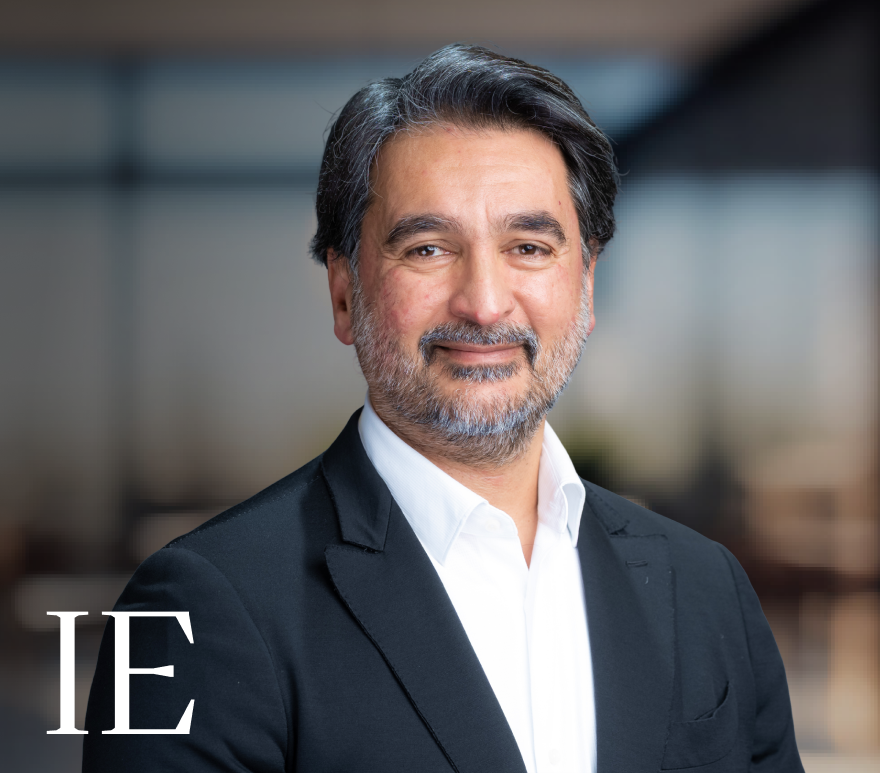
On today's episode of the Innovators' Exchange, I'm delighted to welcome Waqas. Waqas is the CEO of Lloyd's List Intelligence, a leading data and analytics provider in the maritime space. Waqas's career spans four decades, a technologist and engineer at heart. He's played a central role in the creation and scaling of the index industry, culminating in his becoming the CEO of FTSE Russell and an executive committee member of the London Stock Exchange Group.
Waqas's passion for data and analytics and following market structure shifts has seen him switch from fixed income markets to commodities and shipping. Welcome to the show, Waqas.
Waqas Samad:
Thank you very much, Hiten. Delighted to be here.
Hiten:
Begin by describing your current role and current seat as the CEO of Lloyd's List Intelligence.
Waqas:
Well, I'm CEO of Lloyd's List Intelligence, which as some will know, is a pretty, pretty heritage business in the UK. 300 years of history in the same roots and founded in the same coffee shop as the Lloyd's Insurance Market all those years ago but now has evolved into a leading data and analytics provider in the maritime space. Part of the business, the Lloyd's List part of the business is arguably the longest running trade publication in the world. It's been in constant publication, no longer in print, sadly, many people miss it being in print, but it's now all online, but it's been running for almost 300 years. But it's evolved to being much more than an editorial type of business. That's still there. And we still publish the latest and greatest news and analysis on the developments in the shipping market. And naturally these days, that's pretty much in demand.
But allied to that is a huge data and analytics business and a number of other analyst-driven, you know, maritime intelligence type of businesses. So, my role as CEO is to lead the next phase of growth, very much focused on innovation, on product development, on customer focus, and geographical expansion and growth.
Hiten:
Awesome. Well, look, we're going to get stuck on maritime and boats in a little while. Because that's very, very topical at the moment. But before then, I always like to take guests back for a little bit of their journey. Because you weren't born a CEO, you didn't just land in that seat. So, you could start wherever you'd like to start. But I generally encourage people, you know, growing up, bits of education that may have influenced who you've become. Take us through those early years.
Waqas:
Sure. I mean, I was born and raised in London to a family who originally came from Pakistan, and so definitely had that sort of second-generation immigrant family experience here in the UK.
I was very lucky that I had a great education. I had the privilege of being offered a great education as a child here in London. Studied eventually electronic engineering in university, again, here in London. I spent a little bit of time in engineering on the software side in telecoms. And then I moved over into the, into the financial markets’ world.
Hiten:
This is the 90s, right? This is the early 90s boom?
Waqas:
Yes, back, back in the 90s. In 1995 I moved over from telecoms into the City. Originally at SG Warburg, back in the days of gentlemanly capitalism. And then I worked my way around a few different banks on the sell side, mostly in kind of tech infrastructure roles, software development.
Hiten:
What kind of things were you doing at that point?
Waqas:
Oh man, I like to say I worked, I used a very geeky comment, but I worked my way up the OSI reference model from networks and hardware all the way up to application development, and then kind of fell off the top into the business side, you know.
Hiten:
And that stuff must matter, right? Having that grounding and knowing, because we are going to come onto AI later. And one of my favorite things when I speak to you normally is the ability to kind of have a sense of understanding as to what goes on all the way deep down in tech stack and how much of having done that decade through those levels has enabled you to not just be a surface level executive?
Waqas:
Surface level executive. I like that phrase. I am going to steal that and maybe use that somewhere else. You know, look, I've got a, I think a pretty good grounding in the nuts and bolts from a technology point of view. As you said, quite rightly, the 90s was a period where there was a bit of an explosion in the financial markets, in the adoption of technologies. And I was fortunate to be in the right place at the right time to kind of benefit from that explosion and learn how the application of new tech can be a real driver of commercial value. Not just efficiency, but also opportunity on the product side.
You know, I've always been quite interested in the application of technology. I guess that's the engineering side of things coming through. I've stayed, I've tried to stay pretty much in touch with the developments on the technical side, and I've been lucky enough through the experiences I had in my career to work, as I say, at different layers on the technology side. From, you know, networking and operating systems and then applications and so on.
Hiten:
Reckon you could still do it now?
Waqas:
Absolutely not. No. I pretend that I can with my team just so that I can kind of keep them on their toes. But, actually, probably now I could, because the tool set is becoming, you know, much more accessible with everybody. So yeah, now I could probably go back in and be a bit more convincing than I have been in the last three decades, you know.
Hiten:
Talk to me about your, you were around at the infancy or the very early stages of the index business creation. It's one of those, ones for those I only came into the industry like in the late 00s, and at that point everyone was like, here is a cash cow, here is a gold mine. This thing is going to be a, you know, one of the pillars of the industry. But talk to me about when you've entered that part of the world, what does it look like when you are at the early stages of a market structure shift and you're seeing it play through?
Waqas:
So those index years. You know, I started out in the index industry when I was at Deutsche Bank. First of all, kind of coming into it through the tech angle, working with an index team that was very much pioneering the use of indices as underlying for structured products marketing out to their customer base. And that was one angle on the index industry, which is a little bit different to kind of benchmark indices for that you'd see in FTSE Russell or in other competitors like MSCI and S&P.
But that was a great grounding for me because as I say, I came in through the root of tech, but was able to kind of fuse a few different threads coming together in this nexus of value creation for the end customers. So tech, data, modeling, some understanding of financial markets, portfolio analytics, you know, putting all of those things together to enable the creation and marketing of structured products to acquire a wide customer base. Both through sort of retail and high net worth channels, as well as through institutional customers. So for me, that was a great experience of being able to tap into some experience that I had in a number of different areas and into interest that I had in a number of different areas and put them all together.
So that nexus was pretty, that's a bit of a theme that I think has since then run through the career that I've had, fortuitously perhaps. But that pulling together a few different threads, to be able to apply them into new areas has been really motivating, a real challenge. And that was very much in fairly early stages of the rapid development of the index industry as being a driver of growth in the financial markets.
And of course, you know, where we are today, where index investing has come to be a driving force in financial markets. I've been able to participate in that growth through a number of different avenues from Deutsche Bank, I moved to Barclays, and when I was at Barclays building a similar kind of structured product-oriented index business, about a year later, you know, the global financial crisis happened. Lehman went under, I acquired a couple of businesses from Lehman, including the benchmark index business in fixed income. As well as a platform that was focused on portfolio analytics and risk models.
We built that business up to, you know, triple digit, top line revenue over the course of seven or eight years. You know, significant growth on both the index side and the portfolio analytics side, you know, as a software platform that we deliver to customers. It's data, analytics, models and a lot of research that went around it. Eventually we sold that to Bloomberg and now that forms the core of their index business and their port business.
Hiten:
Tell me a little bit about your transition to FTSE, the LSEG years.
Waqas:
Well, after we sold the business to Bloomberg, I took a little bit of time off and then ended up at FTSE Russell. They brought me in to help them build out their fixed income capabilities. Naturally having just done that for a few years at Barclays. And, you know, FTSE at the time was very focused on equity. Index capabilities and equity models. So, bringing some technical expertise and commercial expertise from a fixed income side was the job. We decided fairly quickly to do that. Mostly inorganically rather than organically, because again, fortuitously Citibank had decided at the time to also sell their fixed income index capabilities and their mortgage backed securities platform called Yield Book, which fit quite well into the strategy that we were developing at FTSE to grow in fixed income.
So, we acquired that, which was also an interesting transaction, which took a lot longer than people had assumed it might do. But we finally did that and then put together a multi-asset strategy for FTSE Russell, which is continuing today, I think. And after a little while, I ended up taking over FTSE and running the information services division at LSEG.
Hiten:
So, it feels like at that point, to an outsider, you know, you'd scaled the mountain, you'd seen a market structure shift, you'd got one of the best seats in the industry. I remember those years, you know, I'd write to you regularly get no replies back.
Waqas:
That's not true, Hiten, come on.
Hiten:
There was no interest in taking a meeting. You've kind of done, it feels like at that point you may be, you may be done. Talk to me now, you know, fourth decade, what's peaked your interest to get back in the game and what's peaked your interest to shift focus to the maritime space in particular?
I guess, leading question, it feels like, when I hear you talk about the heritage, the history, the transitions of the market structure you've seen, it feels like this might be about to repeat itself all over again, potentially, in a different part of the market.
Waqas:
Well, you and I have talked a number of times about maritime data and tech being, feeling like it's where financial markets, data and tech were maybe 20 years ago in terms of the evolutionary stage. You know, lots of fragmentation, lots of ability to potentially roll up different assets into something that's a bit more, has a bit more, you know, momentum or critical mass, but also secular trends that are driving the adoption of tech. More data, more analytics coming from a number of different angles.
You know, until maybe a couple of years ago, the debate around the table at shipping companies was always very much about freight rates, supply demand dynamics, you know, operational efficiency and so on. Clearly in the last couple of years, the agenda's been dominated by geopolitics. And the impact of that on shipping, which I'm sure we'll come onto in more detail later.
But, you know, that's a secular trend that just drives more and more demand for data and analytics, you know, transparency, and to drive decision making both within the industry and within the wider ecosystem around, you know, trade finance and so on. And that's something that I think is super, super interesting and something that I was very keen to get involved in.
Hiten:
Let's jump straight in there then. As a non-maritime person walking in, when you're looking at that ecosystem for what the data and analytics and requirements are, like paint that, paint that picture for us. What is there, what is missing? Like what does it look like when you walk into that space?
Waqas:
You know, you got to kind of, when you, when you enter that kind of a situation, you got to spend some time trying to color in the picture. But there are a lot of parallels that, as I mentioned, you know, with the career that I've been fortunate to have on the financial markets, data and analytics side, there are a lot of parallels that can be brought to bear to help kind of make sense of everything. The, you know, the tech platform angle, which we, we talked about. I'm very, you know, keen to make sure I understand how the tech all works when I come into a new role.
The, you know, the data sets that are available, there's a big difference between the data availability in financial markets compared to maritime markets. Because obviously in the financial markets, there's a hell of a lot of regulation and a requirement to report and be transparent around all transactions pretty much in the public markets, which drives a lot of data availability.
Whereas in the maritime space, there is a lot of data availability, but it's all squirreled away in lots of different pockets. And there's a very fragmented landscape. You know, I think it's fair to say that although there are some bigger players emerging in maritime, we have ambition to be one of those. Nobody is going to own all the data in the maritime space. It's very fragmented and dispersed around a lot of different institutions. And, you know, maybe not regulators, but quasi regulators or authorities that have access to the data, or that maintain the data.
Hiten:
What kinds of data are out there, what kind of data is useful, and I say this because at least when we talked about data in the financial markets, all felt quite abstract. Oh, it's an ice, and it's this for a bond. It's very difficult to explain to your six or 10-year-old what's going on. But with ships and boats, what was fascinating me, I am a, I'm a relative recent novice interest in it, is that it's tangible. It's like real stuff. What kind of, what kind of data sets?
Waqas:
We are talking about data about the vessels themselves. We like to sound a little bit more cultured by saying good combos rather than, rather than ships they are vessels. The vessel characteristics, the vessel ownership, the ownership is often, you know, the registered owner characteristics. But then there's a lot of ultimate beneficial owner data that sits behind the registered owners. The position of vessels at any given point in time.
So, we maintain a network of our own that tracks the entire commercial fleet, terrestrial network and then we fuse the data that comes out of that, which, keeps a track on the live positions of vessels as they come near to the shore. We fuse that with other sources from satellite data and from mobile AIS data, as it's called. So we put all that together to get a clear picture on the actual position of vessels, which helps in a number of different angles.
So one is to just figure out the logistics and the supply chain capabilities for, for those who are trying to ship their goods. As you know, as the classic stat goes, you know, 90% of everything moves by sea. And so it's a huge driver, that data on vessel positions is a huge driver for decision making within the shipping industry for charterers, for brokers, for ship owners. But then of course, because 90% of everything moves by sea, you're talking about a wider ecosystem that involves banks, insurance companies and law firms and others who are involved in trade.
And so, as I was saying earlier, the debate around the boardroom table in shipping companies for the longest time has always been about freight rates and always been about supply chain, you know, supply and demand dynamics that, you know, may motivate them to invest more or less in the underlying physical assets of the vessels that are moving the goods around. But in recent times, the geopolitics has meant that there's a really clear focus on sanctions and compliance issues on the actual ownership of vessels to enable people to ship their goods and to trade with each other in a way that's compliant with some of those issues.
And then, as we've seen in the very recent months, a much sharper focus on supply chain dependencies and security issues, security of supply chains, resilience of supply chains. So we see a lot of customers coming now, not just from the commercial world, but also from government institutions and authorities that are looking to figure out how to make sense of all that. So all of that to say that, as you said, it's a very real world. It's, you know, it's hard assets.
I spent a long time in financial markets, like you said, it's very abstract and intangible and the financial markets activity is obviously incredibly important for the functioning of the global economy. But there's something, you know, much more real world about dealing with maritime. There's something that really therefore gives a clearer sense of purpose. And like you say, it's much easier to explain to your children.
Hiten:
That dinner table chat. So going back to your point on 90% of the goods the cargos move by boat. I guess we spent so long on the show and in your own career and most of mine thinking about financial market plumbing and the innovation and the optimization of that, clearly it makes sense now to think about optimizing and innovating if the real economy plumbing, if 90% of those goods go by sea. Like, talk to me a little bit about your vision, where could you see this bit of the world getting to? What would Lloyd's List Intelligence role be in that? Where are they useful corollaries to what's happened elsewhere in your career and where is it different?
Waqas:
Well, you know, like I said earlier, there, there's a secular trend anyway, to get more digitalization within the maritime industry. Before there was this broader focus on the geopolitics side of things, there was a big shift towards utilizing more data, more telemetry coming off of the vessels as well to make voyages more efficient. Both in order to manage costs in a complex operating environment. But also to serve the needs of the decarbonization agenda that has started to work its way through the shipping industry as well.
That comes, there are some shorter term headwinds around that you know, one can get into. But long term, there's definitely a decarbonization agenda, which we think is going to stick within the industry because again, the recent couple of months have just highlighted that the resilience issues and the dependencies on fossil fuels have meant that alternatives have got to be sought out, not just for the reason of addressing climate change, but also perhaps from an energy security point of view.
So there's a secular trend to get more digitalization. I think that that pace is increasing. Where the industry is going now, I think is to, and, this is a real parallel, I think with the financial markets, you know, there's an initial drive to source more and more data. And then when you start to have access to very large data sets, which now there is a greater degree of processing power. And a larger set of tools to be able to make sense of that data. Now there's an allied or associated or consequential desire to drive deeper insight and intelligence. So the next phase of growth for Lloyd's List Intelligence is, and this is very much where I'm focused as CEO, is to take it from being a data provider into a provider of that layer of intelligence and insight. It's a bit, it's a bit analogous to what we were talking earlier on about the index industry. You know, you end up, you start out with more data and analytics available at the individual security level or individual derivative level.
And then after a while you can put that together with some models to aid decision making, aid investment decision making. Whether that's strategic or tactical. And, you know, you wind forward a couple of decades and then you end up with index investing being central to the way that the markets are being operated. So I think in the maritime space, we're evolving from the age of just being about data to now with this, with a wealth of data that's available at people's fingertips, now evolving to a phase where we need greater and deeper focus on the intel and the insights that come out of that data. And that's especially true in our view, you know, at Lloyd's List Intelligence, we are, I think, a little bit differentiated from some of the other competitors in that not only are we very much keyed into the shipping ecosystem, ship owners, brokers, charterers and so on, but then the wider ecosystem, we've got a lot of customers in banks, in insurance, in law firms and so on.
So that wider ecosystem that supports global trade, and trade finance, and trade underwriting, that's something that we can tap into and also provide a, I guess a translation layer, right? Because it's still the case that the shipping world is a little bit closed. Can be a little bit arcane. Specialist community. And one thing that has really come to the fore in the last couple of months since the Middle East crisis kicked off, is that those in the wider ecosystem are looking to providers like us to translate the data into actionable intelligence. You know, providing them with that connection from what's actually happening on the water from the physical risks involved. To the financial risks and the decision making, the 'so what', if you like, that affects them and impacts them in their businesses.
Hiten:
Hearing you talk, as an outsider, I always think there's every now and then there's like a spark that drives major interest in the market that makes it everyone's interest rather than a specialist. And a whole bunch of changes in behaviors. So, you know, fixed income markets, the financial crisis, there's a whole bunch of rule changes. Suddenly there's electronic trading and clearing and derivative rules. Suddenly everyone obsesses with the fixed income market. Because there's a, you know, there's a mini gold rush.
There seems to be a lot of interest now in the shipping space, whether it's because of the geopolitical, because of the sanctions. Certainly, people are now asking questions to the layman on the street. You know, did that ship go up the Strait of Hormuz? Did it get turned around? What was it carrying? Where's the ammonia coming? Like, is this that moment? And if it is, what kind of like accelerant changes in the market structure could we expect to see?
Waqas:
Well, it's certainly brought shipping into very sharp focus in the layman's terms. You know when the US and Israel attacked Iran, then obviously the consequences on shipping in that region, and therefore on the oil and energy markets, which are obviously critical to the global economic picture that has really brought it onto, you know, out of the arcane discussions in industry segments into, you know, front pages and around the dinner tables and around the, you know, nightly news bulletins.
Whether that is, as you said, the moment that really switches and drives more focus from an industry point of view, I'm not so sure, but it certainly is catalyzing the need for greater insight and intelligence in a wider community than just within shipping. Or just within the trade finance ecosystem that centers around shipping. As I said before, I think there's a secular trend that's been going on for a number of years now that has been driving the interest and investment in maritime data and maritime technologies.
These last few months does, well, that's been going on for a number of years. The geopolitics of it all in the last two years probably has increased the focus on sanctions and compliance and what's known as these deceptive shipping practices that requires a greater degree of modeling and analysis to be able to make sense of those things. And then the war in the Middle East has really then kind of made everybody a lot more hyper-focused on the space, so in a broader community. That's probably a spike that hopefully when things calm down and, and touch wood, they calm down soon for the benefit of everybody. But, you know, that might revert back down from a peak.
But we don't see that as going back to whatever normal was beforehand. We think there's an increased interest and focus from both people within that closed community as well as outside.
Hiten:
How does that show up in this world and how should it show up in this part of the world?
Waqas:
You know, I mentioned earlier on about those deceptive shipping practices. Those have shifted from techniques that have required kind of a categorical screening, you know, screening against lists of sanctioned entities, for example, to practices that require behavioral analysis of how vessels move, where they go, what they do. So as a result, for the last few years, we have in Lloyd's List Intelligence, we've been utilizing AI machine learning models on top of the vast array of data that we originate and collate daily to make sense of those practices to look at the behavior patterns and so on.
All to say that AI has been creeping into this space for a number of years, and of course in the last couple of years now with, after the announcements from OpenAI and all of the increased interest in LLMS and so on, that's another area where that's, you know, that focus has just exploded and the interest has exploded in the use of AI tools in the maritime industry. I think the future there is an inexorable continuation of that. That's not going to abate. There's going to be more and more focus on how to use AI tools to make sense of the data.
But the maritime data is, as I mentioned earlier, highly fragmented, quite messy, quite noisy. Again, there's no real central regulatory authority that requires reporting aside from a few distributed things, distributed entities that require that. Putting it all together to get a complete picture is quite hard to do. And you know, so as I say, we see our role as originating large chunks of that, compiling that with some other data sources, cleaning that up, making that tractable, and then utilizing our own models, utilizing third party AI tools and so on to be able to provide more intelligence in a way that is definitely data-driven.
But I think the key differentiator that we see we can bring to the table is to have humans in the lead of that, the demand for deeper insights and intelligence in the maritime space, whether that's coming from the commercial or the public sector, still requires, and I think will require for some time a layer of human expertise to fuse with the data, the tech, and the AI models or however the models are built, for some time. It's an area that domain expertise is particularly important. And we've seen some others, I think come to the fore saying, we just apply AI to the data and maybe fall a little foul of the fact that the expertise and the understanding of how the markets actually operate can require some greater focus from the human expertise side rather than just a complete reliance on AI.
Now that's not to say as you know, I mean, that's not to say I'm at all of the opinion that AI doesn't have a place in this space. It certainly does. And we're, we are investing a huge amount in of time and resource in building AI tools. Not just for internal efficiency, but also for, you know, for product development and for new products. But we still see a role for humans in the lead there.
Hiten:
Last one on this section, if you fast forward to another end of one of your decades in the industry, take 10 years down the line, what could the market structure in this space look like? There's, in my head, there's a couple of scenarios. There's a think of maritime as a, on a liquidity spectrum, which is like a very illiquid credit instrument and very bespoke and it follows that path. And is there a version of like a centralization and a tape and a registry? Or is it, to your point earlier on the geopolitics and the dynamics, there's just a lot of incentive to keep some stuff off the books, and actually there's a lot of behavioral dynamics at play. Any sense as to, you know, 10 years down the line what this could, what this could or may look like?
Waqas:
I think given the challenges as demonstrated quite recently at the IMO, of trying to impose without consensus, a framework around regulation, you know, in the decarbonization agenda, you know, that's very challenging because of the way that the whole market is put together. I think it's hard to see in 10 years time a central regulatory authority operating in a, in the maritime space. And besides, you know, in the financial markets, of course you've got cooperation of regulators cross border, but there isn't only one sort of central regulator. There are some standards and some principles that regulators around the world can agree to and can adopt.
But even those, you know, with geopolitics, those come under pressure as well. So, I think in the shipping world, it will be a similar kind of scenario, where I think there will be, there will need to be probably incrementally and by stages, a bit more regulation, certainly around things like safety standards and so on. There is quite a lot of that already. But that's under an international framework. And the risk is that that might all break up a little bit and become more regional or national, and then that's a more complex environment for people to operate within.
Hiten:
Good for the data analytics providers though.
Waqas:
I mean, look, I'm not sure about putting it that way, but you know, we definitely see the need for people to help people translate all that complexity into something that makes it easier for them to make decisions. So, you know, going forward, what we are just focused on is making sure that we keep in touch with what customer needs are and try to build to those, keep in touch with where the regulatory efforts are going, keep in touch with what's happening from a geopolitics point of view, which is pretty complicated. And just be there for our customers when they need more insights.
Hiten:
Love it. Love it. Fascinating. Just could spend all day talking about shipping, but we'll just have to deal with the tip of the iceberg for now. And we'll move on for some personal questions, because I know listeners like to kind of..
Waqas:
You can't say 'tip of the iceberg' in a shipping discussion. That's a bit too scary.
Hiten:
Oh yeah [laughing]. Talk to us about the most interesting challenge or biggest lesson you've learned in your career journey to date.
Waqas:
You know, a lot of, a lot of lessons and still learning a lot of lessons, naturally. You know, I think one of the things that I found to be a bit of a challenge when taking on more leadership roles was that having grown up in a, as I mentioned earlier, being a sort of second generation Pakistani growing up in the UK, you get this kind of conditioning a little bit to kind of keep your head below the parapet a little bit. I think you know what I'm talking about. You know, you kind of don't ruffle feathers too much, go with the flow a little bit and so on, which is kind of a cultural conditioning that I think is, you know, everybody's experience is unique, but, you know, but I think that's a common thread maybe for some immigrant communities.
And so when taking on leadership challenge more, you know, higher profile roles and so on, I found that it initially took a fairly, you know, it required a bit of intent to kind of go beyond that conditioning and to, as you know, when you get into leadership positions, you've got to be a bit bolder. You gotta be a bit more ambitious. You gotta have a louder voice and a stronger voice. And so breaking the mold on that kind of upbringing conditioning can be a bit of a challenge. It's, I've seen that go a number of different ways with people out there where, you know, you can go too far the other way perhaps and not achieve the right kind of balance. And you know, look, especially in this day and age where there's a lot of noise and misinformation and disinformation about the contribution of immigrants in communities like in the UK or in other countries, it can be easy to get a little carried away by the emotion of how to rail against that kind of nonsense and to point out what the incredibly positive effect of immigrant communities is on countries in general.
So achieving that balance. Being bolder, being more vocal, being more ambitious, stepping up to a leadership challenge. I've had people in the last, I would say last year, 18 months, actually come up to me and, you know, from other companies, from other, you know, customers and so on, and ask me questions about that, because it's not so usual to see someone with my background at a leadership level. Especially, you know, leading a company with 300 years of history and heritage with quite a strong brand around the world that is associated a bit with UK Inc.
I've actually been weirdly fortunate to have a couple of, you know, strong UK, global, but UK-heritage brands that I've led, you know, FTSE and now Lloyd's List Intelligence. So, that's somehow become a bit of a theme in my career.
Hiten:
Thank you for sharing, you're trailblazing. First we were on the boats, then we're meant to be the only engineers and now you're leading. Each decade we write a new chapter. But jokes aside, I think it is a, it's a great reflection to share, right. And inspire and educate those that need to follow.
Waqas:
Well, I sometimes reflect on the fact that, and I think I mentioned this to you and we had lunch a couple of years ago, or maybe 18 months ago, that Lloyd's List obviously started about 300 years ago in a coffee house in Lombard Street. And that was built by innovators back in those days who were pioneering and thinking about, you know, the whole insurance market and Lloyd's List were supporting the effort of innovators and pioneers and buccaneers who went all around the world to places like where our roots are, India, Pakistan, and, you know, subcontinent in general. And were it not for that, my family wouldn't have ended up over in the UK in the 1950s. And lo and behold, full circle, here I am running Lloyd's List Intelligence.
Hiten:
There's a beautiful circularity. I think you should update the museum. The coffee shop. Anything you do outside of work that, that helps you in your, you know, in your professional sphere?
Waqas:
Well, I try to keep sane by, you know, taking some time away from the office when I can. And you know, I like to get out hiking the hills up in the northwest of England and, and up in Scotland as well sometimes. But, you know, family keeps me pretty busy. I've got three grown up children and a couple of grandchildren. So definitely, you know, perseverance and resilience are qualities that I have learned from that, which can definitely apply in the commercial world in the general sense. But, you know, usually I just try and keep as much balance as possible. But it's difficult, you know, running a business like this, which is growing so far so interesting in an industry, which is really dynamic and there's so much focus on it right now. It's difficult to keep a balance, but, you know, it's something that I try to do.
Hiten:
And you've run businesses that were housed in big leading global investment banks. You've led businesses in, what we'd call public FITS companies. You've now got a private equity owner. Like what, does it feel different or is it the same?
Waqas:
Well, it's definitely, it's definitely different. I mean, the ability to kind of, you know, compress that journey from innovation to product to customer is much easier within a private equity backed business. Especially when you've got a private equity backer that is knowledgeable and understanding of how the dynamics in the industry work and are actually interested in supporting that journey. So, you know, a good shout out to our private equity backers who are definitely of that ilk and who, you know, want to understand how the industry is working, how the specifics of our business are working within that industry context and are pretty supportive about what we see as the challenges and the opportunities and how we should address them. So it's definitely different in the sense that you can therefore be a lot more nimble. And react to how the market develops and what new challenges emerge, what new opportunities emerge and shift focus and pivot to something new if you need to.
I think that's given us, when I think about the comparison with say, where I was in, you know, public company before running a lot, running a big sort of data and analytics focused business, which has now since I've left, that has now, you know, become, you know, even more scale and is real powerhouse in the industry. I think though that what that has done is moved a little bit more, a little bit away from a focus on market expertise and IP and more into just data at scale. Whereas I think partly because of the demands of the industry and the way that the maritime space is set up, but also partly because we're privately backed, I think we've been able to focus much more on not only the data side, but also the IP and the intelligence and the market expertise.
I mentioned before that we see a real need to, to combine the data and tech products with our human expertise. That's something that I think we can focus on more compared to maybe a public company as that scales, because we can highlight more keenly within our framework because we're privately backed because we're closer to the customers, perhaps, we can focus more keenly on the needs to fuse that human expertise with the data.
Hiten:
Last one, we ask all guests to throw the spotlight. So for listeners to go away and look up an individual or a company that's caught your attention that you think maybe being overlooked or is worth someone paying more attention to.
Waqas:
Well, I'm going to cheat slightly and focus on the last bit about people that are worth paying more attention to and not focus on an individual or a company, but to focus on seafarers. So the entire maritime industry, whether you're a ship owner, or broker, or charterer, or in the wider ecosystem involved in trade, trade, finance, insurance, whatever, it completely depends on people who sail on the boats. And they are largely overlooked, not often focused on, but without them, we all have nothing. There's no maritime industry. Autonomous boats are a long way away as a, you know, scale commercial offering to supplant them. And they have tough lives. They have a real, real difficult job. Physical risk. You know, challenges being away from home for extended periods, you know, a support network that's required to help them to function under challenging circumstances, which is often not invested in enough. So they really do require some focus.
And you know, even in the last couple of months with the Persian Gulf crisis, there are some estimates that go from up to maybe 20,000 seafarers who are trapped within the Persian Gulf on those vessels. You know, it's a large, whatever the number, it's a large number and at the best of times it's not the easiest life. Both, you know, physical issues as well as sometimes mental health issues and operating in a war zone in these kind of, you know, situations. That's incredibly challenging. Not something that I have personal experience of, but when I think about how difficult that must, I thought that's something that we should really highlight and focus on.
So if there's one thing that people that are listening to this podcast could maybe look up and think about, I would say seafarers.
Hiten:
That is awesome. Thank you for calling that out and paying attention. It's definitely, definitely overlooked.
Waqas:
Well, there are some very good charities that focus on supporting them. One of them is Seafarer's Mission, which LLI is a supporter of. So, but there are many others. And so I would encourage people to take a look at some of those and see if they can support them. Go out there and check it out.
Hiten:
Thank you very much, Waqas, for a trip down those many decades, many areas of expertise and it's a great new exciting chapter for you and a lot more to come. So thank you for taking time out of the busy day to come and join us.
Waqas:
Thanks very much for the time.
This transcript was edited for clarity.