Jack Stoddard
If you just think about every other market, if it’s Netflix, if it’s Amazon Prime, if it’s DoorDash, the world is moving to this highly personalized, on-demand experience and the idea of having to drive, park, and wait at a clinic… that’s about the provider efficiency, not about the consumer experience.
Narrator
That was Jack Stoddard describing how healthcare and particularly primary care needs to evolve to meet consumer expectations and improve the patient experience. Stoddard has a history of trying to reshape how care is delivered, having worked at such companies as Accolade, Optum, Devoted Health, and Haven. He now serves as CEO of Patina, a hybrid primary care provider that partners with Medicare Advantage plans to offer seniors a blend of virtual and in-home care. Stoddard and Oliver Wyman’s Bryce Bach break down Patina’s business model and how it is resonating with seniors, payers, and clinicians. They also broaden the lens to talk about ways to further disrupt primary care.
The Oliver Wyman Health Podcast is brought to you by the global management consulting firm Oliver Wyman. For more insights on the business of transforming healthcare, visit our online publication, health.oliverwyman.com. We pick things up with Stoddard, putting the current primary care market into context.
Jack
Traditional primary care, I think, has been in many ways corrupted by the fee-for-service chassis that it’s operating on and that’s unfortunate because I think that primary care practitioners have good intent. But they end up trying to optimize their economics and their care model with the resources that they have. You end up with care that is very reactive, sick care. It is often not coordinated because there’s no either incentive to develop the resources or capabilities to do the coordination component. But when it’s done well, I’d call it an advanced primary care. It is really one of the most powerful elements. You look at every other industrialized country that is invested in primary care, you get better mortality, you get better outcomes. The promise is there, and I think that people are starting to recognize that in this country. And there are new models that are emerging but it’s on an evolution.
If you think about the care model, it’s really two things that Patina is doing differently. One is reinventing the experience of healthcare, and the second is how we deliver that experience. When I think about the care model that we’ve built at Patina, it’s really about being comprehensive. So looking at you holistically, building deep relationships with you, getting to know your values, preferences, and goals. It’s about being continuous with you, so staying with you over time. It’s about being coordinated, so it’s really doing the legwork, and we have members of the team-based approach that are really doing the legwork to help you not only access care when you need to go to a specialist but also coordinating with them. So that we have the continuity and the consistency to make it work, but it’s also just being that first point of contact. So being that place where you can go to, we’ve tuned that entire care model to people 65 and older. So recognizing that you have a unique phase of life, you need to understand that journey. The needs that people have through that, and then have the technology and the protocols and the workforce.
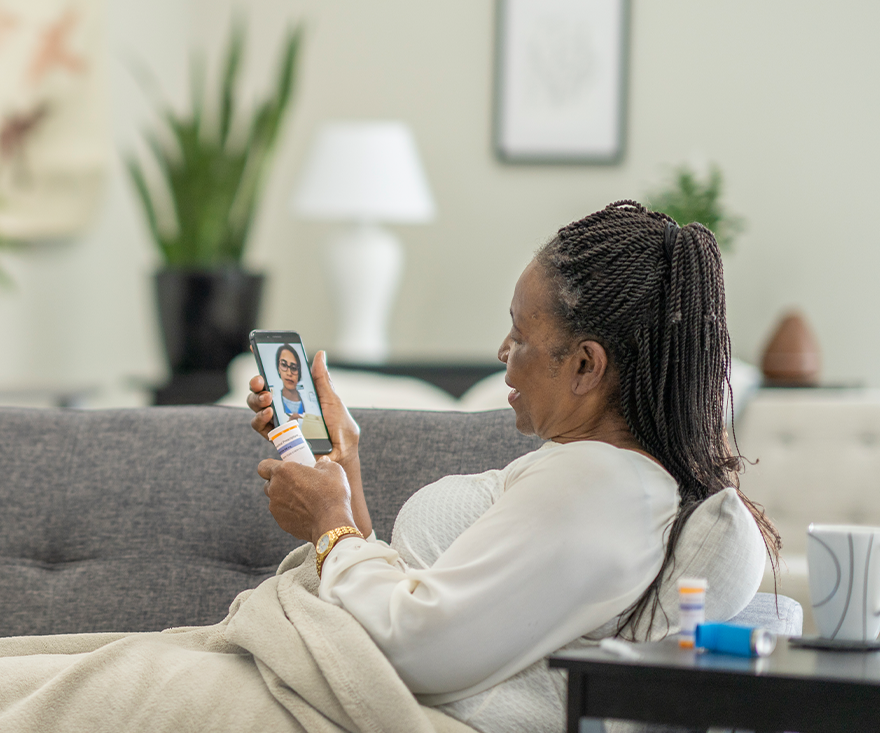
The second thing that we had to do is rethink how that care was delivered. If you think about most care today, it’s still in that blockbuster mode of drive, park, and wait. We’re in a world where every other consumer industry is moving towards this on-demand, highly personalized, tech-forward experience other than healthcare. So as we built Patina from scratch, we built it to be a hybrid of virtual and in-home. The reason for that is we think combining this, the tech forward, the ability to do secure messaging, to do video interactions. But you still... While you can do about 80% of primary care that way, you still need eyes-on, hands-on care and particularly for the population that we’re serving you need that hybrid together. So we’ve merged those together but we don’t build bricks-and-mortar clinics and so we’re providing comprehensive, advanced primary care. Transforming the experience, providing deep relationships and we’re doing it through this hybrid of virtual and in home.
Bryce Bach
I find this idea is so fascinating. Higher touch, longitudinal primary care with no office.
Jack
Well, we were fortunate too. We had designed this idea back in 2019 and little did we know that the pandemic was going to be a wormhole that’s compressed time and space. Now through that, everyone has now tried virtual care. They recognize it’s better from the experience perspective and what’s happening now, which is interesting, is that a lot of traditional primary care is migrating back to bricks-and-mortar and that’s because they’re muscles. Right? We’re all tuned around that care model and their financial model is aligned with that. So you have consumer sentiment saying, “Hey, I want a home-based virtual experience.” But on the other end you’re seeing sort of the market pulling them back. So yeah, I think it is certainly possible and I think if you just think about every other market, if it’s Netflix, if it’s Amazon Prime, if it’s DoorDash, the world is moving to this highly personalized, on-demand experience and the idea of having to drive, park, and wait at a clinic… that’s about the provider efficiency, not about the consumer experience.
Bryce
Yeah.
Jack
It’s also about health equity and scalability, right? So many primary care practices that are built close to where primary care doctors live, right? They don’t want to commute very far, so you end up in many major metro areas with these primary care deserts and our model will go to wherever the person lives. We’re serving people in rural parts, in suburban neighborhoods, and in urban centers that you would never go and build a primary care clinic in. We’re supporting people 65 to 100 years old across all acuity, across all needs. We are excited that technology and this model is allowing us to provide the same kind of support, dignity, access, and experience to people who may fall into those deserts.
At the same point, it’s much more scalable for us as we enter and open new markets. Our ability to get this launched nationally is much more capital efficient because we don’t need to put $2 million into the ground. But it’s also just faster because we can open up markets relatively quickly.
Bryce
It’s got to be… it really lowers the bar on the chicken and egg issue of getting scale at the supply as you’re matching supply and demand as you’re building your patient base.
Jack
We still have that challenge. We still have to communicate to older adults that this is a new model of care. Once they recognize in some ways that it’s a retro back to when my great- grandfather would do horse and buggy visits as a primary care doctor, it puts us back in the home, it’s built around them. But we’re also finding that Medicare Advantage plans are really interested in our approach because they’re trying to compete for Medicare lives on two primary levers. One is cost and one is coverage. Cost as they’ve competed has gone to zero so they’ve sort of lost that lever.
Bryce
Yeah, zero premium plan.
Jack
Exactly. So now they’re trying to compete on the bells and whistles of the benefits, which also get mirrored very quickly and the way you differentiate is you transform the experience. So we show up and we’re saying hey, yes you have to have a good network. Yes, you have to have the bells and whistles, right, as the plan. But we as a partner can now work with you on transforming the experience of healthcare and of aging. Because we’re not constrained to a bricks-and-mortar clinic, it opens up opportunities for the Medicare Advantage plans to work with us. It’s a symbiotic relationship where then they can go and communicate to 100% of their members, 100% of their prospects, communicate to 100% of the brokers in a major metro about this and it really opens up the aperture for us to create this awareness and consumer adoption of what Patina is offering.
Bryce
Yeah. I can see why that has clear appeal for the partnerships you’re striking on the plan side and so you’re specialized, you’re tailored with your model in some sense. You’re going 65 and up MA but you’re not specializing or limiting who you serve so deeply as other players are, because you’re serving the full acuity spectrum inside 65-plus. What are you finding, learning so far in terms of what’s working? The outcomes you’re getting, how the financials go around?
Jack
We were fortunate to partner with Independence Blue Cross, we launched in Philadelphia, and we’ve been using our early patient volume to really get the people process tech right. So the learnings have been through the roof but the hypothesis of the business was… to be able to serve everybody in the population was one and so we’re currently serving people 65 to 101 years old. It was designed to figure out, how do you get the right hybrid, virtual and in-home experience. There were some real questions about where the digital adoption would be, so there’s kind of two parts of the population. One is those who are new to Medicare, 65-plus who, as I said before, are getting a great consumer experience in every other consumer company they interface with. They love having a care team that knows them on their side, in their pocket, on demand. When they need that physical or they need someone to listen to the lungs, we can get a clinician to them on their terms in their home.
On the other end of the spectrum, we have older, more frail adults and they’re really indexing on the fact that we can be in their home. Right? For them to drive, park, and wait in a normal clinic is very difficult, it takes up their caregiver’s time. So often the adult caregivers have to give up a day of work. It’s inconvenient and you really don’t get the full picture and so they’re indexing into our model on the fact that there’s this hybrid now where I can have virtual interactions but you’re also coming to the home.
Then the third dimension was, build this to take total accountability for care. We’ve created on this team… it’s physician led but we have primary care practitioners who are often nurse practitioners. We have nurses in a role that we call the health champion, and that health champion is doing a lot of the legwork to help coordinate care. To help with the referrals, to build the relationship, to understand changing needs as they emerge. But also, to make sure that the system is working on their behalf, overcoming barriers, if it’s transportation, logistical, financial barriers. It’s exciting to see that team is working and so far, the early indications are from a quality perspective, certainly from a satisfaction perspective and from a financial that is driving the outcome. So better clinical quality, which translates into better HIDA scores and star component. Better experience, which obviously for the health plan partners translates into higher cap scores and into star ratings. But also, the ability to take waste and harm out of the system, deprescribing, avoiding unnecessary readmissions.
Bryce
I appreciate how you emphasize the harm aspect as well. So much when we talk about value-based care, we do emphasize the financial sustainability of the system, but it really is mitigating harm as well from the access utilization. Do patients engage the [advanced practice providers] APP, the health coach, often without the doc involved? They have relationships around the whole team or is the doc pretty present in most of those interactions?
Jack
The majority of the primary care practitioners are NPs and they’re working very closely with the health champion role. When they have a question, when they have a complex case, do case reviews, the MD is involved. But we really had to rethink the model because there’s a shortage of primary care practitioners nationwide. A huge social crisis that this country’s facing is the time where we have aging of the population. We also have... Many of them are primary care docs, so many of them are retiring and so something has to be done differently. Part of that is creating a team-based approach to care and that allows you to rethink the ratios and the involvement of the PCP. You still have the same clinical intensity, the same oversight, the same accountability. But the care model is being delivered through a team-based approach, which allows you to serve more people on the primary care physician’s panel. The neat thing about it is that consumers are OK with it and when we have these interactions with folks, you can feel the love. Right? Because they finally feel heard, they feel seen, they feel like somebody’s investing the time, they don’t feel rushed.
From a care experience perspective, so much of traditional primary care, because it’s infrequent sick care, people sort of stock up on all their healthcare issues until they finally get that 15-minute window with their doctor. For us, we’ve rethought what a visit is, to us it’s many smaller, shorter interactions and when necessary, we get a clinician to the home for that comprehensive exam and so forth. But that abundance of interaction with the team, the people we serve are giving us tours of their garden, we see their artwork and by being in the home that relationship gets forged even stronger because you now have access to their community. You see the stairs that they have to climb, you see whether they have air conditioning. Do they live alone? Do they have food insecurity? You see the medicine cabinet and you can watch them operate in their own environment. That richness of the picture of who these people are become so much more clear in contrast to when people go to the doctor’s office, they sit on that wax paper and they’re on the physician’s terms.
Bryce
How much are you able to help them with the surrounding constellation of needs you just described? They have challenges in the home, they may have a bad carpet, they may have food insecurity issues.
Jack
There’s actually a ton of resources available. The health plan provides them, they’re in the community and so this health champion’s role is to really understand in that city with that health plan what’s available to you. What’s challenging is that there’s an abundance of these resources. The trick is knowing how do you get to them, how do you access them? Who’s available? What do you have to do, is their paperwork and all that? So having this champion whose job it is to figure all that out in context of needs, we are mobilizing a ton of the benefits, the community resources that are available and making those work on behalf of the people we’re serving.
Bryce
We have such a supply issue around primary care providers. Coming out of a COVID burnout, is it a wildly concerning high? Can you share a little bit about the providers that are opting into your experience?
Jack
Yeah. When you then put the lens of older adults on that, it gets even harder right? Because most older adults don’t fit into a 10-minute traditional primary care window. You need to spend an hour with them to really unpack what’s happening. They have multiple chronic conditions and unfortunately for the people who are 65 and older, what happens is those primary care docs who are pressed for time make referrals. So you end up with this abundance of specialists who are not coordinated and so in our model we’re finding that we’re able to one, give you more time; two, build more relationships; and three, we have the financial alignment as a value-based provider to have the incentive to do all the right things. To coordinate care, to do the follow-up, to plan the discharge as soon as we make the referral into the hospital for a procedure or something.
Bryce
But I still imagine there’s a factor of patients who are going to have ad hoc needs that somebody might have to put hands on them to see if they’ve got strep throat and it might not always be easy or make sense to have someone drive out to their home. So what do you do in those circumstances? I actually love to hear your perspective as you think about things that would feel adjacent in the primary care space. But then also as you’re thinking downstream through the continuum, because you’re not trying to be everything to everybody.
Jack
Right. What we’re trying to do is be that quarterback in a very complex system and so where we can, we really want to be that first point of contact. If we have a same-day appointment, which we often do, we’ll get somebody to the home if they need that. But if it’s after hours, for example, and they do need stitches or something, we are creating a network, it’s a virtual narrow network that we can put on top of a broad access. We’re curating that in the markets that we go into and ideally are finding either urgent care centers or specialists who are willing to share data and collaborate around the patient needs. That’s obviously easier for us to do than many standalone care management partners because we are the primary care doc. Right? That gives you a calling card with these organizations to say hey, I’m making this referral, and I’d love to get this information back from you.
Bryce
Are you getting to the data connectivity or is that one of the next big hurdles ahead?
Jack
It’s always a challenge. The good news is we were built on a modern tech stack. Right? We’re not trying to deal with the legacy. We’re kind of cloud-based, we’re virtual, and we launched in 2022, which is when interoperability is now front and center. There are still more faxes than we would like but we’re tapped into the local health information exchanges. We can get direct data from many of the hospital systems in the market and so it’s better than it was. I think from our perspective, we’re sort of native to being able to take and manage that data, do something with it. I will confess, we do have patient service coordinators who will go and hunt down records and often they’ll come in an envelope, or they’ll come in inaudible. We get somebody to scan them in and we have a nurse go through them and make heads or tails of them and then very quickly we’ll get that loaded in structure data.
Bryce
How are you getting paid for all of this? It can be hard to do capitation until you’re at a certain scale. Are you trying for that out of the gate or are you doing something different?
Jack
We’re finding with the Medicare Advantage partners is even those who have their own primary care assets, they still realize there isn’t enough supply and there certainly isn’t enough supply of this type of model. Right? If you roll forward, what I get excited by is if you’re 60 today going to 65 in the next five years, you’re going to be much more interested in the kind of highly personalized, high touch experience that Patina’s offering. There’s good alignment with them, in terms of the financial model, is the entire business was natively built to take and manage risk. To your point, we want to get enough reps under our belt before we take that and, in many cases, we have to have enough minimum threshold of patient volume either from our models…
But most of the health plan partners have been very supportive of us with the primary care cap rate or being able to go through an approach where we get some upside risk in year one, upside downside in year two. Then full risk in year three is typically the structure that we have and that gives us a glide path to it. The key piece is that our operation is fully at risk, and we operate it, we’re doing all the same things for people. We’re taking care of people, we’re being proactive, we’re coordinating care. None of that changes because of the financial model, in terms of revenue. And then ultimately our profitability it will grow into it as we get more patients with each of the health plan partners in each market.
Bryce
Well, it sounds like your payer partners have been pretty receptive. Are there asks you’re making of them? Are there things that you’re depending on them for or they’re plugging into you for to help make your model be more effective?
Jack
As a virtual and home base, we’re breaking the model a little bit. The first time we had to get credentialed they were like, “Well, we’ve never credentialed a primary care group without a bricks-and-mortar.” We did have to get them to think differently about credentialing, about provider search. I mean when you go to their website, most of their algorithms are built off how far are you from the clinic, but we’re on your doorsteps. So they’ve had to rethink, where do we show up in their listings? We’ve had to rethink the member services integration and get referrals from case management, from their inside sales group. There’s a lot of process work we’ve had to establish, there’s a lot of data that we need from them to be effective at taking and managing risk, and then there’s a lot that we do in terms of communicating this new model.
Bryce
Do you think that this model you’re building, deploying, does this work for all primary care over time? Or are there natural boundaries that you think to which you can take this, other populations you could extend this to, let’s say your generic commercial population? What do you think?
Jack
I certainly think for Medicaid it’s highly relevant to be able to focus in and understand the unique needs that that population has. I think it’s going to be more challenging for commercial and a lot of it just gets back to two primary factors. One is a willingness to share the risk, to be able to now think differently and to pay you. I’m not saying it’s not impossible, I think it’ll just be a little bit slower. But there are models that are starting to emerge, and I think larger, more progressive employers are feeling like this is the right place to transfer, that is to an accountable primary care group versus to the health plan.
The second reason is just geographic, right? As I described before, it’s because we are delivering this, it’s comprehensive primary care that’s a hybrid, a virtual and in the home. We can do that in a Medicare or Medicaid, potentially you could do it because that’s often a geographic-based model. In my experience working with large employers, they’re going to have people in 38, 50 states and a small number of them. When I was at Haven, one of the first things we did is, we took all the data, dropped it in Tableau and plotted it on a map and people were all over the place. You can imagine there were a few concentrations in New York and Columbus and Seattle and so forth. But they were everywhere, a lot of that’s Amazon, they’re just everywhere. So to have an impact with a hybrid model or to be able to provide in-person primary care, you’re going to get huge differences between what you have in a market with a clinic or with an in-home dimension. Those were just scale you can’t get to as fast, so I think those dimensions are going to put some handbrakes on the employer side for a while.
Bryce
I appreciate the conversation today, Jack.
Jack
It was great, I appreciate the time. Thanks Bryce.
Narrator
The Oliver Wyman Health Podcast is brought to you by the global management consulting firm Oliver Wyman. For more insights on the business of transforming healthcare, visit our online publication, health.oliverwyman.com.
This transcript has been edited for clarity.