


Saudi Arabia's generic pharmaceuticals industry is entering a new phase of growth, supported by healthcare reforms, expanding coverage, and a Vision 2030 policy agenda that increasingly favors local drug manufacturing.
Already the largest pharmaceutical market in the Middle East and North Africa (MENA), valued at between US$14 billion and US$16 billion in 2024, Saudi Arabia has a rapidly growing population, rising life expectancy, and high prevalence of chronic disease, creating sustained demand for pharmaceutical products.
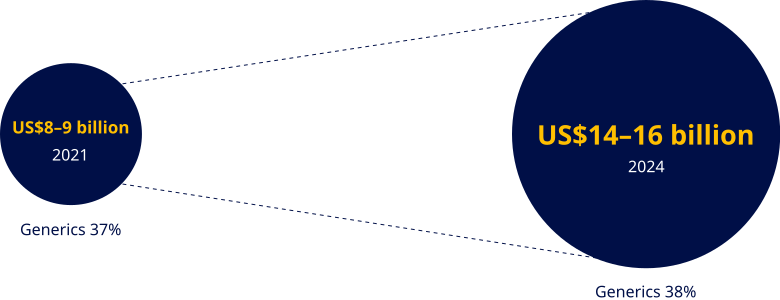
Generics already account for nearly 40% of market share and are scaling faster than originator medicines, supported by rising demand for cheaper treatment options, expanding insurance coverage, and a growing pipeline of off-patent medicines. Manufacturers that wish to remain competitive will now need to balance pricing pressure, localization requirements, and supply reliability.
Demand for healthcare and pharmaceuticals is growing rapidly in Saudi Arabia
Saudi Arabia’s population has expanded from approximately 16 million in 1990 to around 37 million in 2025, with a life exptectancy increasing from 69 to 79 years across the same period. The proportion of older adults in Saudi Arabia is also increasing dramatically, with projections suggesting the over-65 demographic could rise from 3.6% of the total population in 2025 to between 20% and 25% by 2050 due to rising life expectancy and falling birth rates.
Meanwhile, the prevalence of diseases such as diabetes, hypertension, hypercholesterolemia, and cardiovascular disease in Saudi Arabia is among the highest in the world, with 19% of adults living with at least one chronic condition.
These risk factors create sustained demand for medicines, long-term treatments, and continued engagement with the healthcare system.
Saudi Arabia's Vision 2030 is accelerating healthcare reform
Healthcare is a national priority under Vision 2030 through the Healthcare Sector Transformation Program (HSTP). The program aims to achieve universal coverage — defined as access to key health services for 88% of the Kingdom’s population, including those in peripheral and rural areas — while strengthening healthcare delivery and reinforcing pressure to deliver affordable, high-value care.
As healthcare budgets come under pressure, generics offer a means to deliver cost-effective treatments without compromising clinical outcomes. This makes them an attractive option for healthcare systems seeking to optimize pharmaceutical spending.
Localization is reshaping the Saudi pharmaceutical market
One of the most significant changes in the Saudi pharmaceuticals industry is the increase in local manufacturing, which went from meeting 26.3% of Saudi’s total drug consumption in 2019 to 30.5% in 2024. What was once a policy aspiration for Saudi drug manufacturers has become an increasingly important determinant of procurement decisions, market access, and competitive positioning, particularly in public-sector channels.
Against this backdrop, success will depend on making disciplined portfolio choices, competing effectively across both tender and commercial channels, and building local capabilities that support long-term growth. Further investment in advanced manufacturing and biotechnology could also strengthen Saudi Arabia's position as a regional production base serving broader Gulf and MENA demand.
As the market evolves and Vision 2030 reshapes the operating environment for Saudi Arabian pharmaceutical companies, competitive advantage is likely to come from the ability to scale efficiently while responding to changing procurement, manufacturing, and portfolio requirements. Those that align their strategies with these changes are likely to be better positioned for growth in Saudi Arabia and across the region.
