


Oliver Wyman’s fourth Flight Operations Brief — based on our work with flight operations departments worldwide, interviews with senior flight operations leaders, and analysis of key industry trends and data — explores how the post-pandemic recovery has transformed flight operations worldwide.
Attracting pilots and adapting to generational change in the workforce have driven higher pay rates and more pilot-friendly work rules, while more pilots than ever before are prioritizing work-life balance and career sustainability. These dynamics will radically impact how airlines plan for, manage, and train their pilot workforces for some time to come.
Why the global pilot shortage is easing — and what it means for airlines
The pilot supply shortage of the past several years has eased for many regions worldwide. In North America, pilot demand has leveled off due to slower airline capacity growth – the result of aircraft production delays, engine reliability issues, and slowing customer demand in certain market segments. At the same time, there has been a near-term surge in new pilots, driven in part by changes in work rules and pay increases in recent collective bargaining agreements.
Our most recent forecast (year-end 2024) now projects that, due to recent changes in supply/demand factors, global pilot supply will outpace demand through the rest of the decade (Exhibit 1). Only the Middle East is expected to continue seeing a pilot shortage — but typically relies on regions with an excess supply of pilots to bridge the gap.
We now expect the global supply-demand gap will begin to narrow toward the early 2030s, if projected mid-term supply chain and economic constraints ease. But airlines should be prepared for all scenarios: if constraints ease earlier than expected, some airlines could again face an acute need for pilots.
A focus in flight operations on managing pilot costs
A key consideration for flight operations leaders is that pilots are an increasingly expensive resource. In regions hit hardest by pilot shortages, the industry saw major increases in pilot pay and material changes in scheduling rules that continue to impact operations and productivity. These factors have led to pilot costs outpacing total cost growth, while revenue growth remains muted in some regions.
Flight leaders are taking a close look at how best to manage cost in both the intermediate and long term. Carriers have made changes to technology, processes, people, and performance metrics in their scheduling departments, operations, and training centers to better adjust to and optimize pilot costs. Changes still to come (due to multi-year labor agreements) will require even more focus on resource management, airline and pilot scheduling, and day-of management to keep costs in line.
Investing in enhanced training and technology for pilots
The airline industry is experiencing a changing landscape in pilot training. One significant issue right now is a need for a high volume of captain upgrades, due to a wave of senior pilot retirements. Airlines are implementing enhanced training procedures that prioritize pilot experience, ensure continuous learning, and cater to various learning styles to maximize safety and operational effectiveness.
Airlines also are making training more adaptive through technology, including improved simulator scenarios to mimic flight conditions and the use of virtual and augmented reality tools to create immersive training experiences. Airlines are also using technology and data to focus training on specific risk areas – with the potential for greater individualization in the future.
Adjusting to generational pilot preferences
Although the millennial and Gen Z workforce are driving changes in what pilots value, even experienced pilots are putting more focus on quality-of-life issues post-pandemic. Where once pilots tended to focus on maximizing earnings and flying bigger aircraft, many now want to be based closer to home and get home more often.
One impact of this is that some carriers are seeing pilots less willing to "move up the ladder,” as shown in Exhibit 2; instead, these pilots want to stay where they are once they hit seniority in their current role. Seniority gives them greater schedule control and flexibility — which they lose if they move to the bottom of the list in a new position. As a result, some carriers are experiencing targeted position shortages, constraining flight schedule planning.
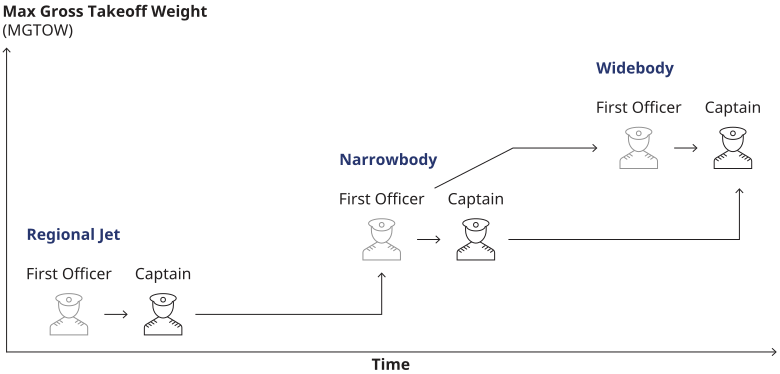
The ongoing reset of expectations across all active generations of pilots does have its upside for flight leaders, in that they can diversify benefits options to attract and retain pilots, while driving up productivity. As examples, carriers have seen success in offering part-time flying months, greater basing flexibility, and options to fly different aircraft in partnership with other carriers.
In conclusion, we anticipate the key themes discussed in our Flight Operations Brief will be top of mind for flight operations leaders for at least the next several years. The generational shift now underway will continue to redefine how the workforce is managed, what pilots value most, and how best to meet pilot expectations while supporting operational effectiveness, cost efficiency, and safety.
