


For the past two years, Amsterdam Airport Schiphol — a major European hub — has been transforming its security operations to create a more resilient and responsive system. As the Netherlands’ main international airport, Schiphol has undertaken a comprehensive overhaul of this critical function, setting a new industry standard for other major airports.
This transformation began in the waning days of the COVID-19 pandemic, as the industry began to emerge from the near-shutdown of air travel the virus caused. In the summer of 2022, Schiphol Airport faced significant operational hurdles, including long queues and unpredictable service levels. These challenges necessitated immediate and effective solutions to restore functionality and prepare for the anticipated increase in passenger volumes during the summer 2023 season.
How Schiphol transformed airport security operations
To help address these issues, Schiphol partnered with us, leveraging our extensive work in aviation, performance transformation, and operational efficiency. We provided strategic insights and a structured approach to overhaul the airport's entire security operations.
By identifying both short-term fixes and long-term structural changes necessary to enhance airport security’s operating model, we helped Schiphol adapt to evolving market conditions and mitigate future disruptions. Our comprehensive transformation strategy delivered immediate improvements while laying the foundation for lasting change.
Initially, we worked alongside Schiphol to implement a series of ad-hoc measures that stabilized operations and prepared for the summer 2023 season. These early actions were crucial to the speedy restoration of functionality, as well as ensuring smoother, more predictable operations post-pandemic. One of the first steps involved optimizing staffing by selecting high-performing security agents for peak shifts, which led to immediate improvements in operational metrics.
Enhancing airport security for long-term resilience
Our joint operational team with Schiphol also recognized early on that short-term fixes wouldn’t be enough. The entire rostering system needed reworking, and significant upgrades were required in training and technology.
Over 18 months, we focused on a complete overhaul of the security operating model, aiming to prevent future disruptions and establish a cost-efficient, resilient, and performance-oriented framework, ready to adapt to changing market conditions.
Achieving these goals required strong collaboration with Schiphol’s broader ecosystem, including border control, airlines, ground handlers, and security companies. Given the complexity of modern-day airports, a holistic approach to security was essential, and these partnerships were pivotal in driving Schiphol’s security operations transformation.
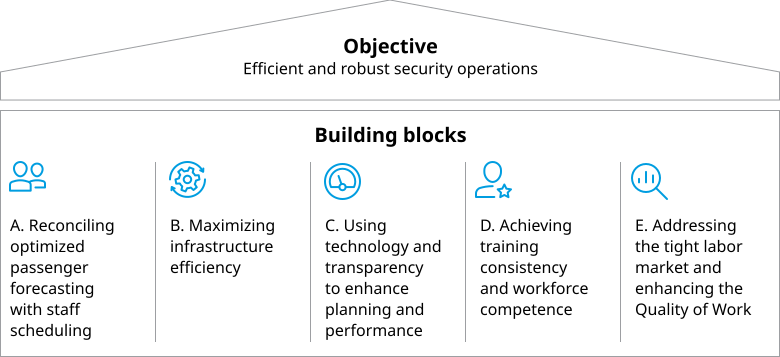
Together, we identified several levers that could structurally improve airport security operations. These performance transformation levers are now integral to the airport’s new operating model.
The impact of operational changes on passenger experience
After facing severe operational disruptions, with security queues reaching up to six hours in 2022, Schiphol was able to reduce queue times dramatically, with approximately 90% of passengers passing through security in under 10 minutes on peak days.
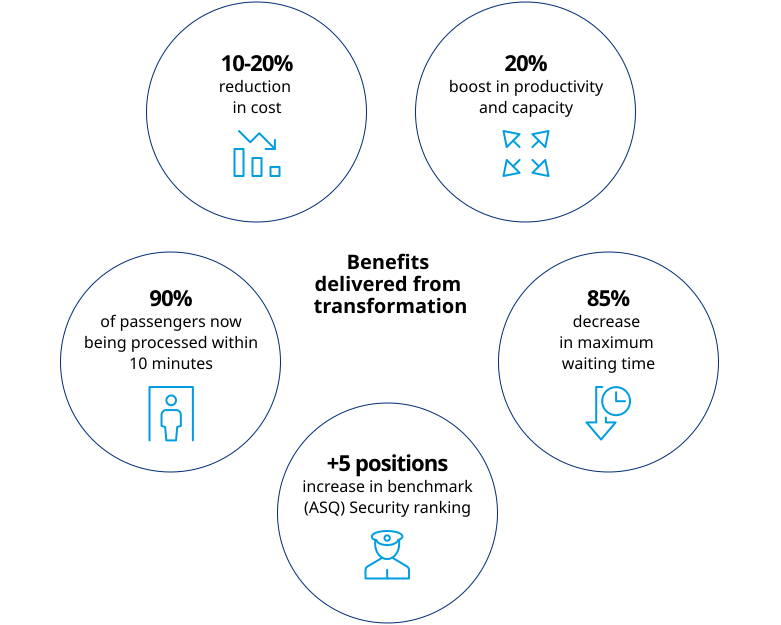
Additionally, the transformation led to a 10% to 20% reduction in operational costs. A collaborative ecosystem approach — integrating airlines, suppliers, regulators, and border control — was crucial in enhancing security and passenger experience, enabling robust passenger forecasts, reducing congestion, and establishing efficient security operations.
