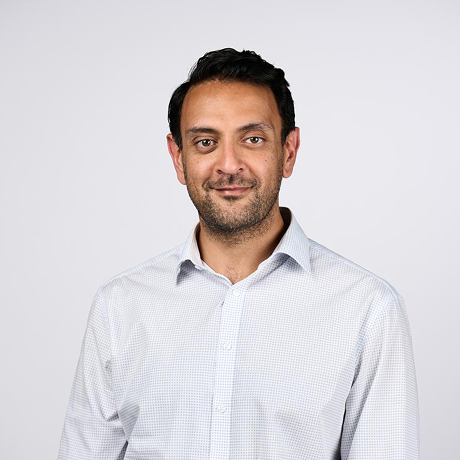
After two decades at Oliver Wyman, spanning Europe, Asia, and regional leadership roles, and with deep involvement in people development, Wolfram has embarked on a new chapter as a published author. His upcoming book, Dreams & Deadlines, explores how to make meaningful progress toward personal goals amidst the pressures of modern careers and life’s competing demands. We caught up with Wolfram in Singapore to discuss his journey, his writing process, and how his time at Oliver Wyman shaped the ideas behind the book.
How would you describe your journey at Oliver Wyman?
Most of my Oliver Wyman career was in Asia, first helping open our China office and then serving in various leadership roles in Singapore, including country head and leading the non-aligned consulting group. It was an exciting time. We were building capability, expanding into new markets, and shaping teams from the ground up. Throughout, I was deeply involved in people development and training, which became a real passion.
What is the origin of the idea behind Dreams & Deadlines?
The book has been brewing for years. Like many consultants, I always knew how to get things done at work (we’re all extremely good at meeting KPIs and delivering under pressure), but making progress on personal goals was a different story. Life gets in the way. You’re busy, you’re travelling, you’re juggling responsibilities, and suddenly the things that matter to you outside of work fall behind. My co-author [Sebastian Voss] and I realized we were scratching our own itch, trying to solve a problem we both struggled with.
What is the main concept of the book?
We adapted the objectives and key results (OKR) system, famously used by companies like Intel and Google, into a flexible, humane framework for personal life. You don’t want to run your family like a business, but you do need structure, intention, prioritization, and accountability. The method helps you identify what truly matters, set quarterly goals you can actually achieve, and build routines that support progress even when life gets a bit bonkers!
How did the firm shape the ideas presented in the book?
My interest in productivity and balance stems directly from my years in consulting. I spent a lot of time designing time-management and effectiveness training for consultants. At Oliver Wyman, I learned that productivity is incredibly personal. What works for one person doesn’t work for another. That’s why the book emphasizes flexibility: whether you’re a visual planner, a notebook-and-pen traditionalist, or a tech-heavy systems person, the method needs to adapt to you.
Describe your writing process and how you collaborated with your co-author.
We started while both working full-time, which was ambitious. We agreed on a clear structure up front, divided chapters, and reviewed each other’s drafts. We used AI tools intelligently, not to replace our voice, but to overcome the “blank page problem,” generate research starting points, and refine structure.
The only section written heavily with AI was the glossary, but even that still sounded like us. We also followed a rigorous multi-round editing approach, including reading the entire manuscript aloud to each other. That was surprisingly powerful.
Did you experience any moments of doubt?
Every writer goes through that. In those moments, having a strong co-author helped immensely. We even drafted a writer’s agreement at the start: how we’d resolve disagreements, what success meant, and why we were doing this. That clarity protected our friendship and kept us aligned. The project ultimately became one of the most rewarding things I’ve worked on.
Is your framework applicable to the workplace as well?
Absolutely. OKRs come from the corporate world. The idea is to set stretch goals that motivate you. The point isn’t to hit 100%, it’s to aim high enough to make meaningful progress. The same principles apply at work: clear direction, prioritization, accountability, and measured ambition. But the book is mostly about the personal side, the part most of us neglect.
What are your next steps?
I’ve recently joined True North Partners, a boutique founded by former Oliver Wyman colleagues, which in some ways reminds me of the firm 20 years ago: small, entrepreneurial, full of energy. Meanwhile, we’re preparing for the book launch. It’s been a fascinating new chapter, and I’m excited to see how people respond to the work.
Do you have any concluding thoughts for the alumni community?
I’ve always believed alumni networks are hugely valuable. There’s so much shared experience, expertise, and goodwill to draw on. It’s wonderful to see Oliver Wyman investing more meaningfully in alumni engagement. I’m looking forward to reconnecting with familiar faces and watching the community grow.
This page was originally published on January 29, 2026.