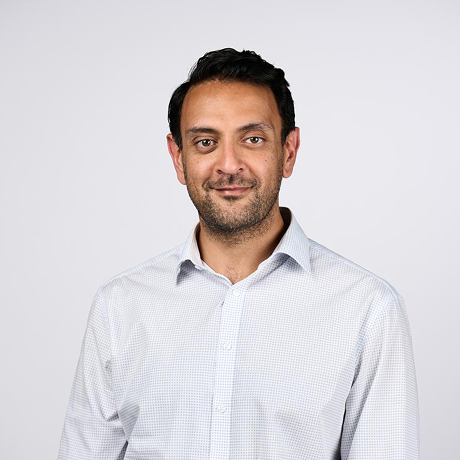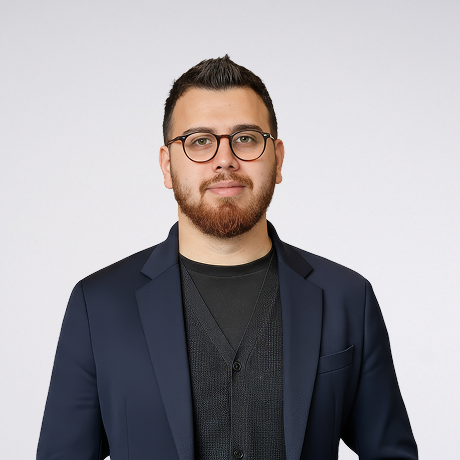
Ben Terdich

Home  // . //  The Alumni Network //  Ben Terdich

After launching his career at Oliver Wyman’s Chicago office, Ben Terdich quickly found himself drawn to big, complex questions shaping healthcare. That curiosity eventually led him to Tempus, where he now works at the intersection of medicine, data, and artificial intelligence. Today, he helps build tools that support more personalized cancer treatment. We caught up with Ben to talk about his path, the promise of AI in healthcare, and the consulting skills he still uses every day.

Tell us about your time at Oliver Wyman.

I spent most of my time in the Health and Life Sciences practice, focusing on payer strategy and care management. Much of my work centered on helping healthcare organizations better identify and support patients who could benefit from more proactive care, improving outcomes, and reducing unnecessary hospitalizations.

I was fortunate to work alongside some incredible colleagues and mentors, and toward the end of my time at the firm, I also contributed to Practicing Wisely, an Oliver Wyman initiative focused on reducing low‑value care and improving clinical decision‑making, which was particularly rewarding.

Outside of client work, I was heavily involved in recruiting. I helped lead efforts at Northwestern University and always enjoyed meeting prospective consultants and sharing what made the Chicago office culture so special.

What are you doing today at Tempus?

Tempus sits at the intersection of healthcare, genomics, and artificial intelligence. We perform clinical testing, primarily in oncology, and use that information to build one of the largest datasets linking patient outcomes, molecular biology, and treatment decisions.

My role spans strategy, operations, and product development. I work with multidisciplinary teams across medicine, data science, biostatistics, regulatory affairs, and legal  to identify important clinical questions and determine how data and AI can help answer them.

Ultimately, our goal is to develop tools that help physicians make better decisions for individual patients and improve treatment outcomes.

What excites you most about the work you're doing?

The scale of data now available in healthcare is unprecedented. Historically, many treatment decisions were guided by biomarkers based on a single gene or biological signal. Today, with much larger datasets, we can develop models that evaluate hundreds of variables simultaneously and potentially identify patterns that were previously impossible to detect.

One of the most exciting aspects of my work is helping translate these advances into practical tools that can support clinical decision-making. The potential to improve patient outcomes is enormous.

What have been some of the biggest challenges?

The work is highly multidisciplinary, which means bringing together experts with very different perspectives and areas of expertise.

In many cases, we're trying to solve problems that have never been solved before. Even when you're working with world-class experts, there often isn't an established playbook. Everyone is learning and building the solution together.

There's also the challenge of working with real-world healthcare data. While the volume of data available today is extraordinary, generating the evidence required to change clinical practice remains complex and highly regulated.

How did your Oliver Wyman experience prepare you for your current role?

One of the most valuable skills I developed was stakeholder management. Consulting teaches you how to align groups with different priorities around a common objective and build momentum toward a decision. That skill remains incredibly relevant today.

At Tempus, we established what we call an "Algorithms Brain Trust" — a cross-functional leadership group that helps guide key decisions. The process of pre-wiring discussions, building alignment, and creating structured forums for decision-making felt very familiar to my consulting experience.

What advice would you give to consultants interested in healthcare, data, and AI?

My first piece of advice: do it. We're reaching a point where the combination of healthcare data and AI is creating opportunities that simply didn't exist a decade ago. The amount of available data continues to grow exponentially, and we're only beginning to understand what’s possible.

I would also encourage people to join organizations that are genuinely investing in AI – not just as the product itself (like our clinical algorithms), but as a way of building (for example, deploying agentic systems to accelerate everyone’s day-to-day work) and embracing new ways of working. The companies that learn how to effectively leverage these technologies will have a significant advantage over the coming years.

This page was originally published on June 22, 2026.