


Operational efficiency used to define the role of a chief operating officer (COO). Today, their mandate stretches far beyond that, touching nearly every aspect of a company’s strategy.
We analyzed and interviewed more than 20,000 COOs across Europe and found that their remit now includes everything from driving digital innovation and sustainability initiatives to systemic risk management. And they’re taking on this more strategic role while navigating rising geopolitical and market volatility. Understanding this evolution is key for executives aiming to build future-ready operations.
Three waves shaping the future of COO priorities
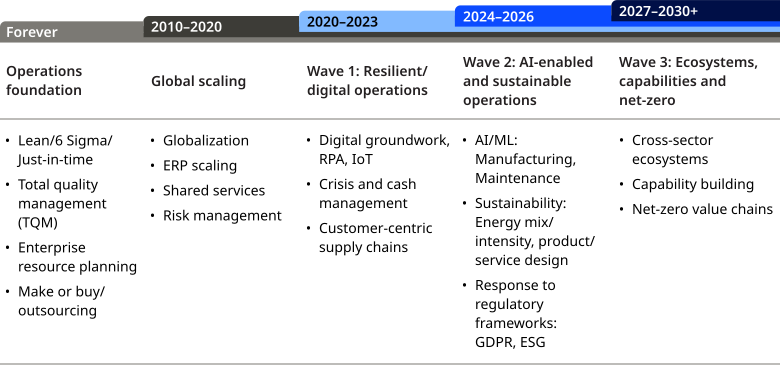
The COO role is evolving in three overlapping waves that now run simultaneously but at different maturity and speeds.
The first wave, which rose to prominence around 2020, focused on building resilient and digital foundations. This involved extensive use of the Internet of Things (IoT), automation, crisis preparedness, cash management, and customer-centric supply chains.
The second wave, starting approximately in 2024, centered on enhancing operations with artificial intelligence and sustainability. COOs carry the responsibility for scaling AI and machine learning applications in manufacturing and maintenance, optimizing energy and material use, and complying with rising environmental, social, and governance (ESG) standards as well as data regulations.
The emerging third wave emphasizes ecosystem expansion and new capabilities. This includes fostering cross-sector partnerships, modularizing value chains, and implementing targeted upskilling programs aimed at achieving net-zero emissions.
COOs must manage all three waves concurrently with overlapping resource demands, trade-offs, and conflicting priorities.
Key forces driving COO transformation
Five forces shape the complex COO landscape:
- External shocks and structural volatility. Geopolitical tensions, pandemics, energy market fluctuations, and trade policy uncertainties have elevated operational and supply chain risks to the full C-suite, shifting priorities to resilience, diversification, and optionality.
- Technology maturation and data realities. While IoT, robotics, and AI mature, inconsistent business processes and data quality issues remain as barriers. Digital foundation work started in Wave 1 is essential to enable scalable AI adoption in Wave 2.
- Sustainability and regulatory pressure. Sustainability has moved from a secondary responsibility to a mandatory operational constraint, driven by regulations like the European Union Green Deal. Embedding ESG in strategy, technology, product, and process design is crucial from Wave 2 onward.
- Competitive and business model disruption. Digital-native competitors and evolving customer expectations push COOs beyond operational efficiency toward business model innovation and ecosystem orchestration in Wave 3.
- Workforce mindsets and capability gaps. Legacy cultures and skill shortages challenge transformation. COOs focus on capability building, mindset shifts, and leadership development to scale operational excellence and sustain a complex agenda.
The business orchestrator COO — building the integrated operating system
The successful next-generation COO transcends traditional operational management as an integrated orchestrator, enabled by the COO Operating System. This framework translates complexity into clear strategic priorities and capabilities, including:
- A prioritized operations value proposition aligned to cost, service, innovation, resilience, and sustainability.
- A targeted operating model addressing processes, technology, governance, and organizational design.
- A capability engine driving talent development, change management, and continuous improvement.
- Ecosystem guardrails governing partner collaboration, decision rights, and transparency.
This operating system clarifies tradeoffs between cost, resilience, localization, and ecosystem choices, enabling agility in a resource-constrained and volatile environment.
The need for a more strategic and networked COO role
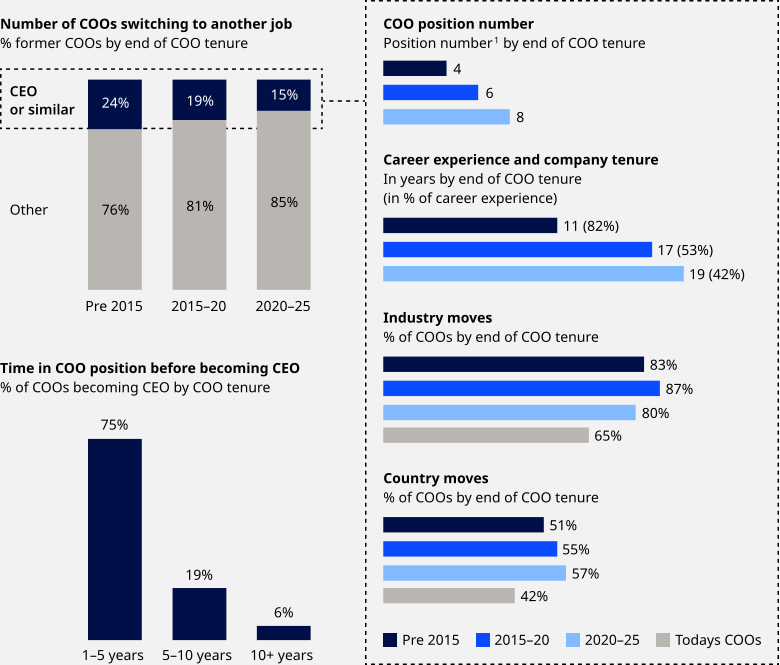
COOs now bring deeper, broader experience into the role, averaging 17 years of work experience before appointment and six years’ average tenure — significantly longer than a decade ago. This consistency fosters durable internal and external partnerships and speeds decision-making.
Capability building is critical. The COO role increasingly overlaps with those of chief information officers, chief digital officers, and sustainability leaders, demanding enhanced digital literacy and leadership evolution. External engagement with partners, regulators, and customers is also rising. These traits are especially crucial for COOs who continue on a career trajectory to becoming a CEO.
Next steps for COOs leading transformation
Navigating overlapping waves and systemic challenges requires focus on three high-impact initiatives:
- Build an integrated framework: Define a clear operations value proposition and translate strategy into prioritized core objectives and ecosystem guardrails.
- Invest in deeper experience: Grow internal capabilities and leadership depth with consistent tenure to bridge shop floor and boardroom.
- Orchestrate change: Build governance, transparency, incentives, and digital integration across partners, and uplift capability-building and AI literacy as baseline operation skills.
These efforts empower COOs to transform complexity into strategic advantage, becoming true orchestrators of transformative ecosystems.
